Home > AR/VR > USA > San Francisco

Ratings Updated: November 03, 2026

Top AR/VR Development Companies in San Francisco

Read more
Services
Hourly Rate

List of the Top AR/VR Development Companies in San Francisco

Sort By:

★ ★ ★ ★ ★

Share Your Experience & Build Your Business Credibility

Your review helps companies grow, improves trust, and increases visibility on Google

Write a Review & Get Featured
consult-img

Why Trust Fixnhour?

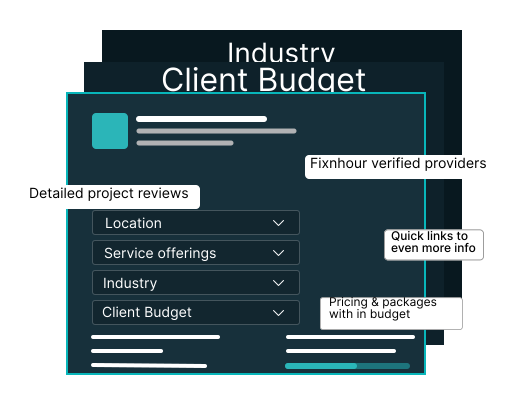
We create a high-integrity ecosystem for business services. When you browse companies on our platform, you are backed by:

icon

Verified Service Providers:

A trusted platform where verified service providers and genuine reviews by clients come together.

icon

Manual Verification Process:

We verify all registered businesses and projects undertaken by them through an official process of manual verification.

icon

Customer Reviews:

Ratings and reviews are based on actual customer experiences and real project results.

icon

Rankings You Can Trust:

Verified reviews, past performance, and industry-specific knowledge all influence our rankings.

Frequently asked questions (FAQs)

Whatever your business challenge, browse our most in-demand service categories to find top-ranked companies in specialized service lines.

AR/VR development companies in San Francisco offer a range of immersive technology services to help businesses create interactive digital experiences. Common services include augmented reality app development, virtual reality software development, mixed reality solutions, 3D modeling, virtual simulations, and immersive user experience design. Some companies also provide Unity and Unreal Engine development, AR filters, VR training applications, product visualization, and wearable technology integration. Businesses can discuss their requirements with development teams to understand which services are suitable for their projects. Evaluating service capabilities and previous work helps identify potential development partners.

Choosing the right AR/VR development company requires understanding your project goals, technical requirements, and expected outcomes. Start by reviewing the company's experience in augmented reality, virtual reality, 3D development, and immersive application design. Examine its portfolio to understand the types of projects it has completed and the technologies it uses. You should also compare client feedback, communication practices, development processes, pricing structures, and post-launch support. Ask about project timelines, scalability, and intellectual property ownership before making a decision. Comparing multiple AR/VR developers helps businesses shortlist suitable technology partners.

Augmented reality and virtual reality are different technologies used to create immersive digital experiences. Augmented reality adds digital elements, such as 3D objects, animations, or information, to the user's real-world surroundings through smartphones, tablets, or smart glasses. Virtual reality creates a completely digital environment that users can explore through VR headsets and compatible devices. AR is commonly used for product visualization, interactive shopping, and navigation, while VR supports virtual training, gaming, education, and simulations. Both technologies offer different business opportunities, and the right choice depends on the intended application, audience, and user experience.

The cost of AR/VR app development in San Francisco depends on project complexity, features, development hours, technology requirements, and team expertise. A basic AR application may require a smaller investment than an advanced virtual reality platform with interactive environments, 3D assets, multiplayer functionality, or custom integrations. Hardware compatibility, user interface design, testing, and ongoing maintenance can also influence the overall budget. Businesses should request detailed proposals from multiple AR/VR development companies before selecting a provider. Comparing project estimates, deliverables, technical capabilities, and support services helps establish a realistic development budget.

AR/VR development companies use different technologies and development frameworks to build immersive applications. Popular tools include Unity, Unreal Engine, ARKit, ARCore, WebXR, and various 3D modeling platforms. Unity and Unreal Engine support interactive virtual environments, simulations, and immersive gaming experiences. ARKit and ARCore help developers build augmented reality applications for compatible mobile devices. WebXR enables browser-based immersive experiences without requiring every user to install a separate application. Development teams may also work with artificial intelligence, computer vision, spatial computing, and motion tracking to improve application functionality and create more engaging user experiences.
Join Fixnhour

Create Your Professional Profile

Showcase your services, attract new clients, and grow your business by connecting with companies looking for trusted professionals.

Get Listed & Start Getting Leads


Create profile