Choosing the right business partner has never been more important or more challenging. Whether you're looking for a software development company, digital marketing agency, IT consultant, cloud provider, or manufacturing partner, the number of available vendors continues to grow every year. While having more choices is beneficial, it also makes the vendor selection process longer, more complicated, and riskier. Businesses often spend weeks comparing websites, requesting proposals, scheduling meetings, checking references, and validating claims before making a final decision.
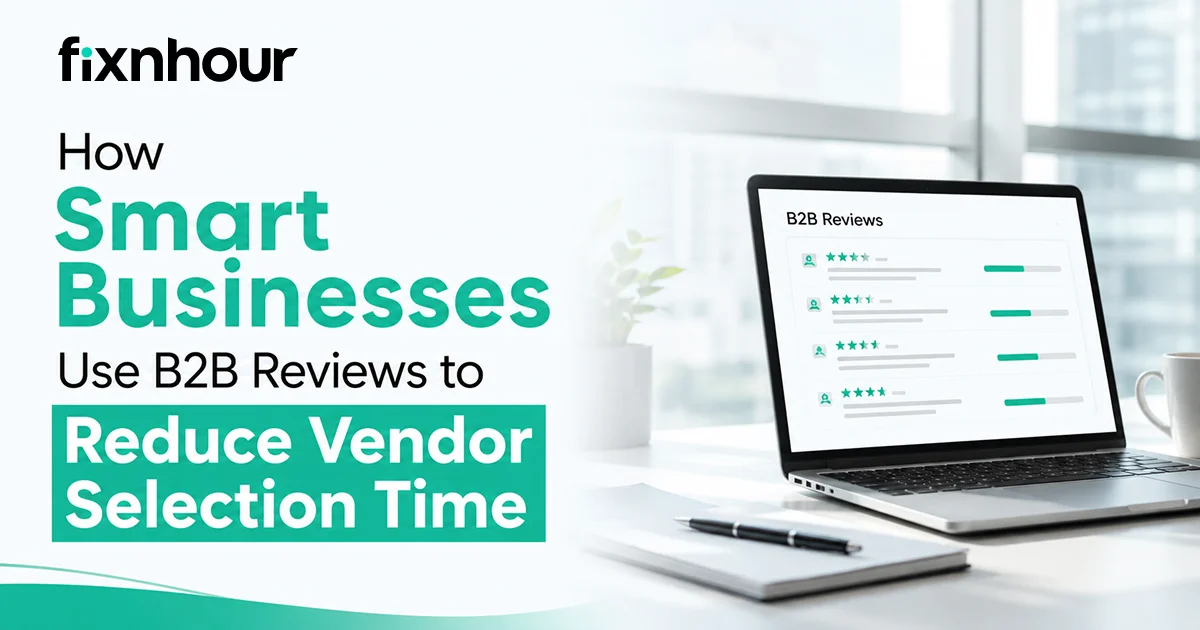
Instead of relying solely on marketing materials, businesses can now access verified client feedback, company ratings, project experiences, and industry insights to evaluate vendors quickly and confidently. Trusted B2B review platforms help organizations identify reliable service providers, reduce research time, and minimize the risk of choosing the wrong partner.
Why Vendor Selection Takes So Long
Selecting a vendor isn't just about finding the lowest price. Businesses need a partner that understands their industry, delivers quality work, communicates effectively, and supports long-term growth. Fixnhour Unfortunately, evaluating all these factors takes significant time and effort.
Too Many Service Providers
Almost every industry has hundreds or even thousands of vendors offering similar services. From software development and AI solutions to marketing agencies and consulting firms, businesses often struggle to determine which companies are genuinely qualified. Without a structured comparison process, narrowing down the options can become overwhelming.
Limited Transparency
Many vendors highlight only their strengths while leaving out important information such as project challenges, customer complaints, or support quality.As a result, buyers may struggle to distinguish between marketing promises and actual customer experiences.
Comparing Different Vendors
Each company presents information differently. One vendor may emphasize pricing, another showcases portfolios, while another focuses on testimonials.
Without standardized information, comparing vendors becomes difficult and time-consuming.
Risk of Choosing the Wrong Partner
Selecting an unsuitable vendor can lead to:
- Delayed project delivery
- Budget overruns
- Poor communication
- Low-quality work
- Missed business opportunities
- Long-term operational issues
Why Traditional Vendor Research Is No Longer Enough
Traditional vendor research often relies on limited information, outdated directories, and sales-driven claims, making it difficult to evaluate providers accurately. This section explains why modern businesses need authentic B2B reviews, real customer experiences, and data-driven insights to compare vendors effectively, reduce uncertainty, save time, and make smarter purchasing decisions confidently.
- Company websites
- Portfolio analysis
- Case studies
- LinkedIn profiles
- Client testimonials
- Industry certifications
What Are B2B Reviews?
B2B reviews are detailed evaluations written by businesses that have worked with another company or service provider. Unlike consumer product reviews, B2B reviews focus on professional services, long-term partnerships, project outcomes, communication quality, technical expertise, and overall client satisfaction.
These reviews provide valuable insights that help businesses make informed purchasing decisions before signing contracts.
A quality B2B review typically includes:
- Overall client experience
- Project scope
- Service quality
- Communication effectiveness
- Technical expertise
- Delivery timeline
Why B2B Reviews Matter More Than Ever
The purchasing journey has changed significantly over the past few years.Business buyers now conduct extensive online research before contacting a vendor.According to multiple industry studies, decision-makers prefer to shortlist vendors that have strong online reputations, positive client feedback, and consistent ratings across trusted review platforms.
- Build trust before the first meeting
- Verify vendor credibility
- Compare multiple companies quickly
- Understand strengths and weaknesses
- Reduce uncertainty
- Improve purchasing confidence
- Make data-driven vendor decisions
B2B Reviews vs. Consumer Reviews
B2B reviews and consumer reviews serve different purposes and reflect different buying experiences. This section explains their key differences in audience, decision-making process, purchase value, evaluation criteria, and review depth. Understanding these distinctions helps businesses interpret feedback accurately and use the right reviews when evaluating vendors and making informed purchasing decisions.
| B2B Reviews | Consumer Reviews |
|---|---|
| Focus on business services, software, and B2B solutions | Focus on consumer products and everyday services |
| Designed for businesses evaluating vendors | Designed for individual shoppers making purchases |
| Longer buying and decision-making cycles | Quick purchasing decisions |
| Higher contract values and larger investments | Lower purchase amounts |
| Multiple stakeholders involved (management, procurement, IT, finance) | Usually a single buyer or household decision |
| Reviews emphasize project outcomes, ROI, and business impact | Reviews focus on personal experiences, satisfaction, and usability |
| Include detailed case studies, project scope, timelines, and deliverables | Include product quality, features, shipping, and customer service feedback |
| Build long-term business partnerships | Support one-time or occasional purchases |
| Often include verified clients and company profiles | Usually submitted by verified or general consumers |
| Help organizations reduce vendor selection risk | Help consumers choose the best product quickly |
| Common on platforms like Clutch, GoodFirms, and Fixnhour | Common on Amazon, Google Reviews, Yelp, and Trustpilot |
Also read: https://fixnhour.com/blog/business-listing-platforms
How Smart Businesses Use B2B Reviews to Shortlist Vendors Faster
Leading organizations don't evaluate every vendor they find online. Instead, they use B2B reviews to quickly identify companies with a proven track record and eliminate unsuitable options early in the buying process. A structured review process helps businesses reduce research time while improving the quality of their final decision.
Filter Vendors by Industry Experience
Industry expertise is one of the first things businesses should evaluate.A software development company with extensive healthcare experience may not be the best choice for a fintech project, while an AI development firm specializing in manufacturing may be ideal for industrial automation.
- Industry-specific projects
- Relevant technical expertise
- Similar business challenges
- Client success stories
- Long-term partnerships
Compare Overall Ratings
While star ratings provide a quick overview, they shouldn't be the only factor influencing your decision.
- Overall client satisfaction
- Project delivery quality
- Communication
- Technical expertise
- Value for money
- Problem-solving ability
- Customer support
Read Detailed Client Feedback
The most valuable B2B reviews explain exactly how a vendor handled a project.
- Business goals
- Project complexity
- Communication process
- Challenges faced
- Solutions implemented
Evaluate Company Reputation
Reputation goes beyond review scores.
- Consistent positive feedback
- Active customer engagement
- Transparent communication
- Updated company profile
- Verified business information
- Professional portfolio
Verify Recent Reviews
Businesses evolve over time.A company with excellent reviews from three years ago may not deliver the same quality today.
- Recent client feedback
- Consistent performance
- Ongoing successful projects
- Updated service offerings
Review Case Studies Alongside Customer Reviews
Case studies explain what a company achieved.
Reviews explain how they achieved it.
When both align, you gain stronger confidence in the vendor.
Look for:
- Business objectives
- Technologies used
- Timeline
- Results achieved
- Client testimonials
Key Factors to Evaluate Before Selecting a Vendor
Before selecting a vendor, businesses should evaluate key factors such as experience, service quality, customer reviews, pricing, reliability, technical expertise, communication, scalability, and support. Carefully assessing these aspects helps companies compare potential vendors effectively, reduce risks, avoid costly mistakes, and choose a dependable partner aligned with their business goals.
| No. | Key Factor | What to Evaluate |
|---|---|---|
| 1. | Verified Customer Reviews | Verified reviews are generally more trustworthy because they come from businesses that have actually worked with the vendor. They reduce the chances of fake testimonials and provide more reliable insights. |
| 2. | Overall Ratings | Review ratings should remain consistent across multiple projects. A vendor with stable, high ratings over several years is often a safer choice than one with inconsistent feedback. |
| 3. | Portfolio Quality | Review the company's portfolio carefully. Check whether they have completed similar projects, served businesses of a similar size, or worked in your industry. |
| 4. | Industry Certifications | Look for ISO certifications, cloud certifications, technology partner programs, security compliance, and industry-specific accreditations. |
| 5. | Technical Expertise | Assess whether the vendor has experience with the technologies your project requires, such as AI development, mobile app development, Flutter, React, .NET, Java, cloud computing, and data analytics. |
| 6. | Pricing Transparency | Reliable vendors clearly explain their pricing structure, project milestones, deliverables, additional costs, and support charges. |
| 7. | Communication and Support | Evaluate the vendor's communication process, response time, customer support, project updates, and post-launch assistance. |
1. Verified Customer Reviews
Verified reviews are generally more trustworthy because they come from businesses that have actually worked with the vendor.
They reduce the chances of fake testimonials and provide more reliable insights.
2. Overall Ratings
Review ratings should remain consistent across multiple projects.A vendor with stable, high ratings over several years is often a safer choice than one with inconsistent feedback.
3. Portfolio Quality
Review the company's portfolio carefully.
Ask yourself:
- Have they completed projects similar to mine?
- Do they serve businesses of similar size?
- Have they worked in my industry?
4. Industry Certifications
Examples include:
- ISO certifications
- Cloud certifications
- Technology partner programs
- Security compliance
- Industry-specific accreditations
5. Technical Expertise
Assess whether the vendor has experience with the technologies your project requires.
For example:
- AI Development
- Mobile App Development
- Flutter
- React
- .NET
- Java
- Cloud Computing
- Data Analytics
- DevOps
6. Pricing Transparency
Reliable vendors clearly explain:
- Pricing structure
- Project milestones
- Deliverables
- Additional costs
- Support charges
7. Communication and Support
Many project failures occur because of poor communication rather than technical issues.
Check whether reviews mention:
- Fast responses
- Dedicated project managers
- Regular updates
- Problem resolution
- Post-launch support
Benefits of Using B2B Reviews During Vendor Selection
B2B reviews help businesses make smarter vendor selection decisions by providing real customer experiences and valuable insights. They make it easier to compare providers, evaluate service quality, identify reliable partners, reduce research time, minimize risks, and choose vendors that best match business needs, expectations, budget, and long-term goals.
Save Research Time
Instead of contacting dozens of companies, businesses can quickly create a shortlist using verified reviews and ratings.
This significantly reduces the vendor selection timeline.
Reduce Business Risk
Client feedback reveals potential issues before contracts are signed.Businesses can avoid vendors with:
- Poor communication
- Missed deadlines
- Hidden costs
- Low-quality deliverables
Make Data-Driven Decisions
Reviews provide measurable insights rather than marketing claims.
Decision-makers can compare vendors using:
- Ratings
- Project success
- Customer satisfaction
- Industry experience
- Technical capabilities
Improve Vendor Quality
Review platforms naturally encourage vendors to maintain high service standards.
Businesses benefit from choosing providers with proven performance records and strong customer satisfaction.
Increase Project Success Rate
Selecting experienced vendors based on verified customer feedback often leads to:
- Better communication
- Higher-quality work
- Faster delivery
- Improved collaboration
- Long-term partnerships
Better Return on Investment (ROI)
Choosing the right vendor the first time helps businesses avoid costly project failures, unnecessary delays, and expensive rework. A reliable partner delivers greater value and maximizes the return on every investment.
Also read: https://fixnhour.com/blog/business-directories-vs-verified-reviews
Step-by-Step Process to Reduce Vendor Selection Time Using B2B Reviews
Discover a step-by-step approach to using B2B reviews for faster vendor selection. Learn how to research providers, compare reviews, assess credibility, identify the best options, and make confident purchasing decisions. This guide helps businesses reduce research time, avoid unreliable vendors, and choose the right partners more efficiently.
Step 1: Define Your Business Requirements
Before comparing vendors, clearly identify your project goals, budget, timeline, technical requirements, and expected outcomes.
Create a checklist that includes:
- Project scope
- Budget range
- Required technologies
- Timeline
- Industry expertise
- Support expectations
Step 2: Search Trusted B2B Review Platforms
Use reputable B2B review platforms to discover companies with verified client feedback and strong industry reputations.
When searching, look for:
- Verified customer reviews
- Overall ratings
- Company portfolios
- Industry expertise
- Recent client testimonials.
Step 3: Create a Vendor Shortlist
Based on reviews and ratings, shortlist three to five vendors that best match your business needs.
Compare them using:
- Experience
- Services offered
- Industry specialization
- Customer satisfaction
- Pricing model
Step 4: Compare Reviews and Ratings
Don't rely solely on star ratings.
Read detailed reviews to understand:
- Communication quality
- Project management
- Technical expertise
- Delivery timelines
- Client satisfaction
- Problem-solving capabilities
Step 5: Verify Portfolios and Case Studies
Compare client reviews with real-world case studies to confirm the vendor's expertise.
Check for:
- Similar projects
- Business outcomes
- Technology stack
- Client industries
- Measurable results
Step 6: Request Proposals
Ask shortlisted vendors to provide detailed proposals covering:
- Project timeline
- Cost estimates
- Team structure
- Deliverables
- Communication plan
- Post-launch support
Step 7: Choose the Best-Fit Vendor
Select the vendor offering the best combination of:
- Verified B2B reviews
- Industry expertise
- Transparent pricing
- Strong communication
- Proven results
- Long-term value
Also read: https://fixnhour.com/blog/get-more-b2b-leads-with-fixnhour
Conclusion
Vendor selection is one of the most important business decisions any organization makes. Relying solely on websites, referrals, or marketing materials can increase research time and project risks.Trusted B2B reviews provide valuable insights into real client experiences, helping businesses compare vendors objectively, reduce uncertainty, and choose reliable partners with confidence.
By following a structured evaluation process and using reputable B2B review platforms, organizations can shorten vendor selection cycles, improve project outcomes, and build long-term business relationships.If you're looking for trusted business service providers, start with verified B2B reviews to make faster, smarter, and more informed decisions. Contact us today
Frequently Asked Questions
Q1. How do B2B reviews reduce vendor selection time?
ANS. B2B reviews help businesses evaluate vendors through verified customer experiences, detailed ratings, and project feedback. Instead of spending weeks researching multiple companies, decision-makers can compare B2B review platforms, analyze client satisfaction, and shortlist trusted service providers quickly. This streamlined approach reduces research time, minimizes business risks, and helps organizations choose the right vendor faster with greater confidence.
Q2. Why are B2B review platforms important for businesses?
ANS. B2B review platforms provide businesses with verified customer feedback, company ratings, case studies, and detailed service evaluations in one place. They simplify the vendor selection process by allowing organizations to compare providers based on expertise, industry experience, communication, and customer satisfaction. These platforms help businesses make informed, data-driven decisions while reducing the chances of choosing an unreliable vendor.
Q3. What should businesses check before selecting a vendor?
ANS. Before selecting a vendor, businesses should review B2B ratings, verified client reviews, industry expertise, company portfolios, pricing transparency, technical capabilities, customer support, and project success stories. Comparing multiple B2B review websites helps organizations identify reliable service providers that match their requirements. A thorough evaluation reduces project risks and increases the likelihood of building a successful long-term business partnership.
Q4. Can B2B reviews help reduce business risks?
ANS. Yes, B2B reviews significantly reduce business risks by providing honest insights from previous clients. Reviews reveal a vendor's communication quality, project management skills, delivery timelines, pricing transparency, and customer satisfaction. Businesses can identify potential red flags before signing contracts, making it easier to avoid unreliable vendors and select trusted business partners with proven performance and industry expertise.
Q5. Are verified B2B reviews more trustworthy than testimonials?
ANS. Yes. Verified B2B reviews are generally more trustworthy because they are submitted by real businesses that have worked directly with the vendor. Unlike website testimonials, verified reviews often include detailed project information, measurable outcomes, and balanced feedback. This transparency helps businesses evaluate vendors more accurately, compare B2B ratings, and make confident purchasing decisions based on authentic customer experiences.
Q6. Which industries benefit the most from B2B review platforms?
ANS. Many industries benefit from B2B review platforms, including software development, mobile app development, AI services, healthcare technology, digital marketing, cybersecurity, manufacturing, cloud computing, IT consulting, finance, and e-commerce. Businesses in these sectors use B2B reviews to compare service providers, verify expertise, evaluate customer satisfaction, and select trusted vendors that deliver high-quality results and long-term business value.