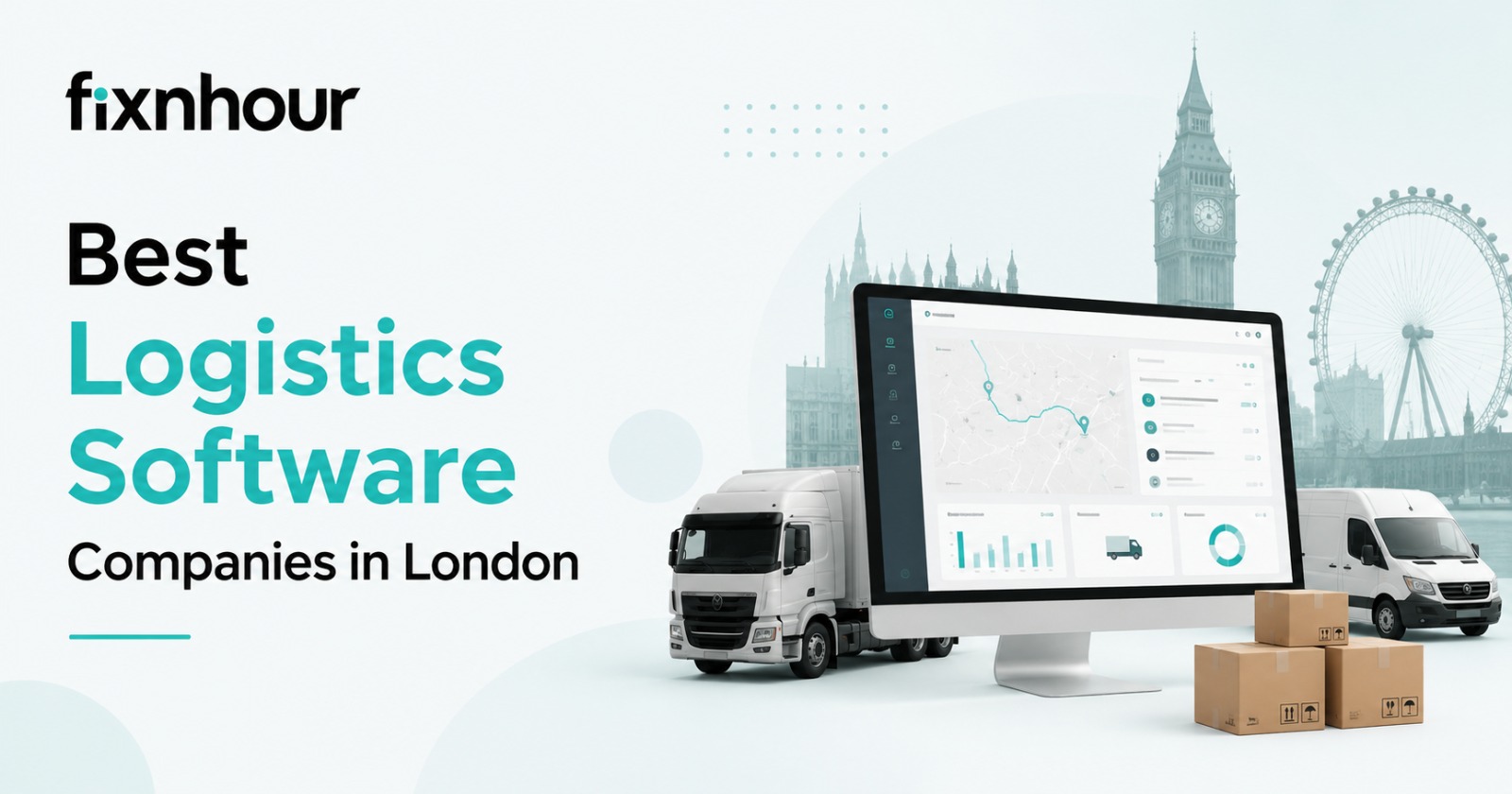
London is one of the UK's busiest business and transportation hubs, making efficient logistics technology more important than ever. From last-mile delivery and fleet tracking to warehouse operations and supply chain management, businesses increasingly rely on software to keep operations connected, efficient, and responsive.
The right logistics software development company can help turn complicated processes into simple digital workflows. Whether you need a transportation management system (TMS), fleet management platform, warehouse management software, delivery tracking app, or a custom logistics solution, choosing the right technology partner can directly influence operational efficiency and customer experience.
What Is Logistics Software and Why Does It Matter?
Logistics software is designed to help businesses plan, manage, track, and optimize the movement of goods, vehicles, orders, and information. Instead of relying on spreadsheets, phone calls, emails, and disconnected systems, businesses can bring important logistics operations into one connected digital environment. For London businesses dealing with deliveries, transportation, warehousing, freight, or supply chain operations, logistics management software can make everyday processes easier to monitor and control.
How Logistics Software Helps Businesses
The real value is not simply having another software platform. It is having technology that solves actual operational problems and gives teams better visibility into what is happening. A well-designed logistics management system can help businesses:
- Track vehicles, shipments, and deliveries in real time
- Optimize routes and reduce unnecessary transportation costs
- Automate repetitive logistics and administrative tasks
- Improve communication between drivers, warehouses, customers, and managers
- Monitor inventory and warehouse operations
- Generate useful reports and operational insights
- Improve the customer delivery experience
Also Read :- logistics software companies in Mumbai
What to Look for in a Logistics Software Company in London?
Not every software development company is the right fit for a logistics project. Logistics platforms often involve multiple users, real-time data, integrations, mobile applications, dashboards, location services, and complex business workflows.A strong development partner should also be willing to understand your business before recommending a technology stack or feature list. Before choosing a logistics software development company, consider:
- Experience with custom software development
- Knowledge of transportation and supply chain workflows
- Fleet management and GPS integration capabilities
- Warehouse management software expertise
- API and third-party system integration
- Cloud infrastructure and scalable architecture
- Data security and access controls
- Mobile and web application development
- Post-launch maintenance and technical support
Best Logistics Software Companies in London
London is home to a growing logistics technology ecosystem, with companies offering solutions for route optimization, fleet management, delivery tracking, transportation management, and supply chain automation. The companies featured in this list are selected based on their software capabilities, industry expertise, innovation, and ability to support modern logistics operations.
1. Coherent Lab
Coherent Lab is a software development company offering custom web, mobile, AI, SaaS, and software development services. Its profile on Fixnhour highlights capabilities across artificial intelligence, mobile applications, web development, and custom digital solutions. For logistics businesses, these capabilities can be applied to areas such as delivery applications, fleet management platforms, logistics dashboards, customer portals, supply chain systems, and custom SaaS products. Coherent Lab can be a suitable choice for businesses that want to develop a logistics platform around their own workflows instead of adapting their operations to a rigid off-the-shelf product.
Key strengths:
- Custom logistics and enterprise software development
- Web and mobile application development
- AI, API, and third-party integration capabilities
- Scalable SaaS and digital product development
2. Andersen Inc.
Andersen Inc. is a large custom software development company with a presence in London. It is also featured in current software development listings for companies serving the transportation and supply chain sector in London. The company's scale and engineering capabilities make it worth considering for businesses working on complex enterprise applications, modernization projects, integrations, or large digital transformation initiatives.
Key strengths:
- Custom software development
- Enterprise application development
- Software modernization
- Large-scale digital transformation
3. Future Processing
Future Processing is a software development company with a London presence and expertise spanning custom software, cloud, AI, data, cybersecurity, and web development. It is listed among providers serving supply chain businesses in London. For logistics organizations, this broad technical capability can be valuable when a project requires more than a standalone application and involves analytics, cloud infrastructure, integrations, or modernization.
Key strengths:
- Custom software development
- Cloud consulting and integration
- AI and data capabilities
- Enterprise technology solutions
4. Vention
Vention is a technology company featured in software development listings for supply chain businesses in London. Its software engineering capabilities make it an option for organizations planning sophisticated digital products or large-scale technology platforms. For growing logistics companies, scalable architecture is particularly important. A platform should be designed to handle increasing users, transactions, integrations, and operational data as the business grows.
Key strengths:
- Custom software development
- Enterprise software engineering
- Digital product development
- Scalable technology solutions
5. Imaginary Cloud
Imaginary Cloud is a custom software development company serving businesses in London and is listed among providers working with supply chain companies. The company can be considered by organizations that want to turn an idea, manual workflow, or existing business process into a modern digital product.
Key strengths:
- Custom software development
- Digital product development
- Full-stack development
- Business-focused applications
6. GoodCore Software
GoodCore Software is a London-based custom software development company. Its capabilities make it relevant for businesses looking for bespoke software instead of a generic logistics platform. Custom development can be particularly useful when a logistics business has unique workflows involving dispatching, fleet operations, warehouse processes, customer management, or reporting.
Key strengths:
- Bespoke software development
- Custom business applications
- AI and web development
- Project-focused software delivery
7. ELEKS
ELEKS is a large software engineering company with a London presence and capabilities across custom software, AI, business intelligence, cloud, and cybersecurity. For logistics organizations handling significant amounts of operational data, combining software development with analytics, cloud infrastructure, and security can be especially valuable.
Key strengths:
- Custom software engineering
- Data and business intelligence
- Cloud technology
- Cybersecurity solutions
8. Simform
Simform is a full-stack software development company serving businesses in London. Its capabilities include custom software, AI, cloud, enterprise applications, and mobile development. For logistics businesses, these capabilities can support projects ranging from delivery applications and customer portals to internal fleet, warehouse, and operations platforms.
Key strengths:
- Custom software development
- AI and cloud solutions
- Mobile and web application development
- Enterprise software solutions
9. Leobit
Leobit is a custom software development company with a London presence and expertise across full-stack development, AI, cloud, enterprise modernization, and mobile applications. Its technology capabilities make it worth considering for logistics companies that need to modernize legacy software or develop a new operational platform.
Key strengths:
- Full-stack software development
- Custom software solutions
- AI and cloud development
- Enterprise application modernization
10. TatvaSoft
TatvaSoft is a software development company with a London presence and a focus on custom software development. Its broader capabilities include web development, mobile applications, AI, cloud, and enterprise technology. For logistics organizations, this range can be useful when internal logistics applications need to communicate with other business systems.
Key strengths:
- Custom software development
- Enterprise application solutions
- Web and mobile development
- Cloud and AI capabilities
Also Read :- Find verified software development companies
What Types of Logistics Software Can Companies Build?
Different logistics businesses need different technology solutions. Before hiring a development company, it helps to identify the exact type of platform you need.
Transportation Management Software (TMS)
A transportation management system helps businesses plan, manage, monitor, and optimize transportation activities. Common features include:
- Shipment planning
- Carrier management
- Route optimization
- Delivery scheduling
- Transportation cost tracking
- Real-time shipment visibility
Fleet Management Software
Fleet management software helps businesses monitor vehicles and drivers while improving operational visibility. Common features include:
- GPS vehicle tracking
- Driver management
- Vehicle maintenance records
- Fuel monitoring
- Route planning
- Fleet performance analytics
Warehouse Management Software
Warehouse management software helps businesses manage inventory and warehouse operations digitally. Important features may include:
- Inventory tracking
- Order management
- Barcode and RFID support
- Stock movement tracking
- Warehouse analytics
- Automated alerts
Delivery Management Software
Delivery management platforms are particularly useful for businesses handling last-mile logistics. Features can include:
- Real-time delivery tracking
- Driver applications
- Route optimization
- Digital proof of delivery
- Customer notifications
- Delivery status updates
Supply Chain Management Software
Supply chain platforms connect multiple processes, from procurement and inventory to suppliers and distribution. A custom supply chain solution may include:
- Supplier management
- Procurement workflows
- Inventory forecasting
- Order management
- Supply chain analytics
- Business intelligence dashboards
Key Features of Modern Logistics Software
The right feature set depends on the business. A small courier company may need a lightweight delivery management application, while a large logistics provider may require an integrated transportation, warehouse, fleet, and analytics platform AI and Automation SaaS solutions can support smarter workflows, predictive insights, and scalable digital operations for modern logistics companies. The best logistics platforms are generally built around three core goals: visibility, automation, and control. Important features include:
- Real-time GPS tracking
- Route optimization
- Automated dispatching
- Fleet management
- Shipment tracking
- Inventory management
- Warehouse management
- Digital proof of delivery
- Driver mobile applications
- Customer notifications
- Analytics and reporting
- AI-powered forecasting
- API integrations
- Cloud-based dashboards
Also Read :- Why verified reviews matter
Why London Businesses Need Custom Logistics Software
The biggest advantage is flexibility. Instead of changing your business around someone else's software, custom development allows the software to be designed around your actual workflow. Off-the-shelf logistics software can be useful, but it does not always match the way a particular business operates. Custom logistics software can help businesses:
- Automate manual processes
- Improve operational visibility
- Reduce unnecessary administrative work
- Optimize delivery routes
- Connect disconnected business systems
- Improve fleet and warehouse management
- Provide better customer updates
- Make data-driven decisions
- Scale operations more efficiently
Final Thoughts
Choosing among the best logistics software companies in London ultimately comes down to your business requirements, technical complexity, budget, and long-term goals. For a logistics startup, the priority may be building an MVP quickly and creating a scalable foundation. For an established logistics company, integration, automation, security, fleet visibility, and system modernization may matter more.
Before making a final decision, compare portfolios, relevant experience, client feedback, technical capabilities, communication processes, pricing, and post-launch support. Find top-ranked verified companies on Fixnhour . The right logistics software development partner should not simply build an application. It should understand the operational problem you are trying to solve and turn that problem into technology that creates measurable business value.
Frequently Asked Questions
Q1. What are the best logistics software companies in London?
Ans. Some companies to consider include Coherent Lab, Andersen Inc., Future Processing, Vention, Imaginary Cloud, GoodCore Software, ELEKS, Simform, Leobit, and TatvaSoft. The best option depends on your project requirements, budget, technical complexity, and need for logistics-specific functionality.
Q2. How much does logistics software development cost in London?
Ans. The cost depends on the software's features, integrations, platforms, design complexity, development team, security requirements, and ongoing support. A simple logistics application will generally cost less than an enterprise transportation or supply chain management platform.
Q3. What features should logistics management software include?
Ans. Common features include GPS tracking, route optimization, shipment tracking, fleet management, driver management, inventory management, warehouse management, notifications, analytics, reporting, API integrations, and administrative dashboards.
Q4. What is a transportation management system (TMS)?
Ans. A transportation management system is software used to plan, manage, monitor, and optimize transportation operations. It can help businesses manage shipments, carriers, routes, delivery schedules, transportation costs, and real-time visibility.
Q5. How long does it take to develop logistics software?
Ans. Development time depends on the scope. A basic MVP may take considerably less time than a full enterprise logistics platform with mobile apps, GPS tracking, warehouse integration, analytics, automation, and multiple third-party APIs.
Q6. Should I choose custom or off-the-shelf logistics software?
Ans. Off-the-shelf software can be suitable when your requirements match the available features. Custom logistics software is more appropriate when you need unique workflows, specialized integrations, custom automation, or greater control over the platform.
Q7. Can logistics software integrate with existing business systems?
Ans. Yes. Custom logistics platforms can integrate with ERP, CRM, accounting, payment, mapping, GPS, e-commerce, warehouse, and other business systems through APIs and other integration methods.
Q8. How can AI improve logistics and supply chain management?
Ans. AI can support logistics through demand forecasting, route optimization, predictive maintenance, anomaly detection, intelligent automation, customer support, and data analysis. The specific benefits depend on the quality of available data and the business use case