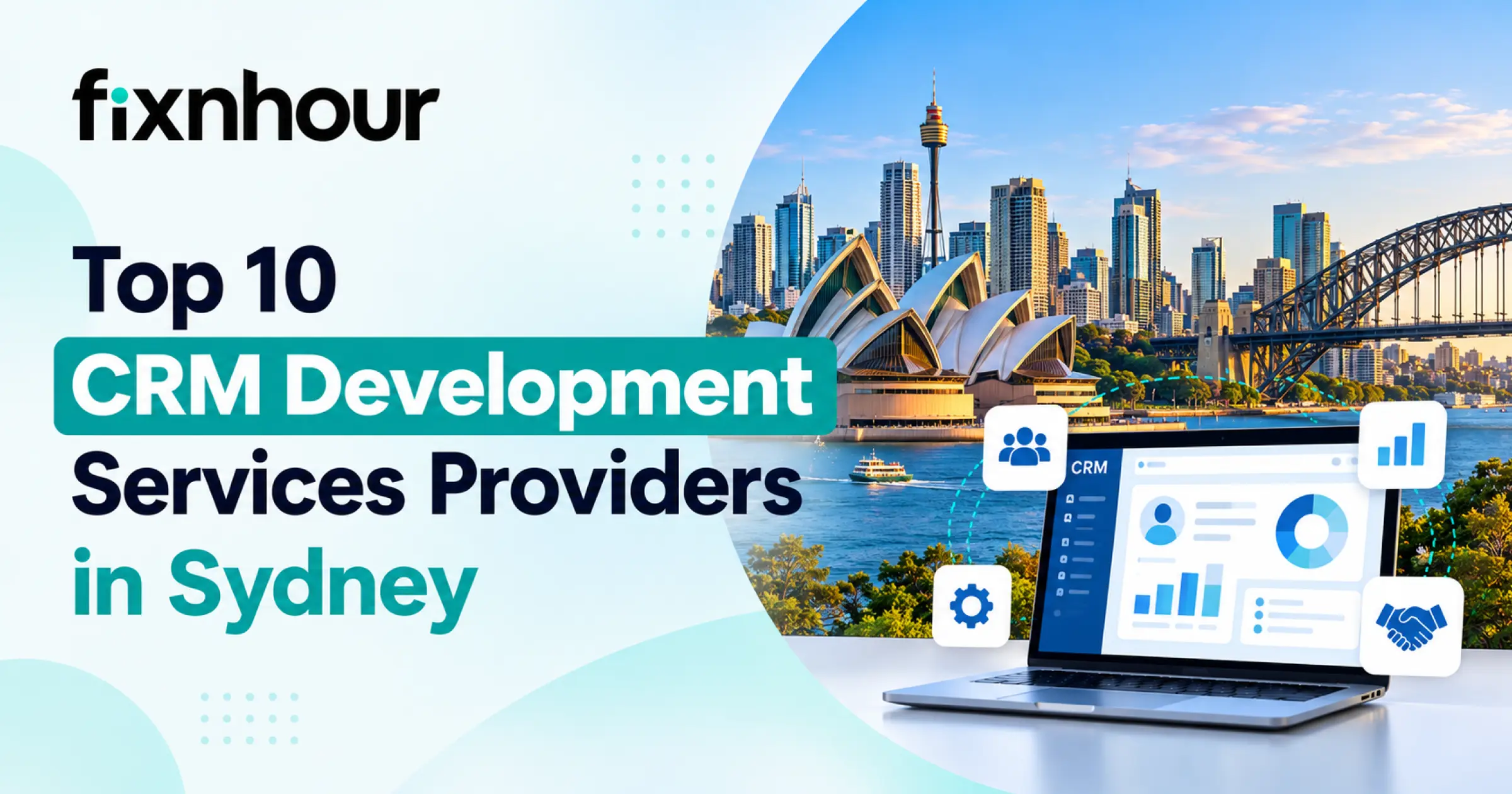
Choosing the right CRM development company in Sydney can help your business manage customer relationships, streamline sales processes, automate repetitive tasks, and make better decisions using customer data. The best provider depends on your requirements, whether you need custom CRM software, Salesforce implementation, Microsoft Dynamics 365 integration, or an existing CRM system tailored to your workflows.Some providers specialise in CRM consulting and enterprise platforms, while others focus on custom software development, integrations, and business process automation.
This guide explores 10 CRM development services providers serving businesses in Sydney, Australia, along with their capabilities, potential use cases, and selection criteria.The companies below are a practical shortlist, not a definitive ranking. They are selected for their publicly described CRM capabilities, relevant technology services, or Sydney presence. Businesses should verify current service availability, project experience, and commercial terms before making a final decision.
What Is CRM Development, and Why Does Your Business Need It?
CRM development involves designing, building, customising, integrating, and maintaining customer relationship management systems. A CRM platform centralises information about leads, customers, sales opportunities, communications, and support activities.For growing businesses, a well-designed CRM system can replace disconnected spreadsheets and manual processes with a more consistent way to manage customer relationships.
- Improve lead management: Capture enquiries, assign leads, and track sales opportunities.
- Automate sales processes: Reduce repetitive administrative work through automated workflows.
- Centralise customer data: Bring customer records and interactions into a unified system.
- Strengthen customer service: Give support teams access to relevant customer history.
Top 10 CRM Development Services Providers in Sydney
Choosing the right CRM development services provider in Sydney can help businesses improve customer relationships, streamline sales processes, and automate daily operations. Sydney offers access to technology companies specializing in custom CRM software, CRM integration, workflow automation, and enterprise solutions. This guide highlights 10 CRM development providers worth evaluating based on their service expertise and potential project suitability. Compare their technical capabilities, industry experience, client reviews, pricing, and ongoing support to find a reliable CRM development partner for your business needs.
|
No. |
Company |
Key Specialisation |
Best Suited For |
|---|---|---|---|
|
1 |
VT Digital |
Salesforce and enterprise CRM platforms |
Businesses seeking a Sydney-based technology partner |
|
2 |
Human Pixel |
Custom CRM architecture and system integration |
Businesses with complex workflows and manual processes |
|
3 |
ECLEVA |
Microsoft Dynamics 365 and Microsoft solutions |
Organisations using Microsoft business applications |
|
4 |
Cynoteck Technology Solutions |
Salesforce, Dynamics 365, and CRM consulting |
Businesses implementing or improving established CRM platforms |
|
5 |
Peeklogic |
Salesforce development and integration |
Companies requiring specialised Salesforce solutions |
|
6 |
CODECLOUDS |
Custom software and system integration |
Businesses connecting CRM with other applications |
|
7 |
SDLC Corp |
Enterprise platforms, Salesforce, and automation |
Businesses with complex technology requirements |
|
8 |
Computan |
CRM integration and web technology services |
Companies connecting customer platforms with websites and digital systems |
|
9 |
SotaTek |
Software development and digital transformation |
Organisations evaluating broader software engineering support |
|
10 |
Upzoids |
CRM consulting and low-code/no-code services |
Businesses exploring CRM configuration and workflow automation |
1. VT Digital
VT Digital is an Australian software development company with a Sydney presence. Its publicly described services include Salesforce consulting and enterprise CRM capabilities, alongside custom software, mobile applications, and other technology services.The company may suit organisations that need help connecting customer management systems with broader digital operations rather than treating CRM as a standalone application.
- Marketing Cloud and other Salesforce platform capabilities
- CRM and enterprise platform integration
- Custom software development
- Workflow automation and digital transformation
2. Human Pixel
Human Pixel is a Sydney-based technology company focused on business efficiency through software engineering, CRM architecture, API integration, and intelligent automation.Its services are relevant to businesses that have outgrown basic CRM configurations or rely on multiple disconnected systems to manage customers and operations.
- API development and middleware
- Business process automation
- AI-enabled workflow solutions
- Custom software engineering
3. ECLEVA
ECLEVA is listed among CRM consulting and systems integration providers serving Sydney. Its publicly described capabilities include Microsoft Dynamics 365 and custom application development.This makes the company worth considering for organisations that already rely on Microsoft's business technology ecosystem.
- Microsoft business application integration
- Custom application development
- Business workflow optimisation
- Ongoing technical support
4. Cynoteck Technology Solutions
Cynoteck Technology Solutions provides CRM consulting, implementation, and software development services. Its published capabilities include Salesforce, Microsoft Dynamics 365, and Microsoft Power Platform solutions.The company is an option for businesses that want to implement an established CRM platform instead of building an entire customer management system from scratch.
- CRM consulting and process assessment
- Business application integration
- Power Platform solutions
- CRM-related automation and analytics
5. Peeklogic
Peeklogic focuses on Salesforce consulting, implementation, custom development, integrations, and related services. Its published capabilities cover multiple Salesforce products and customisation requirements.This specialisation makes it relevant to businesses whose requirements extend beyond standard CRM configuration.
- Data migration
- Salesforce platform customisation
- AppExchange application development
- Automation and AI-related Salesforce solutions
6. CODECLOUDS
CODECLOUDS is a software development company offering custom software, web engineering, AI solutions, and related technology services. It also has a publicly listed Sydney office.Its broader engineering capabilities may be useful when CRM functionality needs to connect with a website, e-commerce platform, or other business application.
- API development
- Web application development
- Business workflow automation
- AI-enabled software solutions
7. SDLC Corp
SDLC Corp offers software engineering and enterprise technology services. Its published capabilities include Salesforce-related services, CRM automation, implementation, and broader custom software development.The company may be relevant to organisations with CRM requirements that intersect with other enterprise systems.
- Enterprise software development
- Custom application integration
- Digital transformation consulting
- AI-enabled business process automation
8. Computan
Computan offers web development, CRM consulting and systems integration, and related digital technology services. It is listed among providers serving the Sydney market.The company may be worth evaluating when CRM requirements involve website functionality, customer acquisition, or connections between marketing and business systems.
- Customer data integration
- Digital platform development
- Workflow and process improvements
- Support for connected business applications
9. SotaTek
SotaTek is a software development company offering engineering services across multiple technology areas. It appears in CRM consulting and software development directories covering the Sydney market.Businesses should confirm its current CRM-specific service scope and the team available for their project rather than assuming that every CRM platform or implementation service is covered.
- Business workflow automation
- Web and mobile application development
- Data management and reporting
- Digital transformation support
10. Upzoids
Upzoids is listed in CRM consulting directories covering the Sydney market, with services that include CRM consulting and low-code/no-code development.It may be worth considering for businesses investigating whether CRM configuration, workflow automation, or a low-code application can meet their requirements.
- Low-code/no-code application development
- Business process automation
- Application integration
- Workflow improvement
How Much Does CRM Development Cost in Sydney?
CRM development costs in Sydney vary depending on the selected platform, feature complexity, integration requirements, data migration, security needs, and ongoing support. The following figures are illustrative budgeting estimates in Australian dollars (AUD), not verified market quotations. Actual project costs may differ based on provider expertise, business requirements, and implementation scope. Request detailed proposals from shortlisted companies to establish a realistic budget and avoid unexpected expenses during development. For additional insights into enterprise technology providers, explore Top Enterprise AI Companies.
|
CRM Project Type |
Indicative Budget (AUD) |
Typical Scope |
|---|---|---|
|
Basic CRM configuration |
A$5,000–A$15,000 |
Basic pipeline, contacts, and simple workflows |
|
Standard CRM implementation |
A$15,000–A$40,000 |
Team setup, reporting, automation, and selected integrations |
|
Advanced CRM customisation |
A$40,000–A$100,000 |
Complex workflows, multiple integrations, and custom functionality |
|
Custom CRM software development |
A$50,000–A$150,000+ |
Bespoke customer management platform and business-specific features |
|
Enterprise CRM transformation |
A$150,000–A$300,000+ |
Complex migration, multiple systems, security requirements, and enterprise workflows |
How to Choose the Right CRM Development Company in Sydney
Selecting a CRM development company in Sydney requires more than comparing software features and prices. Businesses should evaluate technical expertise, industry experience, implementation methods, and long-term support. A suitable provider should understand your workflows, recommend the right solution, and deliver a system that improves productivity while supporting future business growth. Explore technology solutions and business services through Fixnhour.
Step 1: Define Your Business Requirements
Identify the main problems your CRM should solve before contacting potential providers. Clear requirements help developers recommend appropriate features, estimate costs accurately, and create a realistic implementation plan.
Step 2: Check Relevant Experience
Review each provider's experience with similar industries, business processes, CRM platforms, and integrations. Ask for relevant case studies and client references to understand their technical capabilities and project delivery experience.
Step 3: Review the Technical Approach
Evaluate how the provider plans to develop, integrate, test, and deploy your CRM. A detailed technical proposal should explain the architecture, security measures, project milestones, and data migration strategy before development begins.
Step 4: Understand Ownership and Support
Clarify ownership, maintenance responsibilities, and ongoing costs before signing a contract. These details help protect your business from unexpected expenses and excessive dependence on a single vendor.
Step 5: Compare Proposals Fairly
Request proposals from at least three suitable vendors and compare them against the same requirements.Evaluate the total cost, implementation timeline, relevant expertise, communication process, technical quality, and post-launch support.The lowest quotation is not always the most economical choice if it excludes essential integrations, testing, documentation, or maintenance.
What Are the Common CRM Development Mistakes to Avoid?
Businesses often focus on CRM features while overlooking the operational details that influence successful implementation and adoption. Factors such as employee training, data migration, workflow compatibility, system integration, and ongoing technical support can significantly affect results. Evaluating these elements early helps organizations avoid unnecessary costs, reduce implementation challenges, and ensure their CRM solution supports long-term business objectives, improves team productivity, and delivers a better customer experience.
- Choosing software before defining requirements: A popular CRM may not suit your workflows without substantial customisation.
- Ignoring user adoption: Employees need training and a clear understanding of how the system helps them.
- Migrating inaccurate data: Duplicated and incomplete records can undermine reporting from the beginning.
- Over-customising the platform: Excessive customisation can increase maintenance costs and complicate future upgrades.
Conclusion
The right CRM development partner can help your business improve lead management, connect disconnected systems, automate repetitive work, and build a more consistent customer experience.For Salesforce-focused projects, VT Digital, Cynoteck, and Peeklogic are worth evaluating. For custom CRM architecture and integrations, Human Pixel and CODECLOUDS may be relevant options. Businesses working with Microsoft Dynamics 365, enterprise systems, or low-code solutions should investigate providers whose expertise matches those requirements.
Before making a final decision, define your business goals, compare detailed proposals, verify relevant experience, and assess long-term ownership and support costs. The best CRM solution is not necessarily the one with the most features. It is the one your team can use consistently to serve customers better and achieve measurable business outcomes. Need help selecting the right CRM solution for your business? Talk to our experts.
Frequently Asked Questions
Q1. Which are the top CRM development services providers in Sydney?
Ans.VT Digital, Human Pixel, ECLEVA, Cynoteck Technology Solutions, Peeklogic, CODECLOUDS, SDLC Corp, Computan, SotaTek, and Upzoids are providers worth evaluating for different CRM-related requirements. Their capabilities vary, from Salesforce and Microsoft Dynamics 365 services to custom software development, integration, and automation. Some are Sydney-based, while others serve the market through broader operations. The best choice depends on your preferred CRM platform, project complexity, budget, and support requirements. Before selecting a company, verify its current services, relevant project examples, customer references, and delivery arrangements.
Q2. How much does CRM development cost in Sydney?
Ans.CRM development costs depend on whether you are configuring an existing platform, implementing a commercial CRM, or building custom software. As an initial planning guide, basic configuration may cost A$5,000–A$15,000, while standard implementations may fall around A$15,000–A$40,000. Advanced customisation can cost A$40,000–A$100,000, and bespoke or enterprise projects can exceed A$150,000. These are illustrative estimates rather than verified market averages. Licensing, hosting, data migration, integrations, training, and ongoing support may be charged separately. Request an itemised quotation based on your specific business requirements before committing to a budget.
Q3. Should I choose custom CRM software or an existing CRM platform?
Ans.Choose an existing platform when its standard features can support your business processes with manageable configuration and customisation. Salesforce and Microsoft Dynamics 365, for example, offer established CRM capabilities that may reduce the need to develop everything from scratch. Custom CRM software may be more suitable when your business relies on unique workflows, specialised data structures, or functionality that existing platforms cannot reasonably accommodate. However, custom development also introduces responsibility for maintenance, security, hosting, and future enhancements. Compare total ownership costs, flexibility, integration needs, and long-term support before deciding.
Q4. How long does CRM development take?
Ans.The timeline depends on project scope, platform complexity, data quality, and integration requirements. A basic CRM configuration may take a few weeks, while a standard implementation can take approximately one to three months. More complex CRM customisation or custom software projects may require several months or longer. Enterprise projects can take considerably more time because they involve multiple departments, data migration, testing, training, and change management. These are general planning estimates, not guaranteed delivery schedules. Ask potential providers to outline discovery, development, migration, testing, training, and deployment milestones so you can assess the proposed timeline realistically.
Q5. Which CRM platform is best for small businesses in Sydney?
Ans.The best CRM platform depends on your sales process, team size, budget, integration requirements, and expected growth. Small businesses with straightforward lead management needs may benefit from a simpler CRM with contact tracking, pipeline visibility, and basic automation. Companies already invested in Microsoft's ecosystem may evaluate Microsoft Dynamics 365, while businesses requiring extensive customisation or a broad application ecosystem may consider Salesforce. Other CRM platforms may also be appropriate depending on licensing and functionality. Compare ease of use, reporting, mobile access, integration options, data export, and support costs. A short requirements assessment can help you avoid paying for features your team does not need.
Q6. What services do CRM development companies provide?
Ans.CRM development companies may offer consulting, platform selection, implementation, customisation, bespoke software development, integration, data migration, workflow automation, reporting, training, and ongoing maintenance. Some specialise in particular platforms, such as Salesforce or Microsoft Dynamics 365, while others focus on connecting CRM systems with websites, accounting applications, ERP software, and customer support tools. Before hiring a provider, clarify whether your project requires configuration, custom development, or both. Ask for a written scope covering deliverables, testing, documentation, data protection, ownership, and support. A clear scope reduces misunderstandings and makes it easier to compare vendor proposals.
Q7. What should I check before hiring a CRM development company?
Ans.Evaluate the provider's relevant experience, technical capabilities, communication process, project management approach, security practices, and post-launch support. Ask for examples of comparable implementations and references you can contact. Review the proposed platform, integrations, migration plan, testing process, milestones, and total costs. Confirm who owns custom code, how customer data can be exported, and what happens if you change providers. It is also important to establish who will train employees and maintain the system after launch. Comparing at least three proposals against the same requirements can help you identify the provider offering the best overall fit rather than simply the lowest initial price.
Q8. Can a CRM development company integrate AI into my CRM?
Ans.Yes. Depending on the CRM platform and project scope, a development partner may integrate AI features for lead prioritisation, interaction summaries, customer support, workflow automation, and sales forecasting. AI may also help employees find information across approved business data sources. However, these features require careful planning around data quality, access permissions, accuracy, and privacy. Businesses should understand which data an AI service can access, whether information is sent to an external provider, and how AI-generated outputs are reviewed. Start with a clearly defined use case and measurable objective, then test the feature with representative data before expanding it across the organisation.