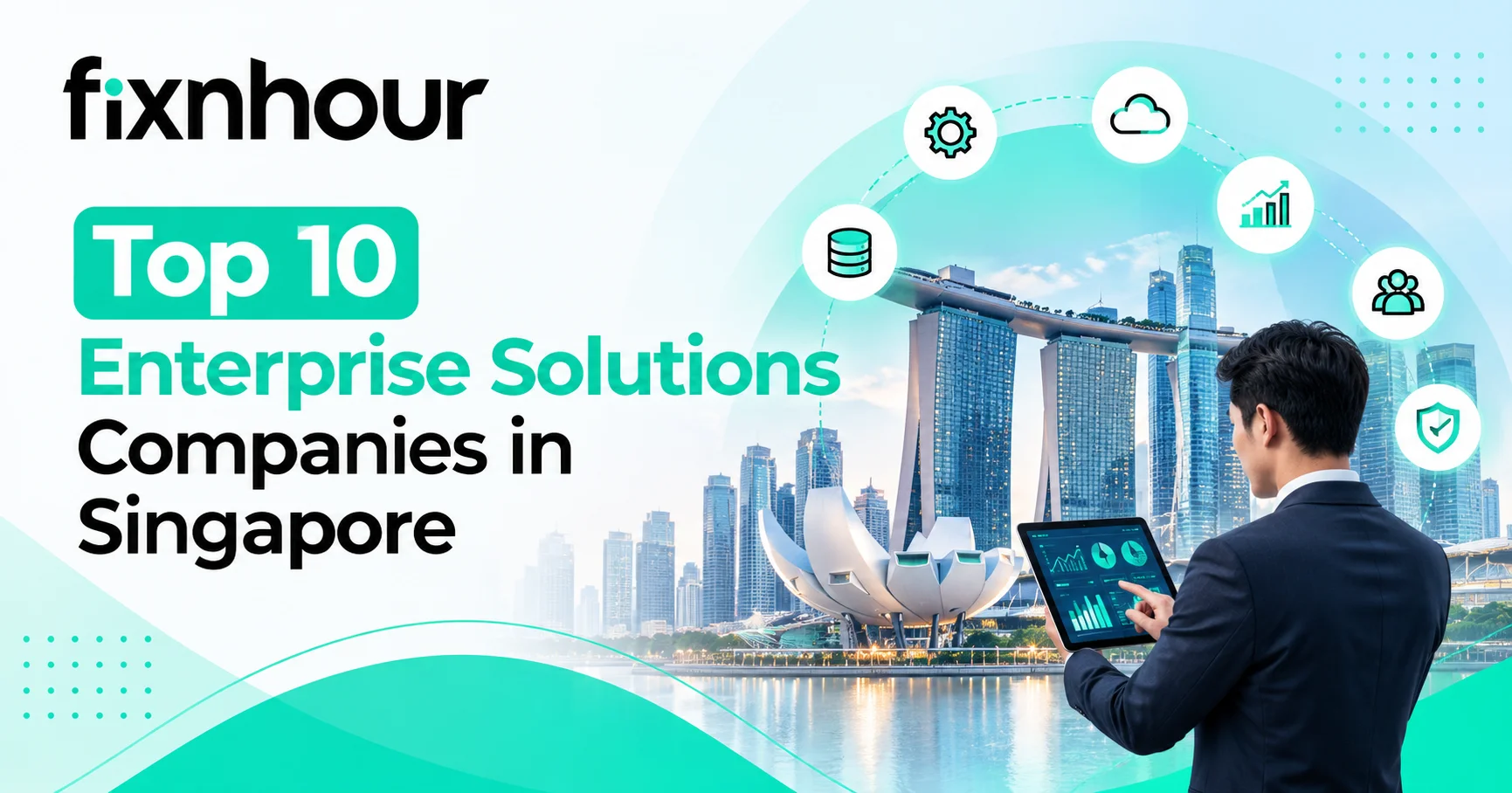
Singapore has become an important technology hub for businesses looking to modernize operations, improve customer experiences, and build scalable digital platforms. From enterprise software development and cloud computing to artificial intelligence, system integration, and business process automation, technology partners help organizations address complex operational challenges. Choosing the right enterprise solutions company in Singapore can help businesses streamline workflows, connect existing systems, strengthen data security, and support long-term growth.
However, every provider offers different capabilities, engagement models, and areas of expertise. Some specialize in custom software and digital products, while others focus on enterprise IT, application modernization, or business automation. This guide explores ten technology companies worth evaluating, including VLink, ROCKETECH, Orfeostory Pte Ltd, Slash, and SDLC Corp. It also covers their potential strengths, key selection criteria, and the benefits of choosing an experienced technology partner for enterprise projects.
Quick Answer
Businesses evaluating enterprise solutions companies in Singapore can consider VLink, ROCKETECH, Orfeostory Pte Ltd, Slash, SDLC Corp, Kyanon Digital, Techgropse, TechUP SG, Atta Systems, and MLTech Soft. These providers represent different technology service categories, including custom software development companies, digital product engineering, mobile applications, business automation, and IT solutions. The best choice depends on project complexity, industry requirements, integration needs, security expectations, budget, and ongoing support.
Key Takeaways
- Custom enterprise software: Look for providers capable of building applications around your operational requirements.
- Digital transformation: Evaluate expertise in modernizing workflows, applications, and business systems.
- Integration capabilities: Prioritize solutions that connect existing software, databases, and third-party platforms.
- Security and scalability: Assess access controls, testing practices, infrastructure, and future growth requirements.
- Long-term value: Compare communication, documentation, maintenance, delivery processes, and total ownership costs.
Top 10 Enterprise Solutions Companies in Singapore
When evaluating providers for complex business needs, comparing their expertise, service offerings, and industry experience is essential. Exploring this guide to Enterprise Solutions Companies in India can help businesses discover potential technology partners and understand the solutions available in the market. This comparison introduces ten companies to consider, but businesses should verify each provider’s capabilities, services, and suitability before making a final procurement decision.
|
Rank |
Company |
Main Area to Evaluate |
Potential Project Fit |
|---|---|---|---|
|
1 |
VLink |
Enterprise software, AI, and digital engineering |
Enterprise modernization |
|
2 |
ROCKETECH |
Web, mobile, and digital product development |
Custom business platforms |
|
3 |
Orfeostory Pte Ltd |
Websites, applications, and managed IT |
Business digitization |
|
4 |
Slash |
Confirm the exact provider and service portfolio |
Specialized technology projects |
|
5 |
SDLC Corp |
Custom software, AI, cloud, and enterprise applications |
Complex software projects |
|
6 |
Kyanon Digital |
Digital products and transformation |
Customer and business platforms |
|
7 |
Techgropse |
Mobile applications, software, and AI |
Application development |
|
8 |
TechUP SG |
Web, mobile, and business automation |
SME and enterprise digitization |
|
9 |
Atta Systems |
Custom digital products and software engineering |
Product development |
|
10 |
MLTech Soft |
Verify current enterprise service offerings |
Requirements-led software projects |
1. VLink
VLink is a technology services provider offering software engineering and digital transformation capabilities. Its published service portfolio includes AI, machine learning, generative AI, cloud computing, and enterprise mobile application development. These capabilities make it a candidate for organizations assessing technology modernization, digital product development, and application engineering. Businesses should confirm the appropriate delivery team, regional coverage, and engagement arrangements for projects in Singapore.
Key Capabilities to Evaluate
- Enterprise application development: Explore custom applications that support business processes, internal teams, and customer interactions.
- AI and automation: Assess whether AI-powered workflows can reduce repetitive tasks or improve decision-making.
- Cloud and modernization: Discuss infrastructure requirements, application performance, and migration strategies.
- Delivery and support: Confirm project ownership, communication practices, security requirements, and post-launch maintenance.
2. ROCKETECH
ROCKETECH is a software development company with a Singapore presence. Its published profile describes experience in web and mobile development, business analytics, and product scaling, serving startups and enterprises. The company also references sectors such as e-commerce, education technology, customer relationship management, enterprise resource planning, and the Internet of Things. This makes it worth considering for businesses developing digital products or expanding existing software platforms.
Key Capabilities to Evaluate
- Web and mobile platforms: Discuss the functional requirements of customer-facing and internal applications.
- Product engineering: Evaluate how the team handles discovery, prototyping, development, and iterative improvements.
- Business analytics: Identify opportunities to use operational data to improve product and business decisions.
- Scaling support: Confirm how architecture, testing, and infrastructure will accommodate growing users and workloads.
3. Orfeostory Pte Ltd
Orfeostory Pte Ltd is a Singapore-based digital services provider associated with website development, e-commerce, mobile applications, and broader IT services. Its offering is relevant to businesses that want to establish or improve digital touchpoints while considering maintenance and integration requirements. Companies evaluating it should distinguish between standard website projects and larger enterprise initiatives requiring complex integrations, governance, or specialized infrastructure.
Key Capabilities to Evaluate
- Website and e-commerce development: Review content management, product catalogues, payments, and customer account requirements.
- Mobile applications: Discuss native or cross-platform approaches based on user needs and budget.
- IT infrastructure: Ask about managed IT, cloud services, backup, and disaster recovery where relevant.
- Ongoing maintenance: Clarify update schedules, monitoring, response times, and responsibility for security patches.
4. Slash
Slash needs additional verification before it can be confidently described as a particular enterprise solutions company. Businesses should identify the correct legal entity and official website, then assess whether its services match their technical and operational needs. This is particularly important when several businesses use similar names or when a directory listing does not clearly establish enterprise software expertise.
Key Capabilities to Evaluate
- Company identity: Verify the official business name, registered details, website, and Singapore operating presence.
- Service portfolio: Confirm whether it provides enterprise software, consulting, integration, or another specialized service.
- Relevant experience: Request comparable projects and references from organizations with similar requirements.
- Commercial clarity: Review pricing, delivery responsibilities, contractual terms, and ongoing support commitments.
5. SDLC Corp
SDLC Corp describes its services around software engineering, AI, automation, cloud systems, cybersecurity, and digital platforms. Its published company profile also references enterprise-related capabilities such as ERP, CRM, SaaS, and application development. These offerings can be relevant to businesses looking for custom software or modernization support. Before engagement, confirm the proposed team's experience with Singapore-specific operational, security, and regulatory requirements.
Key Capabilities to Evaluate
- Custom software: Identify processes that need purpose-built applications rather than generic software.
- Enterprise integrations: Explore connections between ERP, CRM, finance, inventory, and other business systems.
- AI and automation: Assess realistic opportunities to improve workflows and reduce manual administration.
- Security and quality assurance: Request details about testing, access controls, documentation, and deployment procedures.
6. Kyanon Digital
Kyanon Digital is included in this shortlist as a candidate to assess for digital product engineering and transformation work. Businesses should investigate its current services, delivery locations, industry experience, and ability to support enterprise-grade platforms. A suitable digital partner should connect technology decisions with measurable business objectives rather than focusing only on application features or visual design.
Key Capabilities to Evaluate
- Digital product strategy: Define user needs, business outcomes, and measurable success criteria before development begins.
- Application engineering: Review experience building maintainable applications and integrating them with existing systems.
- Customer experience: Evaluate usability, accessibility, and consistency across web and mobile touchpoints.
- Delivery governance: Confirm milestone planning, stakeholder communication, testing, and change management.
7. Techgropse
Techgropse has a Singapore-facing software development presence and promotes mobile application development, custom software engineering, AI development, testing, and maintenance. Its service profile makes it relevant for businesses planning mobile-first services, digital workflows, or connected applications. For enterprise projects, buyers should confirm how security testing, data protection, integrations, and post-launch service levels will be handled.
Key Capabilities to Evaluate
- Mobile application development: Compare native and cross-platform approaches for employees, customers, or field teams.
- Custom software engineering: Define the backend services, APIs, databases, and integrations the application requires.
- AI-enabled features: Determine whether intelligent automation solves a specific, measurable business problem.
- Quality and maintenance: Establish acceptance criteria, release procedures, security testing, and support expectations.
8. TechUP SG
TechUP presents itself as a Singapore-based digital solutions company and outsourced technology partner. Its published offerings include website development, web and mobile applications, lead generation systems, and business automation. The company describes serving startups, small and medium-sized businesses, and larger organizations. Buyers should confirm the depth of its experience with complex enterprise integrations and the support arrangements available for mission-critical applications.
Key Capabilities to Evaluate
- Business automation: Identify repetitive administrative activities that could be streamlined with software.
- Web and mobile solutions: Assess whether the proposed platform supports business-specific workflows and user needs.
- Outsourced technology support: Clarify team availability, project ownership, and communication arrangements.
- Growth readiness: Check performance, security, integration, and maintenance plans before scaling the solution.
9. Atta Systems
Atta Systems is another provider to investigate for custom software and digital product development. When evaluating this company for enterprise work, focus on the complexity of its completed projects, its engineering approach, and its ability to support applications beyond initial launch. Confirm its current Singapore availability, enterprise service portfolio, and experience with integrations before including it in a final procurement decision.
Key Capabilities to Evaluate
- Product discovery: Check whether business goals, user needs, and technical constraints are documented before development.
- Custom engineering: Request examples of applications with comparable functionality and integration requirements.
- Usability and testing: Review design validation, quality assurance, performance, and accessibility practices.
- Long-term ownership: Establish how source code, documentation, maintenance, and future enhancements will be managed.
10. MLTech Soft
MLTech Soft completes this list of companies to investigate for enterprise technology requirements. Before deciding whether it fits a project, businesses should verify the provider's official identity, current service offerings, team expertise, and presence in Singapore. Clear evidence of relevant delivery experience is especially important for enterprise systems that involve sensitive information, multiple departments, or critical operational workflows.
Key Capabilities to Evaluate
- Requirements alignment: Confirm that the company can address the project's specific business and technical needs.
- Engineering expertise: Review its technology stack, architecture approach, testing methods, and development process.
- Integration planning: Discuss compatibility with existing systems, data migration, and third-party platforms.
- Support and accountability: Agree on delivery milestones, documentation, warranties, and post-launch responsibilities.
Benefits of Hiring an Enterprise Solutions Company in Singapore
Enterprise technology partners help organizations turn business challenges into practical digital solutions. The right provider can improve efficiency, connect systems, strengthen security, and support growth. Businesses exploring AI-driven innovation can also learn from these Enterprise AI Companies for Smarter Business Transformation to understand how artificial intelligence can streamline operations, improve decision-making, and create long-term business value.
Four Major Business Benefits
- Greater operational efficiency: Automation can reduce repetitive work, minimize manual errors, and improve coordination between departments.
- Scalable business systems: Well-designed software can accommodate additional users, transactions, locations, and new operational requirements.
- Improved data visibility: Integrated applications help teams access consistent information and make better-informed decisions.
- Stronger technology management: Appropriate security controls, maintenance plans, and monitoring can improve reliability and reduce operational risks.
How to Choose the Best Enterprise Solutions Company in Singapore
Selecting an enterprise technology provider involves more than comparing services or hourly rates. Businesses should assess each company’s understanding of workflows, technical needs, compliance, and long-term goals. Platforms like Fixnhour can help businesses discover technology providers, compare service offerings, and evaluate their suitability. A structured selection process helps decision-makers identify reliable partners, set realistic expectations, and reduce the risk of costly implementation challenges while supporting sustainable business growth.
Essential Evaluation Criteria
- Relevant experience: Request case studies and references for projects similar in size, complexity, and industry.
- Technical capabilities: Assess expertise in cloud platforms, enterprise applications, APIs, AI, cybersecurity, and system integration where applicable.
- Project transparency: Confirm deliverables, milestones, communication channels, ownership, and acceptance criteria.
- Total cost of ownership: Consider development, licensing, infrastructure, training, maintenance, upgrades, and future enhancements.
Conclusion
Choosing among the top enterprise solutions companies in Singapore starts with understanding your business priorities. VLink, ROCKETECH, Orfeostory, SDLC Corp, Techgropse, and other providers offer different capabilities depending on your project requirements. Compare their industry experience, integration expertise, security practices, communication, and long-term support before making a decision.
If you need help evaluating suitable vendors, Talk to our experts to explore solutions aligned with your business goals. Request detailed proposals and realistic timelines from shortlisted companies. The right enterprise technology partner should improve operations, support business growth, and deliver measurable outcomes over time.
Frequently Asked Questions
Q1. Which are the top enterprise solutions companies in Singapore?
Ans. Companies to investigate include VLink, ROCKETECH, Orfeostory Pte Ltd, Slash, SDLC Corp, Kyanon Digital, Techgropse, TechUP SG, Atta Systems, and MLTech Soft. Each requires evaluation against your project requirements. Compare verified service portfolios, relevant case studies, Singapore availability, technical expertise, pricing, and support arrangements before selecting a provider. This shortlist is a starting point, not an independently verified ranking.
Q2. What services do enterprise solutions companies provide?
Ans. Enterprise solutions companies may provide custom software development, cloud computing, enterprise application integration, AI implementation, cybersecurity, ERP, CRM, and business process automation. Some specialize in digital products, while others focus on infrastructure or consulting. The exact services vary by provider. Businesses should identify their operational challenges first and then choose a company whose capabilities directly address those needs.
Q3. How much do enterprise software solutions cost in Singapore?
Ans. Enterprise software development costs depend on functionality, integrations, security requirements, infrastructure, team size, and delivery timelines. A relatively simple internal application typically requires less investment than a complex platform connecting multiple enterprise systems. Additional expenses may include licensing, cloud hosting, testing, training, and maintenance. Request an itemized proposal with clear deliverables, milestones, assumptions, and ongoing costs before approving a budget.
Q4. How do I choose an enterprise software development company?
Ans. Start by documenting business objectives, user requirements, existing systems, and expected outcomes. Shortlist companies with relevant technical experience and request case studies or references. Evaluate architecture, security, testing, communication, project management, and post-launch support. Compare proposals on total cost and expected value rather than price alone. A clear contract should establish responsibilities, delivery milestones, intellectual property ownership, and acceptance criteria.
Q5. Which companies offer enterprise cloud and AI solutions in Singapore?
Ans. VLink and SDLC Corp publicly describe capabilities involving AI, cloud technologies, and software engineering. Other providers may offer relevant services depending on their current portfolios. Businesses should verify specific expertise in cloud migration, AI integration, data governance, and production deployment. Ask prospective vendors how they protect enterprise information, measure results, manage infrastructure costs, and maintain solutions after implementation.
Q6. What industries benefit from enterprise technology solutions?
Ans. Industries such as financial services, healthcare, retail, logistics, manufacturing, education, and professional services can benefit from enterprise technology. Applications may support inventory management, customer relationships, employee workflows, reporting, compliance, and supply-chain coordination. The most suitable solution depends on industry regulations, existing infrastructure, and business objectives. Organizations should prioritize use cases with measurable operational or customer-service improvements.
Q7. What is the difference between enterprise software development and IT consulting?
Ans. Enterprise software development focuses on designing, building, testing, and maintaining applications tailored to business requirements. IT consulting generally helps organizations assess technology needs, plan strategies, select platforms, and improve their IT operations. Some providers offer both services, combining strategic guidance with implementation. Businesses should clarify whether they need advice, a complete software solution, or ongoing technical support before choosing a partner.
Q8. How long does enterprise software implementation take?
Ans. Implementation timelines depend on project complexity, integrations, data migration, security requirements, and stakeholder availability. A limited application may take weeks or months, while a large enterprise transformation can require considerably longer. Discovery, testing, training, and change management also affect schedules. Ask vendors for a phased delivery plan with dependencies, milestones, testing periods, and contingency allowances rather than relying on a generic timeline.