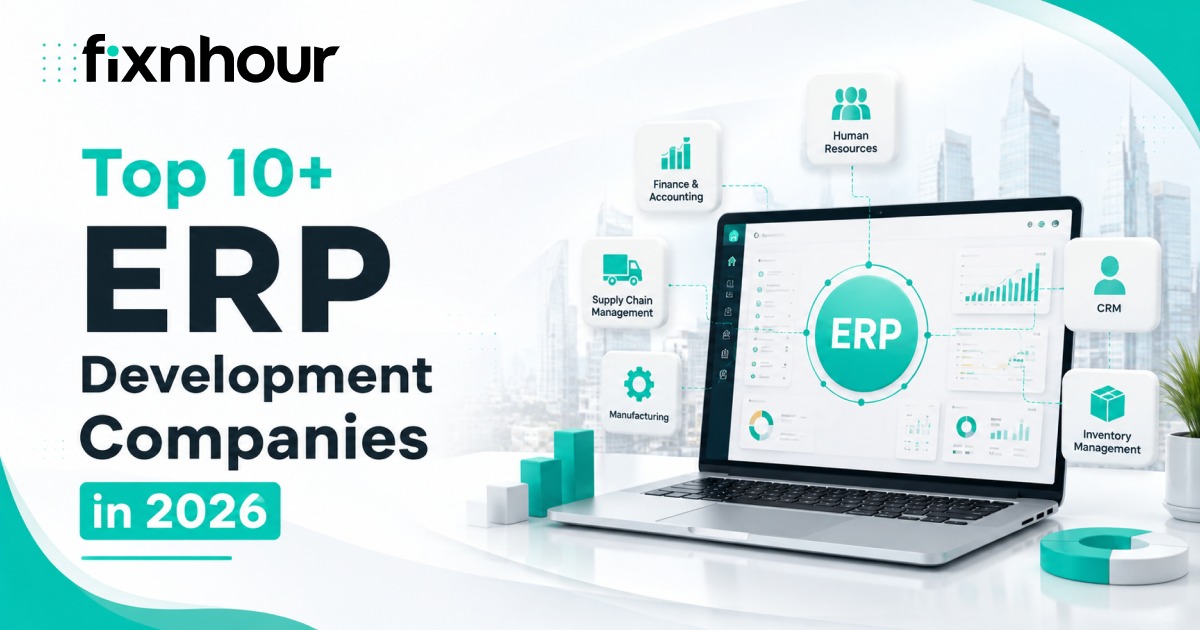
Enterprise Resource Planning (ERP) software has become the backbone of modern businesses. Whether you're managing finance, inventory, manufacturing, sales, HR, or customer relationships, a well-designed ERP system centralizes operations, improves efficiency, and provides real-time business insights.
However, selecting the right ERP development company can be challenging. Hundreds of software firms offer ERP services, but only a few possess the technical expertise, industry knowledge, and long-term support capabilities required for successful enterprise implementations.
In this guide, we've compiled the Top 10+ ERP Development Companies in 2026 based on technical expertise, innovation, client satisfaction, industry experience, global presence, and ERP implementation capabilities. Whether you need a custom ERP solution, cloud-based ERP platform, or enterprise software modernization, this list will help you choose the right technology partner.
What is ERP Development?
ERP (Enterprise Resource Planning) development is the process of designing, developing, implementing, and maintaining software that integrates multiple business functions into a single centralized platform.
Unlike standalone applications, ERP software integrates across departments, enabling organizations to streamline operations, improve collaboration, automate workflows, and make informed decisions using real-time data.
- Finance & Accounting
- Human Resources
- Inventory Management
- Procurement
- Manufacturing
Why Businesses Invest in ERP Software Development
Today's organizations require more than spreadsheets and disconnected software. They need intelligent software development solutions and platforms that support growth while providing complete visibility across departments.
- Automate repetitive business processes
- Improve team collaboration
- Reduce operational costs
- Increase productivity
- Centralize business data
- Improve inventory accuracy
- Enhance customer service
- Generate real-time reports
- Support business scalability
- Enable data-driven decision-making
Quick Comparison of the Top ERP Development Companies in 2026
| Company | Headquarters | Founded | Core ERP Expertise |
|---|---|---|---|
| Microsoft | USA | 1975 | Dynamics 365 ERP |
| SAP | Germany | 1972 | Enterprise ERP |
| Oracle | USA | 1977 | Oracle Fusion Cloud ERP |
| IBM | USA | 1911 | Enterprise Digital Transformation |
| Coherent Lab | India | — | Custom ERP Development |
| Accenture | Ireland | 1989 | Enterprise ERP Consulting |
| Infosys | India | 1981 | SAP & Oracle ERP |
| Tata Consultancy Services | India | 1968 | Enterprise ERP Solutions |
| Capgemini | France | 1967 | ERP Consulting |
| Cognizant | USA | 1994 | Cloud ERP Services |
| Deloitte | UK | 1845 | ERP Consulting & Implementation |
1. Microsoft
Microsoft is a global technology leader offering Microsoft Dynamics 365 ERP, an intelligent cloud-based platform that helps organizations streamline finance, operations, supply chains, and customer management. Its ERP ecosystem integrates seamlessly with Microsoft 365, Azure, and Power Platform, enabling businesses to improve productivity, automate workflows, and make data-driven decisions. Many enterprises also combine ERP deployments with Software Testing to ensure secure, reliable, and high-performing business applications.
Core Services
- Microsoft Dynamics 365 ERP
- Finance & Operations
- Supply Chain Management
- Business Intelligence with Power BI
- Cloud ERP Migration
2. SAP
SAP is one of the world's most recognized ERP providers, delivering enterprise software that helps organizations manage finance, procurement, manufacturing, human resources, and supply chain operations. Its SAP S/4HANA platform enables real-time analytics, automation, and intelligent business processes. SAP solutions are trusted by global enterprises seeking scalable digital transformation while improving operational efficiency and long-term business growth across multiple industries.
Core Services
- SAP S/4HANA
- ERP Consulting
- Digital Supply Chain
- Financial Management
- Enterprise Resource Planning
3. Oracle
Oracle provides advanced cloud ERP solutions through Oracle Fusion Cloud ERP, helping organizations automate financial management, procurement, project planning, risk management, and enterprise performance. Its AI-powered platform offers real-time insights, enhanced security, and seamless scalability for growing businesses. Oracle ERP enables enterprises to modernize operations while supporting innovation, compliance, and smarter decision-making across global business environments.
Core Services
- Oracle Fusion Cloud ERP
- Financial Management
- Procurement Solutions
- Project Portfolio Management
- Cloud Business Applications
4. IBM
IBM delivers enterprise ERP consulting and digital transformation solutions by combining AI, cloud computing, automation, and analytics. The company helps organizations modernize legacy ERP systems, optimize workflows, and improve operational efficiency through advanced technologies. IBM also supports complex enterprise integrations, cybersecurity, and hybrid cloud strategies, enabling businesses to accelerate innovation while maintaining secure and scalable ERP environments.
Core Services
- ERP Modernization
- Digital Transformation
- AI Integration
- Hybrid Cloud Solutions
- Enterprise Consulting
5. Coherent Lab
Coherent Lab is a leading custom software development company specializing in tailored ERP development solutions for startups, SMEs, and enterprises. The company builds scalable ERP platforms that streamline finance, inventory, HR, CRM, and business operations. Its experienced development team also offers Microsoft SharePoint Development services to help organizations improve collaboration, document management, and enterprise productivity through integrated digital workplace solutions.
Core Services
- Custom ERP Development
- ERP Integration
- CRM Development
- Cloud ERP Solutions
- Business Process Automation
6. Accenture
Accenture is a global consulting and technology company delivering enterprise ERP implementation, cloud migration, and digital transformation services. Working with leading ERP platforms such as SAP, Oracle, and Microsoft Dynamics, Accenture helps businesses optimize operations, automate processes, and improve organizational performance through intelligent technologies, data analytics, and industry-specific consulting expertise.
Core Services
- ERP Consulting
- SAP Implementation
- Oracle ERP Services
- Cloud Migration
- Business Transformation
7. Infosys
Infosys provides enterprise ERP consulting and implementation services that help organizations modernize business operations through SAP, Oracle, and cloud-based ERP platforms. The company focuses on automation, digital transformation, AI integration, and process optimization to improve operational efficiency, scalability, and customer experience across manufacturing, healthcare, banking, retail, and other industries.
Core Services
- SAP ERP Services
- Oracle ERP Solutions
- Cloud Transformation
- Enterprise Automation
- Business Consulting
8. Tata Consultancy Services (TCS)
Tata Consultancy Services (TCS) is a global IT services company delivering enterprise ERP implementation, consulting, and modernization solutions. The company helps organizations improve financial management, supply chain efficiency, manufacturing processes, and customer engagement using advanced ERP technologies, cloud platforms, and intelligent automation for sustainable business growth.
Core Services
- Enterprise ERP Solutions
- SAP Consulting
- Oracle Services
- Digital Transformation
- Cloud ERP Migration
9. Capgemini
Capgemini offers comprehensive ERP consulting and implementation services that enable organizations to optimize business operations through cloud technologies, automation, and intelligent analytics. Its ERP specialists help enterprises implement SAP, Oracle, and Microsoft ERP platforms while improving operational efficiency, reducing costs, and accelerating digital transformation initiatives.
Core Services
- ERP Consulting
- SAP Services
- Oracle Solutions
- Cloud ERP
- Business Process Optimization
10. Cognizant
Cognizant delivers cloud ERP services that help enterprises modernize legacy systems, automate workflows, and improve operational performance. The company provides consulting, implementation, migration, and managed ERP services across industries including healthcare, banking, retail, manufacturing, and logistics. Its digital-first approach supports scalable and secure enterprise transformation.
Core Services
- Cloud ERP Services
- ERP Implementation
- Digital Operations
- Business Automation
- Enterprise Consulting
11. Deloitte
Deloitte is a leading global consulting firm providing ERP strategy, implementation, modernization, and managed services for enterprises worldwide. The company works with SAP, Oracle, Microsoft, and other leading ERP platforms to improve business performance, streamline operations, strengthen compliance, and support long-term digital transformation through industry-focused consulting expertise.
Core Services
- ERP Consulting
- ERP Implementation
- Digital Strategy
- Business Transformation
- Managed ERP Services
Key Features of Modern ERP Software
Modern businesses need more than basic record management. Today's ERP software solutions integrate artificial intelligence, automation, cloud computing, and real-time analytics to improve productivity and business performance. The best ERP development companies build scalable platforms that centralize operations while supporting future growth.
Finance & Accounting Management
A powerful ERP system simplifies financial management by automating accounting processes and providing complete visibility into business finances. It helps organizations maintain compliance, generate accurate reports, and make informed financial decisions.
Key Capabilities
- General Ledger Management
- Accounts Payable & Receivable
- Budget Planning
- Tax Management
- Financial Reporting
- Cash Flow Monitoring
Human Resource Management (HRM)
Modern ERP software streamlines HR operations from recruitment to payroll. Businesses can manage employees, monitor attendance, evaluate performance, and improve workforce productivity using a centralized HR module.
Key Capabilities
- Employee Records
- Payroll Processing
- Attendance Tracking
- Leave Management
- Performance Reviews
- Recruitment Management
Inventory & Warehouse Management
Inventory management is one of the most valuable ERP modules, enabling businesses to monitor stock levels, reduce waste, and improve warehouse efficiency through real-time tracking.
Key Capabilities
- Inventory Tracking
- Warehouse Management
- Barcode & QR Code Support
- Stock Forecasting
- Purchase Orders
Conclusion
Selecting the right ERP development company is a strategic decision that can significantly improve your organization's efficiency, scalability, and long-term growth. Whether you need a fully customized ERP platform, cloud ERP implementation, or enterprise software modernization, partnering with an experienced ERP development team ensures your investment delivers measurable business value.
The companies featured in this guide are among the leading ERP software development companies in 2026, known for delivering innovative, secure, and scalable enterprise solutions. Evaluate your business objectives, budget, industry requirements, and future growth plans before making your final decision.
Contact us today to discuss your ERP project and discover how we can help your business grow with secure, future-ready ERP software that drives long-term success.
Frequently Asked Questions (FAQs)
1. What is ERP software development?
ERP software development is the process of designing, building, customizing, and implementing an Enterprise Resource Planning system that integrates core business functions such as finance, inventory, HR, procurement, sales, and customer management into one centralized platform. A custom ERP solution improves operational efficiency, automates repetitive tasks, provides real-time insights, and helps organizations make informed decisions while supporting long-term business growth.
2. How much does ERP software development cost?
The cost of ERP software development depends on factors such as business size, required modules, custom features, integrations, deployment model, and project complexity. Small business ERP solutions generally start around $15,000, while enterprise-grade systems with advanced automation, AI capabilities, and cloud infrastructure can exceed $500,000. Working with an experienced ERP development company helps optimize costs while delivering a scalable solution.
3. How long does it take to develop an ERP system?
ERP development timelines vary based on project scope, customization requirements, and implementation complexity. A basic ERP solution may take 3–6 months, while a fully customized enterprise ERP platform with multiple integrations, advanced modules, and extensive testing can require 9–18 months. Proper planning, agile development, and continuous collaboration help ensure timely project delivery.
4. Which industries benefit the most from ERP software?
ERP software is valuable across industries, including manufacturing, retail, healthcare, logistics, construction, education, finance, hospitality, real estate, and government. Every organization that manages multiple departments, large datasets, inventory, employees, or financial operations can benefit from a centralized ERP system that improves collaboration, increases efficiency, and supports informed business decisions.
5. What is the difference between ERP and CRM?
ERP focuses on managing internal business operations such as finance, inventory, procurement, manufacturing, and HR, while CRM (Customer Relationship Management) focuses on customer interactions, sales, marketing, and customer support. Many modern ERP solutions include CRM functionality, allowing businesses to manage internal operations and customer relationships through a single integrated platform.
6. Is cloud ERP better than on-premise ERP?
Cloud ERP offers flexibility, remote accessibility, automatic updates, lower infrastructure costs, and easy scalability, making it ideal for growing businesses. On-premise ERP provides greater control over infrastructure and data, making it suitable for organizations with strict compliance or security requirements. The best choice depends on your business objectives, budget, and IT strategy.
7. How do I choose the best ERP development company?
When selecting an ERP development company, evaluate its industry experience, technical expertise, client portfolio, customization capabilities, implementation methodology, post-launch support, and pricing transparency. A reliable partner should understand your business processes, provide scalable solutions, and offer ongoing maintenance to ensure your ERP system continues to deliver value as your business grows.
8. Why should businesses invest in custom ERP development?
Custom ERP development allows businesses to build software tailored to their specific workflows, processes, and operational requirements instead of relying on generic solutions. A custom ERP system improves efficiency, supports future growth, integrates seamlessly with existing software, enhances security, and provides the flexibility needed to adapt to changing business demands, making it a valuable long-term investment.