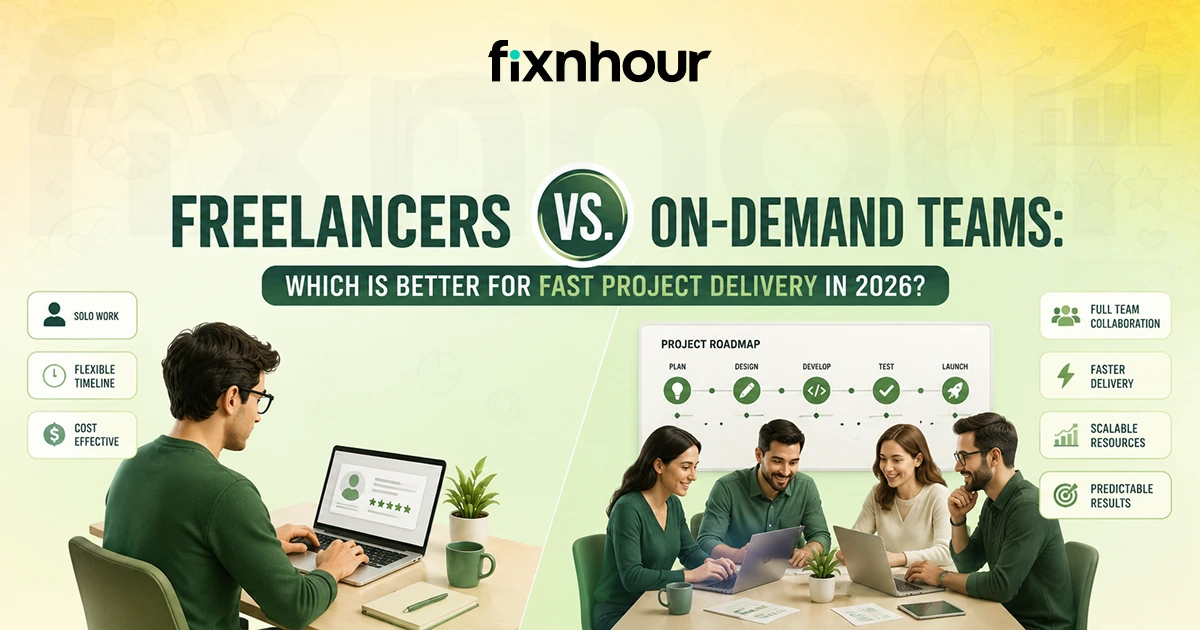
In 2026, businesses are under constant pressure to deliver digital products and services faster than ever. Whether it’s launching a mobile app, building a website, or scaling a SaaS platform, choosing the right execution model can significantly impact speed and quality. Two popular approaches stand out—freelancers and on-demand teams. Freelancers offer flexibility, niche expertise, and cost efficiency, making them ideal for small or well-defined tasks. On the other hand, on-demand teams bring together coordinated professionals who can handle complex projects with structured workflows and faster scalability. As project demands grow more dynamic, the decision between these two models is no longer simple. This article explores freelancers vs on-demand teams in detail to help you decide which option is better for fast project delivery in 2026.
What Is a Freelancer?
A freelancer is an independent professional who works on projects for multiple clients without being permanently employed by one company. Freelancers are commonly hired for development, design, marketing, content writing, and software-related tasks.
- Short-term projects
- Specialized tasks
- Budget-friendly solutions
- One-time development work
Benefits of Hiring Freelancers
Freelancers offer flexibility, lower costs, specialized skills, quick hiring, and efficient support for short-term projects.
Cost-Effective Hiring
Fixnhour Freelancers are generally more affordable than hiring a full-time team or agency. Businesses only pay for the work completed.
Faster Hiring Process
You can hire a freelancer within hours or days instead of going through lengthy recruitment processes.
Flexibility
- Hourly contracts
- Fixed-price projects
- Part-time assignments
- Remote collaborations
Access to Global Talent
Companies can hire experts from anywhere in the world based on skills and budget.
Challenges of Working with Freelancers
Although freelancers offer flexibility, there are some limitations businesses should consider. Freelancers may face availability issues, communication gaps, inconsistent quality, limited scalability, and lack of long-term project support.
Limited Scalability
A single freelancer may struggle with large or complex projects.
Communication Gaps
Different time zones and inconsistent availability can slow project progress.
Lack of Project Management
Freelancers usually work independently, meaning businesses must manage workflows themselves.
Quality Risks
Not every freelancer provides consistent quality, testing, or long-term support.
What Are On-Demand Teams?
On-demand teams are pre-assembled groups of professionals who work together to deliver projects quickly and efficiently. They include experts from different fields such as design, development, and marketing. These teams provide structured workflows, faster scaling, and better coordination than individual freelancers. Businesses use them for complex or time-sensitive projects that require reliable, end-to-end execution and consistent quality delivery.
- Developers
- UI/UX designers
- QA engineers
- DevOps specialists
- Project managers
Benefits of On-Demand Teams
On-demand teams provide faster delivery, coordinated workflows, scalability, dedicated support, and reliable expertise for complex business projects.
Faster Project Delivery
Different team members work simultaneously on development, design, testing, and deployment.
Better Collaboration
Team members already follow established workflows and communication systems.
Scalability
Businesses can quickly scale resources up or down depending on project requirements.
Dedicated Project Management
- Sprint planning
- Task management
- Progress tracking
- Client communication
High-Quality Development
- Agile methodologies
- Code review processes
- QA testing standards
- Security practices
Challenges of On-Demand Teams
On-demand teams may involve higher costs, less flexibility, onboarding time, and dependency on external project management processes.
Higher Initial Investment
Compared to freelancers, on-demand teams may require a bigger upfront budget.
Vendor Selection Matters
Choosing the wrong outsourcing company can impact quality and timelines.
Structured Processes
Some businesses may find agency workflows less flexible than working directly with freelancers.
Freelancers vs. On-Demand Teams: Key Comparison
Freelancers vs on-demand teams differ in structure, speed, and scalability. Freelancers are best for flexible, individual tasks with lower costs, while on-demand teams offer coordinated expertise for faster and more complex project delivery. On-demand teams ensure better communication and reliability, whereas freelancers provide independence and niche skills. Choosing between them depends on project size, urgency, and required collaboration level.
1. Speed of Project Delivery
On-demand teams generally deliver projects faster due to coordinated workflows, dedicated roles, and streamlined collaboration processes.
Freelancers
- Small tasks
- Quick bug fixes
- Simple website updates
- Short-term assignments
On-Demand Teams
- Multiple experts work together
- Tasks happen in parallel
- Dedicated managers track deadlines
2. Cost Comparison
Freelancers usually cost less initially, while on-demand teams offer greater long-term value through efficiency and support.
| Factor | Freelancers | On-Demand Teams |
|---|---|---|
| Initial Cost | Lower | Higher |
| Long-Term Value | Moderate | High |
| Project Management | Self-managed | Included |
| Scalability | Limited | Easy |
| Support & Maintenance | Depends on freelancer | Structured support |
3. Communication & Collaboration
On-demand teams provide smoother communication and collaboration through organized workflows, regular updates, and dedicated project management support.
Freelancers
- Delayed responses
- Different time zones
- Lack of coordination
On-Demand Teams
- Slack
- Jira
- Trello
- Agile sprint meetings
4. Scalability
On-demand teams scale quickly by adding skilled professionals, while freelancers may struggle with growing project demands.
Freelancers
- Workflow confusion
- Communication issues
- Management complexity
On-Demand Teams
- Developers
- Designers
- QA engineers
- Technical specialists
5. Quality Assurance
On-demand teams ensure consistent quality through testing, reviews, and structured processes, unlike individual freelancers handling everything alone.
Freelancers
Many freelancers work independently without dedicated testing support.
On-Demand Teams
- QA engineers
- Automated testing
- Security testing
- Performance optimization
When Should You Hire Freelancers?
You should hire freelancers when you need quick, cost-effective support for small or well-defined tasks. They are ideal for short-term projects, urgent requirements, or specialized skills like design, writing, or development. Freelancers work best when you have clear instructions and limited scope, allowing you to complete work efficiently without long-term commitments or heavy project management overhead.
- Your budget is limited
- The project scope is small
- You need quick fixes
- You require niche expertise
- The work is temporary
Ideal Freelance Projects
- Logo design
- Blog writing
- Landing page development
- Minor app updates
- SEO optimization
When Should You Choose On-Demand Teams?
You should choose on-demand teams when your project is complex, time-sensitive, or requires multiple skill sets working together. They are ideal for building apps, websites, or large-scale digital products where coordination and speed are important. On-demand teams provide structured workflows, dedicated project management, and scalable resources, ensuring consistent quality, faster delivery, and reliable long-term support for growing business needs.
- You need rapid development
- The project is complex
- Multiple specialists are required
- You need long-term support
- Deadlines are critical
Ideal Projects for On-Demand Teams
- Mobile app development
- SaaS platforms
- Enterprise software
- AI solutions
- eCommerce development
- Healthcare applications
Which Option Is Better for Fast Project Delivery?
For fast project delivery, on-demand teams are usually the better option when the project is complex or requires multiple skills working together. Their structured workflows, dedicated project management, and coordinated execution help reduce delays and improve efficiency. Freelancers can also deliver quickly for small, simple tasks, but may struggle with scaling or handling end-to-end delivery under tight deadlines.
Choose Freelancers If:
- You have a small project
- You need affordable resources
- Speed matters for a simple task
- You can manage the workflow internally
Choose On-Demand Teams If:
- You need end-to-end development
- The deadline is tight
- Your project requires multiple skills
- You want scalability and reliability
Also Read: How to Get More Website Leads: Proven Strategies That Actually Work
Key Factors to Consider Before Hiring
Before hiring, consider several key factors such as project scope, timeline, and budget. Evaluate whether you need specialized skills for a short task or a coordinated team for a complex project. Check experience, communication style, and reliability of the talent. Also assess scalability, support needs, and long-term goals to ensure you choose the right hiring model for efficient delivery.
Project Complexity
Simple tasks may only need a freelancer, while advanced applications require dedicated teams. Complex projects often require coordinated expertise, making on-demand teams more suitable than individual freelancers for efficient execution.
Budget
- Initial development costs
- Maintenance expenses
- Long-term scalability
Timeline
Urgent projects often benefit from parallel team execution.
Technical Requirements
Complex tech stacks may require multiple experts working together.
Communication Needs
Businesses needing daily collaboration often prefer managed teams.
Also Read: Digital Business Solutions for Growth, Innovation & Success
Future Trends in Remote Hiring for 2026
Future remote hiring in 2026 is expected to become faster, more specialized, and heavily driven by AI-powered tools. Companies are shifting from general hiring to role-specific talent acquisition, focusing on skills rather than traditional credentials. Freelancers and on-demand teams will increasingly collaborate in hybrid models, while remote-first workflows, automation, and global talent access will make hiring more flexible, efficient, and outcome-focused than ever before.
- AI-assisted development
- Global remote hiring
- Dedicated offshore teams
- On-demand staffing platforms
- Agile remote collaboration
Freelancers are best for:
- Small projects
- Budget-conscious startups
- Short-term tasks
- Specialized expertise
On-Demand Teams are best for:
- Fast project delivery
- Complex development
- Long-term scalability
- Enterprise-level solutions
Conclusion:
In 2026, businesses are under constant pressure to deliver digital products and services faster than ever. Whether it’s launching a mobile app, building a website, or scaling a SaaS platform, choosing the right execution model can significantly impact speed and quality. Two popular approaches stand out—freelancers and on-demand teams. Freelancers offer flexibility, niche expertise, and cost efficiency, making them ideal for small or well-defined tasks. On the other hand, on-demand teams bring together coordinated professionals who can handle complex projects with structured workflows and faster scalability. As project demands grow more dynamic, the decision between these two models is no longer simple.
This article explores freelancers vs on-demand teams in detail to help you decide which option is better for fast project delivery in 2026. In conclusion, the right choice depends on your project scope, urgency, and long-term goals. Freelancers work best for quick, isolated tasks, while on-demand teams excel in delivering faster and more reliable outcomes for larger, time-sensitive projects. If you're ready to accelerate your project delivery and need expert guidance, contact us today to get started.
Frequently Asked Questions:
Q1. Are freelancers cheaper than on-demand teams?
Ans. Yes, freelancers are generally cheaper than on-demand teams because businesses pay only for specific tasks or hours worked. They also reduce overhead costs and long-term commitments. However, on-demand teams may provide better long-term value through faster delivery, structured workflows, and dedicated support, especially for large or complex projects requiring multiple professionals
Q2. Which is faster for app development?
Ans. On-demand teams are usually faster for app development because they include developers, designers, testers, and project managers working together simultaneously. Their coordinated workflow improves communication and speeds up delivery. Freelancers can be fast for smaller apps or single tasks, but managing multiple freelancers may slow down complex app development projects with tight deadlines.
Q3. Can startups use on-demand teams?
Ans. Yes, startups can benefit greatly from on-demand teams, especially when they need fast product development without hiring full-time employees. These teams provide access to skilled professionals, flexible scaling, and structured project management. On-demand teams help startups launch products quickly, reduce operational stress, and focus on growth while maintaining quality and efficiency.
Q4. Are freelancers reliable for long-term projects?
Ans.Freelancers can be reliable for long-term projects if they have strong experience, clear communication, and consistent availability. However, reliability may vary depending on workload and commitment levels. Businesses should carefully review portfolios, client feedback, and work history before hiring. For larger long-term projects, on-demand teams often provide more stability, continuity, and structured support.
Q5. What industries benefit most from on-demand teams?
Ans.Industries such as IT, healthcare, fintech, eCommerce, education, and digital marketing benefit most from on-demand teams. These sectors often require fast scalability, specialized expertise, and continuous project support. On-demand teams help businesses handle complex development, rapid product launches, and changing market demands efficiently while reducing hiring time and operational costs for long-term growth.