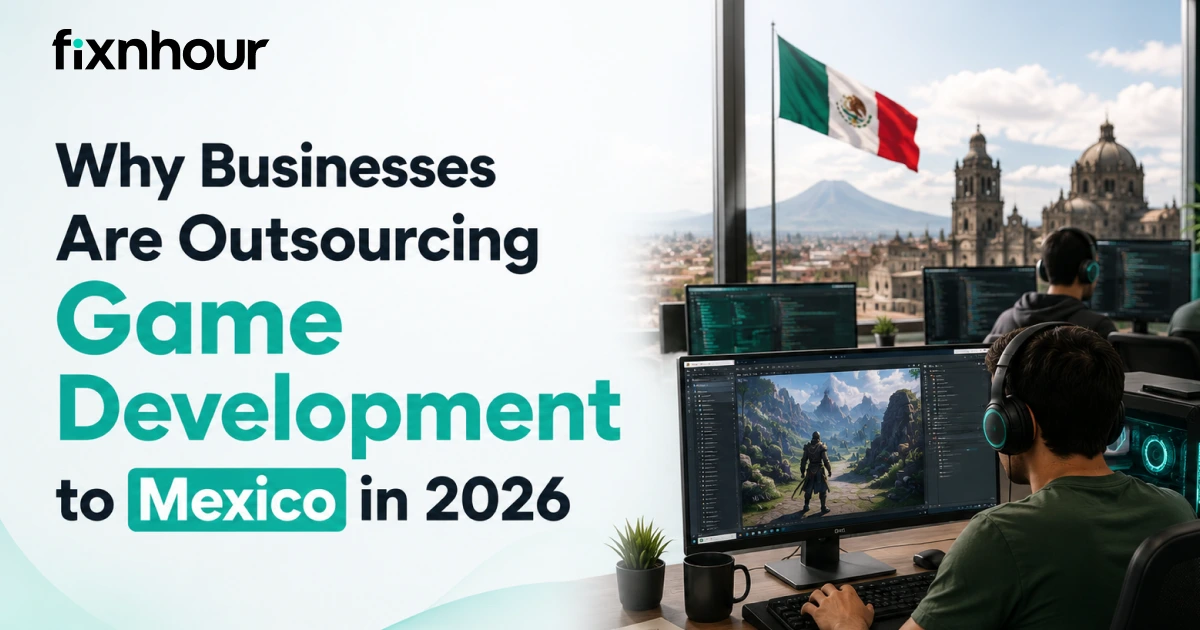
The global gaming industry is evolving faster than ever, and businesses are constantly searching for ways to develop high-quality games while managing costs and accelerating production timelines. As competition increases across mobile, console, PC, AR/VR, and Web3 gaming, outsourcing has become a strategic solution for companies looking to access specialized talent and scale development efficiently. In 2026, one destination is gaining significant attention among game studios, publishers, and startups: Mexico.
Mexico has emerged as a leading nearshore outsourcing hub thanks to its growing pool of skilled game developers, competitive pricing, and strong alignment with North American markets. Cities such as Guadalajara, Mexico City, and Monterrey are becoming technology and innovation centers, attracting both local and international gaming projects. Developers in Mexico bring expertise in Unity, Unreal Engine, 2D/3D art, animation, multiplayer systems, and emerging technologies like AR/VR and blockchain gaming.
Beyond cost savings, businesses value Mexico for its time zone compatibility, cultural alignment, and ability to support real-time collaboration. These advantages help companies reduce communication barriers, speed up development cycles, and deliver games to market faster. Whether building a mobile game, creating immersive virtual experiences, or supporting large-scale production pipelines, Mexican game development teams are proving they can deliver quality results.
Key Takeaways
- Mexico offers nearshore advantages, not just offshore savings
- Talent quality is improving rapidly in gaming technologies
- Communication is smoother than traditional offshore regions
- Ideal for mobile, indie, and mid-core game development
- AR/VR and Web3 gaming talent is emerging fast
- Outsourcing reduces time-to-market significantly
- Studios can scale teams without long-term hiring risks
Why Companies Are Choosing Mexico for Game Development
Businesses are outsourcing game development to Mexico in 2026 because it offers a powerful mix of affordability, technical expertise, and collaboration efficiency. Companies benefit from lower development costs, skilled Unity and Unreal developers, strong time zone alignment with the US, and faster production cycles, making Mexico a strategic alternative to traditional outsourcing hubs like India and Eastern Europe.
- Lower development costs compared to the US and Europe
- Skilled Unity, Unreal, AR/VR, and mobile developers
- Strong time zone overlap with North America
- Faster collaboration and agile delivery cycles
- Expanding gaming ecosystem and tech talent pool
Why Mexico Became a Hotspot for Game Development in 2026
Mexico’s rise in game development outsourcing is driven by its expanding tech education system, growing number of gaming studios, and strong government support for digital innovation. Cities like Guadalajara and Mexico City are becoming key tech hubs. The country is also attracting global partnerships, making it a reliable and fast-growing destination for game development services.
- Strong STEM education pipeline
- Growing number of game studios and freelancers
- Increasing collaboration with US-based publishers
- Cultural alignment with Western gaming markets
Also Read: Why Businesses Are Switching to Outsourcing in 2026
What Types of Game Development Are Outsourced to Mexico?
Mexico supports a wide range of outsourced game development services, including mobile, PC, console, AR/VR, and blockchain-based gaming. Companies also outsource game art, animation, UI/UX design, and QA testing. This section explores how Mexico’s diverse talent pool allows businesses to handle full-cycle development or specific parts of game production efficiently.
- Full game development cycles
- Prototype and MVP development
- Art production pipelines
- Multiplayer backend systems
- Live ops support and updates
Benefits of Outsourcing Game Development to Mexico
Fixnhour Outsourcing to Mexico offers several advantages such as reduced development costs, faster turnaround times, and easier communication with North American teams. Businesses gain access to skilled developers and flexible scaling options without long-term commitments. This section explains how companies improve productivity, reduce risks, and achieve better project outcomes through nearshore game development partnerships.
- Reduced hiring and infrastructure costs
- Faster iteration on game mechanics
- Flexible scaling of development teams
- Better collaboration during real-time updates
- Strong creative alignment with Western audiences
Also Read: Top 10 Business Services Every Company Should Outsource in 2026
How Much Does Game Development Outsourcing to Mexico Cost in 2026?
Game development outsourcing in Mexico is significantly more affordable than in the US or Europe. Costs vary depending on project complexity, required skills, and team size. Developers, artists, and QA testers are available at competitive hourly rates, making Mexico an attractive choice for startups and studios seeking high-quality game production at optimized budgets.
| Role / Service | Average Cost (Per Hour) | Estimated Monthly Cost | Description |
|---|
| Game Developer (Unity/Unreal) | $20 – $45 | $3,000 – $7,500 | Core gameplay development, coding, mechanics |
| Game Designer | $18 – $40 | $2,800 – $6,500 | Game concept, level design, UX flow |
| 2D/3D Artist & Animator | $15 – $35 | $2,500 – $6,000 | Characters, environments, animations |
| QA Tester | $12 – $25 | $1,800 – $4,000 | Bug testing, gameplay quality assurance |
| Full Game Development Team | $8,000 – $25,000/month | — | End-to-end development depending on scope |
Step-by-Step: How to Outsource Game Development to Mexico
Outsourcing game development to Mexico involves a structured process starting from defining project requirements to selecting the right studio and setting up workflows. Businesses must evaluate portfolios, ensure technical compatibility, and establish clear contracts. This section provides a step-by-step guide to help companies build efficient and successful outsourcing partnerships in 2026.
Step 1: Define your game vision clearly
Step 2: Decide full development vs partial outsourcing
Step 3: Shortlist experienced Mexican game studios
Step 4: Evaluate portfolios and past game releases
Step 5: Test communication and technical alignment
Step 6: Finalize contracts, NDAs, and milestones
Step 7: Start agile development cycles
Best Practices for Successful Game Development Outsourcing
Successful outsourcing requires strategic planning, clear communication, and continuous collaboration. Companies should adopt agile methodologies, maintain transparent workflows, and prioritize long-term partnerships over short-term savings. This section outlines proven best practices that help businesses achieve high-quality AI Game Development results when working with Mexican studios.
- Maintain shared project roadmaps
- Use Agile or Scrum methodologies
- Conduct frequent playtesting cycles
- Keep creative alignment with target audience
Also Read: Top Features Businesses Should Look for in AI Game Developers
Conclusion:
Mexico is rapidly becoming a strategic outsourcing hub for game development due to its skilled workforce, cost advantages, and proximity to North America. For businesses in 2026, it offers a powerful combination of affordability, speed, and quality. As global gaming demand increases, Mexico is positioned to become a key player in the outsourcing ecosystem.
Contact us today to connect with trusted game development partners and discover how outsourcing to Mexico can help turn your gaming vision into reality while maximizing efficiency, quality, and long-term growth.
Frequently Asked Questions
Q1. Why are businesses outsourcing game development to Mexico in 2026?
Ans. Businesses are outsourcing game development to Mexico in 2026 because it offers a strong balance of cost efficiency, skilled talent, and nearshore convenience. Companies in the US and Canada benefit from similar time zones, which improves real-time collaboration and faster project delivery. Mexico also has a growing pool of Unity, Unreal Engine, and mobile game developers. Combined with lower operational costs and improving tech infrastructure, it has become a strategic outsourcing destination for startups and established gaming studios looking to scale efficiently.
Q2. Is Mexico good for mobile game development outsourcing?
Ans. Yes, Mexico is very strong for mobile game development outsourcing, especially for iOS and Android platforms. Many developers specialize in Unity and Unreal Engine, which are widely used for mobile games. Studios in Mexico handle casual games, mid-core games, multiplayer apps, and hyper-casual projects efficiently. The country’s nearshore advantage allows better communication with North American clients, improving development speed and quality. With competitive pricing and growing experience in mobile-first gaming, Mexico is becoming a reliable destination for mobile game production and long-term development partnerships.
Q3. How much does game development outsourcing cost in Mexico?
Ans. Game development outsourcing in Mexico is generally more affordable than in the US, Canada, and Western Europe. Costs vary depending on project complexity, game type, and required expertise. On average, developers, designers, and QA testers in Mexico charge lower hourly rates while maintaining strong quality standards. Simple mobile games cost significantly less than complex AAA or multiplayer games. Pricing also depends on team size, technology stack, and duration. Overall, Mexico provides a cost-effective solution without compromising on professional game development quality.
Q4. What skills do Mexican game developers specialize in?
Ans. Mexican game developers specialize in a wide range of modern game technologies and creative skills. Key expertise includes Unity and Unreal Engine development, 2D/3D game design, animation, AR/VR experiences, and mobile game development. Many developers also work on blockchain and Web3 gaming projects. In addition, they are skilled in UI/UX design, multiplayer systems, and game testing (QA). The talent pool is rapidly growing, with strong technical foundations and increasing exposure to global gaming standards and international development workflows.
Q5. Can Mexico handle AAA game development projects?
Ans. Mexico is gradually becoming capable of supporting AAA game development projects, especially in specific production areas. While full AAA development is still emerging, Mexican studios are already contributing to large-scale projects through outsourcing support like art production, animation, QA testing, and backend development. Many international companies collaborate with Mexican teams for parts of AAA pipelines. With rising expertise and global partnerships, Mexico is building the foundation to handle more complex, high-budget gaming projects in the future.
Q6. What are the risks of outsourcing game development to Mexico?
Ans. Outsourcing game development to Mexico comes with some risks such as choosing the wrong vendor, communication gaps, and unclear project requirements. Intellectual property protection can also be a concern if contracts are not properly structured. However, these risks are manageable by working with verified studios, using detailed documentation, and setting clear milestones. Regular communication and agile workflows also help reduce misunderstandings. With proper planning, outsourcing to Mexico can be highly efficient and low-risk for most gaming projects.
Q7. How do I choose the best game development studio in Mexico?
Ans. To choose the best game development studio in Mexico, businesses should evaluate portfolios, technical expertise, and past gaming projects. Look for experience in Unity, Unreal Engine, AR/VR, or mobile game development depending on your needs. Client reviews, communication quality, and delivery timelines are also important factors. Conduct technical interviews and start with small test projects if possible. A reliable studio should also offer transparent pricing, strong project management, and a proven ability to scale development teams efficiently.
Q8. Is outsourcing better than hiring an in-house game development team?
Ans. Outsourcing is often better than hiring an in-house game development team, especially for startups and mid-sized businesses. It reduces hiring costs, saves time, and provides access to global talent without long-term commitments. Outsourcing also allows companies to scale teams quickly based on project needs. In contrast, in-house teams require higher salaries, infrastructure, and management overhead. However, in-house teams may be better for long-term IP-driven studios. Many companies use a hybrid model combining both approaches for flexibility and control