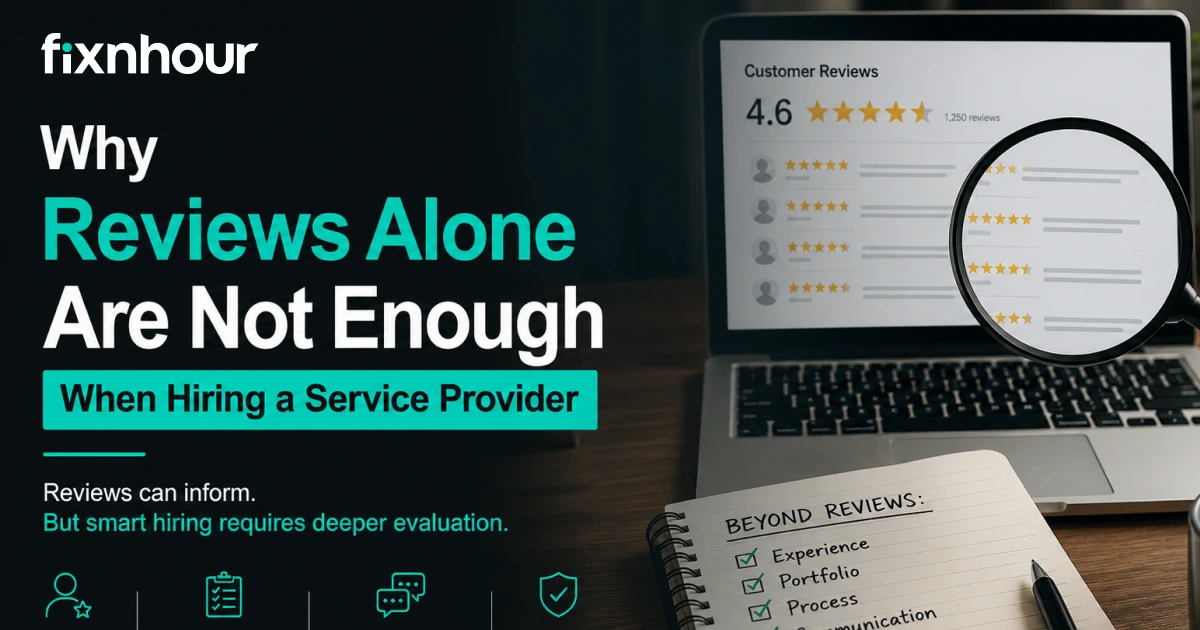
When searching for a service provider, most people start by reading online reviews. Whether you're hiring a contractor, marketing agency, web developer, cleaning company, or consultant, customer ratings often influence your decision. Positive reviews can build confidence, while negative feedback may quickly eliminate a provider from consideration. However, relying solely on reviews can be a costly mistake. Online reviews offer valuable insights, but they rarely provide the complete picture. Reviews can be biased, outdated, manipulated, or based on experiences that may not match your specific needs. A five-star rating does not always guarantee expertise, reliability, or compatibility with your project. Likewise, a few negative reviews do not necessarily indicate poor service.
Choosing the right service provider requires looking beyond star ratings and testimonials. Factors such as industry experience, communication skills, credentials, portfolio quality, transparency, pricing, and client references often play a much bigger role in determining project success. Smart buyers understand that reviews are only one piece of the evaluation process. In this guide, we'll explore why reviews alone are not enough when hiring a service provider, what additional factors you should consider, common mistakes to avoid, and the best practices for making confident, informed hiring decisions.
The Growing Importance of Choosing the Right Service Provider
Selecting the right service provider can significantly impact project success, budget efficiency, and overall satisfaction. Whether hiring a contractor, agency, consultant, or freelancer, the decision affects outcomes and long-term value. A poor choice can lead to delays, additional costs, and frustration, making careful evaluation essential.
Why Online Reviews Influence Buying Decisions
Online reviews provide social proof and help potential customers understand others' experiences with a service provider. Positive ratings often build trust quickly, while negative feedback raises concerns. Since reviews are easily accessible, many consumers rely on them heavily when comparing options and making hiring decisions.
The Hidden Risks of Relying Only on Reviews
Although reviews can offer useful insights, they rarely tell the complete story. Some reviews may be biased, outdated, or even manipulated. Important factors such as communication skills, technical expertise, accountability, and project compatibility often remain hidden, creating risks for those who depend solely on ratings.
Are Reviews Enough When Hiring a Service Provider?
No, reviews alone are not enough when hiring a service provider. While reviews can offer valuable insights into customer experiences, they rarely provide the full picture. Factors such as expertise, communication skills, project management, certifications, industry experience, and reliability are equally important. Some reviews may be outdated, biased, or even manipulated, making them an incomplete decision-making tool. The best approach is to use reviews as a starting point and then verify credentials, examine portfolios, request references, and conduct direct conversations. This comprehensive evaluation helps ensure you choose a provider who can truly meet your needs.
What Smart Buyers Evaluate Beyond Star Ratings
Experienced buyers assess much more than ratings and testimonials. They examine portfolios, certifications, client references, industry expertise, communication style, pricing transparency, and project management capabilities. This broader evaluation process provides a clearer picture of whether a provider can consistently deliver high-quality results.
Key Takeaways
Hiring a service provider requires more than simply checking ratings and testimonials. Reviews can help identify reputable companies, but they should not be your only selection criterion. A successful hiring decision involves evaluating experience, credentials, communication quality, portfolio strength, and customer references. Comparing multiple providers allows you to assess value rather than focusing solely on price. Understanding both positive and negative feedback patterns can reveal valuable insights. By combining review analysis with independent research, you can minimize risks, improve project outcomes, and establish stronger long-term partnerships. A balanced evaluation process leads to smarter and more confident hiring decisions.
- Reviews tell only part of the story.
- Verified experience matters more than review volume.
- Communication quality predicts project success.
- Portfolios reveal actual work standards.
- References provide deeper insights than public reviews.
- Pricing should be evaluated alongside value.
- Credentials and certifications reduce hiring risks.
- Long-term reliability is often absent from reviews.
Also Read: How to Compare IT Service Providers Like a Pro: A Complete Business Guide for 2026
Why Reviews Matter—but Only to a Certain Extent
Online reviews have become a major influence on consumer purchasing decisions because they provide social proof and real-world feedback. Positive reviews can increase trust and help users identify providers with a strong reputation. However, reviews represent individual experiences and may not accurately reflect overall service quality. Some customers leave reviews based on emotions rather than objective results, while others may never leave feedback despite having excellent experiences. Additionally, fake reviews and reputation management tactics can distort perceptions. Reviews are valuable, but they should be viewed as one component within a broader evaluation strategy.
The Hidden Factors Reviews Often Fail to Reveal
Reviews often focus on outcomes rather than the complete customer journey. Important factors such as professionalism, communication style, accountability, problem-solving ability, and project management skills are frequently overlooked. A provider may have excellent ratings but struggle with deadlines or client communication. Reviews also rarely reveal how a company handles unexpected challenges or long-term support. Understanding these hidden factors requires deeper research, including direct conversations, reference checks, and portfolio evaluations. By looking beyond ratings, businesses and individuals can gain a more accurate understanding of a provider’s capabilities and likelihood of delivering successful results.
Statistics & Market Insights on Consumer Trust and Reviews
Research consistently shows that consumers heavily rely on online reviews before making purchasing decisions. However, studies also reveal growing concerns about fake reviews, manipulated ratings, and declining trust in anonymous feedback. Businesses increasingly invest in reputation management strategies, making it more difficult for consumers to distinguish authentic experiences from promotional content. Market trends indicate that buyers now seek additional trust signals such as verified testimonials, case studies, and third-party certifications. Understanding these statistics helps consumers recognize the strengths and limitations of reviews while encouraging a more informed and comprehensive approach to evaluating service providers.
Essential Criteria to Evaluate Before Hiring a Service Provider
Choosing the right service provider involves assessing several critical factors beyond customer ratings. Start by verifying licenses, certifications, and professional credentials. Review the provider’s portfolio to evaluate work quality and relevance to your project. Consider their industry experience, technical expertise, and track record of delivering successful results. References and case studies can provide deeper insights into reliability and customer satisfaction. Communication style, responsiveness, and transparency are equally important because they influence the overall project experience. Evaluating these criteria together creates a more complete picture and significantly improves the likelihood of a successful partnership.
Also Read: Why Verified Reviews Matter When Hiring Agencies in 2026
A Step-by-Step Process for Choosing the Right Service Provider
A structured hiring process helps reduce risks and improve decision-making. Begin by clearly defining your goals, budget, and project requirements. Create a shortlist of potential providers based on research and recommendations. Analyze reviews while also examining portfolios, certifications, and previous work. Schedule consultations to assess communication and expertise. Request references from past clients and ask specific questions about performance and reliability. Compare proposals based on value rather than price alone. Finally, review contracts carefully before making a commitment. Following these steps ensures a more informed selection process and increases the chances of project success.
Step 1: Define Your Project Requirements
Step 2: Shortlist Potential Providers
Step 3: Analyze Reviews and Ratings
Step 4: Examine Portfolio and Work Samples
Step 5: Conduct Interviews or Consultations
Step 6: Request References
Step 7: Compare Pricing and Value
Step 8: Make an Informed Decision
Understanding Costs: Why the Cheapest Option Is Not Always the Best
Price is often a deciding factor when hiring service providers, but choosing the lowest-cost option can lead to disappointing results. Lower prices may indicate limited experience, reduced service quality, or hidden costs that emerge later. Instead of focusing solely on cost, evaluate the value being offered. Consider expertise, customer support, project scope, turnaround time, and long-term benefits. A higher-priced provider may deliver superior outcomes that ultimately save time and money. Understanding pricing structures and comparing value-based proposals helps ensure that your investment generates meaningful returns while minimizing risks and unexpected expenses.
Also Read: Top Startup Service Providers in India for Fast Business Growth in 2026
Benefits of Looking Beyond Reviews Before Hiring
Taking a comprehensive approach to provider evaluation offers significant advantages. It helps identify professionals who possess the right skills, experience, and communication abilities for your project. Looking beyond reviews reduces the likelihood of hiring based on misleading information or manipulated ratings. It also improves transparency by encouraging direct conversations and verification of credentials. Businesses and individuals who conduct thorough research often experience better project outcomes, stronger working relationships, and greater return on investment. By considering multiple trust signals, you can make more confident decisions and establish partnerships that support long-term success and growth.
Common Challenges When Evaluating Service Providers
Finding the right service provider can be challenging due to the overwhelming amount of information available online. Consumers often struggle to distinguish genuine reviews from fake ones and may find it difficult to compare providers fairly. Different platforms present ratings differently, making direct comparisons complicated. Budget constraints can further complicate decision-making, especially when balancing quality, expertise, and affordability. Additionally, some providers excel at marketing themselves without delivering exceptional results. Recognizing these challenges allows buyers to develop a more systematic evaluation process, reducing uncertainty and increasing the likelihood of selecting the best provider.
Common Mistakes People Make When Hiring Based Solely on Reviews
Many people make the mistake of assuming that the highest-rated provider is automatically the best choice. This approach can overlook important factors such as experience, communication, project compatibility, and industry expertise. Some buyers focus only on positive reviews without examining negative feedback patterns. Others fail to verify credentials or request references. Choosing solely based on low pricing is another common error that can result in poor-quality work. Avoiding these mistakes requires a balanced evaluation process that combines review analysis with independent research, helping ensure a more informed and successful hiring decision.
Best Practices for Hiring a Trustworthy Service Provider
Successful hiring decisions are built on thorough research and careful evaluation. Start by reviewing customer feedback from multiple sources rather than relying on a single platform. Verify certifications, licenses, and professional credentials whenever possible. Request case studies, portfolios, and client references to validate expertise. Conduct interviews to assess communication skills and responsiveness. Compare multiple proposals to understand pricing and value differences. Establish clear expectations and review contracts before work begins. Following these best practices helps reduce uncertainty, improve transparency, and increase confidence in your final decision while building the foundation for a productive partnership.
Why Choose Fixnhour
Choosing the right partner Fixnhour can make a significant difference in project success. [Company Name] stands out through its proven expertise, commitment to quality, and customer-focused approach. Clients benefit from transparent communication, tailored solutions, and a track record of delivering measurable results. The company prioritizes reliability, accountability, and long-term client satisfaction. Verified success stories and case studies demonstrate real-world achievements across various industries. Competitive pricing combined with high service standards ensures exceptional value. By focusing on trust, innovation, and performance, [Company Name] helps clients achieve their goals while maintaining strong and lasting professional relationships.
Future Trends in Service Provider Selection (2026–2027)
The way consumers evaluate service providers is evolving rapidly. Artificial intelligence will play a larger role in matching businesses with qualified providers based on data-driven insights. Verified review systems, blockchain-based reputation tracking, and advanced fraud detection tools will improve transparency. Video testimonials and interactive case studies are expected to become more influential than traditional written reviews. Predictive analytics may help buyers assess the likelihood of project success before hiring. As technology advances, trust signals will become more sophisticated, enabling consumers to make faster, smarter, and more accurate decisions when selecting service providers.
Also Read: Top Business Services Every Growing Company Should Outsource in 2026
Conclusion
Reviews are a useful starting point when researching service providers, but they should never be the sole basis for your decision. The most successful hiring choices come from evaluating multiple factors, including experience, credentials, communication, references, portfolio quality, and overall value. By taking a broader approach, you can avoid common pitfalls, reduce risks, and improve project outcomes. As technology and AI continue to reshape how trust is measured online, relying on diverse credibility signals will become even more important. Contact us today because Smart hiring decisions require thorough research, careful verification, and a commitment to looking beyond ratings alone.
Frequently Asked Questions
Q1. Why are online reviews not enough when choosing a service provider?
Ans. Online reviews can provide valuable insights, but they only tell part of the story. Reviews may be outdated, biased, incomplete, or even fake. They often fail to reveal important factors such as communication skills, industry expertise, project management abilities, accountability, and problem-solving capabilities. A provider with excellent reviews may not necessarily be the right fit for your specific needs. To make a well-informed decision, evaluate portfolios, certifications, client references, case studies, and pricing transparency. Combining reviews with direct conversations and independent research helps reduce risks and increases the likelihood of hiring a reliable service provider.
Q2. What should I check besides reviews before hiring a contractor or agency?
Ans. Beyond reviews, you should examine the provider’s credentials, certifications, licenses, portfolio, and industry experience. Request references from previous clients and review case studies to understand the results they have achieved. Assess their communication style, responsiveness, and transparency during initial discussions. It is also important to evaluate pricing structures, contract terms, and project timelines. A detailed proposal can reveal how well the provider understands your requirements. Looking at multiple trust factors instead of relying solely on reviews gives you a more accurate picture of their capabilities and helps you choose a provider that aligns with your goals.
Q3. How can I identify fake reviews when researching service providers?
Ans. Fake reviews often have vague language, excessive praise, repetitive wording, or unrealistic claims. Be cautious if all reviews appear overwhelmingly positive without mentioning any challenges or specifics. Look for detailed feedback that discusses actual experiences, project outcomes, and communication quality. Compare reviews across multiple platforms to identify inconsistencies. Verified reviews and testimonials from credible sources are generally more trustworthy. Pay attention to review dates, reviewer profiles, and patterns that suggest manipulation. Cross-checking reviews with references, portfolios, and case studies helps ensure you are evaluating a provider based on authentic information rather than misleading feedback.
Q4. Are customer testimonials more reliable than review websites?
Ans. Customer testimonials can be useful, but they should not automatically be considered more reliable than review websites. Testimonials are typically selected by the company and often highlight positive experiences. Review platforms may provide a broader range of opinions, including both positive and negative feedback. The most effective approach is to use both sources together. Testimonials can showcase success stories and project outcomes, while independent reviews provide additional perspectives. To gain a complete understanding, also examine case studies, references, portfolios, and direct client feedback. Relying on multiple sources creates a more balanced and trustworthy evaluation process.
Q5. What questions should I ask before hiring a professional service provider?
Ans. Before hiring a service provider, ask about their experience, qualifications, project process, communication methods, and expected timelines. Request examples of similar projects they have completed and ask for client references. You should also discuss pricing, payment terms, and any potential additional costs. Ask how they handle challenges, revisions, and project changes. Understanding their approach to customer support and accountability is equally important. These questions help you evaluate expertise, professionalism, and compatibility. A provider who answers clearly and confidently is often more likely to deliver a successful project and maintain a positive working relationship.
Q6. How important is a portfolio compared to online ratings?
Ans. A portfolio is often more valuable than online ratings because it provides direct evidence of a provider’s work quality and capabilities. While ratings reflect customer opinions, portfolios showcase actual projects, achievements, and expertise. Reviewing work samples helps you determine whether the provider has experience handling projects similar to yours. A strong portfolio demonstrates consistency, creativity, technical skills, and problem-solving abilities. Ratings should still be considered, but they should complement—not replace—portfolio evaluation. Combining portfolio reviews with client feedback, references, and interviews offers a more complete understanding of the provider’s ability to meet your expectations.
Q7. Can a highly rated service provider still be a poor fit for my project?
Ans. Yes, a highly rated service provider can still be the wrong choice for your project. Reviews often reflect general customer satisfaction rather than project-specific requirements. A provider may excel in one area but lack the expertise, resources, or industry knowledge needed for your particular goals. Differences in communication styles, budget expectations, timelines, or service offerings can also create challenges. That is why it is important to assess experience, portfolio quality, references, and project compatibility in addition to ratings. Choosing a provider based on overall fit rather than popularity increases the chances of achieving successful outcomes.