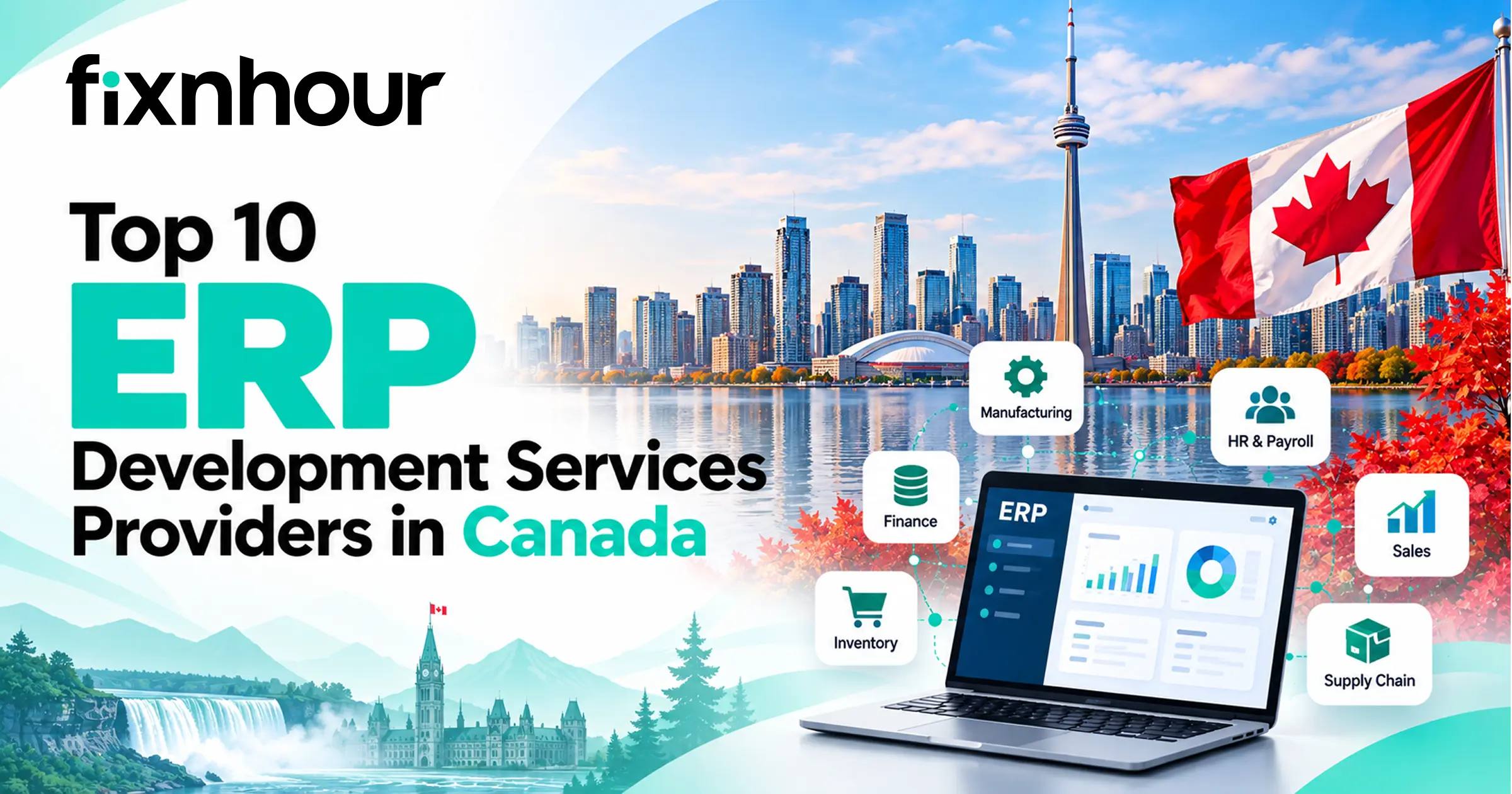
Enterprise resource planning (ERP) software helps businesses manage finance, inventory, procurement, manufacturing, human resources, sales, and other core operations through a connected system. The top ERP development services providers to evaluate in Canada include CGI, Deloitte Canada, IBM Consulting, Accenture Canada, Capgemini Canada, Tata Consultancy Services (TCS), Infosys, Nybble Group, Numigi, and TriTech Information Systems. These companies offer varying capabilities across enterprise technology, ERP consulting, software implementation, system integration, and customized business solutions. Their suitability depends on project complexity, industry requirements, and technical expertise.
Choosing the right ERP development company in Canada requires evaluating business size, existing technology, budget, integration needs, and long-term objectives. Large consulting firms may be suitable for complex enterprise transformations, while specialized ERP providers can offer focused implementation and customization services. Businesses should also consider data migration, platform compatibility, security, employee training, and post-launch support before making a decision. This guide compares ten ERP service providers, highlights their potential strengths, explores illustrative development costs, and shares practical selection tips to help Canadian businesses identify an ERP implementation partner aligned with their operational requirements and future growth plans.
What Is ERP Development and Why Does It Matter?
ERP development involves designing, customizing, integrating, implementing, and maintaining enterprise resource planning software to support business operations. Companies can adopt an existing ERP platform, customize an established solution, or develop a tailored system to address specific operational requirements. Businesses looking for suitable technology partners can explore Fixnhour to discover IT service providers and software development companies that can help them evaluate ERP solutions, streamline workflows, and support digital transformation initiatives.
- Automate business processes: Reduce repetitive administrative tasks across departments.
- Improve financial visibility: Connect accounting, budgeting, invoicing, and reporting.
- Manage inventory efficiently: Track stock levels, purchase orders, and warehouse activity.
- Connect departments: Share consistent information across finance, sales, HR, and operations.
Top 10 ERP Development Services Providers in Canada
The following companies represent a mix of enterprise consulting firms, ERP implementation specialists, and technology service providers. This editorial shortlist is not a definitive performance ranking. Each provider should be evaluated based on technical expertise, industry experience, platform capabilities, implementation approach, and ongoing support. The best choice ultimately depends on your business requirements, project scope, integration needs, localization expectations, and available budget. Businesses exploring advanced enterprise technology solutions can also explore Top Enterprise AI Companies to identify potential partners for AI adoption, intelligent automation, and data-driven business transformation.
|
Company |
Primary Area to Evaluate |
Potential Fit |
|---|---|---|
|
CGI Inc. |
Enterprise systems and integration |
Large Canadian organizations |
|
Deloitte Canada |
Business transformation and ERP strategy |
Complex transformation programs |
|
IBM Consulting |
Enterprise integration and modernization |
Legacy-heavy IT environments |
|
Accenture Canada |
Large-scale ERP implementation |
Multi-location enterprises |
|
Capgemini Canada |
ERP and application modernization |
SAP and enterprise technology programs |
|
TCS |
Enterprise application services |
Long-term IT delivery and support |
|
Infosys |
ERP and digital modernization |
Integrated enterprise applications |
|
Nybble Group |
ERP consulting and integration |
ERP-focused implementation projects |
|
Numigi |
Specialized ERP consulting |
Businesses with defined ERP needs |
|
TriTech Information Systems |
ERP consulting and IT services |
Implementation and integration requirements |
1. CGI Inc.
CGI is a global IT and business consulting company headquartered in Canada. It provides technology consulting, systems integration, application services, and managed IT services to organizations across multiple industries.Businesses evaluating CGI for ERP development can explore its enterprise technology capabilities for complex environments involving legacy systems, multiple business units, and extensive integrations.
- Enterprise application modernization
- ERP implementation and systems integration
- Business process transformation
- Application maintenance and support
2. Deloitte Canada
Deloitte Canada combines business consulting, technology implementation, and organizational transformation services. Depending on the engagement, its teams can help businesses assess operational requirements, select appropriate enterprise platforms, redesign workflows, and manage implementation programs.Deloitte may be worth evaluating when an ERP project involves more than software configuration, such as changes to financial controls, supply chains, reporting structures, or organizational processes.
- ERP strategy and platform selection
- Enterprise systems implementation
- Finance and supply chain transformation
- Data migration and governance
3. IBM Consulting
IBM Consulting works with organizations on technology strategy, enterprise applications, data, cloud, and digital transformation. Businesses with established IT environments may consider IBM when an ERP initiative must connect with legacy applications, analytics platforms, or broader enterprise infrastructure.The appropriate IBM team and ERP platform will depend on the specific project and its technical requirements.
- ERP integration and modernization
- Enterprise application consulting
- Cloud and hybrid infrastructure
- Data engineering and analytics
4. Accenture Canada
Accenture provides technology consulting, systems integration, cloud services, and enterprise transformation. Its ERP-related work can involve connecting core business systems, redesigning workflows, migrating data, and supporting large implementation programs.For companies with multiple locations, international operations, or complex supply chains, coordinating ERP deployment across departments can be as important as the software itself.
- ERP implementation and integration
- Enterprise process automation
- Cloud transformation
- Data migration and analytics
5. Capgemini Canada
Capgemini provides consulting, technology services, engineering, and enterprise application expertise. Organizations considering SAP-centered transformation or broader enterprise system modernization may include Capgemini in their vendor evaluation.The company may be relevant when ERP implementation needs to align with cloud infrastructure, data platforms, supply chain processes, or other business applications.
- ERP consulting and implementation
- SAP-related enterprise services
- Application modernization
- Systems integration
6. Tata Consultancy Services (TCS)
Tata Consultancy Services is a global IT services and consulting provider with Canadian operations. Its enterprise services cover application development, systems integration, business transformation, and ongoing technology management.Businesses with complex operational environments may evaluate TCS for ERP implementation support, enterprise application integration, and modernization initiatives.
- ERP implementation and integration
- Enterprise application development
- Legacy system modernization
- Data migration and reporting
7. Infosys
Infosys provides consulting and technology services covering enterprise applications, cloud, data, automation, and digital transformation. Companies planning ERP upgrades or integrating enterprise platforms with existing business systems can consider Infosys as part of their shortlist.Its suitability will depend on the ERP product involved, the experience of the proposed delivery team, and the scale of the implementation.
- ERP consulting and implementation
- Enterprise application integration
- Cloud migration and modernization
- Business process optimization
8. Nybble Group
Nybble Group is listed among ERP consulting and systems integration providers serving Canada. Its service profile includes ERP implementation, integration, and ERP solutions, alongside custom software development and related technology services.Organizations seeking a provider with an ERP-focused service offering can evaluate Nybble Group for projects involving business process improvements and connections between enterprise applications.
- ERP consulting and implementation
- ERP system integration
- Business process optimization
- Custom software development
9. Numigi
Numigi is an ERP consulting and systems integration company based in Longueuil, Quebec. It is listed in Canadian ERP provider directories, making it a potential option for businesses seeking a more specialized provider rather than a large, multidisciplinary consulting firm.Before engaging Numigi, confirm the team's experience with your required ERP platform, industry workflows, data migration needs, and integration environment.
- ERP configuration and implementation
- Business workflow optimization
- Enterprise application integration
- Technical assistance and support
10. TriTech Information Systems
TriTech Information Systems is a Canadian ERP consulting and IT services provider listed in ERP company directories. Its directory profile emphasizes ERP consulting and systems integration, making it relevant for organizations seeking support with enterprise resource planning initiatives.Potential clients should assess its experience with the specific ERP platform, business processes, and integration requirements involved in their project.
- Enterprise systems integration
- Business application support
- Workflow improvement
- Ongoing IT services
What ERP Development Services Do Canadian Companies Offer?
Canadian ERP development companies offer services covering the complete enterprise resource planning lifecycle, from initial planning and software development to implementation, integration, and ongoing maintenance. These services help businesses streamline operations, improve data accuracy, and connect departments through centralized systems. Depending on business requirements, providers may deliver custom ERP software, configure existing platforms, migrate legacy data, integrate third-party applications, and provide technical support to maintain performance and accommodate future growth. Businesses exploring broader technology modernization strategies can also learn about digital transformation companies to identify potential partners for improving operational efficiency, automating workflows, and adopting scalable digital solutions.
Custom ERP Software Development
Custom ERP software development creates tailored solutions around specific business workflows, helping organizations address requirements that standard platforms may not fully support. Canadian development companies can build specialized modules and dashboards to improve operational efficiency, automate processes, and provide greater flexibility as business needs evolve.
ERP Implementation and Configuration
ERP implementation involves configuring and deploying an enterprise platform to support a company's operational requirements. Canadian ERP providers help businesses plan deployments, migrate data, test functionality, and prepare employees for adoption. A structured implementation process minimizes disruption and ensures the system aligns with business objectives.
ERP Integration Services
ERP integration services connect enterprise resource planning software with existing business applications, enabling departments to exchange information efficiently. Canadian providers can integrate ERP systems with ecommerce platforms, CRM tools, payment gateways, logistics software, and analytics solutions. Effective integration reduces duplicate data entry, improves accuracy, and supports better operational visibility.
ERP Migration and Modernization
Organizations operating older ERP platforms may need to move to a modern system, upgrade their existing software, or transfer workloads to the cloud.A migration project should account for data quality, custom functionality, integrations, access controls, downtime, and employee training. The objective is not simply to move data; it is to preserve business continuity while improving the system's long-term maintainability.
ERP Maintenance and Support
ERP software requires ongoing attention after deployment. Businesses should discuss support response times, security updates, backup procedures, performance monitoring, bug fixes, and future enhancements before signing a contract.A clear support agreement helps prevent uncertainty about who will maintain integrations and resolve problems after the initial development team completes the project.
Which ERP Platforms Should You Consider?
The right ERP platform depends on business size, industry requirements, operational complexity, budget, and customization needs. Small businesses may prefer flexible, cost-effective solutions, while larger enterprises often require advanced reporting, automation, and multi-department integration. Companies should also consider scalability, data security, implementation timelines, ongoing support, and compatibility with existing systems. Evaluating these factors helps businesses select an ERP platform that supports current operations and future growth.
Microsoft Dynamics 365
Microsoft Dynamics 365 offers business applications covering finance, supply chain management, sales, and related operations. It may be a good candidate for organizations that already use Microsoft technologies and want connected business applications.
SAP
SAP provides enterprise software for areas such as finance, procurement, manufacturing, and supply chain management. Businesses with complex operations or multi-entity requirements may evaluate SAP alongside their existing infrastructure and implementation budget.
Oracle NetSuite
Oracle NetSuite is a cloud-based business management and ERP platform used for functions including financial management, inventory, order management, and reporting. It is worth evaluating when a business wants integrated cloud applications.
Odoo
Odoo provides a suite of business applications, including accounting, inventory, sales, purchasing, and manufacturing. Depending on the required modules and customization, it can be an option for small and midsize businesses seeking an integrated system.
Custom-Built ERP Software
A custom ERP system may be appropriate when an organization has distinctive workflows, specialized industry requirements, or integration needs that cannot be addressed efficiently with an existing platform.However, custom development also introduces responsibility for software maintenance, security updates, documentation, and future upgrades. Compare the total cost of ownership against configuring an established ERP platform before making a decision.
What ERP Development Trends Should Canadian Businesses Watch?
Canadian businesses should monitor emerging ERP trends to improve operational efficiency, data accuracy, and business agility. Key developments include AI-powered automation, cloud-based ERP platforms, real-time analytics, low-code workflows, and API-based integrations. These technologies can help organizations streamline processes and connect departments. Before adoption, businesses should evaluate security, implementation costs, scalability, compliance requirements, and compatibility with existing enterprise systems.
AI-Powered ERP Automation
AI-powered ERP automation helps businesses analyze data, forecast demand, identify unusual transactions, and streamline repetitive tasks. These capabilities can improve productivity and decision-making when implemented responsibly.
Cloud-Based ERP Solutions
Cloud ERP simplifies remote access and infrastructure management while reducing the need to maintain on-premises infrastructure. Canadian businesses should evaluate subscription costs, data residency, security, and integration requirements before choosing a cloud deployment model.
Real-Time Analytics and Business Intelligence
Real-time analytics helps organizations monitor performance through timely operational data. ERP dashboards provide visibility into financial results, inventory movement, purchasing activity, and order fulfillment, enabling teams to make informed business decisions.
Low-Code Workflow Automation
Low-code automation enables businesses to create applications, approvals, and notifications with minimal traditional programming. When integrated with ERP software, these tools can reduce manual work and accelerate internal process improvements.
API-Based Enterprise Integration
API-based integration connects ERP platforms with ecommerce, CRM, logistics, and reporting applications. Well-designed integrations improve data consistency, reduce duplicate entry, and support future system upgrades while enabling smoother information exchange across departments.
Conclusion
Choosing the right ERP development services provider in Canada can help your organization connect business processes, improve operational visibility, and build a stronger foundation for growth. Providers such as CGI, Deloitte, IBM Consulting, Accenture, Capgemini, TCS, Infosys, Nybble Group, Numigi, and TriTech Information Systems offer different options to investigate, depending on your project's scope and complexity.
Before making a decision, define your requirements, compare platform expertise, review implementation plans, calculate total ownership costs, and verify support commitments. it should help your team adopt a practical, secure, and maintainable system that supports measurable business outcomes.If your organization needs a tailored business application, ERP integration, or workflow automation, consider consulting an experienced software development team to assess your requirements and build Talk to our experts a realistic implementation roadmap.
Frequently Asked Questions
Q1. Which are the top ERP development services providers in Canada?
CGI, Deloitte Canada, IBM Consulting, Accenture Canada, Capgemini Canada, TCS, Infosys, Nybble Group, Numigi, and TriTech Information Systems are potential providers to evaluate. They differ in scale, consulting expertise, ERP specialization, and delivery approach. Before choosing one, confirm that it supports your preferred platform, understands your industry, and can demonstrate comparable implementations. Request a detailed proposal, project references, delivery milestones, integration scope, and post-launch support terms. The best provider is the one that meets your operational requirements and offers a realistic total cost of ownership.
Q2. How much does ERP development cost in Canada?
ERP development costs can range from tens of thousands of Canadian dollars for a straightforward implementation to hundreds of thousands or more for a complex enterprise deployment. The final price depends on the platform, number of modules, customization, data migration, integrations, licensing, and support requirements. A small implementation with standard workflows generally requires less effort than a system spanning multiple departments or locations. Ask vendors for itemized estimates and clarify recurring expenses. A discovery phase can help establish a more reliable budget before the full project begins.
Q3. How long does ERP implementation take?
A straightforward ERP implementation may take several weeks to a few months, while a mid-sized or complex enterprise project can take many months or longer. Timelines depend on requirements, data quality, integrations, customization, employee availability, and the number of departments involved. Projects can be delayed when business rules are unclear or legacy data needs substantial cleanup. To improve predictability, agree on milestones, assign internal decision-makers, prepare migration data early, and test critical workflows before launch. A phased implementation may help organizations introduce functionality incrementally.
Q4. Which ERP software is best for small and midsize businesses in Canada?
There is no universally best ERP platform for every Canadian business. Odoo, Microsoft Dynamics 365 Business Central, and Oracle NetSuite are options worth comparing, depending on business size, required modules, accounting needs, integrations, and budget. Businesses with specialized operational processes may also evaluate custom ERP development. Compare implementation costs, licensing, usability, reporting, local support, and future scalability rather than selecting a platform based on popularity alone. A qualified ERP consultant can map your requirements to suitable solutions and explain the trade-offs before you commit.
Q5. What is the difference between custom ERP development and ERP implementation?
Custom ERP development involves building new software functionality or a complete system around specific business requirements. ERP implementation generally involves selecting an existing platform, configuring it, migrating data, integrating applications, training users, and deploying it. A project can include both approaches when a standard ERP platform needs additional custom functionality. Implementation may be faster when existing features meet most business requirements, while custom development offers greater control but creates additional maintenance responsibilities. The right approach depends on process complexity, available budget, integration needs, and long-term support capacity.
Q6. What industries benefit most from ERP development services?
Manufacturing, wholesale distribution, retail, logistics, construction, professional services, healthcare administration, and other operationally complex industries can benefit from ERP software. Manufacturers may need production planning and materials tracking, while distributors often prioritize inventory, purchasing, and order fulfillment. Retailers may need integrations between ecommerce, point-of-sale systems, and financial reporting. The best ERP solution depends on the organization's workflows, regulatory obligations, reporting requirements, and existing applications. Industry experience is important because the provider must understand not only the software but also how the business operates in practice.
Q7. What should businesses look for in an ERP development company?
Look for relevant implementation experience, platform expertise, transparent pricing, clear documentation, reliable project management, and ongoing technical support. The provider should explain how it handles data migration, security, integrations, testing, employee training, and unexpected scope changes. Ask for comparable case studies and speak with references when possible. Confirm who owns custom-developed code, how data can be exported, and what happens if you change vendors. A detailed statement of work with milestones and acceptance criteria is more useful than general promises about efficiency or digital transformation.
Q8. Can an ERP development company integrate AI into an ERP system?
Yes. Depending on the platform and business requirements, an ERP development company can integrate AI features for demand forecasting, document processing, report summarization, anomaly detection, and selected workflow automation. AI capabilities may be built into an ERP product or connected through APIs and custom applications. Businesses should assess data quality, security, privacy, reliability, and the cost of ongoing model or API usage. Financial approvals and other high-impact decisions should retain appropriate human oversight. Start with a measurable use case and evaluate its performance before expanding AI across business operations.