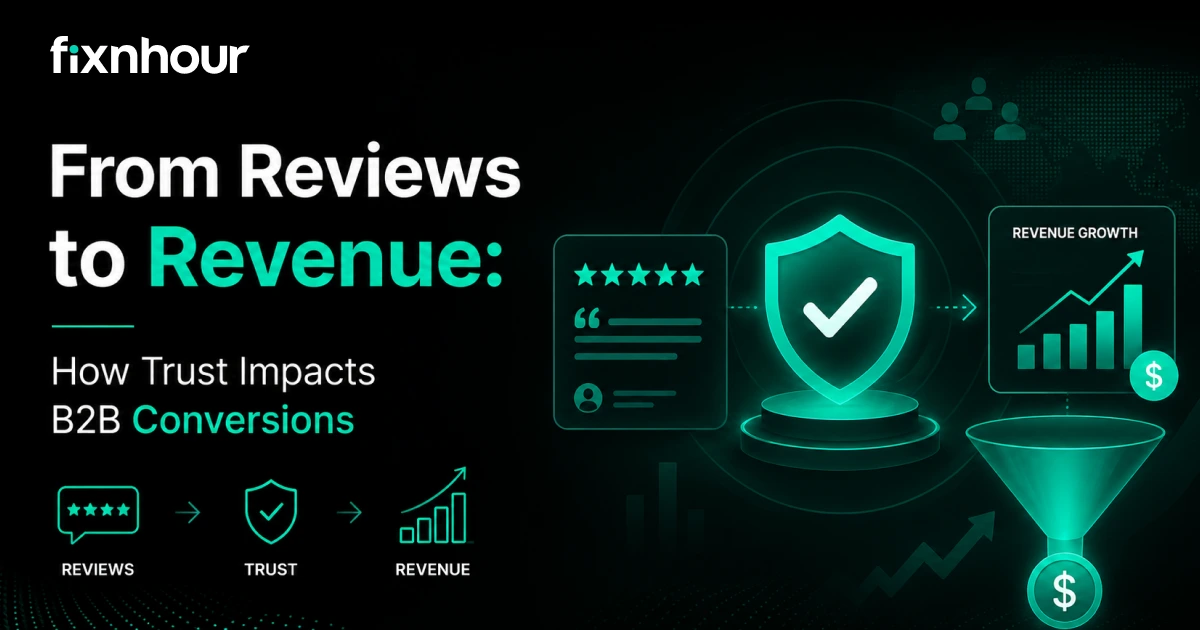
From Reviews to Revenue: How Trust Impacts B2B Conversions
In today's digital-first business environment, trust has become one of the most valuable assets a company can build. Before signing a contract, booking a consultation, or requesting a proposal, B2B buyers spend significant time researching vendors online. They compare services, read reviews, explore case studies, and evaluate a company's reputation.
This shift in buyer behavior has made trust a major driver of B2B conversions. Businesses that actively build credibility through reviews, testimonials, and transparent communication often generate more leads, close deals faster, and increase revenue. The connection is simple: trust reduces risk, and when buyers feel confident in their decision, they are more likely to convert.
Why Trust Matters in B2B Purchasing Decisions
Unlike B2C purchases, B2B buying decisions usually involve larger budgets, multiple stakeholders, and longer sales cycles. Buyers want assurance that they are partnering with a reliable service provider.When businesses demonstrate credibility through verified reviews and positive customer experiences, potential clients gain confidence in their ability to deliver results.
Trust helps answer the questions every buyer asks:
- Can this company deliver what they promise?
- Have other businesses had a good experience?
- Is this provider worth the investment?
- Will they support us after the sale?
The Growing Influence of Online Reviews
Online reviews have become the modern version of word-of-mouth marketing. Whether someone is searching for a software development company, digital marketing agency, IT consultant, or recruitment partner, reviews are often one of the first things they check on platforms like Fixnhour and other business directories.
- Higher website engagement
- Better lead quality
- Increased inquiry rates
- Stronger conversion performance
- Greater customer trust
How Reviews Build Trust and Increase Conversions
Customer reviews play a vital role in building trust and influencing purchasing decisions. Positive reviews provide social proof, demonstrate customer satisfaction, and reduce uncertainty for potential buyers. By showcasing authentic experiences, businesses can strengthen credibility, improve online reputation, and increase conversion rates, ultimately driving more leads, sales, and long-term customer loyalty.
1. Reviews Reduce Buyer Uncertainty
Every business purchase involves risk.
Buyers want to know whether a company can meet deadlines, deliver quality work, and provide ongoing support. Reviews help reduce these concerns by showcasing real customer experiences.
When prospects see consistent positive feedback, they feel more comfortable moving forward.
2. Reviews Act as Social Proof
People naturally trust the experiences of others.
A company with dozens of positive reviews appears more reliable than one with no feedback at all. Social proof validates your expertise and helps potential customers feel confident in their decision.
3. Reviews Strengthen Brand Credibility
A strong review profile positions your business as an industry leader.
Positive ratings demonstrate professionalism, customer satisfaction, and consistent performance. Over time, this builds a reputation that attracts more qualified leads.
4. Reviews Improve Lead Quality
When prospects read reviews before contacting your business, they already have a clearer understanding of your services and value.
This means your sales team spends less time educating prospects and more time converting ready-to-buy leads.
Also Read: B2B Hiring Trends Report 2026: What Businesses Really Want
Key Trust Signals That Influence B2B Buyers
B2B buyers rely on trust signals to evaluate potential vendors before making decisions. Key trust factors include verified customer reviews, case studies, industry certifications, client testimonials, transparent business information, strong online presence, and proven expertise. These signals help establish credibility, reduce perceived risk, and increase confidence in choosing the right business partner.
Verified Customer Reviews
Authentic feedback from real customers provides transparency and credibility.
Detailed Case Studies
Case studies demonstrate measurable business outcomes and prove your ability to solve real problems.
Client Testimonials
Personal recommendations help create emotional trust and reinforce positive experiences.
Professional Website
A modern, informative website signals legitimacy and professionalism.
Industry Certifications
Awards, certifications, and partnerships help validate expertise.
Active Online Presence
Consistent engagement across LinkedIn, business directories, and social media platforms increases credibility.
The Relationship Between Trust and Revenue
Trust and revenue are closely connected in today's competitive business environment. When customers trust a business, they are more likely to make purchases, become repeat buyers, and recommend the company to others. Strong credibility reduces buying hesitation, increases conversion rates, improves customer retention, and ultimately drives sustainable revenue growth and long-term business success.
Higher Conversion Rates
Businesses with strong trust signals convert more website visitors into leads.
Shorter Sales Cycles
Trust removes friction from the buying process and helps prospects make decisions faster.
Increased Customer Retention
Customers who trust your business are more likely to stay longer and purchase additional services.
More Referrals
Satisfied customers become advocates who recommend your business to others.
Better Lifetime Value
Long-term relationships lead to recurring revenue and stronger profitability.
When trust increases, revenue typically follows.
Also Read: 15 B2B Sales Influencers Shaping the Industry in 2026 – May Update
How Business Listing Platforms Support Trust
Business listing platforms help build trust by providing verified business information, customer reviews, ratings, service details, and contact information in one place. A well-maintained listing increases transparency, improves credibility, and helps potential customers make informed decisions. Trusted platforms also enhance online visibility and strengthen a business's professional reputation.
These platforms allow businesses to showcase:
- Verified company profiles
- Customer reviews and ratings
- Service offerings
- Portfolio examples
- Contact information
- Industry expertise
Common Mistakes That Damage Trust
Common mistakes that damage trust include inaccurate business information, inconsistent contact details, poor customer service, unanswered reviews, misleading claims, outdated content, and lack of transparency. These issues create doubt among potential customers, reduce credibility, and negatively impact purchasing decisions. Maintaining accuracy and professionalism is essential for building lasting trust.
Ignoring Customer Reviews
Failing to respond to reviews can make a company appear disconnected from its customers.
Using Fake Testimonials
Buyers can often identify exaggerated or fabricated feedback.
Outdated Business Information
Incorrect contact details or outdated service descriptions create confusion.
Lack of Transparency
Hidden pricing, unclear processes, and vague communication can discourage potential customers.
Inconsistent Branding
Mixed messaging across platforms can reduce confidence in your business.
Trust takes time to build but can be lost quickly.
Best Practices for Building Trust and Driving More Conversions
Building trust and increasing conversions requires consistent branding, accurate business information, positive customer reviews, transparent communication, secure websites, and high-quality content. Showcase testimonials, respond promptly to inquiries, and maintain an active online presence. These practices strengthen credibility, improve customer confidence, and encourage more prospects to become loyal customers.
Encourage Customer Reviews
Ask satisfied clients to leave honest feedback after successful projects.
Highlight Success Stories
Share case studies that demonstrate measurable outcomes.
Respond to Feedback
Engage professionally with both positive and negative reviews.
Maintain Accurate Business Profiles
Keep your company information updated across all platforms.
Be Transparent
Clearly communicate pricing, processes, timelines, and expectations.
Invest in Customer Experience
Exceptional service naturally generates positive reviews and referrals.
Conclusion
Trust is no longer just a branding element; it is a revenue driver. From online reviews and testimonials to case studies and verified business profiles, every trust signal influences how buyers perceive your business. Companies that actively build credibility attract more qualified leads, improve conversion rates, shorten sales cycles, and generate sustainable growth.
In the modern B2B marketplace, reviews create trust, trust drives conversions, and conversions generate revenue. Businesses that understand this relationship are better positioned to grow in an increasingly competitive digital world. If you want to strengthen your online reputation, build customer trust, and generate more business opportunities, contact us today to learn how the right trust-building strategies can support your long-term growth and success.
Frequently Asked Questions
Q1. How do online reviews impact B2B conversions?
Ans. Online reviews play a critical role in influencing B2B purchasing decisions. They provide valuable social proof that helps potential buyers assess a company's reliability, service quality, and customer satisfaction. Positive reviews reduce uncertainty, build confidence, and increase trust, making prospects more likely to contact the business, request proposals, and ultimately convert into paying customers.
Q2. Why is trust important in B2B marketing?
Ans. Trust is one of the most important factors in B2B marketing because business purchases often involve significant investments and long-term commitments. Buyers prefer working with companies they perceive as reliable and transparent. Strong trust signals such as reviews, testimonials, case studies, and consistent communication help reduce perceived risk and encourage decision-makers to choose your business over competitors.
Q3. What are the most important trust signals for B2B companies?
Ans. The most effective trust signals include verified customer reviews, detailed testimonials, case studies, industry certifications, awards, transparent pricing, and a professional website. Active social media profiles, clear contact information, and strong customer support also contribute to credibility. These elements reassure potential clients that your business is experienced, trustworthy, and capable of delivering quality results.
Q4. Can reviews help improve SEO rankings?
Ans. Yes, customer reviews can positively influence SEO performance. Reviews generate fresh user-generated content, increase keyword relevance, and improve local search visibility. Search engines view businesses with consistent positive reviews as more trustworthy and relevant. Additionally, higher ratings can improve click-through rates, driving more traffic and potentially improving search rankings over time.
Q5. How can businesses collect more customer reviews?
Ans. Businesses can increase review collection by requesting feedback immediately after successful project completion or service delivery. Sending personalized email invitations, simplifying the review submission process, and providing direct review links can improve participation rates. Consistently delivering excellent customer experiences and responding to existing reviews also encourages more customers to share their feedback.
Q6. Do business directories help generate leads?
Ans. Yes, business directories can be an effective lead generation channel. They improve online visibility, help businesses reach targeted audiences, and provide a platform to showcase reviews, ratings, and company information. Prospective customers often use directories to compare service providers, making optimized listings a valuable source of qualified leads and business opportunities.
Q7. How long does it take to build trust online?
Ans. Building trust online is a gradual process that requires consistency and commitment. While some credibility can be established quickly through professional branding and customer reviews, strong trust typically develops over months of delivering quality services, collecting positive feedback, maintaining transparency, and engaging with customers. Long-term consistency is essential for creating a strong and reliable online reputation.