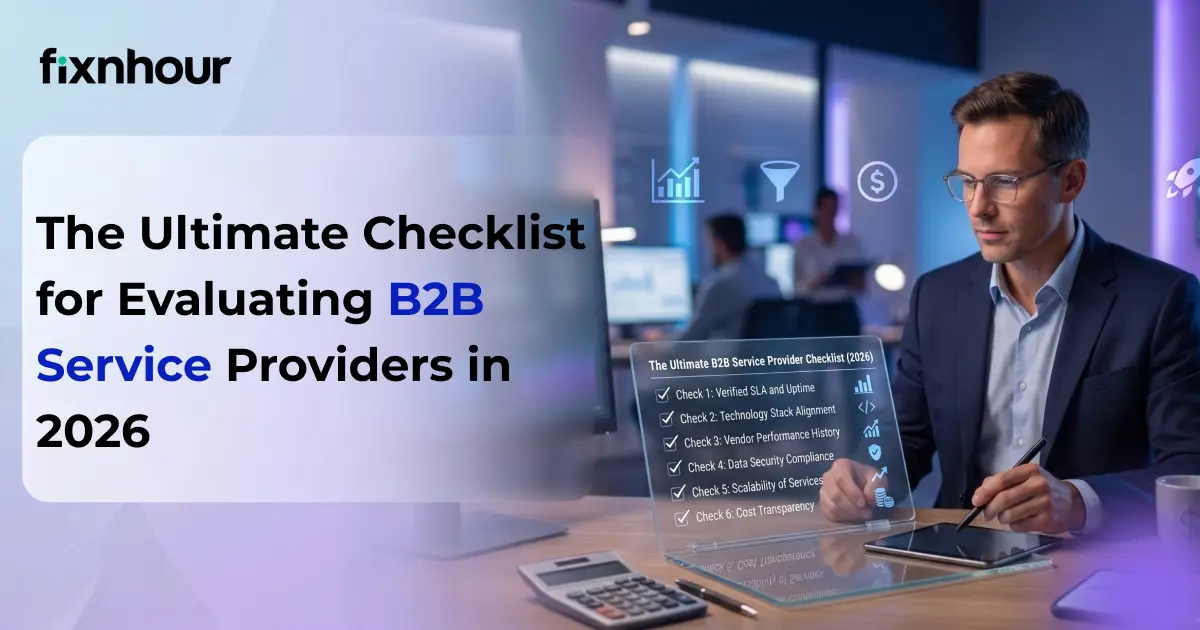
Choosing the right B2B service provider can make or break your business growth in today’s competitive digital landscape. Whether you're outsourcing software development, marketing, or IT services, selecting a reliable partner is critical for achieving long-term success. Many businesses rush into decisions based on pricing alone, only to face delays, poor quality, or communication issues later.That’s why having a structured B2B Sales Influencers checklist is essential. It helps you compare providers, reduce risks, and ensure you’re investing in a partner who aligns with your goals. From assessing expertise and pricing models to checking reviews and scalability, every factor matters.In this guide, we’ll walk you through the ultimate checklist for evaluating B2B service providers, helping you make smarter, data-driven decisions and maximize ROI.
Define Your Business Requirements Clearly
Before selecting any B2B service provider, you must clearly define your business goals, expectations, and project scope. Without clarity, even the best provider may fail to deliver results. Identify your needs, timelines, and desired outcomes to ensure alignment and avoid costly misunderstandings later in the process.
Identify Your Goals and KPIs
Start by outlining clear business objectives and measurable KPIs. Whether it’s increasing revenue, improving efficiency, or scaling operations, defined goals help you evaluate provider performance and ensure accountability throughout the partnership.
Determine Scope of Work
Clearly define deliverables, timelines, and responsibilities. A well-documented scope prevents confusion, ensures transparency, and helps both parties stay aligned on expectations, reducing risks of delays or unmet outcomes.
Assess Experience and Industry Expertise
Experience plays a crucial role in choosing the best B2B service provider. A company with proven industry expertise understands challenges, trends, and solutions specific to your niche. Always evaluate their past work, domain knowledge, and technical capabilities before making a decision.
Check Industry-Specific Experience
Review case studies and portfolios to see if the provider has handled projects similar to yours. Industry-specific experience ensures faster execution, better problem-solving, and improved results.
Evaluate Team Skills and Certifications
Analyze the technical skills, certifications, and expertise of the team. A skilled and certified team ensures high-quality service delivery and adherence to industry standards.
Analyze Reputation and Client Feedback
A provider’s reputation reflects its reliability and service quality. Checking client reviews, testimonials, and ratings helps you understand real-world performance. Trusted feedback gives insights into strengths, weaknesses, and overall client satisfaction.
Read Reviews and Testimonial
Look for verified reviews on trusted platforms. Positive testimonials and success stories indicate reliability, professionalism, and consistent performance across projects.
Request References
Ask for direct client references and speak with past customers. This provides honest insights into communication, delivery timelines, and long-term reliability.
Evaluate Communication and Transparency
Strong communication is key to successful B2B partnerships. A reliable provider ensures regular updates, clear reporting, and transparency in processes. Poor communication often leads to delays, misunderstandings, and project failure.
Communication Channels and Responsiveness
Check how quickly the provider responds and which tools they use. Efficient communication ensures smoother collaboration and faster issue resolution.
Transparency in Processes
Transparent workflows, regular reports, and clear updates build trust. Choose providers who openly share progress and challenges.
Compare Pricing Models and ROI
Pricing is important, but value matters more. Evaluate different pricing models and ensure they align with your budget and expected ROI. The cheapest option isn’t always the best. Choosing a trusted partner like Fixnhour ensures better quality, transparency, and long-term business results.
Understand Pricing Structure
Compare fixed, hourly, and subscription pricing models. Watch out for hidden costs and unclear billing practices that may increase overall expenses.
Measure Return on Investment
Focus on value delivered rather than cost alone. A good provider should help generate measurable business growth and long-term ROI.
Check Technology Stack and Innovation
Modern businesses need providers who use advanced technologies and innovative solutions. The right tech stack ensures scalability, efficiency, and future-ready operations.
Tools and Technologies Used
Evaluate the tools, frameworks, and platforms used. Updated technologies improve performance, security, and scalability.
Innovation and Adaptability
Choose providers who embrace trends like AI, automation, and digital transformation to stay competitive.
Review Security, Compliance, and Data Protection
Data security is critical when working with a B2B service provider. Ensure they follow strict compliance standards and have strong security protocols in place.
Data Security Standards
Check compliance with GDPR, ISO, or other standards. Strong security practices protect sensitive business data.
Risk Management
Ensure they have backup systems, disaster recovery plans, and confidentiality agreements to minimize risks.
Evaluate Scalability and Long-Term Partnership Potential
A great B2B provider should grow with your business. Scalability ensures they can handle increasing demands and support long-term success.
Flexibility to Scale Services
Assess whether the provider can expand services as your business grows without compromising quality.
Long-Term Collaboration Potential
Look for providers interested in building long-term partnerships, not just short-term projects.
Red Flags to Avoid When Choosing a B2B Service Provider
Be cautious of warning signs like poor communication, lack of transparency, or no proven track record. These red flags often indicate unreliable providers who may fail to deliver expected results.
Unclear pricing or hidden costs that are not explained upfront, leading to unexpected expenses later in the project.
Poor or delayed communication, where the provider takes too long to respond or avoids giving clear project updates.
No proven portfolio or case studies, making it difficult to verify their real experience and past performance.
Overpromising unrealistic results, such as guaranteed success in a very short time without a clear strategy.
Lack of transparency in process or reporting, which makes it hard to track progress and measure accountability.
No formal contract or SLA agreement, which increases the risk of misunderstandings and weakens business protection.
Conclusion
Selecting the right B2B service provider requires careful planning, research, and evaluation. By following this checklist, you can minimize risks, maximize ROI, and build a strong partnership. Focus on expertise, communication, and long-term value to ensure sustainable business growth and success in 2026 and beyond.
Ready to grow your business with a trusted B2B service provider? Contact us today for expert solutions and fast support.
FAQs
Q1. What should I look for in a reliable B2B service provider?
A reliable B2B service providers should have proven industry experience, strong client reviews, transparent communication, and a skilled team. Always check their portfolio to understand past work quality and relevance to your industry. Look for companies that clearly define project scope, timelines, and pricing. Good providers also focus on long-term partnerships rather than one-time projects. Additionally, ensure they follow security standards and offer scalable solutions. A trustworthy partner not only delivers services but also helps you grow your business with strategic insights, innovation, and consistent support tailored to your business goals.
Q2. Why is evaluating B2B service providers important for business growth?
Evaluating B2B service providers is crucial because the wrong choice can lead to financial loss, poor-quality output, and project delays. A structured evaluation helps you select a partner aligned with your goals, ensuring better efficiency and ROI. It also reduces risks related to miscommunication, hidden costs, and lack of accountability. By carefully assessing expertise, pricing, and reputation, businesses can build strong, long-term partnerships. The right provider acts as a growth partner, helping you scale faster, improve operations, and stay competitive in your industry through expert-driven solutions and consistent service quality.
Q3. How do I compare different B2B service providers effectively?
To compare B2B service providers, start by analyzing their experience, pricing models, client reviews, and technology stack. Create a checklist to evaluate each provider consistently. Compare their past projects and industry expertise to see who best matches your requirements. Also assess communication speed, transparency, and scalability options. Don’t just focus on cost—evaluate overall value and ROI. Request proposals or demos to understand their approach. A structured comparison helps you identify which provider aligns best with your business needs, ensuring better performance, reduced risks, and long-term success.
Q4. What are the common red flags when choosing a B2B service provider?
Common red flags in a B2B service providers include unclear pricing, poor communication, lack of verified reviews, and no proven portfolio. If a provider makes unrealistic promises or avoids sharing detailed processes, it’s a warning sign. Delayed responses and lack of transparency in reporting also indicate potential issues. Another red flag is resistance to signing formal agreements or SLAs. Businesses should avoid providers who cannot demonstrate industry experience or case studies. Identifying these warning signs early helps you avoid unreliable partnerships and ensures smoother project execution with better accountability and trust.
Q5. How important is communication in B2B service provider relationships?
Communication is one of the most important factors in a successful B2B service providers relationship. Clear and timely communication ensures smooth project execution, reduces misunderstandings, and improves productivity. Providers who offer regular updates, transparent reporting, and quick responses are more reliable. Poor communication often leads to delays, confusion, and unmet expectations. Effective communication also builds trust and long-term collaboration. Using tools like Slack, email, or project management platforms improves coordination. A strong communication system ensures both parties stay aligned on goals, timelines, and deliverables, resulting in better outcomes and higher satisfaction.
Q6. What pricing model is best for B2B service providers?
There is no single best pricing model for B2B service providers, as it depends on project needs. Common models include fixed pricing, hourly rates, and subscription-based plans. Fixed pricing works well for clearly defined projects, while hourly models suit flexible or ongoing work. Subscription models are ideal for long-term partnerships. However, businesses should focus on value rather than just cost. Always evaluate what is included in pricing and check for hidden charges. The best model is the one that balances cost, flexibility, and ROI while ensuring consistent quality and reliable service delivery.
Q7. How can I ensure long-term success with a B2B service provider?
To ensure long-term success with a B2B service providers, focus on building a transparent and collaborative relationship. Set clear expectations, define KPIs, and maintain regular communication. Choose a provider that offers scalability, innovation, and ongoing support. Regular performance reviews help maintain quality and alignment with business goals. Trust and consistency are key factors in long-term partnerships. Also, work with providers who understand your industry and adapt to changing needs. A strong B2B relationship goes beyond service delivery—it becomes a strategic partnership that supports continuous business growth and success over time.