Choosing the right vendor can make or break a business project. Whether you're looking for a software development company, manufacturing supplier, marketing agency, logistics partner, or IT service provider, selecting the wrong vendor can lead to delays, budget overruns, poor quality, and lost opportunities. In 2026, vendor selection has become more complex than ever. Businesses now evaluate vendors based on expertise, technology adoption, cybersecurity standards, scalability, customer support, and long-term reliability. With hundreds of suppliers available online, decision-makers need a structured process to identify the best fit. This comprehensive B2B Vendor Selection Checklist will help businesses evaluate, compare, and select vendors confidently while minimizing risk and maximizing ROI.
Understanding Your Business Requirements Before Choosing a Vendor
Before selecting a vendor, businesses must clearly define their goals, project scope, budget, technical requirements, and expected outcomes. Understanding these requirements helps streamline the evaluation process, identify the most suitable partners, and avoid costly mistakes. A well-defined set of business needs enables organizations to compare vendors objectively, ensure alignment with long-term objectives, and choose a provider like Fixnhour capable of delivering quality solutions, reliable support, and measurable results. This foundation is essential for making informed vendor selection decisions and achieving project success.
Define Project Goals
Identify the desired outcomes, timelines, and expected deliverables.
Establish Budget Parameters
Determine your spending limits and anticipated return on investment.
Identify Technical Requirements
List all features, integrations, compliance requirements, and performance expectations.
Consider Future Growth
Choose vendors capable of supporting your business as it scales.
Essential B2B Vendor Selection Criteria
Choosing the right B2B vendor requires evaluating several critical factors that directly impact business success. Key selection criteria include industry experience, technical expertise, service quality, pricing transparency, scalability, security standards, customer support, and client reviews. Businesses should also assess a vendor’s reliability, communication practices, and ability to meet project deadlines. By carefully analyzing these factors, organizations can identify trusted partners, reduce risks, improve operational efficiency, and build long-term relationships that support sustainable growth and successful project outcomes.
Industry Experience
Vendors with proven experience understand industry challenges and best practices.
Product and Service Quality
Assess quality standards, certifications, and performance records.
Pricing Transparency
Look for clear pricing models without hidden fees.
Scalability
Ensure the vendor can grow alongside your business needs.
Innovation and Technology
Evaluate their adoption of AI, automation, cloud solutions, and emerging technologies.
Also Read: The Ultimate Checklist for Evaluating B2B Providers in 2026
Evaluating Vendor Reputation and Credibility
A vendor’s reputation and credibility play a crucial role in determining their ability to deliver consistent results. Businesses should review client testimonials, case studies, industry recognition, online reviews, and past project performance to assess trustworthiness. Evaluating factors such as communication, reliability, financial stability, and customer satisfaction helps identify dependable partners. A strong reputation indicates proven expertise and professionalism, reducing business risks and increasing the likelihood of successful, long-term collaboration and project success.
Check Reviews and Testimonials
Customer feedback often reveals strengths and weaknesses.
Analyze Case Studies
Successful projects demonstrate real-world capabilities.
Verify Certifications
Industry certifications validate expertise and compliance.
Request Client References
Speaking with existing clients provides valuable insights.
Financial Stability Assessment
Assessing a vendor’s financial stability is essential to ensure they can reliably support your business over the long term. Businesses should evaluate factors such as revenue growth, profitability, cash flow, creditworthiness, and overall financial health. A financially stable vendor is more likely to meet contractual obligations, invest in innovation, maintain service quality, and withstand market challenges. Conducting a thorough financial assessment helps reduce risks, prevent project disruptions, and establish secure, long-lasting business partnerships.
Key Areas to Review
- Years in business
- Revenue growth
- Market reputation
- Investment in innovation
- Business sustainability
Red Flags
- Frequent ownership changes
- Unclear pricing structures
- Poor communication
- Negative customer reviews
Also Read: Future of B2B Service Discovery: Key Trends for Businesses
Vendor Security, Compliance, and Risk Management
Evaluating vendor security, compliance, and risk management practices is essential to protect business data and ensure regulatory alignment. Organizations should assess a vendor’s data protection measures, cybersecurity protocols, industry certifications, and adherence to legal standards such as GDPR or ISO compliance. Effective risk management strategies, including incident response and disaster recovery plans, further ensure operational continuity. A vendor with strong security and compliance practices helps minimize risks, safeguard sensitive information, and build a trustworthy, resilient business partnership.
Security Checklist
- Data encryption practices
- Access control measures
- Security certifications
- Incident response plans
- Regular security audits
Service Level Agreements (SLAs) and Contract Review
Service Level Agreements (SLAs) and contract reviews are critical steps in ensuring clear expectations between businesses and vendors. SLAs define performance standards, response times, deliverables, and accountability measures, while contracts outline legal terms, pricing, and responsibilities. Carefully reviewing these documents helps prevent misunderstandings, reduce risks, and ensure service quality. A well-structured SLA and transparent contract create a strong foundation for trust, compliance, and long-term successful vendor relationships.
Review These Elements
- Performance metrics
- Response times
- Support availability
- Escalation procedures
- Penalty clauses
Contract Considerations
- Pricing structure
- Renewal terms
- Exit clauses
- Ownership rights
- Confidentiality agreements
Also Read: FixnHour | The Business Services Providers
Vendor Communication and Customer Support Evaluation
Evaluating vendor communication and customer support is essential to ensure smooth collaboration and timely issue resolution. Businesses should assess response time, clarity of communication, availability across channels, and the quality of ongoing support services. Strong communication practices help prevent misunderstandings, improve project coordination, and ensure faster problem-solving. A vendor with reliable and responsive customer support builds trust, enhances efficiency, and contributes to long-term successful business relationships and project delivery.
Assess Support Quality
- Availability of support channels
- Response speed
- Dedicated account managers
- Problem resolution processes
Questions to Ask
- How quickly do they respond?
- What support hours are available?
- Is emergency support offered?
Creating a Vendor Comparison Matrix
Creating a vendor comparison matrix helps businesses systematically evaluate and compare multiple vendors based on key criteria such as pricing, expertise, service quality, security, scalability, and support. This structured approach makes it easier to identify strengths and weaknesses of each option, remove bias, and support data-driven decision-making. By using a comparison matrix, organizations can quickly shortlist the most suitable vendors, reduce selection risks, and choose a partner that best aligns with their business goals and project requirements.
Evaluation Categories
| Criteria | Weight |
|---|---|
| Experience | 20% |
| Cost | 15% |
| Quality | 20% |
| Security | 15% |
| Scalability | 15% |
| Support | 15% |
Complete B2B Vendor Selection Checklist (2026)
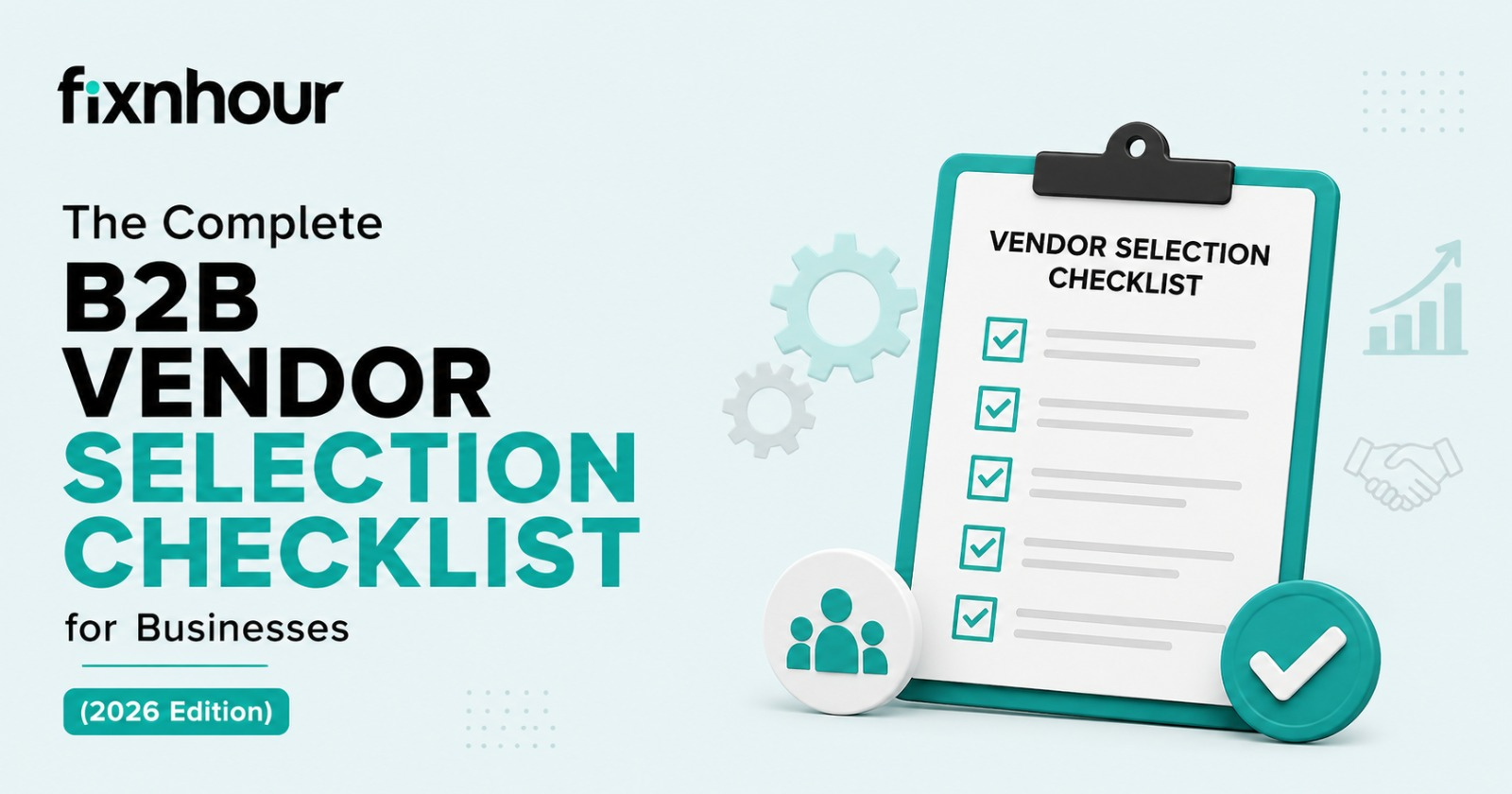
The Complete B2B Vendor Selection Checklist (2026) is a step-by-step guide designed to help businesses evaluate and choose the right partners with confidence. It covers all essential factors, including business requirements, technical expertise, pricing, compliance, security, financial stability, communication, and service quality. This checklist ensures a structured and transparent evaluation process, helping organizations reduce risks, compare vendors effectively, and make informed decisions that support long-term growth and successful project outcomes in a competitive market.
Pre-Selection Checklist
✓ Define business objectives
✓ Establish budget
✓ Create vendor requirements list
✓ Identify key stakeholders
✓ Determine success metrics
Evaluation Checklist
✓ Review portfolio
✓ Check reviews
✓ Verify certifications
✓ Assess technology stack
✓ Evaluate security practices
✓ Compare pricing
✓ Contact references
Contract Checklist
✓ Review SLA
✓ Analyze pricing terms
✓ Understand cancellation policies
✓ Confirm support commitments
✓ Verify legal compliance
Post-Selection Checklist
✓ Conduct onboarding
✓ Establish KPIs
✓ Schedule regular reviews
✓ Monitor performance
✓ Build long-term partnership strategy
Common Vendor Selection Mistakes Businesses Should Avoid
Selecting the right vendor is critical for project success, but many businesses make avoidable mistakes during the process. Common errors include focusing only on cost, ignoring vendor reputation, overlooking security and compliance, failing to review contracts and SLAs properly, and not evaluating long-term scalability. Poor communication assessment and lack of structured comparison can also lead to wrong decisions. Understanding and avoiding these mistakes helps businesses choose reliable vendors, reduce risks, and build strong, long-term partnerships that support sustainable growth.
Choosing Based on Price Alone
The cheapest vendor isn't always the best value.
Ignoring Future Scalability
A vendor that meets today's needs may fail tomorrow.
Skipping Due Diligence
Research is essential before signing agreements.
Overlooking Security Risks
Data breaches can be costly and damaging.
How AI and B2B Marketplaces Are Transforming Vendor Selection
AI and B2B marketplaces are revolutionizing the vendor selection process by making it faster, smarter, and more data-driven. AI-powered tools help businesses analyze vendor performance, compare capabilities, assess risks, and predict outcomes with greater accuracy. Meanwhile, B2B marketplaces provide centralized platforms where companies can discover, evaluate, and connect with verified vendors globally. Together, they improve transparency, reduce manual effort, and enable more informed decision-making, helping businesses choose the right partners efficiently and confidently in a competitive digital economy.
Benefits Include
- Automated vendor matching
- Verified company profiles
- Real-time reviews
- Performance analytics
- Faster decision-making
Why Businesses Prefer Verified B2B Marketplaces
Businesses prefer verified B2B marketplaces because they offer a trusted and transparent environment for finding reliable vendors. These platforms feature pre-verified suppliers, reducing the risk of fraud, poor-quality services, and unreliable partnerships. Companies benefit from better credibility checks, user reviews, and standardized evaluation processes that simplify decision-making. Verified marketplaces also save time, improve efficiency, and provide access to a wider pool of trusted global partners, making vendor selection faster, safer, and more effective.
Faster Discovery
Find qualified vendors quickly.
Improved Transparency
Access verified reviews and ratings.
Better Comparisons
Compare vendors side-by-side.
Reduced Risk
Work with pre-screened service providers.
Final Thought
In today’s competitive business landscape, vendor selection is a strategic decision rather than just a procurement activity. The right vendor can drive business growth, improve operational efficiency, enhance customer satisfaction, and deliver long-term value. Organizations that adopt a structured evaluation process, focus on quality instead of only price, and utilize modern B2B marketplaces are more likely to build strong, reliable partnerships and achieve sustainable success in 2026 and the years ahead. Get Started Today.
FAQs
1. What is a B2B vendor selection checklist?
A B2B vendor selection checklist is a structured framework used to evaluate and compare suppliers based on factors such as experience, pricing, quality, security, scalability, and customer support before making a business decision.
2. Why is vendor selection important for businesses?
Vendor selection directly impacts project quality, operational efficiency, costs, and long-term business growth. Choosing the right vendor reduces risks and improves overall business performance.
3. What factors should businesses consider when selecting a vendor?
Businesses should evaluate industry expertise, service quality, pricing transparency, security standards, financial stability, scalability, customer support, and reputation before selecting a vendor.
4. How can businesses verify a vendor's credibility?
Companies can verify credibility by checking reviews, client testimonials, case studies, certifications, references, and the vendor's track record within the industry.
5. What are the biggest vendor selection mistakes to avoid?
Common mistakes include choosing solely based on price, ignoring security requirements, skipping reference checks, overlooking scalability, and failing to review contract terms thoroughly.
6. How does AI improve the vendor selection process?
AI helps businesses identify suitable vendors faster by analyzing performance data, matching requirements, automating evaluations, and providing data-driven recommendations.
7. What is a vendor comparison matrix?
A vendor comparison matrix is a scoring system that allows businesses to compare multiple vendors based on weighted criteria such as cost, quality, support, experience, and security.
8. Why are verified B2B marketplaces becoming popular in 2026?
Verified B2B marketplaces provide transparent reviews, trusted vendor profiles, simplified comparisons, and faster access to qualified suppliers, making vendor selection more efficient and reliable.