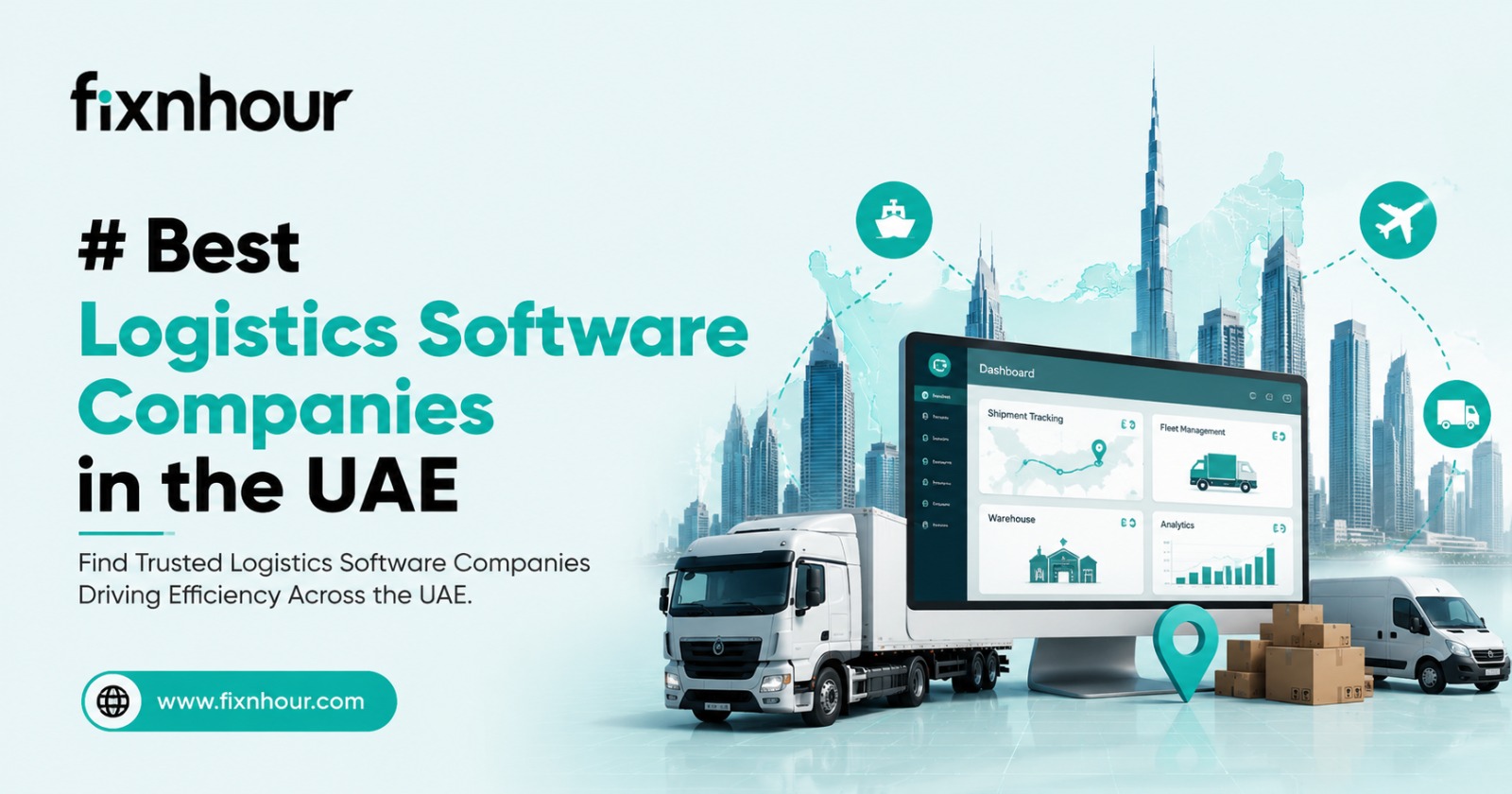
The UAE has established itself as one of the Middle East's most important logistics and supply chain hubs. With Dubai and Abu Dhabi connecting businesses to international markets, logistics companies are under increasing pressure to deliver shipments faster, manage fleets efficiently, control warehouse operations, and provide customers with real-time visibility. Technology has become an important part of meeting these expectations.
Modern logistics software can bring transportation, fleet management, warehouse operations, inventory, shipment tracking, delivery management, and customer communication into a connected digital ecosystem. Advanced platforms can also use AI, automation, GPS tracking, route optimization, IoT, predictive analytics, and cloud computing to improve logistics operations. However, choosing the right technology partner is not always straightforward. A general software development company may have excellent technical skills but limited knowledge of freight forwarding, transportation, warehousing, fleet management, or last-mile delivery.
This is why selecting an experienced logistics software development company in the UAE matters. In this guide, Fixnhour has compiled some of the best logistics software companies in the UAE that businesses can consider for custom logistics platforms, transportation management systems (TMS), warehouse management systems (WMS), fleet management software, delivery applications, supply chain solutions, and logistics automation.
Why Logistics Software Matters in the UAE
Logistics businesses operate in an environment where timing, visibility, accuracy, and coordination matter at every stage. A single shipment may involve a warehouse team, dispatcher, driver, customer, supplier, carrier, and finance department. When these stakeholders rely on disconnected tools, communication gaps and manual processes can quickly become expensive. A centralized logistics management platform can help businesses connect these operations.
Major Benefits of Logistics Software
| Business Area | How Software Helps |
|---|---|
| Fleet Management | Tracks vehicles, drivers, fuel, maintenance, and locations |
| Transportation | Supports dispatching, scheduling, carrier management, and route planning |
| Warehouse | Manages inventory, picking, packing, and order fulfillment |
| Shipment Management | Provides real-time shipment status and tracking |
| Last-Mile Delivery | Optimizes routes and improves delivery coordination |
| Customer Experience | Provides delivery notifications and shipment tracking |
| Analytics | Provides operational dashboards and performance insights |
| Automation | Reduces repetitive manual tasks and improves operational efficiency |
| Integration | Connects ERP, CRM, payment, GPS, and other business systems |
What Is Logistics Software?
Logistics software is a digital solution used to plan, manage, monitor, and optimize the movement and storage of products. Depending on the company's requirements, it can include transportation management, warehouse management, fleet tracking, inventory management, order management, route optimization, shipment tracking, delivery management, freight management, reporting, and customer communication.
Core Functions of Logistics Software
- Transportation management
- Fleet management
- Warehouse management
- Inventory management
- Shipment tracking
- Order management
- Route optimization
- Driver management
- Delivery scheduling
- GPS tracking
- Digital proof of delivery
- Automated notifications
- Billing and invoicing
- Reporting and analytics
- API and third-party integrations
Types of Logistics Software
Businesses should first understand which type of logistics technology they need before selecting a development company.
| Software Type | Primary Purpose | Typical Users |
|---|---|---|
| TMS (Transportation Management System) | Transportation planning and management | Transporters, 3PLs, logistics managers |
| WMS (Warehouse Management System) | Warehouse and inventory management | Warehouses, distributors, retailers |
| Fleet Management | Vehicle and driver monitoring | Fleet operators |
| Delivery Management | Last-mile delivery coordination | Courier and delivery companies |
| Freight Management | Freight planning and tracking | Freight forwarders |
| Supply Chain Software | End-to-end supply chain visibility | Enterprises and manufacturers |
| Logistics Marketplace | Connects logistics providers and customers | Logistics startups |
| Logistics Mobile App | Mobile access to logistics operations | Drivers, customers, field teams |
Also Read:- Best Software Development Companies in UAE
What Should You Look for in a Logistics Software Company?
Before comparing vendors, define what your business actually needs. A strong logistics software development company in the UAE should ideally understand both technology and logistics operations.
Technical Capabilities
Look for expertise in:
- Custom software development
- Mobile app development
- Cloud computing
- API development
- AI and machine learning
- IoT integration
- GPS and mapping
- Data analytics
- Cybersecurity
- ERP integration
- CRM integration
Logistics Expertise
The provider should understand relevant workflows such as:
- Fleet management
- Freight forwarding
- Warehousing
- Inventory management
- Dispatch
- Last-mile delivery
- Courier operations
- 3PL operations
- Transportation management
Top Logistics Software Companies in the UAE
Discover the top logistics software companies in the UAE offering custom logistics solutions, transportation management systems (TMS), warehouse management software (WMS), fleet management, GPS tracking, route optimization, last-mile delivery platforms, AI, and logistics automation. This list helps UAE businesses compare technology partners based on their capabilities, industry expertise, scalability, and ability to support modern logistics operations.
1. Coherent Lab
Coherent Lab is for businesses looking for custom, scalable, and technology-driven software solutions. The company provides software development, web development, mobile app development, SaaS development, API development, and integration capabilities that can be applied to complex logistics requirements. For logistics businesses, custom technology can help connect multiple operational areas through a centralized platform. Depending on the project scope, a logistics solution can include transportation management, fleet management, warehouse management, shipment tracking, delivery management, route optimization, driver applications, customer portals, and real-time analytics dashboards.
- Custom logistics software development
- Mobile and web application development
- API, SaaS, and integration capabilities
- AI, automation, supply chain, and inventory technology
2. Apptunix
Apptunix is a software development company that can be considered by logistics businesses looking for custom mobile and web applications. The company appears in UAE and Dubai logistics technology comparisons and is relevant for organizations looking to build digital products around transportation, delivery, fleet, and customer management. Logistics applications often involve several user groups. Drivers need mobile access to routes and delivery instructions, customers want shipment visibility, dispatchers need centralized order management, while administrators require analytics and operational controls.
- Logistics and delivery application development
- Mobile-first digital solutions
- Fleet and transportation technology
- Custom software development
3. Antino
Antino can be considered by businesses looking for custom web and mobile solutions for logistics and enterprise operations. The company has been included in recent UAE logistics-development comparisons and can be relevant to organizations planning digital transformation initiatives. Modern logistics platforms need to support more than basic shipment tracking. They may need to manage customers, orders, drivers, vehicles, warehouses, routes, notifications, payments, and reporting from one connected system.
- Web and mobile application development
- Enterprise digital solutions
- Custom logistics applications
- Integration and scalable technology
4. Devsinc
Devsinc is an enterprise-focused software development company that can be considered by organizations with complex technology requirements. Its capabilities can be relevant to logistics companies looking for enterprise software, backend engineering, cloud development, integrations, and digital transformation. Large logistics organizations frequently have several existing systems. Replacing all of them at once may not be practical, so new software often needs to integrate with ERP platforms, CRM systems, accounting tools, warehouse applications, GPS systems, and external APIs.
- Enterprise software development
- Cloud and backend engineering
- API and system integrations
- Digital transformation capabilities
5. Burjcode
Burjcode is a UAE-focused software development company with dedicated logistics software offerings. Its logistics capabilities include areas such as fleet management, transportation management systems, warehouse management systems, last-mile delivery, freight forwarding, and courier software. This makes the company particularly relevant for logistics businesses that want a technology partner familiar with transportation and delivery workflows.
- Logistics software development
- TMS and WMS solutions
- Fleet management systems
- Courier and last-mile delivery software
6. Competenza
Competenza can be considered by logistics businesses looking for an operations-focused technology partner. Its logistics development approach emphasizes operational requirements, integration, architecture, and post-launch ownership. This approach is important because logistics software has to work in real operating environments. A platform can have a modern interface but still fail if dispatchers cannot manage orders efficiently, drivers cannot update delivery status, or managers cannot access reliable operational information.
- Operations-focused logistics software
- Integration-led architecture
- Custom logistics applications
- Post-launch technology support
7. Suffescom Solutions
Suffescom Solutions can be considered by businesses looking for custom logistics applications across mobile and web platforms. Its broader software development capabilities can support businesses planning delivery platforms, fleet applications, transportation systems, and other logistics-focused digital products. Custom development can be useful when a business has workflows that do not fit neatly into standard logistics software. A company may require a dedicated driver app, customer application, dispatcher dashboard, warehouse module, or administrator portal.
- Custom logistics applications
- Mobile and web development
- Delivery and fleet technology
- Scalable digital products
8. Control Shift
Control Shift is particularly relevant to UAE logistics businesses looking for transportation and warehouse technology. Its logistics solutions cover areas including TMS, WMS, live tracking, and last-mile delivery, making it relevant to courier, freight, logistics, and 3PL businesses. Transportation and warehouse operations generate large amounts of data. A connected platform can help businesses centralize information about orders, vehicles, deliveries, warehouse activities, and customers.
- TMS and WMS solutions
- Live logistics tracking
- Last-mile delivery software
- Logistics and 3PL technology
9. Code Brew Labs
Code Brew Labs provides logistics software development services for businesses looking to improve transportation and delivery visibility. Its logistics offering highlights areas such as workflow analysis, cloud architecture, GPS tracking, shipment APIs, and real-time operational dashboards. For logistics companies, these capabilities can help connect drivers, dispatchers, customers, and operations teams through a centralized platform.
- Custom logistics software
- Cloud-based platforms
- GPS and real-time tracking
- TMS, WMS, and automation capabilities
10. Radixweb
Radixweb is an enterprise software development company that can be considered by logistics organizations looking for custom business applications, cloud technology, and system integration. Enterprise logistics operations often depend on multiple applications. New logistics software therefore needs to communicate with ERP platforms, accounting systems, warehouse applications, CRM platforms, customer portals, and third-party APIs.
- Enterprise software development
- Cloud and application modernization
- API and system integration
- Scalable business technology
Comparison of the Best Logistics Software Companies in the UAE
Choosing a logistics software partner becomes easier when businesses can compare companies based on their technical expertise, logistics capabilities, software services, industry experience, and scalability. A clear comparison helps businesses identify providers that are better suited for requirements such as TMS, WMS, fleet management, GPS tracking, route optimization, last-mile delivery, AI, automation, and enterprise integrations.
| Rank | Company | Best For | Key Services |
|---|---|---|---|
| 1 | Coherent Lab | Custom logistics platforms | Software, mobile, SaaS, APIs, AI, integrations |
| 2 | Apptunix | Logistics applications | Mobile, delivery, fleet, transportation |
| 3 | Antino | Digital logistics products | Mobile, web, enterprise solutions |
| 4 | Devsinc | Enterprise logistics | Cloud, backend, integrations |
| 5 | Burjcode | UAE logistics businesses | TMS, WMS, fleet, delivery |
| 6 | Competenza | Operations-focused systems | Architecture, integrations, logistics |
| 7 | Suffescom Solutions | Custom logistics apps | Mobile, web, automation |
| 8 | Control Shift | Logistics and 3PL | TMS, WMS, tracking |
| 9 | Code Brew Labs | Smart logistics platforms | GPS, cloud, automation |
| 10 | Radixweb | Enterprise software | Cloud, integration, moderni |
How to Choose the Best Logistics Software Company in the UAE
Selecting a software partner should involve more than comparing development rates. The right company should understand your business model and be able to build technology that can grow with your operations.
1. Check Logistics Industry Experience
Ask potential vendors about their experience with:
| Logistics Area | What to Check |
|---|---|
| Freight Forwarding | Shipment and carrier workflows |
| Courier | Delivery and driver management |
| 3PL | Multi-client logistics operations |
| Warehousing | WMS and inventory workflows |
| Fleet | Vehicle and driver tracking |
| E-commerce | Order management and last-mile delivery |
| Transportation | TMS and dispatching |
2. Evaluate Technical Expertise
A strong technology partner should have experience with:
- Cloud development
- AI and machine learning
- IoT
- GPS tracking
- Mapping APIs
- Mobile applications
- Web applications
- API development
- Data analytics
- Cybersecurity
- ERP integration
3. Review Portfolio and Case Studies
Do not rely only on a company's service page. Ask for examples demonstrating:
- Similar business requirements
- Relevant logistics applications
- Complex integrations
- Mobile applications
- Large-scale platforms
- Performance optimization
- Security implementation
4. Check Reviews and Reputation
Reviews can help you understand:
- Communication quality
- Project management
- Technical expertise
- Responsiveness
- Ability to meet deadlines
- Post-launch support
Also Read :- Verified Software Companies on Fixnhour
Essential Features of Logistics Software
The features you need will depend on your business model, but the following functionality is commonly valuable.
| Feature | Purpose |
|---|---|
| GPS Tracking | Monitor vehicles and shipments |
| Route Optimization | Find efficient delivery routes |
| Fleet Management | Manage vehicles and drivers |
| Automated Dispatch | Assign deliveries efficiently |
| Shipment Tracking | Monitor shipment status |
| Driver App | Give drivers mobile access |
| Customer Portal | Let customers track orders |
| Proof of Delivery | Digitize delivery confirmation |
| Inventory Management | Monitor stock levels |
| WMS | Manage warehouse activities |
| TMS | Manage transportation operations |
| Analytics | Measure operational performance |
| Notifications | Keep customers and teams informed |
| API Integration | Connect external systems |
| AI Automation | Improve prediction and decision-making |
Benefits of Logistics Software for UAE Businesses
Investing in logistics management software can create benefits across transportation, warehouse, customer service, and management operations.
Operational Benefits
- Better fleet visibility
- Faster dispatching
- Reduced manual work
- Improved route planning
- Better warehouse productivity
- Fewer communication gaps
Customer Benefits
- Real-time shipment tracking
- Delivery notifications
- Greater transparency
- Better communication
- Faster issue resolution
Management Benefits
- Centralized operational data
- Real-time dashboards
- Performance monitoring
- Data-driven decision-making
- Easier resource planning
Business Benefits
- Lower operational costs
- Improved productivity
- Better customer experience
- Easier scalability
- Stronger supply chain visibility
AI and Automation in Logistics Software
AI is changing how logistics companies plan routes, predict demand, monitor operations, and communicate with customers. AI should not be added simply because it is trending. The most valuable AI features are those that solve a measurable logistics problem.
| AI/Automation Feature | Potential Benefit |
|---|---|
| Route Optimization | Helps identify efficient routes |
| ETA Prediction | Improves estimated delivery times |
| Demand Forecasting | Supports inventory and capacity planning |
| Predictive Maintenance | Helps anticipate vehicle maintenance needs |
| Automated Dispatch | Speeds up delivery assignment |
| AI Customer Support | Provides faster responses |
| Document Automation | Reduces manual data entry |
| Analytics | Identifies operational patterns |
How Much Does Logistics Software Development Cost in the UAE?
There is no universal price for developing logistics software. The cost depends on the platform's scope, number of users, integrations, features, technology stack, and level of customization.
Factors That Affect Development Cost
| Factor | Impact on Cost |
|---|---|
| Platform Type | Mobile, web, SaaS, or enterprise |
| Number of Features | More functionality requires more development |
| TMS/WMS | Adds specialized logistics workflows |
| GPS Tracking | Requires location and mapping integration |
| AI | Advanced AI increases development complexity |
| Integrations | ERP, CRM, payment, GPS, and API integrations |
| UI/UX | Custom interfaces require additional design work |
| Security | Enterprise security can increase development requirements |
| Cloud Infrastructure | Depends on expected usage and scalability |
| Maintenance | Ongoing support adds recurring costs |
Typical Development Stages
| Stage | Main Activities |
|---|---|
| Discovery | Requirements and business analysis |
| Design | UI/UX and user journeys |
| Architecture | Technology and database planning |
| Development | Frontend and backend development |
| Integration | APIs and third-party systems |
| Testing | Functional, security, and performance testing |
| Deployment | Production launch |
| Maintenance | Updates, |
Also Read :- Software Development Cost in UAE
Logistics Software Development Process
The logistics software development process involves several structured stages, from understanding business requirements to deploying and maintaining the final platform. A reliable development approach ensures that the software is secure, scalable, easy to use, and aligned with real-world logistics operations. Whether you are building a TMS, WMS, fleet management system, delivery app, or custom logistics platform, each stage helps reduce development risks and create a solution that can grow with your business.
Step 1: Understand Business Requirements
The first stage is understanding your logistics workflows, users, operational challenges, and business objectives.
Step 2: Create UI/UX Design
Design interfaces for:
- Administrators
- Drivers
- Dispatchers
- Warehouse staff
- Customers
- Managers
Step 3: Plan the Software Architecture
Developers define:
- Database architecture
- Backend
- APIs
- Cloud infrastructure
- Security
- User roles
- Integrations
Step 4: Develop the Platform
The development team builds the approved features and workflows.
Step 5: Integrate Third-Party Services
Depending on the project, integrations may include:
- ERP
- CRM
- GPS
- Mapping
- Payment gateways
- Accounting software
- Warehouse systems
- External logistics APIs
Step 6: Test the Software
Testing should cover functionality, performance, security, integrations, usability, and real-world logistics scenarios.
Step 7: Deploy
The completed platform is launched on the appropriate cloud, web, or mobile environment.
Step 8: Maintain and Improve
After launch, businesses can introduce new integrations, automation, analytics, security improvements, and features as their logistics operations grow.
Custom Logistics Software vs Ready-Made Software
Businesses often need to decide between building custom software and purchasing an existing logistics platform. A ready-made platform can work well for standardized operations. Custom logistics software becomes more attractive when a company has unique workflows, complex integrations, specialized automation requirements, or plans to develop technology as a strategic business asset.
| Factor | Custom Logistics Software | Ready-Made Software |
|---|---|---|
| Customization | Very high | Limited to available features |
| Development Time | Usually longer | Usually faster |
| Initial Investment | Usually higher | Usually lower |
| Integrations | Built around requirements | Depends on provider |
| Scalability | Designed for business needs | Depends on platform |
| Ownership | Greater control | Vendor-dependent |
| Unique Workflows | Excellent fit | May require compromises |
| Long-Term Flexibility | High | Depends on vendor |
Why Choose Fixnhour to Find Logistics Software Companies?
Finding a technology company can become time-consuming when businesses have to visit dozens of websites, compare portfolios, read reviews, and evaluate technical capabilities independently. Fixnhour helps simplify company discovery.
Get verified with fixnhour. The platform helps businesses discover top-ranked companies backed by trusted research and verified reviews across technology categories. For a logistics software project, businesses can compare potential providers based on:
| Evaluation Area | What Businesses Can Compare |
|---|---|
| Expertise | Technologies and development capabilities |
| Services | Software, mobile, web, AI, SaaS, etc. |
| Reviews | Client experiences and reputation |
| Portfolio | Previous projects and capabilities |
| Industry Experience | Logistics and related sectors |
| Technology | AI, cloud, APIs, IoT, etc. |
| Business Fit | Alignment with project |
Final Thoughts
The UAE's logistics sector is becoming increasingly technology-driven. Businesses that want to remain competitive need more than basic shipment tracking. They need connected systems that can manage transportation, warehouses, fleets, drivers, customers, inventory, and deliveries while providing accurate information to decision-makers. The right logistics software development company in the UAE can help turn these requirements into a scalable digital platform. When evaluating vendors, look beyond price. Consider their experience with TMS, WMS, fleet management, GPS tracking, route optimization, last-mile delivery, AI, automation, cloud technology, mobile applications, APIs, and enterprise integrations.
Ultimately, the best logistics technology partner is the one that understands your operations, communicates clearly, builds scalable software, and continues supporting the platform after launch. Before signing a contract, request relevant case studies, clarify the project scope, understand ownership of the source code, review security requirements, confirm integration capabilities, discuss maintenance, and establish clear milestones. With the right technology partner, logistics software can become more than an operational tool—it can become a foundation for automation, visibility, efficiency, and sustainable business growth. Contact us for more inquiries.
Frequently Asked Questions
Q1. Which is the best logistics software company in the UAE?
Ans. The best logistics software company depends on your business requirements, budget, technical needs, and logistics model. In this Fixnhour list, Coherent Lab is positioned at #1 for its broad capabilities in custom software, mobile applications, SaaS, APIs, AI, automation, and integration-focused development.
Q2. How much does logistics software development cost in the UAE?
Ans. The cost depends on the complexity of the software. A basic delivery application will have different development requirements from an enterprise logistics platform with TMS, WMS, GPS tracking, AI, multiple user roles, dashboards, and ERP integrations. A detailed project scope is necessary to receive an accurate estimate.
Q3. What features should logistics software have?
Ans. Important logistics software features can include GPS tracking, fleet management, route optimization, shipment tracking, automated dispatch, driver management, warehouse management, inventory management, digital proof of delivery, customer notifications, analytics, reporting, billing, and third-party API integrations.
Q4. What is a Transportation Management System?
Ans. A Transportation Management System, commonly called a TMS, is software used to manage transportation activities. It can help businesses plan shipments, manage carriers, schedule deliveries, optimize routes, track transportation, and analyze logistics performance.
Q5. What is a Warehouse Management System?
Ans. A Warehouse Management System, or WMS, is software used to manage warehouse operations. It can support inventory tracking, receiving, picking, packing, stock transfers, barcode scanning, order fulfillment, and warehouse reporting.
Q6. Can logistics software integrate with ERP systems?
Ans. Yes. Custom logistics software can integrate with ERP, CRM, accounting, payment, GPS, mapping, warehouse, and other third-party systems. APIs are commonly used to exchange information between different platforms.
Q7. How can AI improve logistics software?
Ans. AI can support logistics operations through route optimization, demand forecasting, ETA prediction, predictive maintenance, automated dispatch, intelligent analytics, document processing, and AI-powered customer support. The most useful AI applications depend on the company's operational data and business objectives.
Q8. How long does it take to build logistics software?
Ans. Development time depends on the scope of the project. A simple logistics MVP can be developed faster than a full enterprise platform with TMS, WMS, fleet management, mobile applications, GPS, AI, analytics, and multiple integrations.
Q9. Is custom logistics software better than ready-made software?
Ans. Not always. Ready-made software can be suitable for businesses with standard workflows that need a solution quickly. Custom logistics software is more suitable when a company requires unique workflows, specialized features, complex integrations, or complete control over the product.
Q10. How can I find a reliable logistics software company in the UAE?
Ans. Compare companies based on logistics experience, portfolio, technical capabilities, client reviews, communication, security, integrations, pricing, development methodology, and post-launch support. Fixnhour can help businesses research and shortlist technology companies using trusted research and verified reviews