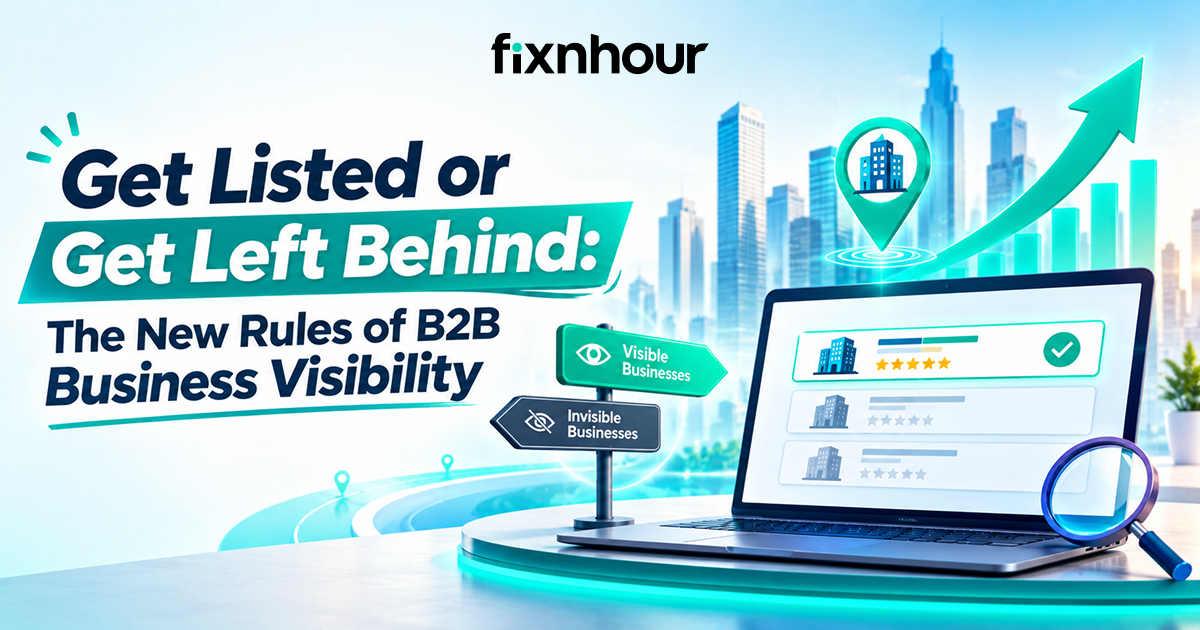
A B2B company can provide excellent services, employ an experienced team, and consistently deliver strong results. However, these strengths may go unnoticed if potential buyers cannot easily find or verify the company online. The way businesses discover service providers has changed significantly. Buyers no longer rely only on referrals, networking events, or sales calls. They now search on Google, explore business directories, compare customer reviews, visit LinkedIn profiles, and use AI tools such as ChatGPT, Gemini, and Perplexity to find suitable providers.
This change has introduced a new rule for B2B growth: offering great services is no longer enough. A company must also be visible, easy to understand, and credible across the platforms its target customers use. Businesses with a strong and consistent digital presence are more likely to reach vendor shortlists and attract qualified inquiries. In comparison, companies with incomplete profiles, outdated details, or limited online proof may lose potential clients before the first conversation begins.
Quick Answer
B2B companies can improve online visibility by creating accurate business listings on Fixnhour, optimizing their websites for search and AI discovery, collecting authentic reviews, publishing useful content, and maintaining consistent company information across platforms. These actions help potential buyers discover, evaluate, verify, and trust a company before contacting its sales team.
Key Takeaways
- Modern B2B buyers research companies independently before contacting sales.
- Business directories create additional opportunities for potential clients to find a company.
- Accurate and consistent company information helps search engines and AI platforms understand a business.
- Verified profiles, reviews, case studies, and portfolios strengthen buyer confidence.
- A complete business listing is more valuable than dozens of incomplete directory profiles.
- Search visibility should be supported by strong website content and third-party brand mentions.
- Businesses must track leads and conversions rather than focusing only on rankings.
- Online visibility requires regular monitoring, updating, and reputation management.
The New Rules of B2B Business Visibility
B2B business visibility is no longer limited to having a professional website or ranking for a few keywords. Today, potential clients discover companies through Google, online directories, review platforms, professional networks, marketplaces, comparison articles, and AI-generated recommendations. To remain competitive, businesses need a clear, accurate, and trustworthy presence across the digital channels their target customers use during research and evaluation.
Visibility Is More Than a Google Ranking
A strong Google ranking can attract valuable traffic, but it is only one part of B2B visibility. Buyers often explore multiple business listing platforms before choosing a service provider. Therefore, companies should maintain a consistent and credible presence across every important touchpoint involved in the buyer’s research and decision-making journey.
- Search engine results
- Business and industry directories
- Review and comparison platforms
- LinkedIn and professional networks
- Service and location pages
- Case studies and client testimonials
- AI-powered search and recommendation tools
From Search Visibility to AI Discoverability
AI platforms have become an important part of business discovery. Tools such as ChatGPT, Gemini, and Perplexity may use company websites, trusted directories, articles, structured data, customer reviews, and third-party mentions to understand what a business does and when it may be relevant to a user’s question.
Clear and consistent information makes it easier for both AI systems and potential buyers to understand a company’s expertise. Conflicting descriptions across different platforms can create confusion and weaken visibility. Businesses should clearly explain their services, target customers, industries, locations, and key strengths using simple, accurate, and factual language.
How Modern B2B Buyers Discover Companies
Modern B2B buyers carefully research companies before contacting sales teams. They search for solutions, compare service providers, read client reviews, explore portfolios, and evaluate Successful Startup Business Models. Since B2B decisions often involve significant budgets and long-term commitments, buyers need clear proof of a company’s expertise, reliability, and credibility before adding it to their shortlist.
Important Digital Discovery Touchpoints
Several online touchpoints can influence whether a business reaches that shortlist:
- The company’s website and service pages
- Google search results
- Business listing websites
- Industry-specific directories
- Reviews and ratings
- Portfolios and case studies
- Leadership and employee profiles
- Social media activity
- Independent articles and mentions
Why Companies Lose Buyers Before the First Meeting
A capable business may lose an opportunity because its online presence fails to communicate its value. Common warning signs include an outdated website, unclear services, broken links, incomplete directory profiles, limited reviews, and inconsistent contact details. The buyer cannot personally investigate every provider. When reliable information is difficult to find, choosing a competitor with clearer proof feels safer.
Why Business Listings Matter for B2B Visibility
A B2B business listing is an online profile containing essential company information, including its name, website, location, contact details, services, industries, team size, portfolio, reviews, and client information. These listings help companies appear beyond their websites and give prospective clients structured information for comparing providers. Platforms such as Fixnhour can also help businesses offering integrate AI business software solutions showcase their expertise to companies actively searching for suitable partners.
General Directories vs Industry-Specific Platforms
General directories help businesses reach a broad audience and strengthen their overall online presence. Industry-specific platforms connect companies with buyers who are actively searching for particular services, often resulting in more relevant traffic and qualified inquiries.
| Comparison Factor | General Directories | Industry-Specific Platforms |
|---|---|---|
| Target Audience | A broad range of users and businesses | Buyers actively searching for specific services |
| Online Visibility | Supports general business discovery | Improves visibility within a particular industry |
| Search Presence | Strengthens local and branded search visibility | Supports niche and service-related searches |
| Traffic Relevance | May attract visitors with different interests | Usually attracts visitors with stronger buying intent |
| Lead Quality | Lead relevance and quality may vary | Offers greater potential for qualified B2B leads |
| Competitor Comparison | Provides limited industry-focused comparisons | Makes comparing specialist service providers easier |
| Best Suited For | Broad brand awareness and local visibility | Niche authority an |
Free Listings vs Verified Profiles
Free listings provide basic company visibility, while verified or premium profiles usually include additional credibility and promotional features. Businesses should compare the platform’s audience, authority, lead quality, pricing, and conversion potential before investing in an upgraded business profile.
- Verified business information
- Greater profile visibility
- Enhanced service and portfolio sections
- Review and reputation features
- Lead-generation opportunities
- Performance analytics and reporting
Best Practices for Turning Visibility Into Leads
Turning visibility into leads requires a complete, trustworthy, and action-focused business profile. Companies looking to get more B2B leads with Fixnhour should provide accurate information, showcase their expertise, feature genuine client reviews, and direct visitors toward a relevant conversion step. Focused landing pages, clear calls to action, updated details, and professional review responses help buyers move from discovery to inquiry with greater confiden
- Complete every important profile section
- Add a clear and specific call to action
- Link to a focused service landing page
- Showcase relevant case studies and results
- Collect detailed reviews from genuine clients
- Respond professionally to all customer feedback
- Update services, contact details, and branding regularly
- Track profile visits, clicks, inquiries, and conversions
How to Measure B2B Business Visibility
Measuring B2B business visibility helps companies understand whether their online presence reaches relevant buyers and supports growth. Track branded search impressions, profile views, referral traffic, rankings, reviews, ratings, and brand mentions. A B2B customer trust index can also measure buyer confidence. Connect these insights with inquiries, qualified leads, conversions, and revenue to identify which activities create meaningful business value.
| Metric | What It Measures | Why It Matters |
|---|---|---|
| Search Impressions | How often your company or content appears in search results | Shows overall search visibility and brand exposure |
| Profile Views | Number of people who view your business listing or profile | Indicates interest in your company and services |
| Referral Traffic | Visitors arriving through directories, review platforms, and other external sources | Identifies which platforms generate website traffic |
| Qualified Leads | Relevant inquiries received from potential customers | Shows whether your visibility efforts attract suitable prospects |
| Cost per Lead (CPL) | Average cost of generating a single lead | Helps evaluate marketing efficiency and control spending |
| Lead-to-Customer Conversion Rate | Percentage of leads that become paying customers | Measures how effectively online visibility contributes to sales |
| Listing-Attributed Revenue | Revenue generated from leads connected to a specific business listing | Determines the commercial value and ROI of |
Conclusion
The new rules of B2B visibility are straightforward: buyers should be able to find your company, understand its services, and verify its credibility without speaking to a sales representative. A professional website is still essential, but it cannot deliver strong visibility alone. Business listings, genuine reviews, valuable content, third-party mentions, consistent company information, and structured data all contribute to a trustworthy digital presence.
Begin by auditing your existing profiles and correcting outdated or inaccurate information. Claim relevant business listings, write clear descriptions, highlight genuine client proof, and focus on platforms your target audience actually uses. Regularly track which channels generate qualified traffic, inquiries, and leads. The goal is not to appear everywhere it is to remain visible, accurate, and credible wherever your ideal buyers search. Get Listed on Fixnhour Today
Frequently Asked Questions
Q1. What is B2B business visibility?
Ans. B2B business visibility shows how easily potential customers can find, understand, and verify a company online. It includes visibility across search engines, directories, review platforms, professional networks, industry websites, and AI search tools. Strong visibility clearly communicates the company’s services, target audience, expertise, location, and credibility.
Q2. How do online listings help B2B companies generate leads?
Ans. Online listings help companies appear where potential buyers search for and compare service providers. A complete listing can showcase services, client reviews, industry expertise, and contact details. It can also direct relevant visitors to the company’s website, landing page, inquiry form, or another lead-generation channel.
Q3. Which business directories are best for B2B service providers?
Ans. The best directories offer credible profiles, genuine visitors, relevant categories, useful filters, and transparent verification. Companies should select platforms according to their industry, location, services, and target audience. B2B marketplaces such as Fixnhour can help service providers present their capabilities to businesses actively researching potential partners.
Q4. How can a company appear in ChatGPT and other AI search tools?
Ans. Companies can improve AI search visibility by publishing clear website content, maintaining consistent business information, earning trusted third-party mentions, collecting authentic reviews, and creating detailed directory profiles. Relevant structured data and strong topical authority can also help AI tools understand the company’s expertise, services, location, and credibility.
Q5. Are verified business listings better than free profiles?
Ans. Verified listings can build stronger buyer confidence because important company information has been checked. They may also provide better placement, enhanced profiles, analytics, and lead-generation features. However, verification cannot guarantee inquiries. Businesses should compare audience quality, platform relevance, pricing, features, and expected returns before choosing an upgrade.
Q6. How much does it cost to list a B2B company online?
Ans. Many B2B directories provide free basic listings, while verified or premium profiles may charge monthly or annual fees. Pricing depends on verification, featured placement, analytics, and lead tools. Companies should also include content creation, review collection, advertising, profile management, and landing-page optimization when calculating the total cost.
Q7. How long do business listings take to improve visibility?
Ans. Business listings may appear in branded search results within a few days or weeks. However, meaningful SEO visibility and lead-generation improvements generally take longer. Results depend on platform authority, profile completeness, category competition, review quality, website performance, and regular updates. Listings should be treated as long-term visibility assets.
Q8. How can I calculate the ROI of a business listing?
Ans. Calculate ROI by tracking referral traffic, inquiries, qualified leads, closed deals, and revenue attributed to each platform. Compare the generated revenue with subscription, advertising, content, and management costs. Because B2B sales cycles are often lengthy, evaluate results over several months while considering lead relevance, quality, and conversion potential.