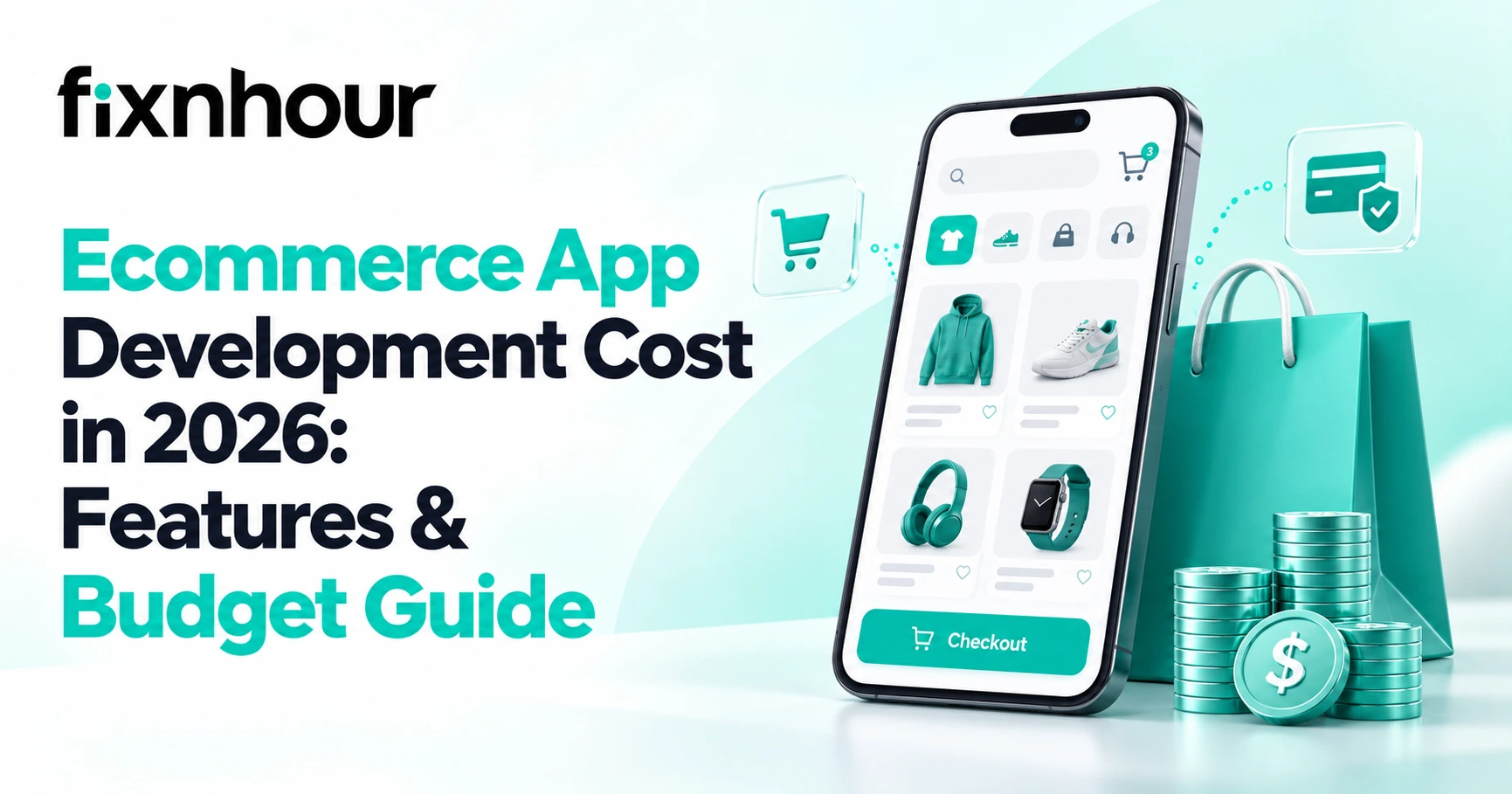
Ecommerce has moved far beyond simply selling products through a website. Today, customers expect fast mobile shopping, personalized recommendations, secure payments, real-time order tracking, and a smooth checkout experience. For businesses planning to launch an ecommerce app in 2026, understanding development costs before starting is essential.
The total ecommerce app development cost depends on the app's complexity, features, platform, technology stack, development team, integrations, security requirements, and ongoing maintenance. A simple shopping app may require a relatively modest investment, while an advanced marketplace with AI, multiple vendors, real-time inventory, and personalized experiences can require a significantly larger budget.
Key Takeaways
- Basic ecommerce apps require fewer features and development hours.
- Advanced apps cost more because of AI, integrations, analytics, and automation.
- Cross-platform development can reduce development time and duplicate coding.
- Payment gateways, shipping APIs, and third-party integrations affect the budget.
- UI/UX quality directly influences customer engagement and conversions.
- Maintenance, hosting, security, and updates create ongoing expenses.
Ecommerce App Development Cost Breakdown in 2026
The overall budget becomes easier to understand when development expenses are divided into individual components.Website Development Pricing in India Businesses should consider design, frontend and backend development, APIs, testing, deployment, and post-launch support rather than looking only at the initial coding cost.
Cost by Ecommerce App Complexity
A basic app generally includes product browsing, accounts, cart, checkout, payments, and order tracking. Medium-level applications add advanced filters, analytics, notifications, and integrations. Advanced applications may include AI recommendations, multi-vendor functionality, real-time inventory, loyalty programs, and sophisticated administration systems.
Cost by Development Platform
Platform selection affects both initial development and future maintenance.
- Android: Suitable for broad market reach.
- iOS: Useful for targeting Apple users and premium customer segments.
- Cross-platform: Allows businesses to develop for multiple platforms using shared code.
- Web + mobile: Useful for businesses building a broader omnichannel ecosystem.
Cost by Development Team Location
Developer rates differ considerably between regions. Businesses may work with freelancers, in-house teams, agencies, or offshore development companies.
The final cost depends not only on hourly rates but also on experience, communication, project management, technical expertise, and quality assurance. Choosing a development partner purely because of a low quote can create additional costs later.
Ecommerce App Development Technology Stack
Choosing the right technology stack is essential for building a secure, scalable, and high-performing ecommerce application.RAG Development Cost The technology selection depends on business requirements, target platforms, expected traffic, features, and budget. A well-planned stack improves development efficiency, supports seamless shopping experiences, and simplifies future maintenance and expansion.
Frontend Technologies
Frontend technologies determine how customers interact with an ecommerce application, including browsing products, searching catalogs, adding items to carts, and completing purchases. The right framework helps create responsive interfaces, smooth navigation, and consistent shopping experiences across mobile devices and web platforms.
Popular frontend technologies include:
- Flutter: Builds cross-platform applications using a shared codebase.
- React Native: Develops mobile applications for Android and iOS.
- Kotlin: Supports native Android application development.
- Swift: Enables native iOS applications with platform-specific capabilities.
- React.js: Creates interactive and responsive ecommerce web interfaces.
Backend Technologies
Backend technologies manage the core functionality of an ecommerce application, including authentication, inventory management, payment processing, order handling, and API communication. A reliable backend architecture helps maintain data consistency, protect customer information, and support growing transaction volumes without compromising application performance.
Popular backend technologies include:
- Node.js: Handles real-time interactions and scalable API development.
- Python: Supports rapid development and integrations with AI-powered features.
- Java: Provides reliable infrastructure for large-scale ecommerce platforms.
- PHP: Powers dynamic ecommerce websites and content-driven applications.
- .NET: Supports secure, enterprise-grade ecommerce solutions and integrations.
Database and Cloud Infrastructure
Databases and cloud infrastructure store ecommerce information, manage application resources, and support reliable performance during traffic fluctuations. Selecting suitable database systems and cloud services helps businesses maintain product catalogs, customer profiles, payment records, and order histories while improving availability, scalability, security, and disaster recovery capabilities.
Common database and cloud technologies include:
- MySQL: Stores structured product, customer, and order information.
- PostgreSQL: Supports complex queries and reliable transactional operations.
- MongoDB: Manages flexible, document-based product and application data.
- Firebase: Provides managed databases and real-time application development services.
- AWS: Offers scalable computing, storage, security, and hosting services.
- Google Cloud: Provides cloud infrastructure, analytics, and application deployment capabilities.
Step-by-Step Ecommerce App Development Process
A well-structured ecommerce app development process helps businesses plan resources, control costs, minimize development risks, and deliver a reliable shopping experience. Fixnhour From initial market research and UI/UX design to development, testing, deployment, and maintenance, each stage plays an important role in building a scalable, secure, user-friendly, and high-performing ecommerce application.
| Stage | Purpose | Key Activities |
|---|---|---|
| 1. Market Research and Business Planning | Define the app’s purpose, audience, business model, and revenue strategy. | Identify target customers; analyze competitors and market trends; select a business model; prioritize MVP features. |
| 2. UI/UX Design | Create an intuitive, mobile-friendly shopping experience with consistent branding. | Develop wireframes and prototypes; design product pages; simplify navigation and checkout; build mobile-first interfaces. |
| 3. Ecommerce App Development | Turn approved designs into a functional ecommerce application. | Develop frontend and backend; integrate databases and APIs; implement authentication and business logic; build core shopping features. |
| 4. Payment and Third-Party Integrations | Connect services that support payments, delivery, customer engagement, and business operations. | Integrate payment gateways; connect shipping APIs; link CRM and ERP systems; add analytics and marketing tools. |
| 5. Testing, Deployment and Launch | Validate app functionality, security, performance, and usability before release. | Test features, payments, and device compatibility; resolve issues; configure servers and monitoring; submit to relevant app stores. |
| 6. Maintenance and Continuous Updates | Keep the app secure, reliable, and aligned with customer needs after launch. | Fix bugs; apply security and OS updates; optimize performance; add features based on feedback and analytics. |
1. Market Research and Business Planning
Begin by understanding your target audience, competitors, business model, and revenue strategy. This stage establishes the app’s purpose, identifies customer needs, and helps prioritize features required for a successful ecommerce MVP.
- Define target customers
- Analyze competitors and market trends
- Select ecommerce business model
- Prioritize MVP features
2. UI/UX Design
The design stage focuses on creating an attractive, intuitive, and mobile-friendly shopping experience. Designers develop user flows and interfaces that simplify product discovery, navigation, purchasing, and checkout while maintaining consistent branding.
- Create wireframes and prototypes
- Design product pages
- Optimize navigation and checkout
- Build mobile-first interfaces
3. Ecommerce App Development
Developers transform approved designs into a functional ecommerce application. Frontend, backend, databases, APIs, authentication, business logic, product management, and core shopping features are developed and integrated according to project requirements.
- Develop frontend and backend
- Integrate databases and APIs
- Implement authentication and business logic
- Build ecommerce features
4. Payment and Third-Party Integrations
Ecommerce applications require secure connections with external services to support transactions, logistics, marketing, and business operations. Integrating reliable third-party tools ensures smooth payments, order management, shipping, customer engagement, and analytics.
- Integrate payment gateways
- Connect shipping and delivery APIs
- Integrate CRM and ERP systems
- Add analytics and marketing tools
5. Testing, Deployment and Launch
Before launch, the application undergoes comprehensive testing to identify functional, security, performance, compatibility, and usability issues. After successful testing, the app is deployed, configured, and submitted to the relevant app stores.
- Perform functional and security testing
- Test payments and performance
- Configure servers and monitoring
- Deploy to app stores
6. Maintenance and Continuous Updates
Post-launch maintenance keeps the ecommerce application secure, reliable, and competitive. Regular updates address bugs, improve performance, maintain OS compatibility, strengthen security, and introduce new features based on customer feedback and analytics.
- Fix bugs and technical issues
- Apply security and OS updates
- Optimize app performance
- Add features based on feedback
Benefits of Investing in Ecommerce App Development
A dedicated ecommerce app can provide businesses with a direct digital channel for communicating with customers and encouraging repeat purchases.Web Design Companies in India Pricing Guide It can also create a more personalized experience than a traditional mobile website when designed and optimized correctly.
Business Benefits
- Higher customer engagement
- Improved retention
- Direct communication
- Personalized promotions
- Better customer data insights
- Faster purchasing experience
- Increased brand visibility
Customer Benefits
Customers can browse products, compare options, save items, complete payments, and track deliveries from a single application. Features such as wishlists, personalized recommendations, saved payment methods, and push notifications can make shopping more convenient.
Conclusion
For startups and small businesses, launching an MVP with essential ecommerce functionality can be a practical way to control costs and validate the market. Established businesses may benefit from advanced features such as AI personalization, loyalty programs, real-time inventory, analytics, and omnichannel integrations.
The most important step is to define your business requirements clearly before development begins. A scalable architecture, user-focused design, secure payment experience, and reliable development partner can help turn an ecommerce app into a long-term digital sales channel. Talk to our experts
Frequently Asked Questions
Q1. How much does it cost to develop an ecommerce app in 2026?
Ans. The cost depends on the app's complexity, features, platform, technology, integrations, design, and development team. A basic ecommerce application may cost around 20,000–40,000, while advanced applications can exceed $80,000. A multi-vendor marketplace with complex functionality can require an even larger investment.
Q2. How long does it take to build an ecommerce mobile app?
Ans. A basic ecommerce MVP may take around 3–5 months, while a medium or advanced application can require 6–12 months or longer. The timeline depends on the number of platforms, features, integrations, UI/UX complexity, testing requirements, and development team size.
Q3. What features should an ecommerce app have?
Ans. Essential features include user registration, product catalogs, search, filters, product pages, cart, checkout, secure payments, order tracking, notifications, and customer support. Advanced ecommerce applications can also include AI recommendations, loyalty programs, voice search, AR, personalized offers, and real-time inventory management.
Q4. Is it cheaper to build an ecommerce app with Flutter or React Native?
Ans. Flutter and React Native can both help reduce development time when businesses need applications for multiple platforms. The better choice depends on the project's requirements, developer expertise, integrations, performance expectations, and long-term maintenance strategy rather than simply choosing the framework with the lowest initial cost.
Q5. How much does it cost to build a multi-vendor ecommerce marketplace app?
Ans. A multi-vendor ecommerce marketplace generally costs more than a standard online store because it requires vendor accounts, commission management, seller dashboards, product approval, payouts, inventory management, order management, reviews, and advanced administration features. Depending on complexity, development can exceed $100,000.
Q6. How can I reduce ecommerce app development costs?
Ans. Start with an MVP and prioritize revenue-generating features. Choose a suitable technology stack, prepare detailed requirements, use reusable components, and test throughout development. Avoid unnecessary custom functionality during the first version and add advanced features after analyzing customer behavior and business performance.
Q7. How much does ecommerce app maintenance cost after launch?
Ans. Maintenance costs depend on application size, traffic, infrastructure, integrations, security requirements, and update frequency. Businesses may need to budget for hosting, monitoring, bug fixes, security updates, operating system compatibility, third-party API changes, performance improvements, and new feature development.
Q8. What is the best technology for ecommerce app development in 2026?
Ans. There is no single best technology for every ecommerce business. Flutter and React Native can be effective for cross-platform applications, while Swift and Kotlin are suitable for native iOS and Android development. The ideal technology should match performance, scalability, budget, integrations, and long-term business requirements.