Choosing the right agency can significantly impact a business's success. Whether you're hiring an SEO agency, software development company, digital marketing firm, branding consultant, or web development partner, the selection process often feels overwhelming. Businesses are frequently presented with dozens of options, varying pricing models, and conflicting reviews.
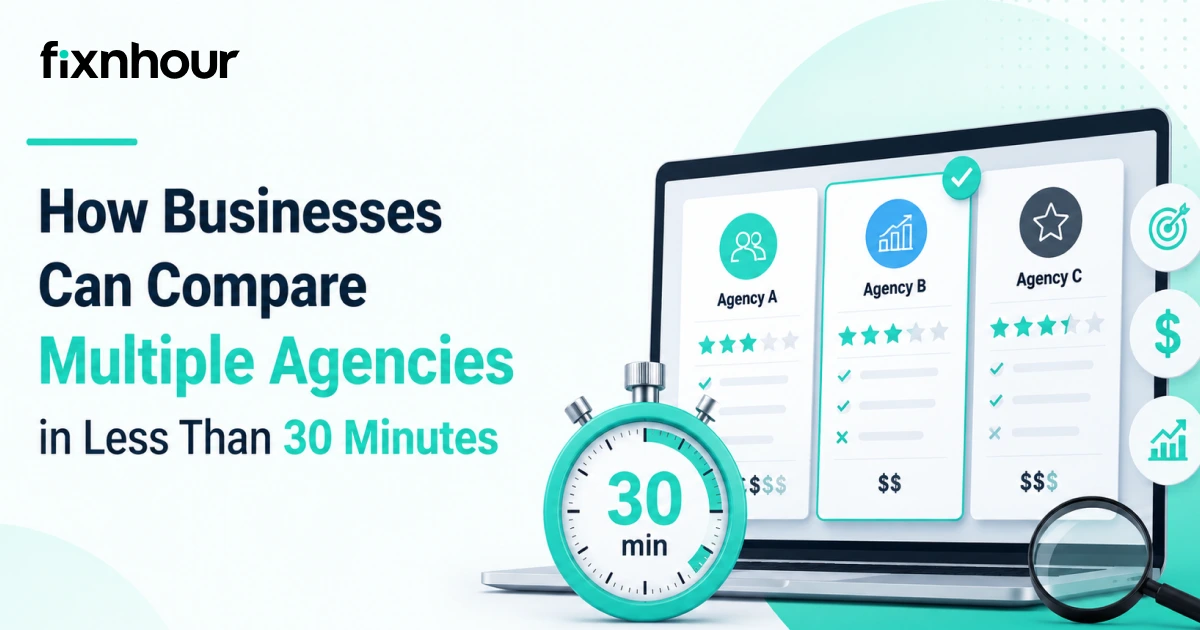
The good news is that comparing multiple agencies doesn't have to take days or weeks. By following a structured evaluation framework, businesses can shortlist, assess, and compare agencies in less than 30 minutes while still making informed decisions. This guide explains how to streamline agency evaluation, reduce hiring risks, and find the best partner for your business goals.
Quick Answer
Businesses can compare multiple agencies in less than 30 minutes by focusing on six critical factors: experience, portfolio quality, client reviews, pricing transparency, communication standards, and support services. Using a simple scorecard and verified platforms like Fixnhour helps companies quickly identify the most suitable agency without spending excessive time on research.
Key Takeaways
- Define business requirements before comparing agencies.
- Focus on expertise, reviews, pricing, and communication.
- Use a standardized evaluation scorecard.
- Compare deliverables, not just costs.
- Verify client testimonials and case studies.
- Avoid choosing agencies solely based on low pricing.
- Use trusted platforms such as Fixnhour to simplify comparisons.
- Prioritize long-term value over short-term savings.
Why Comparing Multiple Agencies Is Important Before Hiring
Hiring the wrong agency can lead to missed deadlines, budget overruns, poor project quality, and lost business opportunities. Many companies rush into decisions after a single sales call, only to discover hidden costs or capability gaps later.
Comparing multiple agencies helps businesses:
- Reduce project risks
- Improve return on investment
- Gain better pricing transparency
- Identify industry specialists
- Build stronger long-term partnerships
Statistics & Market Insights on Agency Selection in 2026
The agency selection process is becoming increasingly data-driven in 2026 as businesses focus on ROI, transparency, and proven expertise rather than marketing promises alone. The following statistics and trends highlight how companies are evaluating agencies and service providers today:
Key trends include:
- Growing demand for digital transformation services
- Increased adoption of AI-powered agency evaluation tools
- Rising importance of verified client reviews
- Greater emphasis on performance-based partnerships
- Expansion of B2B marketplace platforms
Define Your Business Requirements Before Comparing Agencies
Before comparing agencies, businesses should clearly define their goals, project scope, budget, timeline, and expected outcomes. Understanding these requirements helps create accurate evaluation criteria and prevents confusion during the selection process. Clear objectives also make it easier to compare agency expertise, service offerings, and pricing structures.
Ask yourself:
- What problem are we trying to solve?
- What outcomes do we expect?
- What is our budget?
- What timeline are we working with?
- Do we need ongoing support?
Also Read: Top Tools Every Business Service Provider Should Use
The 30-Minute Agency Comparison Process
| Step | Time | Evaluation Area | What to Check |
|---|---|---|---|
| Step 1: Create a Shortlist | 5 Minutes | Initial Agency Selection | • Industry Experience• Service Specialization• Verified Profiles• Positive Client Feedback |
| Step 2: Review Experience and Expertise | 5 Minutes | Agency Capabilities | • Years in Business• Industry Expertise• Certifications• Technical Skills• Team Strength |
| Step 3: Compare Portfolios and Case Studies | 5 Minutes | Project Performance | • Similar Project Experience• Measurable Results• Client Success Stories• Design Quality• Technical Excellence |
| Step 4: Analyze Reviews and Ratings | 5 Minutes | Reputation Assessment | • Review Consistency• Verified Testimonials• Customer Satisfaction• Repeat Clients• Overall Ratings |
| Step 5: Compare Pricing and Deliverables | 5 Minutes | Value for Money | • Service Inclusions• Project Scope• Deliverables• Timelines• Support Options |
| Step 6: Assess Communication and Support | 5 Minutes | Collaboration Quality | • Response Time• Transparency• Meeting Availability• Reporting Process• Post-Project Support |
Step 1: Create a Shortlist (5 Minutes)
Identify three to five agencies that appear relevant to your project.
Look for:
- Industry experience
- Service specialization
- Verified profiles
- Positive client feedback
Step 2: Review Experience and Expertise (5 Minutes)
Evaluate:
- Years in business
- Industry specialization
- Certifications
- Technical skills
- Team capabilities
Step 3: Compare Portfolios and Case Studies (5 Minutes)
Review previous projects carefully.
Look for:
- Similar project types
- Measurable outcomes
- Client success stories
- Design and technical quality
Step 4: Analyze Reviews and Ratings (5 Minutes)
Check:
- Review consistency
- Verified testimonials
- Client satisfaction levels
- Repeat business indicators
Step 5: Compare Pricing and Deliverables (5 Minutes)
Instead of focusing solely on cost, compare:
- Included services
- Project scope
- Deliverables
- Timelines
- Support options
Step 6: Assess Communication and Support (5 Minutes)
Effective communication often determines project success.
Evaluate:
- Response speed
- Transparency
- Meeting availability
- Reporting practices
- Post-project support
Key Criteria Businesses Should Compare
When comparing service providers on Fixnhour, businesses should evaluate key factors such as industry experience, technical expertise, portfolio quality, pricing transparency, client reviews, communication standards, security compliance, and post-project support. Comparing these criteria helps organizations identify reliable partners, reduce project risks, maximize ROI, and choose vendors that align with their long-term business goals.
Industry Experience
Relevant experience reduces learning curves and project risks.
Technical Expertise
Ensure the agency possesses the required technical skills and certifications.
Portfolio Quality
A strong portfolio demonstrates capability and professionalism.
Team Strength
Assess team size, resources, and scalability.
Communication Standards
Clear communication improves collaboration and project outcomes.
Support Services
Ongoing support can be critical for long-term success.
Also Read: Digital Business Solutions for Growth, Innovation & Success
How to Compare Agency Pricing Without Getting Misled
Comparing agency pricing requires looking beyond the lowest quote. Businesses should evaluate the scope of services, deliverables, expertise, project timelines, hidden costs, and ongoing support included in each proposal. Platforms like Fixnhour help companies compare verified agencies transparently, enabling smarter decisions based on value, quality, and long-term business outcomes rather than price alone.
Instead, focus on value.
Common Pricing Models
- Fixed-price projects
- Hourly billing
- Retainer agreements
- Performance-based pricing
Hidden Costs to Watch For
- Additional revisions
- Maintenance fees
- Third-party tools
- Licensing costs
- Emergency support charges
Tools and Platforms That Simplify Agency Comparison
Tools and platforms like Fixnhour simplify agency comparison by providing verified company profiles, client reviews, service portfolios, pricing insights, and industry expertise in one place. These platforms help businesses evaluate multiple agencies efficiently, compare key performance factors, reduce selection risks, and identify the best partner based on quality, credibility, and business requirements.
Popular options include:
- Fixnhour
- Clutch
- GoodFirms
- DesignRush
- Google Business Profiles
Also read: From Reviews to Revenue: How Trust Impacts B2B Conversions
Benefits of Comparing Multiple Agencies
Comparing multiple agencies helps businesses make informed decisions by evaluating expertise, service quality, pricing, communication, and client satisfaction. It reduces the risk of choosing the wrong partner, improves return on investment, ensures better project outcomes, and helps identify agencies that best align with business goals. Platforms like Fixnhour make this comparison process faster and more reliable.
Better ROI
Comparing options increases the likelihood of finding the best value.
Reduced Risks
Businesses can avoid unreliable providers.
Improved Quality
Evaluating portfolios and reviews helps identify top performers.
Better Pricing
Competition often results in more favorable pricing structures.
Stronger Partnerships
Businesses are more likely to find agencies aligned with their goals.
Common Mistakes Businesses Make When Comparing Agencies
Many businesses make the mistake of choosing an agency based solely on price, overlooking factors such as experience, portfolio quality, client reviews, communication, and long-term support. Ignoring hidden costs, failing to verify credentials, and comparing agencies without clear requirements can lead to poor outcomes. Using trusted platforms like Fixnhour helps businesses avoid these mistakes and select the right agency with confidence.
Choosing Based Only on Price
Low-cost providers may lack expertise or support.
Ignoring Reviews
Client feedback often reveals strengths and weaknesses.
Failing to Verify Experience
Not all agencies specialize in the same industries.
Overlooking Communication
Poor communication can derail even the best projects.
Rushing Decisions
Taking a few extra minutes to compare agencies can save significant time and money later.
Best Practices for Smarter Agency Evaluation
To evaluate agencies effectively, businesses should define clear project requirements, compare multiple proposals, review portfolios, verify client testimonials, assess communication quality, and examine pricing transparency. Using a structured comparison framework and trusted platforms like Fixnhour helps identify reliable agencies, minimize risks, and ensure the selected partner can deliver long-term value and measurable business results.
Follow these best practices:
- Use a standardized scorecard
- Compare agencies using identical criteria
- Request references when necessary
- Focus on measurable outcomes
- Review contracts carefully
- Prioritize transparency
Recommended Scoring Framework
| Rank | Evaluation Factor | Weight |
|---|---|---|
| 1 | Expertise | 25% |
| 2 | Portfolio | 20% |
| 3 | Reviews | 20% |
| 4 | Pricing | 15% |
| 5 | Communication | 10% |
| 6 | Support | 10% |
| Total | Overall Evaluation Score | 100% |
Cost of Hiring an Agency in 2026
The cost of hiring an agency in 2026 varies based on project complexity, industry, expertise, and service scope. Small projects may range from a few hundred to several thousand dollars, while large-scale digital transformation initiatives can require significantly higher budgets. Businesses should compare pricing, deliverables, and value offered by multiple providers on platforms like Fixnhour to ensure cost-effective and results-driven partnerships.
| Agency Type | Average Cost Range |
|---|---|
| SEO Agency | $500 – $5,000 per month |
| Digital Marketing Agency | $1,000 – $20,000 per month |
| Web Development Agency | $2,000 – $100,000+ per project |
| Mobile App Development Agency | $10,000 – $250,000+ per project |
| Branding Agency | $1,500 – $50,000+ per project |
Why Choose Fixnhour
Fixnhour helps businesses discover, compare, and connect with verified service providers across multiple industries. With detailed company profiles, authentic client reviews, service portfolios, and transparent business information, Fixnhour simplifies vendor selection and reduces decision-making risks. Whether you need IT services, marketing solutions, app development, or consulting expertise, Fixnhour enables faster, smarter, and more confident business partnerships.
Benefits of Using Fixnhour
- Verified agency listings
- Easy agency comparison tools
- Transparent company profiles
- Genuine client reviews
- Faster vendor discovery
- Better decision-making support
Conclusion
Comparing multiple agencies doesn't need to be a time-consuming process. By focusing on experience, portfolio quality, reviews, pricing transparency, communication, and support, businesses can confidently evaluate several agencies in less than 30 minutes. A structured approach reduces risks, improves decision-making, and increases the chances of finding the right long-term partner. Platforms like Fixnhour further simplify the process by providing verified agency listings, transparent information, and trusted reviews in one place.
If you're looking for the right agency for your next project, take the time to compare providers strategically and focus on overall value rather than just cost. For expert guidance and trusted agency discovery solutions, contact us today and make smarter business decisions with confidence.
Frequently Asked Questions
Q1. How can businesses compare multiple agencies in less than 30 minutes?
Ans. Businesses can compare multiple agencies quickly by using a structured evaluation framework. Start by reviewing agency experience, service expertise, client testimonials, portfolio quality, pricing transparency, communication responsiveness, and post-project support. Create a simple comparison scorecard and rank agencies based on your business priorities. Platforms such as Fixnhour, Clutch, GoodFirms, and DesignRush make this process easier by providing verified profiles, reviews, ratings, and company information in one place. This approach helps businesses identify the most suitable agency without spending hours researching individual providers.
Q2. What should businesses prioritize when choosing an agency?
Ans. Businesses should focus on overall value rather than selecting the lowest-priced option. Key factors include industry expertise, proven project success, technical capabilities, communication quality, transparency, scalability, and long-term support. Reviewing case studies, client feedback, and previous work can provide valuable insights into an agency’s performance. A reliable agency should understand your goals, offer strategic guidance, and demonstrate the ability to deliver measurable results. Prioritizing these factors helps businesses build stronger partnerships and achieve better outcomes from their investments.
Q3. Is it better to choose a specialized agency?
Ans. Yes, specialized agencies often provide significant advantages for businesses with industry-specific requirements. Because they focus on a particular niche or service area, they typically have deeper expertise, proven methodologies, and a stronger understanding of industry challenges. Specialized agencies can deliver faster results, higher-quality solutions, and more strategic recommendations. However, businesses should still evaluate portfolios, client reviews, pricing, and communication standards before making a decision. The best choice depends on your project complexity, goals, and the specific expertise required for success.
Q4. How many agencies should businesses compare?
Ans. Most businesses benefit from comparing three to five agencies before making a final decision. This number provides enough variety to evaluate different pricing models, service offerings, expertise levels, and communication styles without making the process overwhelming. Comparing too few agencies may limit options, while evaluating too many can slow decision-making. A structured comparison matrix helps businesses assess strengths and weaknesses objectively. Using agency comparison platforms like Fixnhour can streamline research and provide valuable insights for selecting the most suitable service provider.
Q5. How important are client reviews?
Ans. Client reviews are extremely important because they provide real-world insights into an agency’s reliability, professionalism, communication, and ability to deliver results. Positive reviews indicate customer satisfaction and consistent performance, while negative reviews may reveal recurring issues. Businesses should look beyond star ratings and analyze detailed feedback regarding project management, responsiveness, deadlines, and overall experience. Combining reviews with portfolio assessments and case studies offers a more complete picture of an agency’s capabilities. Verified review platforms help ensure the authenticity and credibility of customer feedback.
Q6. What are common red flags when evaluating agencies?
Ans. Several warning signs can indicate potential risks when selecting an agency. These include unclear pricing structures, poor communication, unrealistic guarantees, lack of client references, limited portfolio examples, and inconsistent online reviews. Agencies that avoid discussing timelines, deliverables, or performance metrics may also be cause for concern. Businesses should conduct thorough due diligence, verify credentials, and request case studies before signing contracts. Identifying these red flags early helps avoid costly mistakes and increases the likelihood of choosing a dependable long-term business partner.
Q7. Can AI help businesses compare agencies?
Ans. Yes, AI-powered tools are increasingly helping businesses evaluate and compare agencies more efficiently. AI can analyze client reviews, ratings, pricing structures, service offerings, response times, and performance data to identify the most suitable providers. These tools reduce manual research, improve decision-making accuracy, and highlight patterns that may otherwise be overlooked. AI-driven recommendations can also help businesses shortlist agencies based on specific requirements. When combined with human evaluation and strategic judgment, AI can significantly simplify and accelerate the agency selection process.
Q8. Which platform is best for comparing agencies?
Ans. The best platform depends on your business needs, industry, and preferred evaluation criteria. Popular options include Fixnhour, Clutch, GoodFirms, and DesignRush, all of which provide agency listings, client reviews, service details, and company profiles. Fixnhour focuses on helping businesses discover verified service providers and compare them efficiently, while other platforms offer extensive review ecosystems and category-based rankings. Businesses should explore multiple platforms, compare available information, and verify agency credentials before making a final decision to ensure the best possible partnership.