In today's cutthroat technology market, merely building a product that is innovative is not sufficient anymore to ensure business success. The true challenge is to be consistently able to attract the right clients, build a pipeline, and go international. While some software organizations rely on word of mouth and established networks, sustainable growth demands structured sales and systems, strategic partnerships, and a clear strategy for global expansion.
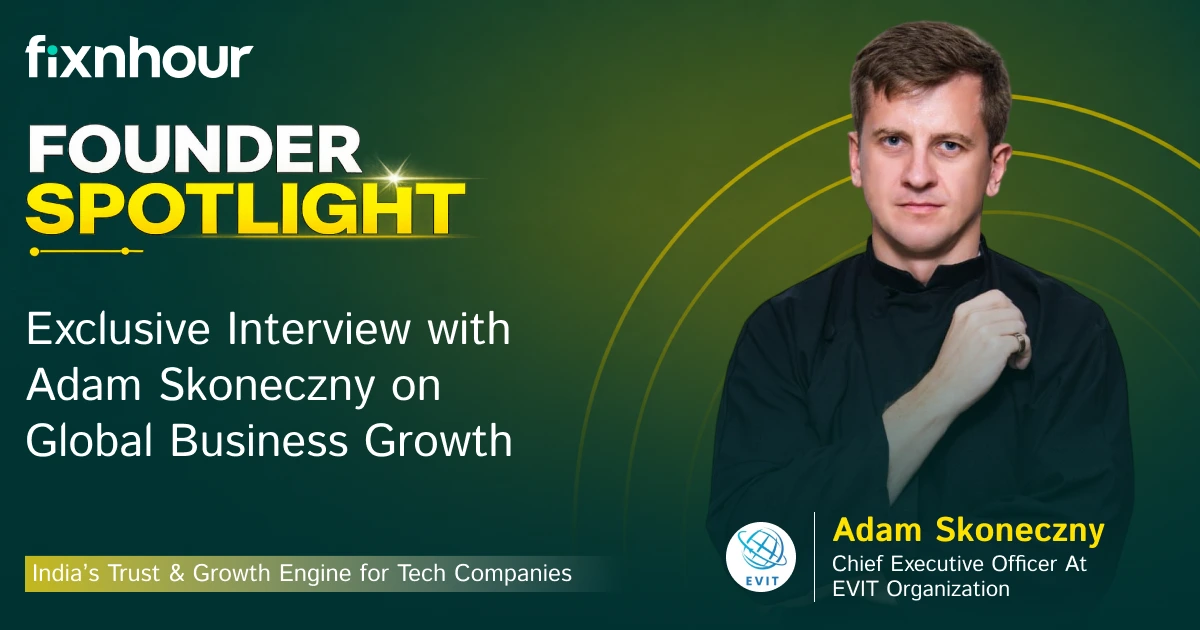
Adam Skoneczny is one business leader who is assisting technology businesses to overcome these obstacles. Adam is an international business growth strategist, sales systems expert, and global expansion consultant and has spent his career helping IT companies grow their revenue engines without relying on sales opportunities that are unlikely to materialize. He has a wide range of experience in sales strategy, international business development and partner building, marketing, and cross-cultural collaboration and has helped technology businesses to grow confidently beyond their home market.
Who is Adam Skoneczny?
Creating a wonderful product is only half the job for many technology businesses. The harder part starts once the product has reached the marketplace, attracting new customers, establishing a consistent sales process, and going overseas. Referrals, repeat customers, or personal networks are crucial to the success of many software companies. These channels could bring in some business, but they will not lead to ongoing growth. Growth can be haphazard and hard to scale without a systematic sales system. The problem that Adam Skoneczny has been working on solving his entire career. Adam is a business growth strategist, international expansion consultant, and sales systems expert who assists technology companies to shift inconsistent sales into predictable revenue engines. He is not just about lead generation anymore he's about creating repeatable growth systems that allow companies to tap into new markets, form strategic partnerships, and secure clients around the world.
Adam's love affair with business strategy, sales, marketing, and cross-cultural collaboration is that the best way to be successful in international growth is to understand people, not just markets. As a consultant, educator, and community of technology business leaders, he keeps helping IT businesses scale and grow across borders and continues to help businesses create stronger, more scalable businesses. Adam discusses his experience as an entrepreneur, his thoughts on international business, and the importance of sustainable growth in the launch of building systems ahead of chasing opportunities in this exclusive Founder Spotlight with Fixnhour.
Q1. Adam, before we discuss business growth, tell us about yourself. What inspired your entrepreneurial journey?
I've always been fascinated by how businesses grow. When I first started in the industry, I was able to see that they had very good products but was having a problem in sales. They relied on referrals, on-and-off inbound inquiries, or even existing relationships for their predictable growth systems. This observation led to my interest in sales strategy & international business development. I understood that it would be more valuable to help companies create structured, recurring revenue streams, rather than just help them sell one-off deals. That's what I spend my time on helping businesses create sustainable growth with today.
Q2. What are the biggest challenges technology companies face when trying to scale?
The majority of businesses do not have a product problem. They suffer from a growth disorder. Most of the founders think that when they create amazing software, people will find them. Unfortunately, this is not often how businesses operate. Growth demands to be positioned with repeatable sales processes, strategic partnerships, and consistent lead generation. If those are not in place, businesses can have irregular income and low scalability. Successful businesses are the ones that create systems, not rely on chance.
Q3. Why do so many IT companies struggle with international expansion?
Going global is more than just a translation of the website and the recruitment of overseas sales representatives. Different markets react in different ways in terms of buying habits, business culture, communication style, and decision-making process. These differences are frequently overlooked by companies. The first step toward successful international expansion is to understand your customers, establish a relationship with them, and customize your offering while holding onto your essence. It's all about trust between cultures in the end.
Q4. You often talk about building revenue systems instead of chasing sales. What does that mean?
No one should be completely responsible for selling. There needs to be a regular structure in place that regularly and reliably produces opportunities for a business. That is, positioning, lead generation, outreach, partnership, qualification, follow-up, and customer success. In such a combination, the revenue turns out to be much more predictable. Rather than being always on the lookout for the next customer, companies create systems that bring in the right customers on a regular basis. That's what the difference is between selling and having a revenue engine.
Q5. How important are partnerships in today's business environment?
Relationships with strategies can jump-start growth very effectively. The right partner can help businesses gain access to new markets, become credible, gain referrals, and develop opportunities that would take years to develop. Networking is not the same as partnerships. They're the ones that are focused on creating value for each other. If we are thinking long-term rather than short-term, we are all better off. Good relationships can sometimes be the basis for sustainable international development.
Q6. What advice would you give founders entering global markets for the first time?
Don't try to sell immediately. Take time to be informed of the market. Understand Customers' Thinking. Understand their challenges. Develop rapport prior to presenting solutions. All successful international businesses start with listening. Businesses that take the time to grasp the culture and expectations of the local community typically end up with better long-term success. Time will become a competitive edge.
Q7. How has digital technology changed business development?
Communication nowadays is made easier through technology and has become globalized. Alternatively, you can now reach out to prospects, partners, and customers from around the world in mere minutes. But technology has also created competition. It's not enough to be automated today to stand out. It requires authenticity, expertise, and meaningful relationships. Technology enables conversations. People create trust. The best companies are the ones that have both in a very good mix.
Q8. What leadership principles have shaped your journey?
I've always been curious (as I'm sure I was before I was born). Each country, each customer, and each business offers a new lesson. I've also found that it's not as much about the intensity as it is about the consistency. The key to creating a successful business is not having moments of success. It's about showing up day by day, continuously getting better, and consistently adding value over time. Leadership is all about assisting people to be successful. As your clients grow, so does your business.
Q9. How important is personal branding for founders today?
There's a brand new business asset that has become the most important, and it's called "founder branding. Buyers are more likely to purchase from a trusted source. Knowledge sharing, experience, and insights help founders to build credibility before they even start selling. Content, speaking, communities, and thought leadership all have a positive impact on better business connections. Founders can share their knowledge and expertise while gaining credibility in the global technology sector through platforms such as Fixnhour .That visibility enables long-term business value.
Q10. What is your long-term vision?
My mission is to help more tech startups create non-geographic businesses. It's amazing how innovative things are all over the world. For many excellent companies, simply getting the right strategy, positioning, and sales systems in place is all that is needed to connect with international customers. I want to keep supporting founders to grow with confidence, collaborate better, and make growth predictable. No success is to be taken on a gamble. It should be created in systems, in relationships, and in continuous learning.
Final Message to Entrepreneurs
Creating a wonderful technology is just the initial step. These are the companies that truly understand customers, build trust, and have repeatable growth systems that are successful globally. Invest in relationships. Don't go by local markets only. Remain curious.
Stay consistent. Just keep in mind that becoming successful internationally takes time. It is creating a conversation, a partnership, and a customer at a time. Predictable opportunities are when the opportunities are not random but inevitable, thanks to a business designed for sustainable growth. Contact us today to know more