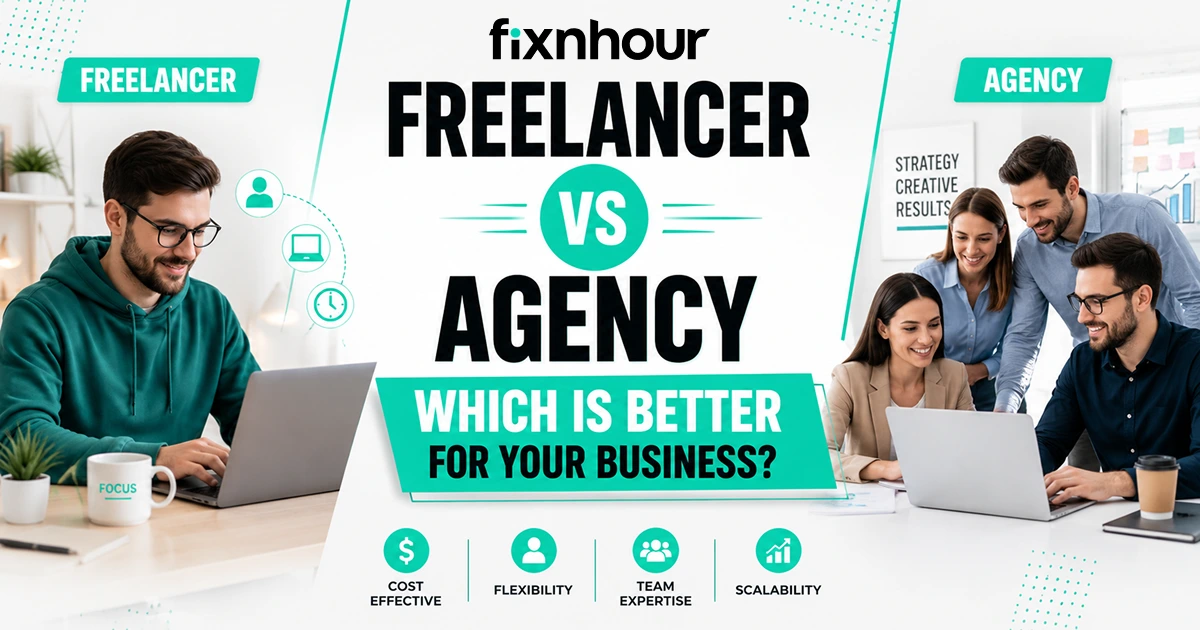
Choosing the right partner for your business project can significantly impact its success. Whether you're launching a startup, redesigning a website, developing a mobile app, or planning a digital marketing campaign, one question often comes up: Should you hire a freelancer or work with an agency? Both options offer unique advantages, but the right choice depends on your budget, project complexity, timeline, and long-term business goals. Freelancers are known for their flexibility, specialized expertise, and cost-effective pricing, making them a popular choice for small projects and startups. Agencies, on the other hand, provide access to a team of professionals, structured project management, quality assurance, and ongoing support, making them ideal for larger or more complex initiatives.
In this comprehensive guide, we'll compare freelancers and agencies across key factors such as pricing, expertise, scalability, communication, project management, and return on investment (ROI). By the end, you'll have a clear understanding of which option aligns best with your business needs and how platforms like Fixnhour can help you connect with trusted freelancers and agencies for your next project.
Key Takeaways
- Freelancers are ideal for specialized, short-term work.
- Agencies deliver complete solutions for complex projects.
- Budget should never be the only deciding factor.
- Scalability matters as your business grows.
- Communication and accountability affect project success.
- Consider long-term maintenance before hiring.
- Review portfolios, testimonials, and case studies carefully.
- Choose based on business goals, not trends.
Should You Hire a Freelancer or an Agency?
If your project is small, requires a specific skill, and has a limited budget, hiring a freelancer can be a smart and cost-effective choice. However, if you need multiple specialists, structured project management, scalable solutions, and ongoing support, an agency is often the better investment. The best decision depends on your business objectives rather than simply choosing the cheapest option. his flexible approach allows businesses to choose a payment model that best fits their budget and project scope. Platforms like Fixnhour make it easier to compare verified freelancers and find professionals that match your budget and business needs.
Why Businesses Struggle to Choose Between a Freelancer and an Agency
Many business owners find it difficult to decide because both freelancers and agencies promise excellent results. Freelancers appear affordable and flexible, while agencies offer comprehensive services and dedicated teams. Without understanding project complexity, scalability, and long-term requirements, businesses often make decisions based solely on cost, leading to delays, quality issues, or unexpected expenses later.
- How complex is my project?
- Do I need one specialist or multiple experts?
- What's my realistic budget?
- Will I need ongoing support?
- How quickly do I need the project completed?
Understanding What You're Really Hiring
Before comparing costs or expertise, it's important to understand what you're actually hiring. A freelancer is an independent professional specializing in one or more skills, whereas an agency brings together multiple experts under one organization. Knowing how each works, communicates, and manages projects helps businesses choose a solution that aligns with their goals, workload, and expected outcomes.
- Website Development
- Mobile App Development
- Digital Marketing
- SEO Services
- UI/UX Design
- AI Development
- Branding
- E-commerce Development
Also Read: Top 10 Platforms to Hire Freelancers in April 2026 (Updated & Compared)
Freelancer vs Agency: Side-by-Side Comparison Across Every Important Factor
Comparing freelancers and agencies across factors like pricing, expertise, communication, scalability, project management, quality assurance, and long-term support provides a complete picture beyond the initial cost. Looking at these aspects side by side enables businesses to evaluate risks, benefits, and overall value, making it easier to select the right partner for successful project delivery.
- Pricing
- Expertise
- Availability
- Accountability
- Scalability
- Project Management
- Delivery Speed
- Support
When Hiring a Freelancer Is the Best Choice
Freelancers are an excellent choice for businesses that need specialized expertise for short-term or clearly defined projects. They offer greater flexibility, faster onboarding, and competitive pricing, making them ideal for startups, entrepreneurs, and small businesses with limited budgets. When managed effectively, freelancers can deliver high-quality work while keeping operational costs under control.
- Landing pages
- Logo design
- Blog writing
- SEO audits
- Website bug fixes
- Social media creatives
- Video editing
When Hiring an Agency Is Worth the Investment
An agency is the right choice when your project requires multiple specialists, strategic planning, and consistent execution. From designers and developers to marketers and project managers, agencies bring together diverse expertise under one roof. They also provide structured workflows, quality assurance, and long-term support, making them ideal for complex projects, growing businesses, and enterprises seeking reliable, scalable solutions.
- SaaS Platforms
- Mobile Applications
- Enterprise Software
- AI Products
- E-commerce Stores
- Complete Branding
- Digital Marketing Campaigns
The Real Benefits of Hiring a Freelancer
Hiring a freelancer offers several advantages, especially for businesses with limited budgets or short-term projects. Freelancers typically provide personalized attention, direct communication, and faster turnaround times without the overhead costs of an agency. Their specialized expertise and flexible working style make them a practical option for tasks such as content creation, graphic design, website updates, SEO, and technical consulting.
Also Read: Freelancers vs. On-Demand Teams: Which Is Better for Fast Project Delivery in 2026?
The Biggest Advantages of Working with an Agency
Agencies provide a complete business solution rather than just individual services. With access to cross-functional teams, businesses benefit from collaborative problem-solving, professional project management, and consistent quality control. Agencies are also better equipped to handle changing project requirements, ensuring timely delivery, ongoing maintenance, and scalable support as your business expands and technology needs evolve.
How Much Does It Cost? Freelancer vs Agency Pricing Explained
Pricing varies significantly depending on project complexity, expertise, industry, and location. Freelancers generally charge lower hourly or project-based rates, making them suitable for smaller assignments. Agencies, however, typically have higher pricing because they include project management, multiple specialists, quality assurance, and ongoing support. Evaluating overall value and return on investment is more important than comparing costs alone.
Typical freelancer pricing models
Freelancers commonly charge hourly, fixed-price, daily, or retainer fees based on project requirements. Pricing depends on their expertise, experience, location, and workload. This flexible approach allows businesses to choose a payment model that best fits their budget and project scope.
Typical agency pricing models
Agencies usually offer fixed-price projects, monthly retainers, hourly billing, or dedicated team models. Their pricing includes project management, quality assurance, multiple specialists, and ongoing support, making them suitable for businesses seeking comprehensive and scalable solutions.
What actually influences project cost?
Project cost depends on factors such as complexity, timeline, technology stack, required expertise, project size, customization, maintenance needs, and business goals. The provider's experience, geographic location, and level of post-launch support also significantly impact the final investment.
- Project complexity
- Experience level
- Technology stack
- Delivery timeline
- Industry requirements
- Maintenance needs
- Geographic location
Which option delivers better long-term ROI?
Long-term ROI depends on your business needs. Freelancers provide excellent value for smaller, specialized projects, while agencies often generate higher returns for complex initiatives through better collaboration, scalability, quality assurance, and continuous support that contributes to sustained business growth.
Also Read: How to Hire the Right Web Development Agency in 2026
A Simple Step-by-Step Framework to Make the Right Hiring Decision
Making the right hiring decision starts with understanding your business needs rather than comparing prices alone. Clearly define your goals, project scope, budget, and timeline before evaluating candidates. Review portfolios, client testimonials, communication skills, and technical expertise. Following a structured process reduces risks, improves collaboration, and increases the chances of delivering a successful project.
Step 1: Define your business goals
Step 2: Understand your project requirements
Step 3: Set a realistic budget
Step 4: Decide whether you need one expert or a team
Step 5: Compare portfolios and previous work
Step 6: Check reviews and client testimonials
Step 7: Conduct interviews or discovery calls
Step 8: Start with a small paid project
Best Practices That Lead to Successful Outsourcing
Successful outsourcing depends on planning, transparency, and consistent communication. Create a detailed project brief, establish realistic deadlines, and define measurable deliverables before work begins. Use contracts to protect both parties, schedule regular progress updates, and monitor key performance indicators throughout the project. Strong collaboration and clear expectations often lead to higher-quality results and long-term business relationships.
What the Future Looks Like (2026–2027)
The future of outsourcing will be shaped by artificial intelligence, automation, and specialized expertise. Freelancers will increasingly use AI tools to improve productivity, while agencies will adopt hybrid service models that combine technology with human creativity. Businesses can also expect greater demand for niche experts, outcome-based pricing, faster project delivery, and more flexible remote collaboration worldwide.
Also Read: Hidden Costs of Hiring Freelancers vs Agencies (Full Cost Breakdown)
Final Thoughts:
Choosing between a freelancer and an agency isn't about deciding which is universally better—it's about selecting the option that best fits your business objectives. Consider your budget, project complexity, growth plans, and support requirements before making a decision. By evaluating these factors carefully, you can build a productive partnership that delivers long-term value and contributes to your business success.
Contact us today to discover the best freelancer or agency for your business and take the first step toward achieving your goals with confidence.
Frequently Asked Questions
Q1. Is it better to hire a freelancer or an agency for a startup?
Ans. The best choice depends on your startup's goals, budget, and project complexity. If you need a simple website, logo, content, or a specific technical task, a freelancer is often the most affordable option. However, if you're building a scalable product, mobile app, or complete digital platform requiring multiple specialists, an agency provides better coordination, project management, and long-term support. Evaluate your immediate needs and future growth plans before making a decision.
Q2. What's the biggest difference between a freelancer and an agency?
Ans. A freelancer is an independent professional who typically specializes in one or two areas, while an agency consists of a team of experts handling different aspects of a project. Freelancers offer flexibility, personalized communication, and lower costs. Agencies provide comprehensive services, structured workflows, quality assurance, and dedicated project managers. The biggest difference lies in the resources, scalability, and level of support each option can offer throughout the project lifecycle.
Q3. Is hiring a freelancer cheaper than working with an agency?
Ans. In most cases, freelancers charge lower hourly or project-based rates because they have fewer operational expenses. Agencies generally cost more since their pricing includes multiple professionals, project management, testing, and ongoing support. However, the cheapest option isn't always the most cost-effective. For complex projects, an agency may deliver better value by reducing errors, improving efficiency, and ensuring smoother execution, ultimately saving time and money over the long term.
Q4. Can a freelancer build and maintain a complete website or mobile app?
Ans. Yes, an experienced freelancer can build and maintain a website or mobile app, especially for small and medium-sized businesses. Many skilled freelancers manage design, development, deployment, and maintenance independently. However, larger applications often require expertise in UI/UX design, backend development, testing, security, and DevOps. In such cases, an agency with a dedicated team is better equipped to deliver high-quality results, ongoing maintenance, and future scalability.
Q5. Which option is better for digital marketing and SEO services?
Ans. Both freelancers and agencies can deliver effective digital marketing and SEO services, depending on your requirements. Freelancers are ideal for specific tasks like content writing, keyword research, link building, or technical SEO. Agencies are better suited for businesses seeking comprehensive strategies that include SEO, PPC, social media marketing, content creation, analytics, and conversion optimization. If your marketing goals require multiple channels and continuous optimization, an agency is usually the better choice.
Q6. How do I know whether my project is too large for a freelancer?
Ans. A project may be too large for a freelancer if it requires multiple skill sets, strict deadlines, continuous collaboration, or long-term maintenance. Enterprise software, complex mobile applications, and large e-commerce platforms often involve designers, developers, testers, and project managers working together. If your project demands ongoing support, scalability, and coordinated teamwork, hiring an agency can reduce risks and ensure smoother project execution from start to finish.
Q7. Should I hire a freelancer first and switch to an agency later?
Ans. Yes, many businesses follow this approach successfully. Hiring a freelancer can be a cost-effective way to validate an idea, create an MVP, or complete smaller tasks. As your business grows and project requirements become more complex, transitioning to an agency provides access to a larger team, structured processes, and ongoing support. Planning this transition carefully ensures minimal disruption while maintaining consistent quality and business growth.
Q8. What factors should businesses consider before choosing a freelancer or an agency?
Ans. Before making a hiring decision, evaluate your project scope, budget, timeline, technical requirements, and long-term objectives. Review portfolios, client testimonials, industry experience, communication skills, and support capabilities. Also consider scalability, security, project management, and post-launch maintenance. Choosing the right partner involves balancing cost with expertise, reliability, and future business needs to ensure your investment delivers lasting value and successful project outcomes