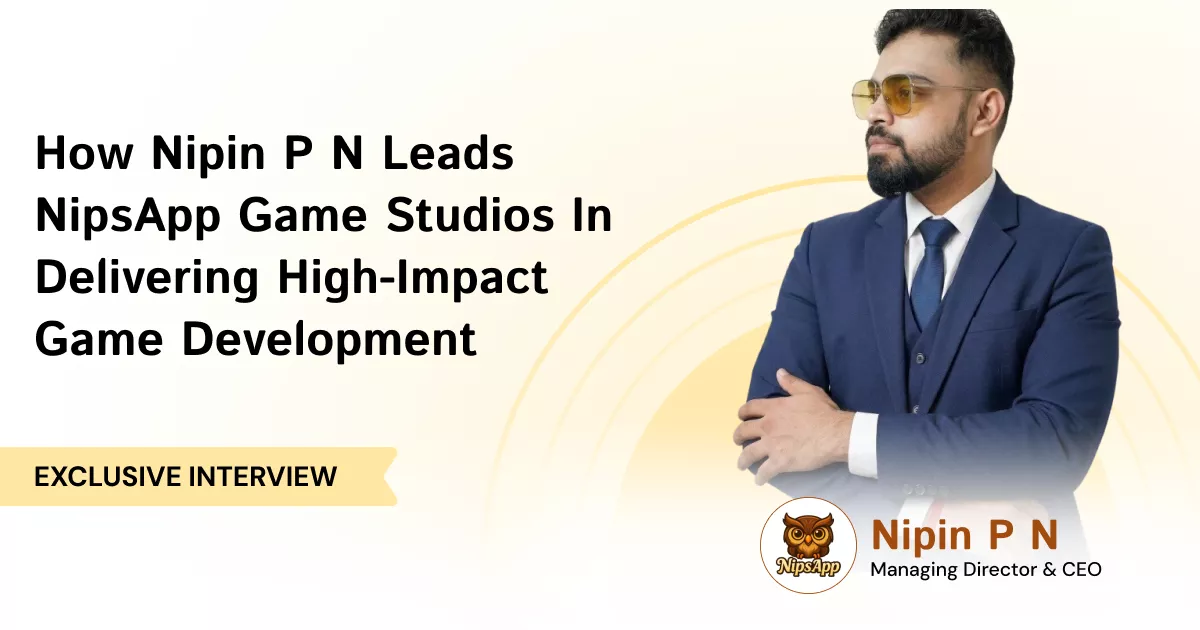
In today’s fast-moving gaming industry, building a successful product is no longer just about great ideas it’s about execution, scalability, and delivering real value early. Many businesses struggle with unclear direction, underperforming products, or the challenge of turning a concept into a market-ready game.
In this conversation, Nipin P N, owner of NipsApp Game Studios shares how his team approaches these challenges with a practical, results-driven mindset. From simplifying complex ideas into playable cores to focusing on performance, retention, and scalable systems, he explains what it really takes to build high-impact games in a competitive market. This interview offers valuable insights into their process, client approach, and the strategies that drive consistent success.
Q1. What specific business challenges do your clients usually come to you with, and how do you solve them differently?
Ans .Most clients come to us with one of three problems:
they have an idea but no clear execution plan, an existing product that is underperforming, or a need to build something scalable from scratch.
We solve this by first simplifying the scope. Instead of jumping into full production, we break the idea into a playable core. We focus on what actually delivers value early, whether that is gameplay, performance, or monetization.
Our approach is practical. We do not over-engineer. We build what is needed, test it quickly, and then scale based on real feedback.
Q2. Who is your ideal client, and what kinds of projects do you deliver the best results for?
Ans .Our ideal clients are founders, studios, or businesses that want to build serious game products, not just prototypes that sit idle.
We deliver the best results in:
Mobile and PC games with long-term scalability
Multiplayer and real-time systems
Projects that need both technical depth and product thinking
We work best when the client is focused on outcomes, not just features.
Q3. Can you walk us through your process, from understanding client requirements to final delivery?
Ans .We usually follow a three-stage approach:
1. Discovery and validation
We understand the idea, define the core loop, and identify risks early.
2. Vertical slice or MVP
We build a small but complete version of the game. This is where most decisions are validated, including gameplay, performance, and pipeline.
3. Full production and scaling
Once the foundation is proven, we scale content, systems, and polish.
Throughout the process, we keep communication direct and iterative. Clients always know what is being built and why.
Q4. Can you share a recent project where you delivered measurable impact?
Ans .In one recent project, the client came with a concept but no working product.
We built a vertical slice first, which helped them validate gameplay and secure internal confidence. After moving to production, we optimized performance and reduced unnecessary systems, which cut development time significantly.
The result was faster launch readiness and better early user retention because the core gameplay was tested before scaling.
Q5. What should businesses look for when choosing a tech partner, and what mistakes should they avoid?
Ans .They should look for a team that understands both technology and product outcomes.
A common mistake is choosing based on cost alone or going with a team that says yes to everything. That usually leads to delays and bloated products.
A good partner will challenge ideas, simplify scope, and focus on what actually works in the market.
Q6. In a crowded market, what truly sets NipsApp Game Studios apart?
Ans .We focus on execution clarity.
Many teams jump into full production too early. We do not. We validate first, build smart, and scale only when needed.
We also combine game development with real product thinking. That means performance, retention, and scalability are considered from day one, not as an afterthought.
Q7. What technology trends or shifts are you currently focusing on, and how are they affecting your clients?
Ans .We are focusing on:
Scalable multiplayer systems
Cross-platform development
Efficient pipelines using Unity and Unreal
The shift we see is that clients now want faster validation and shorter development cycles. They do not want to spend years before seeing results.
This is why approaches like vertical slices and phased development are becoming more important.
Q8. What are the most common challenges in delivering tech projects, and how does your team handle them?
Ans .The biggest challenges are unclear scope, changing requirements, and unrealistic timelines.
We handle this by locking the core early and keeping the process structured. If something changes, we evaluate the impact before adding it.
We keep things transparent so there are no surprises later in the project.
Q9. How do you ensure smooth communication and build long-term relationships with your clients?
Ans .We keep communication simple and consistent.
Clients get regular updates, clear milestones, and honest feedback. We do not hide problems. We address them early.
Long-term relationships come from trust, and trust comes from delivering what was promised without overcomplicating things.