In 2026, businesses are increasingly dependent on third-party vendors for services, technology, and operations. While outsourcing improves efficiency and scalability, it also introduces risks such as fraud, poor service quality, compliance issues, and data security threats.
To overcome these challenges, companies are now relying on verified vendor profiles to make smarter and safer decisions. These profiles help businesses identify trustworthy partners, reduce uncertainty, and build long-term reliable relationships.
Why Vendor Risk Management Matters More Than Ever
Vendor risk is one of the biggest challenges in modern business operations. A single unreliable vendor can disrupt workflows, damage reputation, and cause financial losses.
With digital transformation growing rapidly, businesses must ensure that every vendor they work with is authentic, secure, and capable of delivering quality services.
Key Benefits of Managing Vendor Risk:
- Protect business data and assets
- Ensure compliance with regulations
- Improve operational efficiency
- Maintain brand reputation
- Avoid financial losses
What Are Verified Vendor Profiles?
Verified vendor profiles are authenticated listings that include validated business information such as company details, certifications, past projects, and client reviews.
These profiles are commonly found on B2B platforms and marketplaces where verification processes ensure that vendors are genuine and trustworthy.
Verified Profiles Include:
- Company registration details
- Certifications and licenses
- Client reviews and ratings
- Portfolio and past work
- Contact and business information
Also Read: How Trust & Verification Beat Portfolios for IT Vendors
How Verified Profiles Help Reduce Vendor Risk
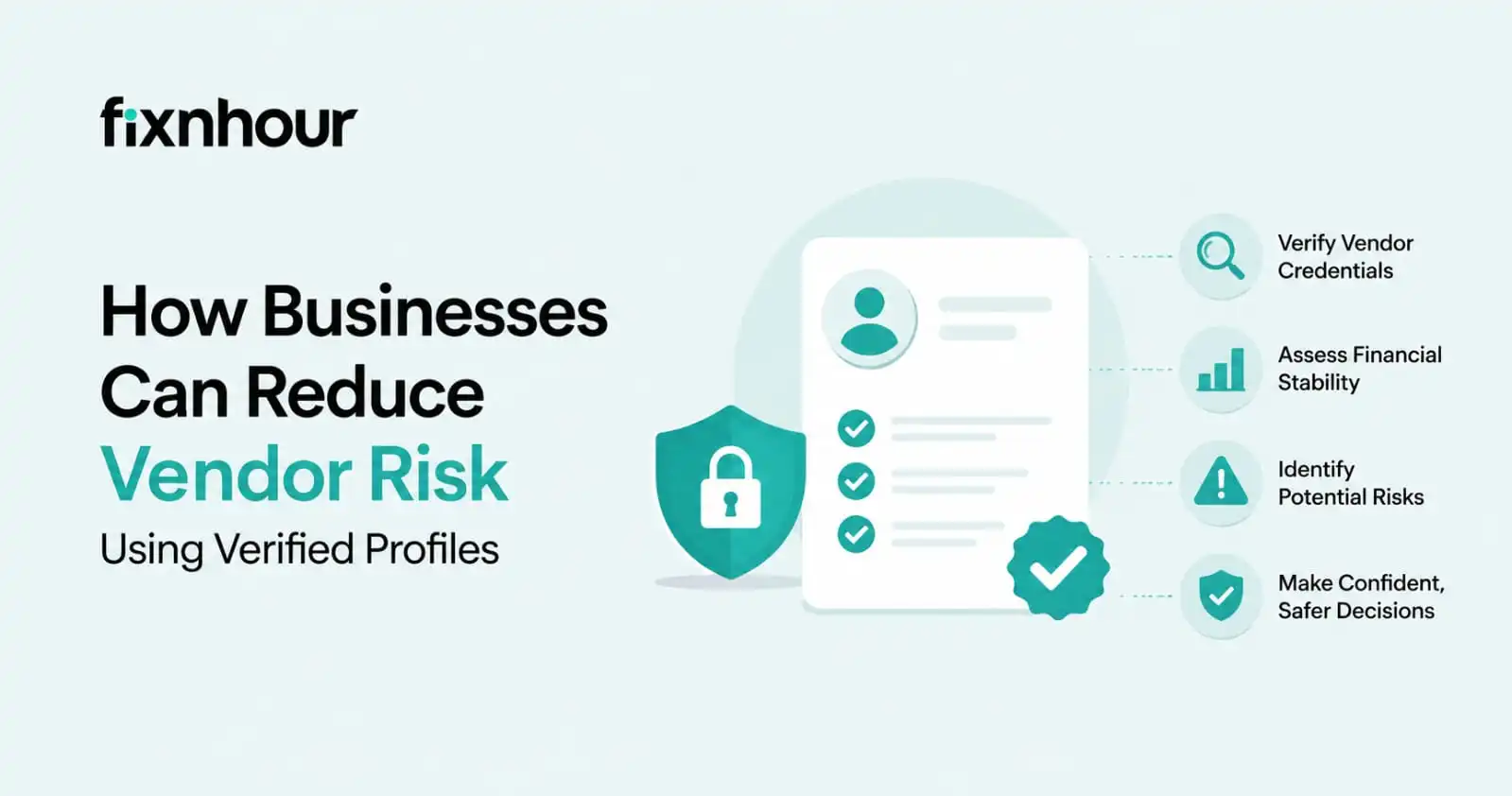
Verified profiles play a crucial role in minimizing vendor risk by offering transparency, authenticity, and reliable information. They help businesses verify vendor credibility, reduce fraud chances, and make informed decisions using reviews, certifications, and past performance. By ensuring compliance, improving data security, and enabling faster vendor selection, Fixnhour verified profiles support safer partnerships and long-term business stability.
|
|
|
|
|
|
|
|
|
|
|
|
|
|
|
|
|
|
|
|
|
|
|
|
|
|
|
|
|
|
|
|
|
1. Increased Transparency
Verified profiles provide accurate and complete information about vendors, helping businesses make informed decisions.
Benefits:
- Clear vendor background
- Verified business details
- Reduced uncertainty
2. Lower Risk of Fraud
Verification processes include identity checks and document validation, reducing the chances of dealing with fake vendors.
Advantages:
- Authentic vendor identity
- Reduced scam risks
- Safer partnerships
3. Better Decision-Making
Businesses can compare multiple verified vendors based on reviews, ratings, and experience.
What You Get:
- Data-driven decisions
- Easy vendor comparison
- Improved selection process
4. Improved Compliance and Security
Verified profiles often include certifications and compliance standards required in specific industries.
Key Points:
- Regulatory compliance
- Data security assurance
- Industry-standard practices
5. Stronger Vendor Relationships
Working with verified vendors builds trust and ensures long-term collaboration.
Outcomes:
- Reliable partnerships
- Consistent service quality
- Better communication
Key Advantages of Verified Vendor Profiles
Verified vendor profiles offer multiple benefits that help businesses reduce risks and improve efficiency. They provide transparency, build trust, and enable faster decision-making by offering reliable vendor information. Businesses can ensure compliance, improve service quality, and save time during vendor selection. Overall, verified profiles support long-term partnerships, cost efficiency, and scalable business growth in a competitive digital environment.
|
|
|
|
|
|
|
|
|
|
|
|
|
|
|
|
|
|
|
|
|
|
|
|
|
|
|
|
|
|
|
|
|
Key Points:
- Reduced vendor risk and fraud
- Improved transparency and trust
- Faster and smarter decision-making
- Better compliance and security
- Cost and time efficiency
- High-quality vendor selection
- Strong long-term partnerships
- Supports business growth and scalability
Also Read: 10 Reasons Businesses Trust Verified B2B Marketplaces More
Best Practices for Using Verified Profiles
To effectively use verified profiles, businesses should carefully review vendor certifications, analyze client feedback, and compare multiple vendors before making decisions. It is important to verify key details, use clear contracts, and define expectations through SLAs. Regular performance monitoring and ongoing evaluation ensure vendors maintain quality, reliability, and compliance over time.
Conduct Proper Verification
Even with verified profiles, always double-check certifications and credentials.
Compare Multiple Vendors
Avoid selecting the first option—compare several verified vendors.
Check Reviews Carefully
Analyze both positive and negative feedback from clients.
Use Contracts and SLAs
Clearly define expectations, timelines, and responsibilities.
Monitor Vendor Performance
Track performance regularly ensure consistent quality.
Key Advantages of Verified Vendor Profiles
Verified vendor profiles offer significant benefits by reducing risks, improving transparency, and enhancing trust between businesses and vendors. They enable faster and smarter decision-making through access to reliable data, reviews, and certifications. Additionally, they support compliance, improve service quality, and save time in vendor selection, ultimately helping businesses build strong partnerships and achieve long-term growth.
- Reduced vendor risk
- Faster vendor selection
- Improved trust and transparency
- Better compliance and security
- Enhanced business efficiency
Final Thoughts
The biggest question in 2026 is no longer, “Should we verify our vendors?” but rather, “How much risk are we taking without verification?” In today’s fast-paced digital environment, relying on unverified vendors can lead to serious operational, financial, and security challenges. Verified vendor profiles have emerged as a powerful solution, helping businesses ensure transparency, build trust, and make informed decisions. By adopting this approach, companies can reduce uncertainty, strengthen partnerships, improve efficiency, and gain a strong competitive edge in an increasingly competitive and technology-driven marketplace.Contact us today.
Frequently Asked Questions (FAQs)
Q1. What is vendor risk?
Ans. Vendor risk refers to potential threats businesses face when working with third-party vendors, including security breaches, financial instability, compliance failures, or poor service quality. If not managed properly, these risks can disrupt operations, damage reputation, and cause financial loss. Effective vendor risk management ensures safer partnerships and protects business continuity in a competitive environment.
Q2. What are verified vendor profiles?
Ans. Verified vendor profiles are authenticated listings that include validated business details such as company information, certifications, client reviews, and past work. These profiles are usually available on B2B platforms and help businesses identify trustworthy vendors. By ensuring authenticity and credibility, verified profiles make vendor selection easier, faster, and more reliable.
Q3. How do verified profiles reduce vendor risk?
Ans. Verified profiles reduce vendor risk by providing transparent and accurate information about vendors. They include verified credentials, reviews, and performance history, helping businesses make informed decisions. This reduces the chances of fraud, improves vendor reliability, and ensures that companies partner with vendors who meet quality, security, and compliance standards.
Q4. Are verified profiles completely risk-free?
Ans. No, verified profiles are not completely risk-free, but they significantly reduce potential risks. Businesses should still conduct proper due diligence, verify documents, and monitor vendor performance regularly. Combining verified profiles with internal evaluation processes ensures safer partnerships and minimizes operational, financial, and security-related risks over time.
Q5. Where can businesses find verified vendors?
Ans. Businesses can find verified vendors on B2B marketplaces, professional networking platforms, and vendor management systems. These platforms provide detailed, verified profiles that include ratings, reviews, certifications, and portfolios. Using such platforms helps businesses compare vendors easily and select the most suitable partner based on their specific requirements.
Q6. Can small businesses benefit from verified profiles?
Ans. Yes, small businesses can benefit greatly from verified profiles by reducing risks and saving time in vendor selection. These profiles help identify reliable vendors without extensive research, ensuring better service quality. They also enable small businesses to compete effectively by building strong partnerships and maintaining operational efficiency.
Q7. What should businesses check before choosing a vendor?
Ans. Before choosing a vendor, businesses should carefully evaluate key factors such as company experience, certifications, client reviews, and past project performance. It is also important to verify legal compliance, security standards, and communication processes. Comparing multiple vendors and reviewing their verified profiles helps ensure better decision-making and reduces the risk of choosing unreliable partners.