The way businesses discover vendors and service providers has changed dramatically over the past decade. Traditional business directories once served as the primary source for finding companies, but today's buyers demand more transparency, trust, and verified information before making purchasing decisions. As digital transformation continues to reshape B2B commerce, verified B2B marketplaces have emerged as the preferred solution for businesses seeking reliable partners. Unlike traditional directories that simply list companies, verified marketplaces provide authentication, reviews, ratings, performance insights, and advanced matching capabilities. In 2026, trust has become one of the most important factors influencing vendor selection. Businesses want confidence that the companies they engage with are legitimate, experienced, and capable of delivering results. This is why verified B2B marketplaces are rapidly replacing traditional directories as the preferred platform for vendor discovery.
Key Takeaways
- Verified B2B marketplaces offer greater transparency and trust.
- Businesses gain access to verified vendors and authentic reviews.
- AI-powered matching improves vendor selection accuracy.
- Verified platforms reduce procurement risks.
- Buyers can compare providers more efficiently.
- Service providers receive higher-quality leads.
- Data-driven insights support better decisions.
- Verified marketplaces are shaping the future of B2B commerce.
What Are Verified B2B Marketplaces?
A verified B2B marketplace is an online platform where businesses can discover, compare, and connect with service providers that have undergone some level of verification. These platforms focus on trust, transparency, and quality assurance. Unlike traditional directories that primarily display business contact information, verified marketplaces offer comprehensive company profiles, client reviews, certifications, portfolios, and performance indicators. Popular examples include platforms that help businesses compare software companies, digital agencies, mobile app developers, marketing firms, IT consultants, and other service providers. To better understand the factors that build trust and credibility in these platforms, you can also explore our guide on What Makes a B2B Review Platform Reliable, which explains the key elements businesses should evaluate before choosing a marketplace.
Why Traditional Business Directories Are Losing Relevance
Traditional business directories are rapidly losing relevance as consumers increasingly rely on search engines, review platforms, and AI-powered recommendations to find trusted service providers. Unlike static listings, modern business platforms offer real-time updates, verified reviews, enhanced visibility, and personalized search experiences, helping businesses connect more effectively with potential customers.
Common limitations include:
- Outdated company information
- Unverified business claims
- Fake or low-quality listings
- Limited customer feedback
- Poor vendor comparison tools
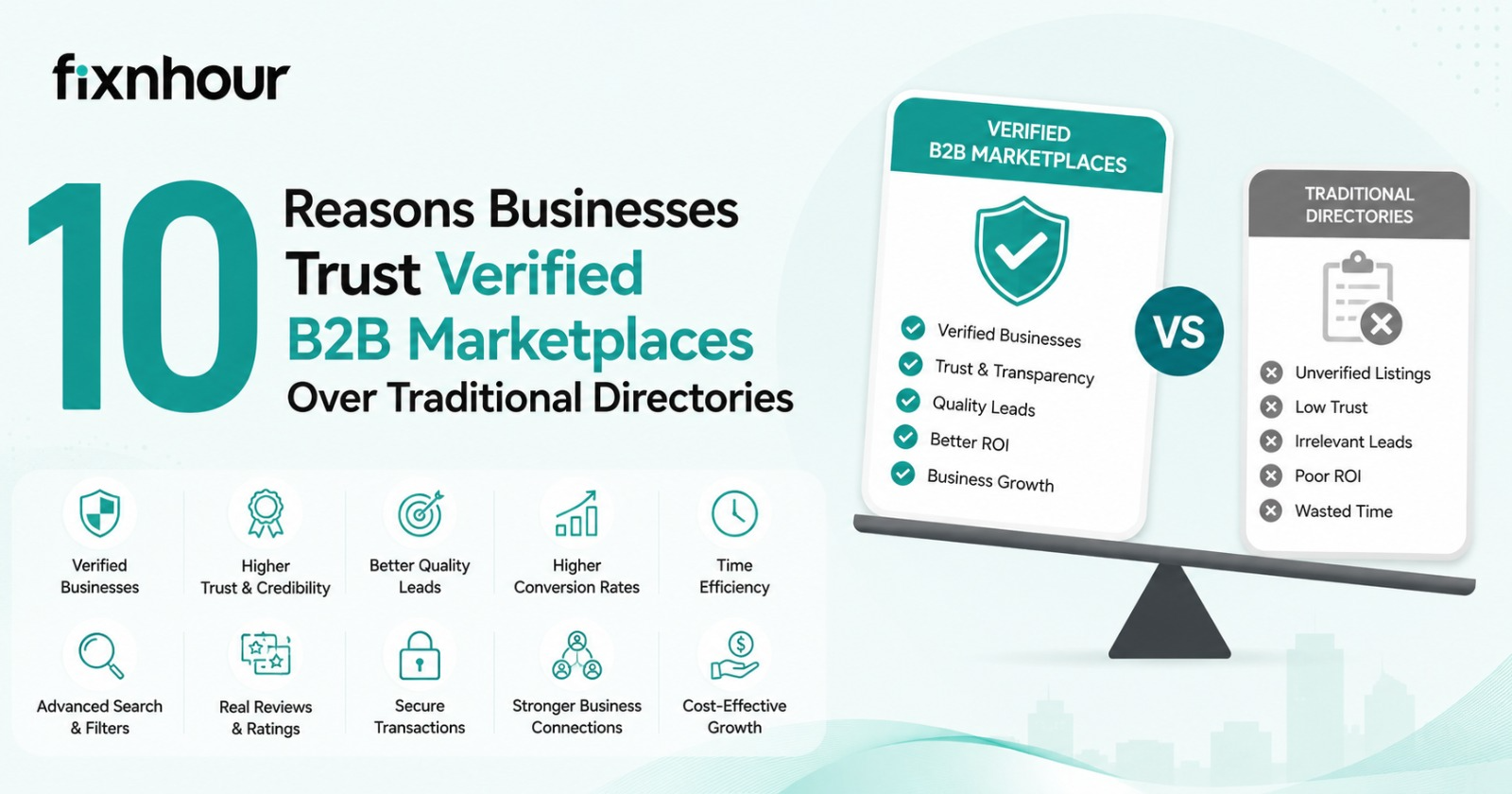
10 Reasons Businesses Trust Verified B2B Marketplaces
Businesses trust verified B2B marketplaces because they provide credibility, transparency, and access to qualified buyers and suppliers. These platforms offer verified company profiles, authentic reviews, secure communication, and greater market visibility. By reducing risks and improving networking opportunities, verified marketplaces help businesses build partnerships, generate leads, and accelerate sustainable growth.
| Reason | How Verified B2B Marketplaces Help Businesses |
|---|---|
| 1. Verified Business Profiles Increase Trust | Company information is validated through business registrations, website verification, documentation reviews, and certifications, reducing fraud risks. |
| 2. Authentic Reviews and Ratings Improve Decision-Making | Verified customer reviews help buyers assess service quality, reliability, communication, and overall customer satisfaction. |
| 3. Better Vendor Quality and Reliability | Marketplaces apply quality standards and screening processes, ensuring businesses connect with professional and trustworthy vendors. |
| 4. AI-Powered Vendor Matching | AI analyzes buyer requirements and recommends suitable vendors, improving match accuracy and reducing search time. |
| 5. Enhanced Transparency and Accountability | Detailed company profiles include experience, team size, specialization, testimonials, and portfolios for informed decision-making. |
| 6. Faster Vendor Shortlisting Process | Advanced filters, ratings, reviews, and portfolio access enable businesses to compare and shortlist vendors quickly. |
| 7. Improved Lead Quality for Service Providers | Businesses receive highly targeted inquiries from buyers actively searching for specific products or services. |
| 8. Secure Communication and Inquiry Management | Built-in communication tools streamline inquiries, improve response times, and support efficient vendor interactions. |
| 9. Data-Driven Business Comparisons | Buyers can evaluate vendors using measurable factors such as ratings, expertise, reviews, pricing transparency, and industry experience. |
| 10. Better Return on Investment (ROI) | Connecting with trusted vendors from the start helps reduce project delays, minimize risks, lower costs, and improve business outcomes. |
Key Benefits of Using Verified B2B Marketplaces
Verified B2B marketplaces offer businesses a reliable way to connect with trusted buyers, suppliers, and partners. They enhance credibility through verified profiles, improve lead generation, increase brand visibility, and streamline business networking. With greater transparency and reduced risk, these platforms help companies build valuable partnerships and drive long-term business growth.
Benefits for Buyers
- Reduced procurement risks
- Faster vendor selection
- Improved project outcomes
- Better decision-making
Benefits for Service Providers
- Enhanced credibility
- Increased visibility
- Better lead quality
- Higher conversion rates
Benefits for Growing Businesses
- Easier market expansion
- Improved networking opportunities
- Access to specialized expertise
- Stronger business partnerships
Statistics & Market Insights for 2026
The B2B marketplace industry is expected to experience significant growth in 2026, driven by digital transformation and increasing demand for trusted business connections. Market insights reveal rising adoption of verified platforms, higher online purchasing activity, and growing investments in B2B technology, creating new opportunities for businesses to expand their reach and revenue.
Several market trends are driving the growth of verified B2B marketplaces:
- Businesses increasingly rely on online research before selecting vendors.
- Reviews influence the majority of B2B purchasing decisions.
- AI-powered procurement tools continue to gain adoption.
- Digital vendor discovery is becoming the preferred sourcing method.
Challenges Businesses Face When Using Traditional Directories
Traditional business directories often struggle to meet modern business needs due to outdated information, limited visibility, lack of verification, and poor lead quality. Businesses may face challenges in reaching targeted audiences, building trust, and generating meaningful inquiries. These limitations make it difficult to compete effectively in today’s fast-paced digital marketplace.
- Limited verification standards
- Inaccurate company details
- Difficulty comparing vendors
- Lack of buyer protection
- Lower trust levels
Cost Comparison: Verified Marketplaces vs Traditional Directories
When comparing costs, verified B2B marketplaces often deliver greater value than traditional directories through enhanced visibility, qualified lead generation, and stronger business credibility. While investment levels may vary, verified platforms typically provide better return on investment by connecting businesses with relevant prospects and offering measurable opportunities for growth and engagement.
- Vendor research
- Due diligence
- Project failures
- Poor vendor selection
Also Read: Businesses Are Switching from Traditional Directories.
Step-by-Step Process for Choosing the Right Verified Marketplace
Choosing the right verified marketplace starts with identifying your business goals, target audience, and industry requirements. Evaluate platform credibility, verification standards, user reviews, lead quality, pricing, and available features. Comparing multiple options helps ensure you select a marketplace that maximizes visibility, builds trust, and supports long-term business growth.
| Step | Action | Purpose |
|---|---|---|
| Step 1 | Define Your Business Goals | Identify the specific services, products, or vendors your business requires to ensure a focused search process. |
| Step 2 | Review Verification Standards | Evaluate how the marketplace verifies businesses through registrations, certifications, documentation, and other validation methods. |
| Step 3 | Assess Industry Coverage | Select a marketplace that has strong representation and expertise within your industry or target market. |
| Step 4 | Analyze Reviews and Ratings | Examine authentic customer feedback, ratings, and testimonials to assess vendor reliability and performance. |
| Step 5 | Compare Platform Features | Review available tools such as advanced search filters, communication systems, lead management, and analytics capabilities. |
| Step 6 | Test Lead Quality | Evaluate the relevance and quality of vendors, inquiries, and potential business opportunities generated through the platform. |
Best Practices for Using Verified B2B Marketplaces
To maximize results from verified B2B marketplaces, maintain a complete and accurate business profile, highlight your unique strengths, and keep company information updated. Engage with customer inquiries promptly, showcase reviews and achievements, and regularly monitor performance metrics to improve visibility, build trust, and generate high-quality business opportunities.
- Keep business profiles updated.
- Collect verified customer reviews.
- Showcase certifications and achievements.
- Respond promptly to inquiries.
- Monitor profile performance regularly.
- Use detailed descriptions and portfolios.
Common Mistakes Businesses Make
Many businesses fail to maximize marketplace opportunities by using incomplete profiles, outdated information, poor-quality descriptions, or ignoring customer inquiries. Overlooking reviews, neglecting profile updates, and targeting the wrong audience can also limit results. Avoiding these common mistakes helps improve visibility, credibility, lead generation, and overall marketplace performance.
- Choosing vendors solely based on price
- Ignoring customer reviews
- Overlooking verification status
- Not comparing multiple providers
- Failing to define project requirements
Future Trends Shaping B2B Marketplaces (2026–2027)
B2B marketplaces in 2026–2027 will be shaped by AI-driven matchmaking, advanced business verification, personalized search experiences, and data-powered insights. Increased automation, mobile accessibility, and seamless digital transactions will enhance efficiency and trust. These innovations will help businesses discover better opportunities, strengthen partnerships, and compete more effectively in global markets.
- AI-powered business matchmaking
- Predictive vendor scoring
- Blockchain-based verification systems
- Advanced reputation analytics
- Automated procurement workflows
Why Choose Fixnhour
Fixnhour helps businesses gain greater visibility, connect with potential customers, and build credibility through a trusted and user-friendly platform. With verified company listings, industry-specific categories, and enhanced discovery features, Fixnhour makes it easier for businesses to showcase their expertise, generate quality leads, and achieve sustainable growth online.
Why businesses choose Fixnhour:
- Verified business profiles
- Transparent company information
- Industry-focused categories
- Easy vendor comparison tools
- Quality lead generation opportunities
- User-friendly platform experience
Conclusion
Verified B2B marketplaces are transforming how businesses discover and evaluate service providers. Unlike traditional directories, they offer verification, transparency, authentic reviews, and advanced matching capabilities that significantly reduce procurement risks. As businesses increasingly prioritize trust and accountability, verified marketplaces will continue to become the preferred destination for vendor discovery. Companies that leverage these platforms can save time, improve decision-making, generate better outcomes, and build stronger business partnerships in the years ahead. Get Started Today.
Frequently Asked Questions
Q1. What makes verified B2B marketplaces more trustworthy than traditional directories?
Ans. Verified B2B marketplaces screen businesses through identity checks, certifications, reviews, and performance evaluations. This verification process helps reduce fraud, improves transparency, and gives buyers greater confidence when selecting vendors, partners, or service providers for important business projects.
Q2. How do verified marketplaces help businesses find reliable vendors?
Ans. Verified marketplaces provide detailed company profiles, portfolios, customer reviews, certifications, and service information. These insights help businesses compare vendors objectively, assess credibility, and identify reliable partners that match their requirements, budget, industry expertise, and long-term goals.
Q3. Why are customer reviews more valuable on verified marketplaces?
Ans. Most verified marketplaces monitor reviews and require genuine customer feedback. This reduces fake ratings and misleading testimonials, allowing businesses to make informed decisions based on authentic experiences shared by previous clients who have worked with listed vendors.
Q4. Do verified B2B marketplaces improve lead quality?
Ans. Yes. Verified marketplaces attract serious buyers and qualified vendors, resulting in higher-quality leads. Businesses spend less time filtering unqualified inquiries and can focus on meaningful opportunities that have a greater likelihood of conversion and successful partnerships.
Q5. How do verification processes reduce business risks?
Ans. Verification checks help confirm company legitimacy, credentials, and business activity. By reducing the presence of fraudulent or inactive businesses, marketplaces lower the risk of financial losses, poor service delivery, and unsuccessful collaborations between buyers and vendors.
Q6. Can verified marketplaces save businesses time during vendor selection?
Ans. Absolutely. Verified marketplaces centralize vendor information, reviews, portfolios, and certifications in one location. This streamlines research and comparison processes, helping businesses evaluate multiple providers quickly and make faster, more confident purchasing or partnership decisions.
Q7. Are verified B2B marketplaces suitable for small businesses?
Ans. Yes. Small businesses benefit from easier access to trusted vendors, transparent pricing information, and verified reviews. These platforms simplify supplier discovery, reduce procurement risks, and help smaller organizations compete more effectively with larger businesses.