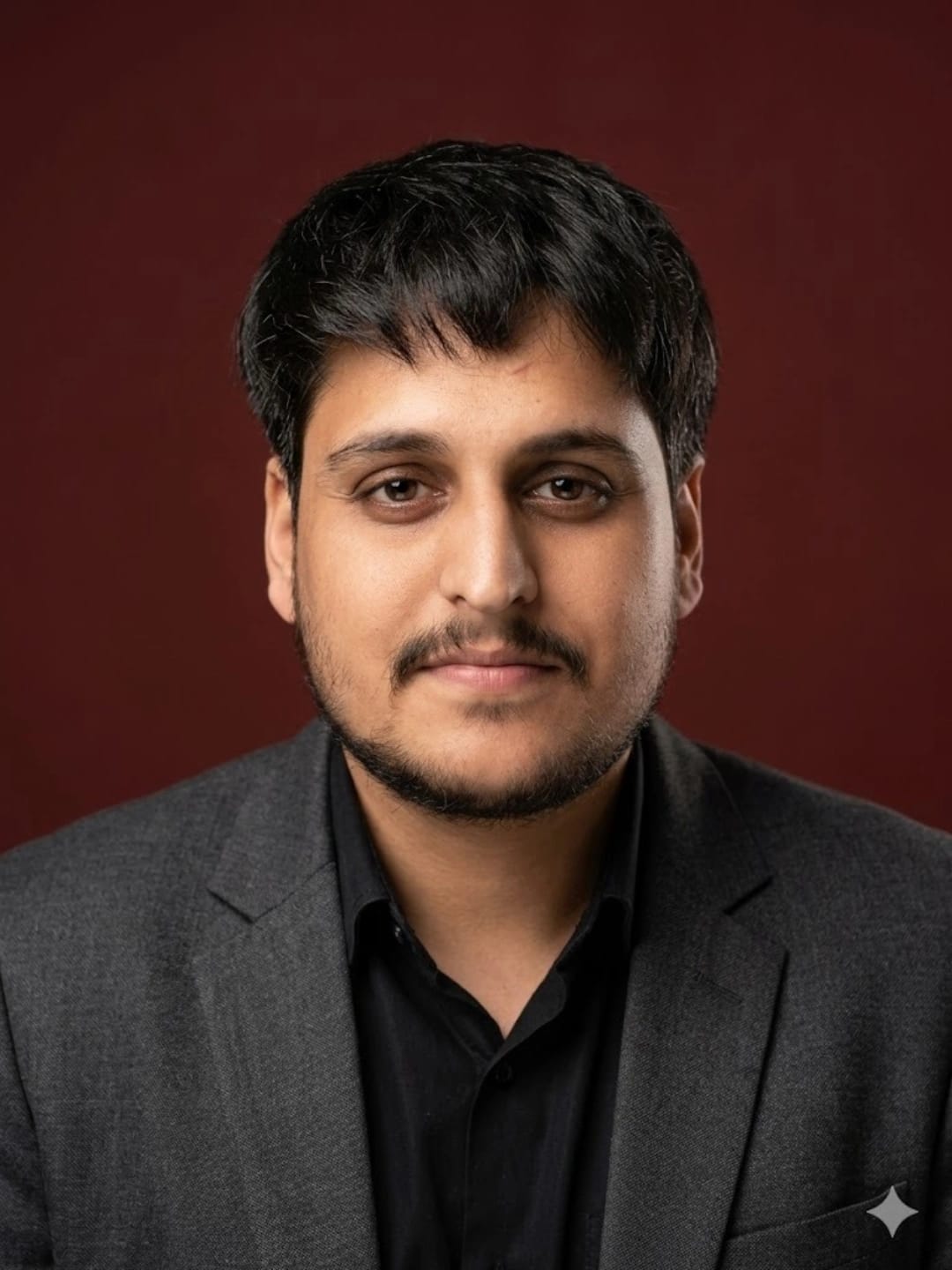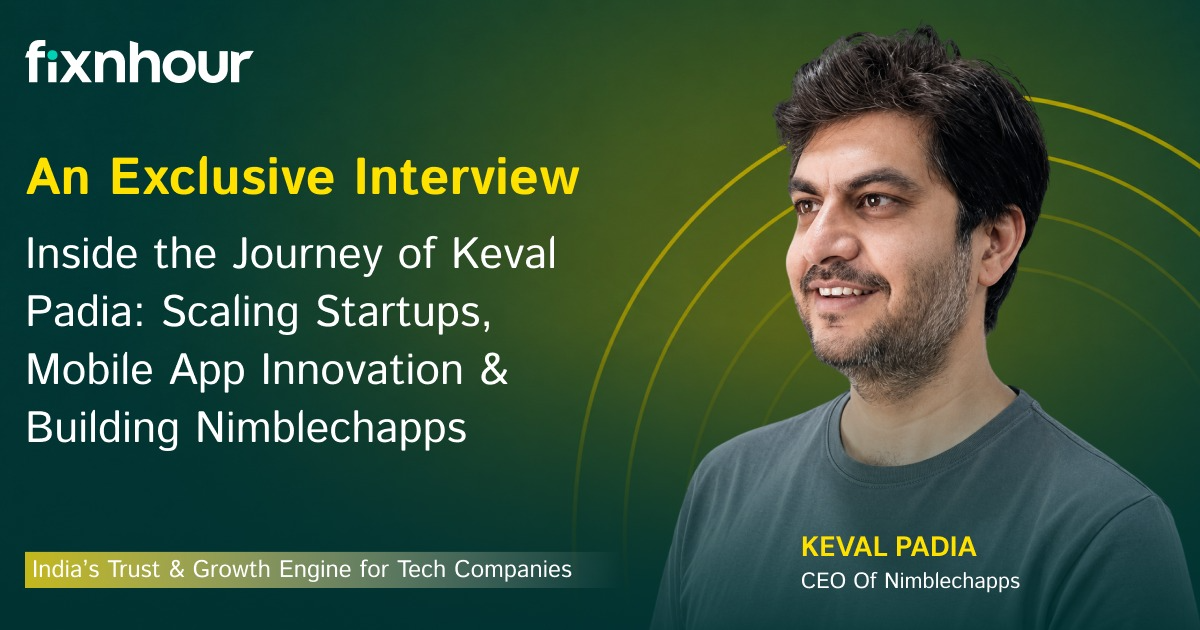
In today’s rapidly evolving digital landscape, building a successful tech company requires more than just innovative ideas; it demands vision, persistence, and the ability to adapt to constant change. This exclusive interview takes you inside the inspiring journey of Keval Padia, a dynamic entrepreneur who has made a remarkable impact in the world of mobile app development and startup scaling. As the founder of Nimblechapps, Keval has transformed simple concepts into powerful digital products that serve clients across the globe. In this conversation, he shares valuable insights on how startups can navigate early-stage challenges, the importance of user-centric mobile app design, and the strategies that drive sustainable growth in competitive markets. From overcoming technical hurdles to building high-performing development teams, his experience offers practical lessons for aspiring entrepreneurs and tech leaders. Whether you are a startup founder, developer, or business enthusiast, this interview provides actionable inspiration for building scalable and innovative digital solutions in today’s mobile-first world.
Q1: Entrepreneurship inspiration & motivation for multiple companies
I didn't start out planning to build multiple companies. Nimblechapps started 11 years ago as a software development firm that taught me how to run a services business at scale. The accounting division came later, after I watched several of our clients struggle with the same problem: needing skilled accounting capacity but being unable to hire it locally without taking on real fixed-cost risk. NimbleFinCorp was the first attempt, spun off independently to validate the thesis without confusing the parent brand. Nimblechapps Finance is the more focused version built specifically for US CPA firms, with the certifications, workflows, and standards their world actually demands. Each new entity exists because a real, observed problem couldn't be solved inside the existing one.
Q2: The problem Nimblechapps Finance solves
US CPA firms, especially the 2-to-10 partner practices, are facing a structural accountant shortage that's getting worse every year. They need capacity. But the standard offshore model is broken for them: lift-and-shift teams who don't carry US certifications, can't operate inside the firm's software environment, and don't understand how a small CPA firm actually delivers client work. We solve that mismatch. Every accountant on our team is a QBO ProAdvisor and Xero Certified before they touch a client file. We white-label so the firm's clients never know we exist. And we operate on monthly engagements, not multi-year contracts, so the firm carries no fixed-cost risk. It matters because if this gap isn't filled, mid-tier CPA firms will continue losing ground to AI-only providers and large national consolidators.
Q3: Biggest challenge in building and scaling
Trust at a distance. Accounting is a regulated, fiduciary profession. A CPA firm handing client books to an offshore team is putting its license at risk. The challenge wasn't capability; our team is technically strong. It was getting CPA firms to believe it. We solved it the slow, structural way: ISO 27001:2013 and ISO 9001:2015 at the parent firm level, individual platform certifications for every team member, multi-layer internal review on every deliverable, mutual NDA executed before any client data access, and a 30-minute discovery call where we tell prospects honestly if we're not the right fit. No badges, no shortcuts. The trust compounds over time.
Q4: Managing leadership across multiple organizations
Tight scoping and operational delegation. Each business has its own MD-level leader handling day-to-day. My job is the 1-2 things only a founder can do: strategy, key client relationships, hiring senior people, and being honest about which initiatives to kill. Weekly cadence per entity, monthly business reviews, quarterly strategy. The trap of running multiple companies is letting all of them become 30% of your attention. I'd rather give 100% focus to the one that's currently most leveraged and put the others on disciplined autopilot and rotate that focus as needs change.
Q5: Key milestones and achievements
11 years of continuous operation at Nimblechapps Pvt. Ltd., the parent, without external funding. ISO 27001:2013 and ISO 9001:2015 certifications, both maintained through annual audits. Successfully spinning off NimbleFinCorp as an independent entity. The launch of Nimblechapps Finance with US CPA firm-specific service design. Building a senior team where every accountant carries multiple platform certifications before touching a client file. Quietly: I'm most proud that we've never had to walk back a hire we made. The bar for senior roles in a remote-delivery firm has to be unusually high because mistakes carry across continents and clients.
Q6: How is technology transforming the industries we operate in
Accounting is where automation has the highest yield right now. Document parsing has gone from clumsy OCR to AI that reads handwritten receipts and bank statements accurately enough for production workflows. Practice management platforms TaxDome, Karbon, Canopy, and Financial Cents have replaced messy email-and-spreadsheet workflows with structured, auditable pipelines. Direct-feed bank integrations into QBO and Xero have cut manual data entry by 70% or more. Our approach: automate everything that's genuinely automatable, then place certified humans where judgment, context, and client communication actually matter. The firms that survive the next five years will be the ones that adopted this stack early and built workflow discipline around it.
Q7: Trends creating the biggest opportunities
Three I'd point to specifically. First, the US accountant shortage: the pipeline of new CPAs has dropped sharply, and firms increasingly can't hire locally at any reasonable cost. Certified, integrated offshore capacity stops being optional and becomes survival. Second, practice management platform consolidation: firms that standardize on TaxDome or Karbon will need partners who can deliver inside those platforms natively, not as workarounds. Third, the increasing complexity of US tax compliance, multi-state SALT, sales tax nexus, and IRS scrutiny on partnerships is creating specialization niches that smaller firms can't fully staff internally. We're building the offshore-with-US-expertise model designed exactly for those three forces.
Q8: Customer satisfaction, trust, and long-term relationships
Trust is mostly a function of two things: doing what you said you would, on time, and being honest when something goes wrong. We've structured the business to make both easier. Mutual NDA before any engagement. Multi-layer internal review so errors get caught before they reach the client. Monthly engagement model with no long-term contracts, which forces us to earn renewal every month. White-label delivery so we never put a CPA firm in a position of having to explain who we are to their clients. And a discovery call structure where we'd rather lose a deal than over-promise. The retention rate that follows from that approach is the only marketing that matters.
Q9: Success story
A small CPA firm specializing in trucking-industry clients came to us after landing a large account: a logistics company running 100+ trucks under a FedEx contract. FedEx sends a separate weekly statement per truck, hundreds of statements to read, reconcile, and enter into QBO every week. The firm was drowning. They'd spoken to other offshore providers, and everyone proposed the same answer: deploy 10 bench accountants, hourly billing. We proposed something different: give us one truck for one week and let us diagnose the workflow first. Inside that one-week diagnostic, we built an AI-driven automation with Claude Code that reads each FedEx statement and posts the entries directly into QBO end-to-end. No human in the data-entry loop. A 10-person engagement became one tech-savvy certified accountant overseeing the system. The firm was happy to pay twice the market rate because we'd just saved them nine hires. That engagement is the clearest demonstration of what "automation-led, not bodies-on-the-ground" actually looks like in practice.
Q10: Qualities that define a successful entrepreneur today
The willingness to be honest about which business you're actually in. Most founders are running a different business than they think they are; they think they're in product, but they're really in distribution, or they think they're in services, but they're really in trust and operations. Second: a high tolerance for unglamorous work. The real job is hiring well, operating tightly, fixing broken processes, and saying no to opportunities that look good but distract. Third: pushback culture. Founders who surround themselves with people who agree with them die slowly. The best ones train their team to disagree with them constructively and then change their mind in public when the team is right.
Q11: How do we foster innovation and continuous learning
Three things. First, certification roadmaps for every role: our accounting team is on structured paths to QBO ProAdvisor, Xero Certified, Sage, and eventually Enrolled Agent or CMA. Learning is part of the job description, not a side project. Second, internal tooling investment: we build our own workflow scripts, document parsers, and dashboards rather than buying generic tools, which forces the team to understand the underlying process deeply. Third, cross-pollination between the IT and accounting divisions: our developers help accountants think about automation, and our accountants help developers understand regulated-industry workflows. The result is a team that thinks about process design, not just task execution.
Q12: Advice to aspiring founders
Two things, both unfashionable. First: build the business that's actually working before scaling the one you wish were working. Founders waste years polishing strategies for businesses that have no customer pull, when they could have grown the one piece of the business that already has traction. Second: don't romanticize the founder journey. The actual work is mostly operations, hiring, and uncomfortable conversations; maybe 5% of it is the visionary stuff LinkedIn celebrates. Get good at the unglamorous 95%, and the visionary parts get easier to execute.
Q13: Long-term vision for Nimblechapps Finance and the broader ecosystem
One thousand certified accountants by 2030, every one carrying QBO ProAdvisor, Xero Certified, and a structured pathway to Enrolled Agent or CMA. Not as a labor-arbitrage bench, but as a deep team that US CPA firms trust like in-house staff. Beyond that, I want Nimblechapps Finance to be the firm CPA partners recommend to peers when they're under capacity pressure. Across the broader group, the parent IT firm continues as the technology backbone, and Nimblechapps SA opens the African market once entity registration is complete later this year. Each entity stays focused on what it does best.
Q14: Importance of founder branding, credibility, and visibility
For service businesses, especially trust-based ones like accounting, founder visibility is closer to essential than nice-to-have. Prospects evaluating offshore partners are taking on real risk; they want to see a real person, with a real track record, willing to put their name behind the work. A faceless firm with a polished website is harder to trust than a less polished firm whose founder writes thoughtfully, takes pushback well, and shows up consistently. It's also a forcing function for honesty: when you have a public position, you can't quietly walk it back. So yes, important but earned through substance, not optimization.
Q15: One leadership lesson
Hire slowly, fire constructively, and never let an avoidable problem become a structural one. Most of the worst situations I've watched founders walk into, including my own past mistakes, started with a small problem we knew about and didn't act on. A misaligned senior hire. A client engagement that wasn't working but was paying the bills. A team member coasting on past performance. The cost of acting early is awkwardness. The cost of waiting is irreversible damage to culture, trust, and momentum. Lean into the awkward conversation. It almost always turns out smaller than the version you feared.
Final Thought:
In today’s fast-changing digital and business landscape, sustainable success comes from balancing innovation with trust, automation with human judgment, and ambition with disciplined execution. Whether building startups or scaling established companies, the real differentiator is not just having ideas, but consistently solving real problems, earning trust over time, and adapting to change without losing operational focus. Leaders who succeed are those who embrace unglamorous work, make difficult decisions early, and build systems that scale beyond themselves. Ultimately, long-term growth belongs to businesses that stay customer-centric, invest in capability and learning, and remain honest about what truly drives value in their industry. Get Started Today.