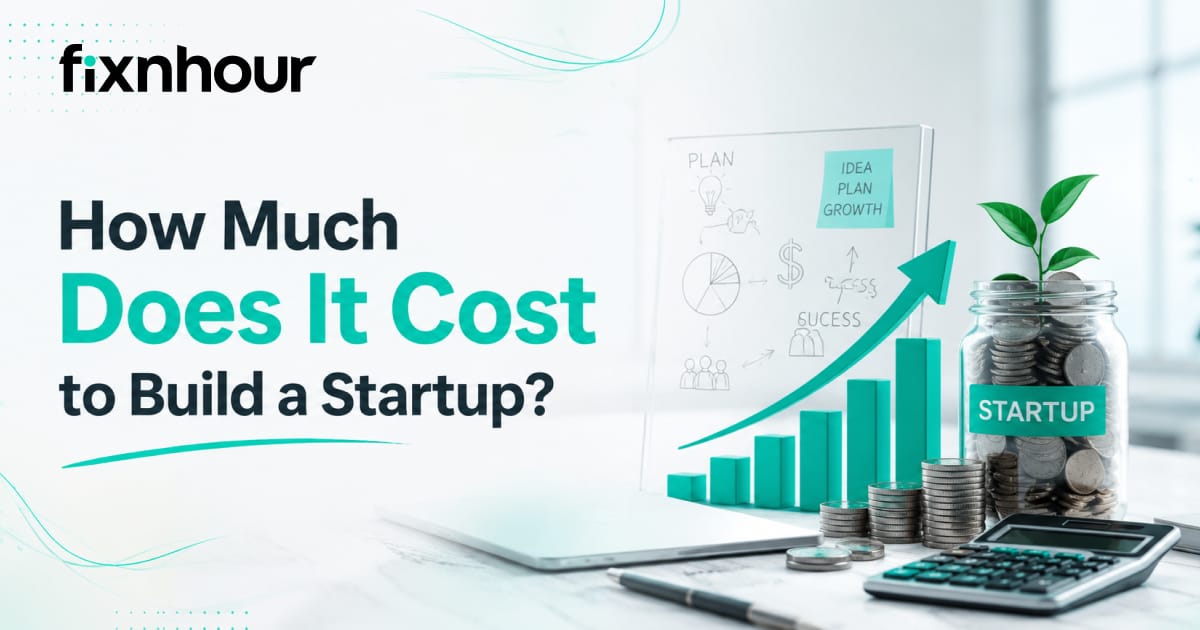
Launching a startup is exciting, but turning an idea into a successful business requires more than passion. One of the biggest questions entrepreneurs ask is, "How much does it cost to build a startup?" The answer depends on your business model, industry, product complexity, team size, and growth strategy. Some startups begin with just a few thousand dollars, while others require hundreds of thousands before generating revenue. Whether you're building a SaaS platform, AI solution, eCommerce store, understanding your startup costs helps you make informed financial decisions and avoid unnecessary expenses..
Quick Answer
The cost to build a startup typically ranges from $5,000 to over $500,000, depending on the business type, technology, and operational requirements. A simple online business may require less than $10,000, while software, AI, fintech, or healthcare startups often need significantly larger investments for product development, marketing, hiring, and ongoing operations. Fixnhour helps startups understand development costs, plan their budgets effectively, and choose the right technology solutions to build scalable and successful businesses.
Key Takeaways
Before diving into detailed cost estimates, here are the most important insights every entrepreneur should know. These takeaways provide a realistic picture of startup budgeting and help you avoid common financial mistakes during the early stages of building your business.
- Startup costs vary based on industry, product complexity, and business goals.
- Product development is usually the largest upfront expense.
- Marketing and customer acquisition require continuous investment.
- Building an MVP reduces financial risk before full-scale development.
- Outsourcing development can lower costs without compromising quality.
Startup Cost Statistics & Market Insights
Understanding current startup spending trends helps founders create realistic budgets instead of relying on assumptions. Market data also reveals where successful startups invest their money and how modern technologies are reducing the cost of launching innovative businesses. Today's startup ecosystem is more competitive than ever. While technology has reduced barriers to entry, customer expectations and market competition have increased significantly. In this digital landscape Business Listing Platforms becomes an important consideration for startups looking to improve visibility, attract potential customers, and build a stronger online presence.
Global Startup Investment Trends
Modern startups typically allocate their budgets across several core business functions to ensure smooth operations, sustainable growth, and long-term success. These areas include product development, technology infrastructure, marketing, hiring, customer support, and daily operational expenses.
- 20–30% on hiring
- 15–25% on marketing and customer acquisition
- 10–15% on operations and infrastructure
- Remaining budget for legal, administration, and contingency planning
Technology Is Reducing Startup Costs
Several technologies have made launching a startup more affordable and accessible than it was a decade ago. Cloud computing, AI-powered tools, automation platforms, and no-code solutions allow entrepreneurs to build products, manage operations, and reach customers with lower initial investments. These advancements have reduced technical barriers, improved efficiency, and enabled startups to scale faster while optimizing their limited resources.
Examples include:
- Cloud computing eliminates expensive servers.
- AI tools automate repetitive business tasks.
- No-code and low-code platforms reduce development time.
- Remote hiring lowers recruitment expenses.
- Subscription-based software minimizes upfront investments.
What Factors Affect the Cost of Building a Startup?
No two startups require the same investment because every business has different goals, products, customers, and technologies. Understanding the factors that influence startup costs helps entrepreneurs create realistic budgets and prioritize spending where it delivers the greatest long-term value. Insights from B2B Trust Index 2026 also highlight that businesses achieve stronger growth by investing in trusted technology partners, strategic planning, and scalable solutions that support sustainable success..
Business Model
Your business model has one of the biggest impacts on startup costs, as different types of businesses require different levels of investment. A service-based startup may need minimal resources, while product-based, software, or technology-driven startups often require higher spending on development, infrastructure, and operations.
For example:
- SaaS businesses require software development.
- eCommerce businesses need inventory and logistics.
- Service businesses often require fewer upfront investments.
- AI startups require data, infrastructure, and specialized talent.
Product Complexity
The more advanced your product, the higher your development cost due to increased complexity, technology requirements, and customization needs. Features such as AI integration, advanced analytics, third-party integrations, security systems, and scalable infrastructure require more time and expertise to build.
Simple websites require fewer resources than applications with features like:
- Artificial Intelligence
- Machine Learning
- Real-time messaging
- Payment gateways
- Cloud synchronization
- API integrations
- Analytics dashboards
- User authentication
Team Structure
Who builds your startup directly affects your budget, project timeline, and overall product quality. Hiring an in-house team, working with freelancers, or partnering with a development agency each comes with different costs and advantages. Choosing the right development approach based on your budget, technical requirements, and long-term goals can help you maximize your investment and build a successful startup.
Hiring an In-House Team
Advantages:
- Better communication
- Stronger collaboration
- Full-time commitment
Challenges:
- Higher salaries
- Office expenses
- Employee benefits
- Recruitment costs
Outsourcing Development
Many startups choose outsourcing because it offers:
- Lower development costs
- Access to experienced specialists
- Faster project delivery
- Flexible scaling
Technology Stack
As your business expands, partnering with Top Payroll Management Companies can further streamline employee payroll, ensure tax compliance, automate salary processing, and reduce administrative overhead, allowing startups to focus on innovation and growth.
A typical startup technology stack may include:
- Frontend frameworks
- Backend development
- Cloud hosting
- Databases
- Security tools
- Analytics software
- CRM platforms
- Payment integrations
Geographic Location
Development costs vary dramatically depending on where your team is located.
For example:
| Region | Typical Development Cost |
|---|---|
| North America | Very High |
| Western Europe | High |
| Eastern Europe | Moderate |
| India | Cost-Effective |
| Southeast Asia | Cost-Effective |
| Latin America | Moderate |
Legal and Compliance Requirements
These expenses may include business registration, licenses, permits, trademarks, contracts, tax filings, and data protection compliance. Investing in proper legal support from the beginning helps protect the business, build credibility, and ensure smooth long-term operations.
Common legal expenses include:
- Business registration
- Licenses and permits
- Trademark registration
- Contracts
- Privacy policies
- Intellectual property protection
- Tax compliance
- Industry certifications
Infrastructure and Operational Costs
These costs include employee salaries, office space, software subscriptions, cloud hosting, customer support, marketing, utilities, and administrative expenses. Proper planning for recurring operational costs helps maintain financial stability and supports long-term business growth.
These often include:
- Cloud hosting
- Software subscriptions
- Office equipment
- Communication tools
- Internet services
- Customer support platforms
- Email services
- Cybersecurity solutions
Why Accurate Budget Planning Matters
One of the biggest reasons startups fail is not a lack of great ideas—it is poor financial planning. Underestimating expenses, overspending on unnecessary features, or running out of cash before reaching product-market fit can quickly derail even the most promising ventures. This is why many entrepreneurs research Why Businesses Choose Fixnhour Over Clutch when selecting a trusted technology and business partner. With strategic planning, transparent pricing, and tailored development solutions, Fixnhour helps startups optimize budgets, avoid costly mistakes, and build scalable products that support sustainable long-term growth.
A detailed startup budget helps founders:
- Prioritize essential investments
- Control cash flow
- Attract investors
- Reduce financial risk
- Make smarter hiring decisions
- Scale sustainably
Complete Breakdown of Startup Costs
Understanding where your money goes is essential before launching a startup. While every business has unique requirements, most startups share several core expenses. Creating a detailed budget helps avoid unexpected costs, improves cash flow management, and ensures you allocate resources to areas that drive long-term growth. Many entrepreneurs also seek guidance from Business Consulting Companies to develop effective financial strategies, optimize budgets, identify growth opportunities, and make informed business decisions from the very beginning.
| Expense Category | Estimated Cost |
|---|---|
| Business Registration & Legal | $500–$5,000 |
| Branding & Logo Design | $500–$10,000 |
| Website Development | $2,000–$20,000 |
| Mobile App Development | $30,000–$300,000+ |
| MVP Development | $15,000–$80,000 |
| Cloud Hosting & Infrastructure | $100–$5,000/month |
| Marketing & Advertising | $2,000–$50,000+ |
| Software & SaaS Tools | $100–$2,000/month |
| Employee Salaries | Varies by team size |
| Maintenance & Support | 15–20% of development cost annually |
Business Registration and Legal Costs
Every startup needs a legal foundation. Registering your business, securing licenses, drafting contracts, and protecting intellectual property are essential first steps. While legal expenses vary by country and business structure, investing early helps prevent costly legal disputes and compliance issues in the future.
Product Development
For technology startups, product development usually consumes the largest share of the budget. Costs depend on feature complexity, integrations, platform selection, testing, and scalability. Building only essential features first allows startups to validate their idea before investing in advanced functionality.
Branding and Design
Strong branding helps startups build credibility from day one. Your investment may include logo design, brand identity, color palette, typography, website graphics, marketing materials, and UI/UX design. A professional brand creates trust and improves customer recognition across digital channels.
Marketing and Customer Acquisition
Launching a product without marketing rarely generates sustainable growth. Startups should budget for SEO, paid advertising, social media marketing, email campaigns, influencer collaborations, and content creation. Customer acquisition costs often increase during the first year as businesses establish market presence.
Operational Expenses
Daily business operations include cloud hosting, communication platforms, project management tools, accounting software, cybersecurity, internet services, and customer support systems. Although individually affordable, these recurring expenses should always be included in long-term financial planning.
Startup Costs by Business Type
Startup costs differ significantly across industries because every business requires different technologies, teams, compliance standards, and operational resources. Understanding the investment needed for your specific business model allows you to build realistic financial projections and choose a growth strategy that matches your available budget. Following a payroll Management Guide for Small Businesses also helps startups estimate employee-related expenses, manage payroll efficiently, stay compliant with regulations, and maintain better financial control as the business grows.
| Business Type | Estimated Cost | Timeline |
|---|---|---|
| SaaS Startup | $20,000–$250,000+ | 4–12 Months |
| AI Startup | $50,000–$500,000+ | 6–18 Months |
| Mobile App Startup | $30,000–$300,000+ | 4–10 Months |
| Marketplace Platform | $40,000–$350,000+ | 5–12 Months |
| eCommerce Business | $5,000–$100,000+ | 2–6 Months |
| Healthcare Startup | $100,000–$1M+ | 8–24 Months |
| FinTech Startup | $100,000–$500,000+ | 8–18 Months |
| Service-Based Startup | $2,000–$25,000 | 1–3 Months |
SaaS Startups
Software-as-a-Service businesses require investment in product development, cloud infrastructure, security, subscription management, and customer support. While initial costs may seem high, recurring revenue models often provide long-term scalability and predictable income.
AI Startups
AI startups typically require experienced engineers, large datasets, cloud computing resources, model training, and continuous optimization. These businesses usually involve higher development costs but also offer strong innovation potential and competitive advantages.
eCommerce Businesses
eCommerce startups focus on website development, payment gateways, inventory management, logistics, and digital marketing. Businesses using dropshipping or print-on-demand models can significantly reduce initial investment compared to inventory-heavy operations.
Benefits of Proper Startup Budget Planning
A well-planned startup budget is more than a financial document—it becomes a roadmap for sustainable growth. It helps founders make informed decisions, control spending, improve investor confidence, and prepare for unexpected business challenges without compromising long-term objectives.
Major Benefits
- Better cash flow management
- Smarter investment decisions
- Improved fundraising opportunities
- Reduced financial risks
- Faster product launches
- Easier business scaling
- Stronger operational efficiency
- Higher return on investment
Common Challenges When Budgeting for a Startup
Even experienced entrepreneurs often underestimate startup expenses. Hidden costs, changing market conditions, and unexpected delays can quickly affect financial stability. Identifying these challenges early allows founders to build contingency plans and make informed decisions throughout the business journey.
Common Challenges
- Underestimating product development costs
- Scope creep during development
- Hiring skilled professionals
- Increasing customer acquisition costs
- Cash flow shortages
- Technology upgrades
- Regulatory compliance expenses
- Scaling infrastructure too early
Step-by-Step Process to Estimate Startup Costs
Estimating startup costs requires careful planning rather than guesswork. Breaking the process into manageable steps helps entrepreneurs identify essential investments, avoid unnecessary spending, and create a realistic financial roadmap that supports sustainable business growth from launch through future expansion. Working with the Best Legal Service Providers for Startups also helps founders budget for business registration, contracts, compliance, intellectual property protection, and other legal requirements, reducing risks and ensuring a strong foundation for long-term success.
Step 1: Define Your Business Idea and Goals
- Identify the problem your startup will solve.
- Define your target audience and market.
- Set short-term and long-term business goals.
- Establish your unique value proposition (UVP).
Step 2: Conduct Detailed Market Research
- Analyze market demand and industry trends.
- Identify your target customers.
- Research competitors and their pricing.
- Validate your business idea with customer feedback.
Step 3: Create a Business Plan
- Write your business model and strategy.
- Define your products or services.
- Prepare financial projections.
- Outline your marketing and sales plan.
Step 4: Estimate Development Costs
- Calculate product development expenses.
- Estimate software, hardware, or equipment costs.
- Include design, testing, and deployment costs.
Step 5: Calculate Operational Expenses
- Estimate salaries and payroll costs.
- Budget for office rent and utilities.
- Include software subscriptions and cloud hosting.
- Account for legal and accounting expenses.
Step 6: Build a Marketing Budget
- Allocate funds for digital marketing.
- Budget for SEO, PPC, and social media campaigns.
- Include branding and content creation costs.
- Plan advertising and promotional activities.
Step 7: Forecast Revenue and Cash Flow
- Estimate monthly and annual revenue.
- Calculate projected profits and expenses.
- Monitor cash inflows and outflows.
- Plan for emergency funding needs.
Step 8: Launch an MVP
- Build a Minimum Viable Product (MVP).
- Launch with essential features only.
- Collect user feedback early.
- Fix issues and improve functionality.
Step 9: Monitor Expenses and Optimize Continuously
- Track all business expenses regularly.
- Compare actual spending with your budget.
- Identify areas to reduce unnecessary costs.
- Optimize operations for
Best Practices to Reduce Startup Costs Without Sacrificing Quality
Reducing startup expenses doesn't mean compromising your product or customer experience. Smart founders focus on efficient resource allocation, lean development, and scalable technologies that maximize value while minimizing unnecessary costs during the early stages of business growth. Protecting intellectual property is equally important, which is why many startups work with trademark & IP Registration Firms to secure trademarks, patents, and brand assets. This helps prevent legal issues, strengthen brand identity, and create a solid foundation for long-term business success.
Best Practices
- Build a Minimum Viable Product (MVP) first.
- Prioritize essential features over advanced functionality.
- Hire remote or offshore development teams.
- Use cloud-based infrastructure instead of expensive servers.
- Choose scalable open-source technologies where appropriate.
Conclusion
Building a startup is an exciting journey, but success begins with realistic financial planning. While startup costs can range from a few thousand dollars to several hundred thousand depending on your business model, careful budgeting allows you to invest wisely, reduce unnecessary expenses, and grow sustainably.
Instead of trying to build a perfect product from the beginning, focus on validating your idea with an MVP, understanding your target market, and allocating resources where they create the greatest impact. Investing in the right technology stack, hiring experienced professionals, and continuously monitoring your finances will help you avoid common pitfalls and improve your chances of long-term success. Contact us today
Frequently Asked Questions
Q1. How much does it cost to build a startup from scratch?
Ans. The cost of building a startup from scratch typically ranges between $5,000 and $500,000+, depending on the industry, product complexity, technology stack, team size, and marketing strategy. Digital businesses generally require lower investments than AI, healthcare, or fintech startups.
Q2. What is the minimum budget required to launch a startup?
Ans. A small service-based or online startup can often begin with $2,000–$10,000, while technology startups usually require $20,000 or more to develop an MVP, establish operations, and launch effective marketing campaigns.
Q3. How much does it cost to build an MVP?
Ans. Developing a Minimum Viable Product (MVP) generally costs between $15,000 and $80,000, depending on the number of features, platforms, design complexity, integrations, and development team. An MVP helps validate your idea before investing in a full-scale product.
Q4. What are the biggest startup expenses?
Ans. The largest startup expenses typically include product development, employee salaries, marketing, cloud infrastructure, legal compliance, branding, software subscriptions, and ongoing operational costs. For most technology startups, product development accounts for the highest percentage of the initial investment.
Q5. How can startups reduce development costs?
Ans. Startups can lower development expenses by building an MVP first, outsourcing development, using cloud-based infrastructure, adopting open-source technologies, leveraging AI productivity tools, and prioritizing essential features instead of creating a fully featured product from the beginning.
Q6. Is outsourcing better than hiring an in-house team?
Ans. For many early-stage startups, outsourcing offers a cost-effective solution by providing access to experienced professionals without the overhead of full-time salaries, office space, employee benefits, and recruitment costs. The best choice depends on your business goals and long-term strategy.
Q7. How much should startups spend on marketing?
Ans. Many startups allocate 10–20% of their annual budget to marketing during the early growth stage. Investment typically includes SEO, content marketing, paid advertising, email campaigns, social media, and customer acquisition activities that drive long-term business growth.
Q8. How long does it take for a startup to become profitable?
Ans. Profitability depends on the business model, funding, market demand, and customer acquisition strategy. Some startups become profitable within 12–24 months, while technology and SaaS businesses may require several years of continuous investment before generating consistent profits.