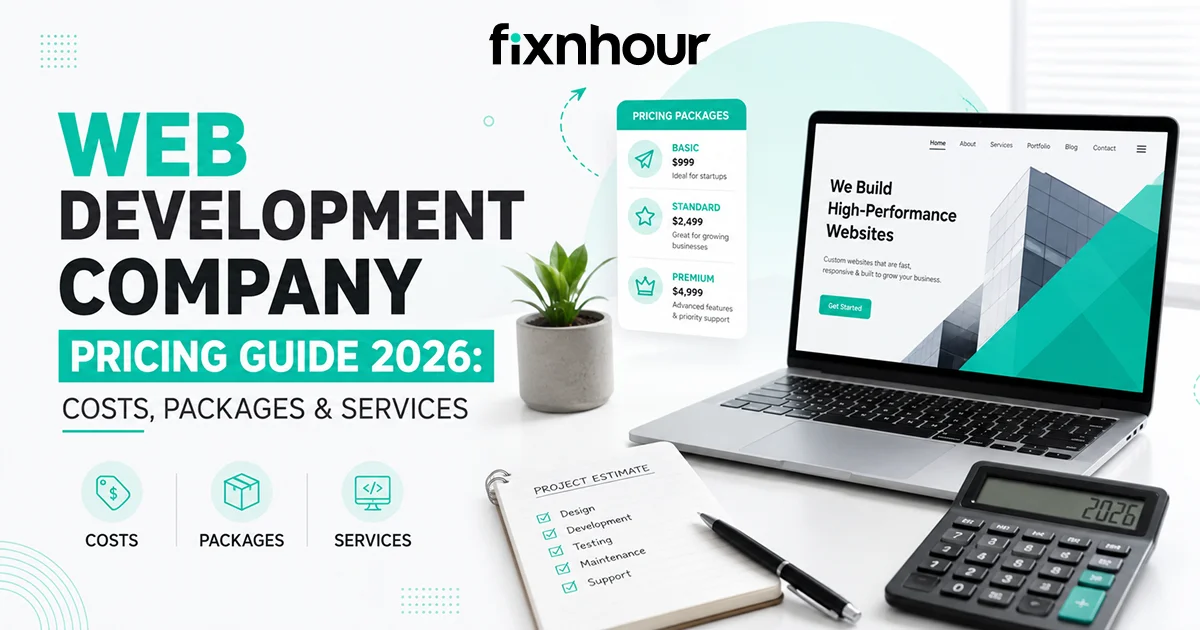
In 2026, having a professionally designed and well-developed website is essential for businesses of every size. Whether you are a startup building its first online presence, a small business looking to generate more leads, or an established company planning a custom web application, understanding web development company pricing is important before starting your project. The cost of hiring a web development company can vary significantly depending on the type of website, design requirements, technology stack, features, integrations, development time, and ongoing maintenance needs.
A simple business website may require a relatively smaller investment, while an eCommerce platform, enterprise website, or custom web application can involve significantly higher development costs because of advanced functionality and technical complexity. In addition to the initial development cost, businesses may also need to consider expenses related to UI/UX design, content creation, SEO, hosting, security, third-party integrations, website maintenance, and future upgrades.
Quick Answer:
The cost of hiring a top web development company in 2026 depends on the website type, complexity, features, technology, design, and development timeline. Basic business websites generally cost less than eCommerce websites, custom web applications, and enterprise platforms. Businesses should compare pricing based on services, expertise, scalability, security, and long-term value rather than choosing the cheapest option.
Key Takeaways:
- Web development costs vary depending on project complexity and business requirements.
- Basic websites are more affordable than eCommerce platforms and custom web applications.
- Custom UI/UX design and advanced features can significantly increase development costs.
- Third-party integrations, APIs, payment gateways, and databases also affect pricing.
- Fixed-price, hourly, retainer, and dedicated team models are common pricing structures.
- Professional web development companies provide design, development, testing, security, and maintenance services.
- Businesses should focus on long-term value, scalability, performance, and ROI instead of only comparing prices.
What Is the Average Cost of Hiring a Web Development Company in 2026?
The average cost of hiring a web development company depends largely on the type and scope of the project. A simple website with basic pages and standard features will require less development time than a complex website with custom functionality, user accounts, payment systems, APIs, and advanced backend infrastructure.
Basic Business Website Cost
A basic business website is generally suitable for startups, local businesses, professionals, and small companies that need a professional online presence.
Common features may include:
- Homepage
- About Us page
- Services or Products page
- Contact page
- Contact forms
- Responsive design
- Basic CMS integration
- Basic SEO-friendly structure
Professional Corporate Website Cost
A corporate website usually requires a more professional design, advanced functionality, better content structure, and stronger branding.
It may include:
- Custom UI/UX design
- Multiple service pages
- Blog or resource section
- Lead generation forms
- CRM integration
- Advanced SEO structure
- Performance optimization
eCommerce Website Development Cost
eCommerce development generally costs more because online stores require multiple systems to work together.
Common features include:
- Product catalog
- Shopping cart
- Secure checkout
- Payment gateway integration
- Inventory management
- Customer accounts
- Order tracking
- Discount and coupon systems
Custom Web Application Development Cost
Custom web applications are developed according to specific business requirements. These projects often require extensive planning, custom backend development, database architecture, user authentication, and third-party integrations.
Examples include:
- CRM platforms
- Booking systems
- SaaS applications
- Customer portals
- Business management software
- Online marketplaces
Also read : Clutch Alternatives for Finding Trusted Service Providers in 2026
What Services Are Included in Web Development Company Packages?
Professional web development companies usually provide much more than just coding. A complete web development project may include planning, design, frontend and backend development, testing, deployment, security, and ongoing maintenance. The exact services included in a package can vary depending on the company, project requirements, and selected pricing plan.
Website Planning and Strategy
Before development begins, the company analyzes the business requirements and defines the overall project scope. Proper planning helps ensure that the website is built according to the business goals, target audience, and required functionality.
This may include:
- Business goal analysis
- Target audience research
- Competitor analysis
- Feature planning
- Technical requirements
- Project timeline planning
UI/UX Design and Development
A professional website should not only look visually attractive but also be easy and convenient to use. UI/UX design focuses on creating a smooth user experience, clear navigation, and a consistent visual identity across different devices.
Services may include:
- Wireframing
- Prototyping
- Custom UI design
- User experience planning
- Mobile-responsive design
- Interactive elements
Frontend and Backend Development
Frontend development focuses on the elements that users see and interact with, such as layouts, buttons, forms, and navigation. Backend development manages the technical systems behind the website, including databases, servers, business logic, and functionality.
A professional development project may include:
- Frontend development
- Backend development
- Database integration
- API development
- User authentication
- Admin dashboards
Testing and Quality Assurance
Testing helps identify and fix technical problems before the website goes live. A professional development company tests the website to ensure that its features work correctly and that users can access it smoothly across different devices and browsers.
Common testing activities include:
- Functional testing
- Mobile testing
- Browser compatibility testing
- Performance testing
- Security testing
- Usability testing
Website Maintenance and Support
After launch, websites require regular maintenance to remain secure, functional, and up to date. Ongoing support helps businesses fix technical issues, improve performance, and add new features as their requirements change.
Maintenance services may include:
- Software updates
- Bug fixes
- Security monitoring
- Performance optimization
- Backup management
- Technical support
Also read : How to Hire the Right Web Development Agency in 2026
What Factors Affect Web Development Company Pricing?
Several factors can influence the final cost of a web development project. The price of developing a website is not based on a single factor, as every project has different business requirements, technical needs, design expectations, and functionality. A simple informational website may require a smaller investment, while a complex platform with advanced features, custom integrations, and scalable infrastructure can require significantly more time and
Website Complexity
Website complexity is one of the most important factors that affects development pricing. A website with a few static pages and basic information is generally easier and faster to develop than a platform with advanced functionality and complex workflows.
For example, a website with user accounts, admin dashboards, customer portals, multiple user roles, real-time features, or custom business logic requires more planning and development time. The number of pages, content structure, database requirements, and technical functionality can all influence the final cost.
Custom Design Requirements
The design approach also plays an important role in determining web development costs. Template-based websites can generally be developed faster because the basic layout and design structure already exist. However, businesses that require a completely custom website design may need additional time for research, wireframing, prototyping, UI design, and revisions..
Features and Functionality
The features and functionality required on a website can significantly affect the development budget. A basic website with simple pages requires less development effort than a platform with advanced business functionality.
Technology Stack
The technology stack used to build a website can also influence its overall development cost. The technology stack may include programming languages, frontend frameworks, backend technologies, databases, content management systems, hosting platforms, and other development tools.
Third-Party Integrations
Many modern websites require integration with external tools and platforms to provide additional functionality. These integrations can increase development time and influence the total project cost.
Businesses may require integrations with:
- CRM systems
- Payment gateways
- Marketing automation tools
- Social media platforms
- Analytics tools
- External APIs
- Email marketing platforms
- Shipping and delivery systems
- Customer support software
Development Team Expertise
The experience and expertise of the development team can also affect the total cost of a project. Experienced developers and specialized web development companies may charge more than less experienced providers, but they can often deliver better technical quality and long-term value.
Also read : Web Design Companies in India Pricing Guide 2026
What Are the Common Web Development Pricing Models?
| Pricing Model | How It Works | Best For | Main Benefits | Possible Challenges |
|---|---|---|---|---|
| Fixed-Price Development | The project cost is agreed upon in advance based on clearly defined requirements, scope, and deliverables. | Small to medium projects with fixed requirements and timelines. | Predictable budget, clear project scope, defined deadlines, and simplified financial planning. | Changes to the project scope or additional features may increase costs and timelines. |
| Hourly Pricing Model | Clients are billed based on the actual hours worked by developers and project specialists. | Projects with evolving requirements, maintenance, bug fixes, and ongoing enhancements. | Maximum flexibility, easy scope changes, and pay only for the work completed. | Final costs can vary, making budgeting less predictable. |
| Monthly Retainer Model | A fixed monthly fee covers continuous development, maintenance, updates, and technical support. | Businesses requiring ongoing website improvements, support, or long-term development. | Predictable monthly expenses, dedicated support, regular updates, and continuous optimization. | You continue paying the monthly fee even during periods with fewer development tasks. |
| Dedicated Development Team | A full-time team of developers, designers, QA engineers, and project managers works exclusively on your project. | Enterprise applications, SaaS platforms, large-scale products, and long-term digital initiatives. | Dedicated resources, faster development, high scalability, better collaboration, and complete project focus. | Requires a higher upfront investment compared to smaller project-based engagement models. |
Fixed-Price Development
A fixed-price development model is suitable for projects where the requirements, features, deliverables, and timeline are clearly defined before development begins. The development company provides an estimated project cost based on the agreed scope of work. This pricing model makes it easier for businesses to plan their budgets because the total cost is generally decided in advance.
Hourly Pricing Model
In an hourly pricing model, businesses pay the development team based on the number of hours spent working on the project. The total cost depends on the complexity of the work, the developer's hourly rate, and the total development time required.
Monthly Retainer Model
A monthly retainer model allows businesses to receive ongoing web development and technical services for a fixed monthly fee. Instead of paying separately for every small update or technical task, the business works with the development company on a continuous basis.
Dedicated Development Team
A dedicated development team model allows businesses to work with a team of professionals who focus on their project for an extended period. The team may include developers, UI/UX designers, project managers, quality assurance testers, and other technical specialists.
Step-by-Step Process of Hiring a Web Development Company
Step 1: Define Your Website Requirements
Before contacting a development company, clearly identify your business goals, target audience, required features, and expected outcomes.
Step 2: Set a Realistic Budget
Your budget should consider not only development but also design, content, hosting, SEO, security, maintenance, and future upgrades.
Step 3: Research Potential Companies
Review:
- Portfolio
- Client reviews
- Industry experience
- Technology expertise
- Case studies
Step 4: Request Detailed Proposals
A professional proposal should clearly explain:
- Project scope
- Features
- Technology
- Timeline
- Pricing
- Deliverables
- Support terms
Step 5: Compare Value, Not Just Price
The cheapest company may not always provide the best value. Compare quality, expertise, communication, scalability, security, and support.
Step 6: Launch and Maintain Your Website
After development, the website should be properly tested, launched, monitored, and regularly maintained.
Benefits of Hiring a Professional Web Development Company
Hiring a professional web development company can provide businesses with the technical expertise, resources, and support needed to build a high-quality website. Instead of managing design, coding, security, testing, and maintenance separately, businesses can work with an experienced team that understands the complete web development process. A professional development partner can create a website that is visually appealing, secure, fast, user-friendly, and capable of supporting long-term business growth.
Professional Technical Expertise
Professional web development companies have experienced developers who understand modern programming languages, frameworks, content management systems, databases, and development standards. They can select the right technology stack according to a business's specific requirements and project goals.
Better Website Performance
A professionally developed website is designed to perform efficiently across different devices and browsers. Experienced developers can optimize code, images, databases, and server performance to improve loading speed and overall website functionality. Faster websites provide a better user experience, reduce bounce rates, and can also support better search engine performance.
Improved Security
Website security is an important consideration for every business, especially for websites that collect customer information or process online payments. Professional web development companies can implement secure authentication systems, data protection measures, encryption, regular updates, and security monitoring. They can also help identify and address potential vulnerabilities before they become serious problems.
Better User Experience
A professional web development company focuses on creating websites that are easy to navigate, visually appealing, and simple to use. Developers and UI/UX designers work together to create clear navigation, responsive layouts, accessible interfaces, and user-friendly features.
Long-Term Scalability
A professionally developed website can be designed to grow alongside your business. As your customer base, website traffic, product range, or business requirements increase, a scalable website can support additional features and users without requiring a complete rebuild.
Challenges and Hidden Costs in Web Development
When businesses plan a website development project, they often focus mainly on the initial development quote. However, the total cost of building and managing a website can be influenced by several additional expenses that may not always be included in the original proposal. Understanding these potential challenges and hidden costs can help businesses create a more accurate budget and avoid unexpected expenses during or after development with Fixnhour.
Scope Creep
Scope creep occurs when new features, design changes, or additional requirements are added after the development project has already started. For example, a business may initially plan to build a basic website but later decide to add a customer login system, payment gateway, booking functionality, advanced search, or third-party integrations.
Third-Party Subscription Costs
Many websites require third-party tools and services to provide specific functionality. These tools may include hosting platforms, premium plugins, payment gateways, email marketing software, analytics tools, APIs, security services, and business software.
Content and SEO Expenses
Website development pricing does not always include content creation and ongoing search engine optimization. A professionally developed website still requires high-quality content, images, videos, product descriptions, landing pages, and SEO optimization to attract and convert visitors.
Businesses may need to invest in:
- Website content writing
- SEO-optimized blog content
- Product descriptions
- Professional photography
- Video production
- Graphic design
- Keyword research
- On-page SEO
- Technical SEO
- Link-building activities
Maintenance Costs
Website development does not end when the website is launched. Websites require regular maintenance to remain secure, functional, and compatible with modern technologies. Software updates, security patches, backups, performance monitoring, and technical improvements are important for maintaining a reliable website.
Ongoing maintenance may include:
- CMS and plugin updates
- Security monitoring
- Regular website backups
- Bug fixing
- Performance optimization
- Database maintenance
- Server management
- Compatibility updates
- Technical support
Conclusion
Understanding web development company pricing is essential for businesses planning to build or improve their online presence in 2026. The total cost of a website depends on several factors, including project complexity, design requirements, technology, features, integrations, development expertise, and ongoing maintenance. While a basic website may require a smaller investment, advanced eCommerce platforms, custom web applications, and enterprise solutions require greater planning and technical expertise.
Instead of choosing a web development company based only on the lowest price, businesses should evaluate the complete value offered by the development partner. A transparent pricing structure, clear project scope, strong technical expertise, professional design, reliable security, scalability, and post-launch support can make a significant difference to the long-term success of a website. By carefully comparing costs, packages, services, and expertise, businesses can choose the right web development solution for their goals and budget. Contact us today
Frequently Asked Questions:
Q1. How much does it cost to hire a web development company in 2026?
ANS.The cost of hiring a web development company in 2026 depends on several factors, including the type of website, project complexity, number of pages, design requirements, technology stack, features, integrations, and development timeline. A simple business website usually requires a smaller investment, while eCommerce websites, custom web applications, and enterprise platforms can cost significantly more. Businesses should request a detailed proposal that clearly explains the project scope, features, timeline, development costs, and post-launch support before making a final decision.
Q2. What is the average cost of developing a business website?
ANS.The average cost of developing a business website depends on the size and functionality of the project. A basic website with standard pages such as Home, About, Services, and Contact usually costs less than a custom-designed website with advanced features. The final price may also be influenced by UI/UX design, content creation, CMS integration, SEO requirements, third-party tools, and ongoing maintenance. Businesses should focus on the value, performance, and scalability of the website rather than only selecting the lowest-priced option.
Q3. How much does custom web application development cost?
ANS.Custom web application development generally costs more than standard website development because it involves creating unique features and systems according to specific business requirements. The total cost depends on the application's complexity, number of users, database requirements, user roles, backend functionality, API integrations, security requirements, and technology stack. Examples of custom web applications include CRM platforms, SaaS products, booking systems, customer portals, marketplaces, and business management software. A detailed project analysis is usually required to provide an accurate estimate.
Q4. What is included in a web development company pricing package?
ANS.A professional web development company pricing package may include several stages of the development process, such as project planning, requirements analysis, UI/UX design, frontend development, backend development, CMS integration, database setup, testing, deployment, and basic security configuration. Some packages may also include SEO-friendly development, performance optimization, content integration, and post-launch support. However, every company's package is different, so businesses should carefully check the proposal to understand which services are included and which services may require additional charges.
Q5. How much does eCommerce website development cost in 2026?
ANS.The cost of eCommerce website development in 2026 depends on the size and functionality of the online store. Factors such as the number of products, payment gateway integration, shopping cart functionality, inventory management, customer accounts, shipping systems, product filters, order tracking, and third-party integrations can affect the total cost. A small online store with basic features may require a lower investment, while a large custom eCommerce platform with advanced business operations and integrations requires a larger development budget.
Q6. Is it cheaper to hire a freelancer or a web development company?
ANS.Hiring a freelancer can sometimes be more affordable for small and simple website projects with limited functionality. However, a professional web development company generally provides a complete team that may include developers, designers, testers, project managers, and technical specialists. This can be beneficial for complex projects that require multiple skills and long-term support. The right choice depends on your project size, budget, timeline, technical requirements, and need for ongoing maintenance. Businesses should compare overall value instead of focusing only on the initial price.
Q7. What factors increase the cost of website development?
ANS.Several factors can increase the overall cost of website development. These include custom UI/UX design, advanced functionality, eCommerce features, payment gateway integration, APIs, databases, user dashboards, third-party software, complex backend systems, security requirements, and custom animations. The number of pages and development hours can also affect the price. In addition, changes to the original project scope, additional features, and ongoing maintenance requirements may increase the final cost. Clearly defining project requirements in advance can help businesses control unexpected expenses.