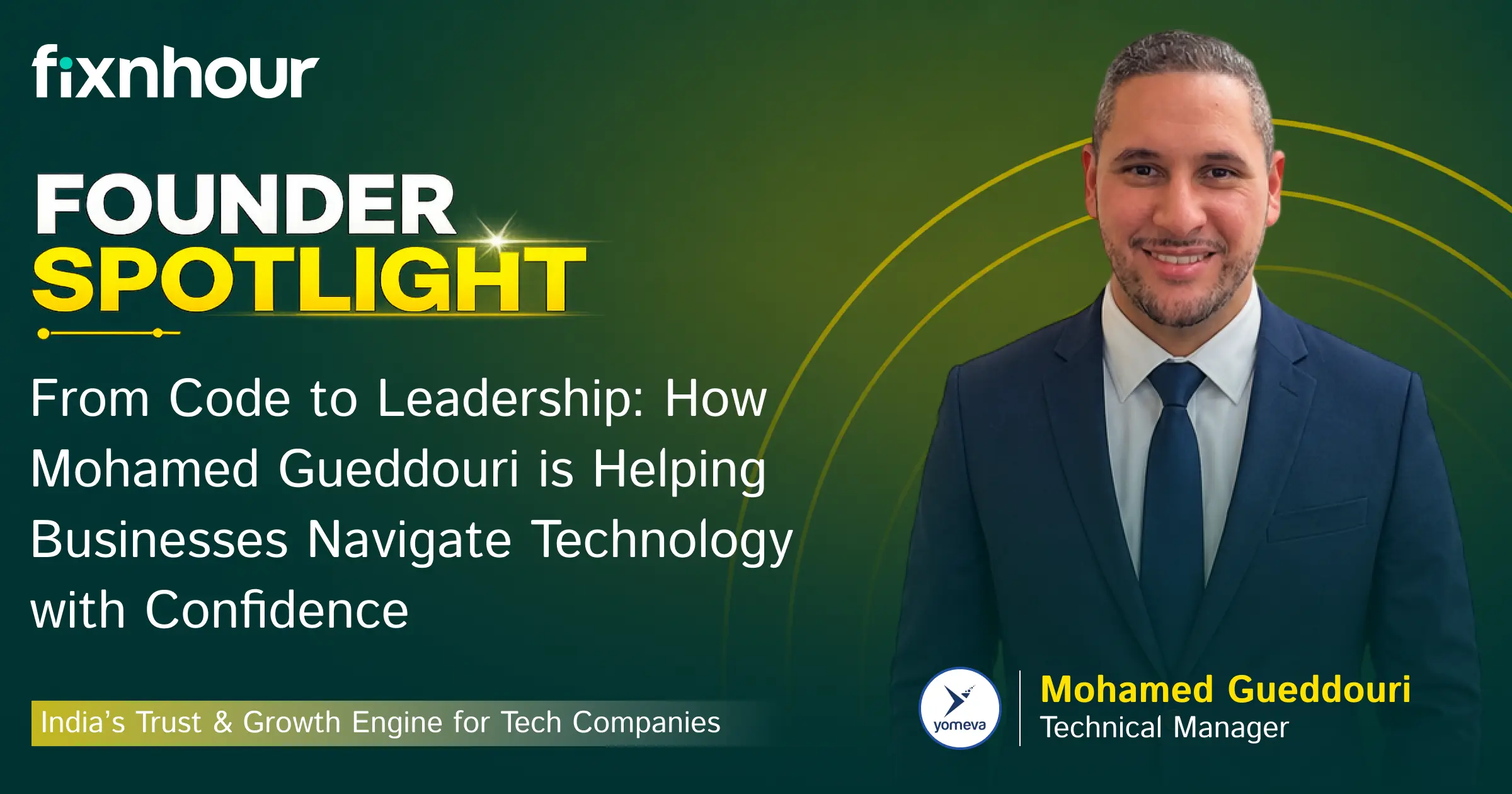
From Code to Leadership: How Mohamed Gueddouri is Helping Businesses Navigate Technology with Confidence highlights the journey of turning deep technical expertise into strategic leadership. It explores how modern businesses can embrace innovation, simplify complex digital challenges, and build scalable solutions with the right technological guidance and vision.
Who is Mohamed Gueddouri?
Technology is often associated with innovation, automation, and digital transformation. However, behind every successful technology initiative lies something much more important: the ability to connect technical complexity with real business outcomes. Mohamed Gueddouri has spent more than a decade doing exactly that. Starting his professional journey as a software developer, Mohamed built his career by developing a deep understanding of technology from the ground up. Unlike many professionals who remain focused on a single specialization, he continuously expanded his expertise across software development, infrastructure, networking, project management, service delivery, cloud technologies, and IT consulting.
This multidisciplinary journey provided him with a unique perspective on technology. He learned that successful digital transformation is not simply about implementing tools or adopting the latest technologies. It is about understanding business challenges, designing practical solutions, and ensuring technology creates measurable value. Over the years, Mohamed evolved from developer to project manager, service manager, technical leader, and consultant. Each role allowed him to understand technology from a different angle and strengthened his ability to bridge the gap between technical teams and business decision-makers.
Today, Mohamed Gueddouri is recognized as a technology leader who helps organizations solve complex IT challenges while preparing for an increasingly cloud-driven and automated future. His passion for DevOps, cloud computing, infrastructure, and software architecture continues to drive his professional journey. What makes his story particularly relevant is his belief that technology should simplify complexity rather than create it. In this exclusive Founder Spotlight with Fixnhour, Mohamed shares his journey from software developer to technology consultant, his thoughts on cloud adoption and DevOps, and the leadership lessons he has learned throughout his career.
Q1. Mohamed, how would you describe your journey from developer to technology leader?
When I started my career, my primary focus was software development. Like many developers, I was passionate about writing code, solving technical problems, and building applications that delivered value. However, as I gained experience, I became increasingly curious about the broader technology ecosystem. I wanted to understand not only how software was built, but also how it was deployed, managed, secured, and integrated into larger business environments. This curiosity led me to explore infrastructure, networking, cloud technologies, project management, and service delivery. Over time, I realized that technology leadership requires more than technical expertise. It requires the ability to understand business objectives, communicate effectively with stakeholders, and create solutions that align technology with organizational goals. My journey has been a continuous learning experience, and each stage has contributed to the professional I am today.
Q2. What inspired your passion for technology?
Technology fascinated me because it combines creativity with problem-solving. Every challenge presents an opportunity to design something better. Whether it is developing an application, optimizing infrastructure, improving system performance, or automating processes, technology provides countless ways to create value. What continues to excite me is the pace of innovation. The industry evolves constantly, creating new opportunities to learn and improve. For someone who enjoys continuous learning, technology is an incredibly rewarding field.
Q3. You've worked across development, project management, and service management. How has that shaped your perspective?
It has given me a more holistic understanding of technology. Developers often focus on building solutions. Infrastructure teams focus on reliability. Project managers focus on delivery. Business leaders focus on outcomes. Each perspective is important. Working across these areas helped me understand how different stakeholders think and what they need to succeed. It also improved my ability to translate technical concepts into business language and vice versa. One of the biggest challenges in technology projects is communication. When technical teams and business teams understand each other better, projects become significantly more successful.
Q4. DevOps has become a major focus across industries. Why do you believe it is important?
DevOps is much more than a technical practice. At its core, DevOps is about collaboration, automation, and continuous improvement. Traditionally, development and operations teams often worked independently. This created inefficiencies, delays, and communication challenges. DevOps helps eliminate those barriers by encouraging shared responsibility and closer collaboration. It enables organizations to deliver software faster, improve reliability, and respond more effectively to changing business needs. For me, DevOps represents a cultural shift as much as a technical one. Organizations that embrace that mindset are often more agile and resilient.
Also read: Interview with Nitesh Jain, Co-Founder of Appic Softwares
Q5. How do you see cloud computing transforming businesses?
Cloud computing has fundamentally changed how organizations approach technology. In the past, businesses often needed significant investments in hardware and infrastructure before they could scale. Cloud platforms have dramatically reduced those barriers. Today, organizations can access powerful computing resources on demand, improve flexibility, reduce costs, and accelerate innovation. However, cloud adoption should not be viewed simply as a technology decision. It is a business decision. Successful cloud transformation requires careful planning, governance, security considerations, and alignment with business objectives. When implemented effectively, cloud computing becomes a powerful enabler of growth and innovation.
Q6. What are some of the biggest technology challenges organizations face today?
One of the biggest challenges is managing complexity. Organizations are dealing with growing volumes of data, increasing cybersecurity requirements, evolving customer expectations, and rapidly changing technologies. Many businesses struggle to determine which technologies deserve investment and how those technologies should be integrated into existing systems. Another challenge is talent development. Technology evolves quickly, making continuous learning essential for both individuals and organizations. The businesses that invest in adaptability and learning are often the ones best positioned for long-term success.
Q7. What leadership lessons have you learned throughout your career?
One of the most important lessons is the value of listening. Early in my career, I believed leadership was primarily about providing answers. Over time, I realized effective leadership often begins with asking the right questions. Leaders who listen carefully gain a deeper understanding of challenges, opportunities, and team dynamics. I have also learned that trust is essential. Teams perform best when they feel supported, respected, and empowered to contribute. Leadership is not about controlling people. It is about creating an environment where people can succeed.
Q8. What advice would you give aspiring technology professionals?
Never stop learning. Technology changes constantly. The skills that are valuable today may evolve significantly over the next few years. Develop strong technical foundations, but also invest in communication, collaboration, and problem-solving skills. Technical expertise can open doors, but long-term career growth often depends on the ability to work effectively with people and understand business objectives. Remain curious and embrace change. Those qualities will serve you well throughout your career.
Q9. How do you balance technical excellence with business requirements?
This balance is critical. Technology should always support business goals. It is possible to build technically impressive solutions that deliver little business value. Conversely, it is possible to make business decisions that create technical challenges if long-term implications are not considered. The key is maintaining communication between technical teams and business stakeholders. Successful organizations create alignment between technology strategy and business strategy. When those two elements work together, organizations achieve better outcomes.
Q10. How has Fixnhour helped strengthen business visibility and credibility?
One of the things I appreciate about Fixnhour is its emphasis on trust and transparency. In today's digital economy, people want to understand who they are working with. They want insight into the expertise, values, and experiences behind a company. Platforms like Fixnhour help businesses share their story through founder interviews, company profiles, and visibility initiatives that build confidence among potential customers and partners. Trust remains one of the most valuable assets any business can build, and initiatives that strengthen trust contribute positively to the broader business ecosystem.
Q11. What is your vision for the future?
My vision is centered around helping organizations leverage technology more effectively while continuing to learn and grow as a technology professional. I believe cloud computing, automation, DevOps, artificial intelligence, and emerging technologies will continue transforming how businesses operate. At the same time, the importance of human skills such as leadership, communication, collaboration, and strategic thinking will only increase. I want to continue helping organizations navigate that transformation while contributing to the development of future technology professionals. Technology creates opportunities, but people ultimately determine how those opportunities are used.
Final Message to Technology Professionals
Technology is one of the most exciting industries in the world because it rewards curiosity. Every challenge presents an opportunity to learn something new. Every innovation creates new possibilities.
Mohamed Gueddouri advice is simple: stay curious, stay adaptable, and never stop learning. Build strong technical foundations, but remember that success also depends on communication, leadership, and the ability to solve real problems. Technology will continue evolving.
The professionals who embrace continuous growth will always find opportunities to thrive. The future belongs to those who remain willing to learn. For more guidance on leveraging technology with confidence and transforming your business through strategic leadership, contact us today