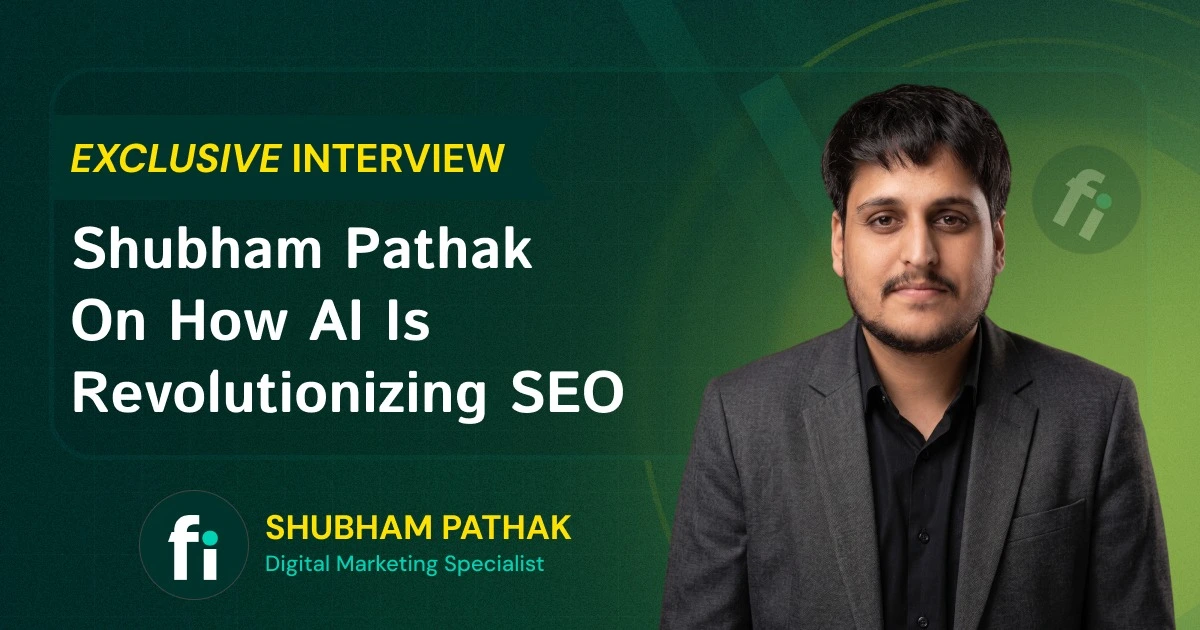
Artificial Intelligence is rapidly reshaping the digital marketing landscape, and SEO is at the center of this transformation. In this exclusive interview, Shubham Pathak shares his expert perspective on how AI is revolutionizing SEO practices in 2026. From smarter search algorithms to advanced content optimization and predictive analytics, AI is changing the way businesses approach visibility and rankings on search engines.
As competition grows stronger in the digital space, marketers are now relying on AI-powered tools to understand user intent, automate keyword research, and create highly personalized content strategies. This conversation highlights the real impact of AI on SEO performance, challenges traditional methods, and opens up new opportunities for brands aiming to stay ahead. Whether you are a digital marketer, business owner, or SEO enthusiast, this insight-packed discussion offers a clear view of the future of search.
In today’s fast-paced digital world, AI is reshaping how businesses approach SEO, making strategies smarter, faster, and more data-driven than ever before. To understand this transformation, we sat down with Shubham Pathak, a leading SEO expert, to get his insights on the future of search engine optimization in 2026. From predictive analytics and AI-powered content tools to voice and visual search, Shubham shares how technology is changing the game and what marketers need to do to stay ahead. In this exclusive interview, he explores practical strategies, ethical considerations, and emerging trends that will define the next era of SEO for businesses worldwide.
Q1.AI in SEO: How Tools Transformed Strategies from 2020 to 2026 and Key Business Shifts
AI has fundamentally transformed SEO over the last few years. Back in 2020, SEO was primarily about keywords, backlinks, and technical optimization, but by 2026, AI had introduced an entirely new layer of intelligence. Today, we’re no longer just guessing what search engines want; AI helps us understand intent at a granular level, from predicting search trends to analyzing user behavior in real-time. Businesses can now use AI to generate data-driven content strategies, optimize site structures automatically, and even personalize user experiences on the fly.
The biggest shift is the move from reactive SEO, where marketers respond to trends, to proactive SEO, where AI predicts opportunities before they even arise. Companies that embrace this predictive power can stay several steps ahead of competitors. In short, AI has made SEO smarter, faster, and more strategic.
The challenge now is for marketers to blend AI insights with human creativity, ensuring content remains engaging and authentic while fully leveraging technology to maximize visibility and engagement.
- Automation of SEO Tasks: AI tools have streamlined keyword research, content optimization, and backlink analysis, reducing manual effort and increasing efficiency.
- Predictive Insights and Personalization: AI-driven analytics enable businesses to anticipate search trends, personalize content, and improve user engagement.
- Strategic Business Shifts: Companies increasingly integrate AI into their digital marketing strategies, focusing on data-driven decisions and ROI-focused SEO campaigns.
Q2. Content Optimization: Maintaining Originality and Authority Amid Rising AI-Generated Content
Content remains king, but AI has changed how we approach it. With AI-generated content becoming widespread, the key challenge is maintaining originality and authority. AI can produce content quickly and at scale, but it doesn’t inherently understand brand voice, nuance, or cultural context. That’s where human oversight is critical.
The best approach is a hybrid one: use AI to handle research, topic generation, and even draft creation, while human writers refine the tone, style, and factual accuracy. Additionally, search engines are getting better at detecting high-quality, valuable content versus generic output, so authenticity matters more than ever.
According to me as Shubham Pathak AI also helps identify content gaps, trending topics, and semantic connections that humans might overlook, giving creators the insights to produce content that truly resonates. Ultimately, AI should be seen as a powerful assistant, not a replacement. Brands that combine AI efficiency with human creativity can consistently deliver authoritative, engaging, and search-optimized content that stands out in today’s crowded digital landscape.
- Prioritize Unique, High-Value Content: Focus on insights, case studies, and expert opinions that AI alone cannot replicate.
- Strengthen Authoritative Signals: Highlight credentials, backlinks, and verified sources to maintain trust and credibility.
- Blend AI Assistance with Human Creativity: Use AI for efficiency, but ensure human oversight preserves originality, tone, and brand voice.
Q3. AI and Search Algorithms: Adapting Marketing Strategies to Evolving Rankings
AI isn’t just helping marketers, it’s reshaping search engines themselves. Modern algorithms now use AI to understand context, intent, and user satisfaction in ways that go far beyond traditional keyword matching. For example, Google’s AI models evaluate content quality, relevance, and even user engagement patterns when ranking pages.
This means that traditional tactics like keyword stuffing or manipulative backlink schemes are less effective. Marketers now need to focus on creating holistic experiences, where content meets the audience’s intent while technical SEO ensures accessibility and speed.
AI also allows for dynamic SERPs, where personalization and real-time behavior play a bigger role. The best strategy is to embrace AI tools that simulate algorithmic analysis, providing insights into what search engines value most.
By continuously monitoring AI-driven search signals and adapting strategies in real-time, businesses can stay ahead of algorithm updates. SEO has evolved from a rules-based practice into an adaptive, intelligence-driven discipline, and understanding AI’s influence is no longer optional; it’s essential for any business that wants to maintain long-term visibility online.
- Algorithm-Aware SEO: Continuously monitor AI-driven search algorithm updates to optimize content structure, keywords, and user experience.
- Data-Driven Decision Making: Leverage AI analytics to track performance metrics and adapt strategies for higher visibility and engagement.
- Agile Marketing Approaches: Shift from static campaigns to flexible, AI-informed tactics that respond to changing search trends in real time.
Q4.Predictive Analytics: Leveraging AI to Forecast SEO Trends for Long-Term Business Growth
One of the most exciting applications of AI in SEO is predictive analytics. Unlike traditional SEO, which reacts to trends, predictive analytics enables marketers to anticipate changes in search behavior, content demand, and even emerging competitors.
By analyzing historical data, search patterns, and user engagement, AI models can forecast which keywords will gain traction, which topics will trend, and which types of content are likely to perform best. Businesses can then allocate resources more efficiently, optimizing content production and marketing campaigns in advance. Predictive SEO also allows for scenario testing, simulating how algorithm updates or shifts in user behavior could impact rankings. This forward-looking approach reduces wasted effort and increases ROI. Companies that adopt predictive analytics can achieve a competitive advantage by being proactive rather than reactive.
In practice, this means brands can launch campaigns aligned with future trends, create timely content that captures attention, and position themselves as industry leaders before their competitors even realize the opportunity. Essentially, AI turns SEO into a strategic, data-driven playbook for the future.
- Trend Forecasting: Use AI to analyze historical data and predict emerging search trends, helping businesses stay ahead of competitors.
- Strategic Content Planning: Leverage insights from predictive analytics to create content aligned with future user intent and demand.
- Optimized Resource Allocation: Focus marketing efforts and budgets on high-impact SEO opportunities identified through AI-driven forecasting.
Q5.Voice and Visual Search: How AI Shapes Emerging Search Formats and What It Means for SEO
Voice and visual search are no longer futuristic concepts; they’re mainstream, and AI is driving their growth. With the rise of smart assistants and image recognition technologies, users increasingly interact with search engines in new ways. For example, people ask conversational questions through voice search, expecting direct, concise answers. AI-powered NLP models analyze context, synonyms, and intent to deliver precise results.
Similarly, visual search allows users to search using images rather than text, which AI interprets to find relevant products, objects, or information. For marketers, this means optimizing for natural language queries, structured data, and image recognition. Traditional keyword SEO isn’t enough; brands must consider how users speak, what they see, and how AI interprets that data. The key is to create content that’s contextually relevant, semantically rich, and visually optimized.
Businesses that adapt to these AI-driven search formats can capture untapped traffic and engage users in ways that were impossible a few years ago, making SEO more interactive, intuitive, and aligned with how people actually discover information today.
- Optimizing for Conversational Queries: AI-driven voice search requires content to match natural language and question-based searches.
- Leveraging Visual Recognition: AI-powered image and video search necessitate optimized visuals, alt text, and structured metadata for discoverability.
- Adapting SEO Strategies: Businesses must integrate multi-modal search optimization, combining text, voice, and visual elements to stay competitive.
Q6.Automation vs. Human Touch: Balancing AI and Expertise in SEO Tasks
AI excels at automating repetitive, data-heavy SEO tasks, but it can’t fully replace human judgment. For example, AI can handle keyword research, competitor analysis, content audits, and even meta-tag optimization at scale, freeing marketers from manual work.
However, tasks requiring creativity, empathy, and strategic thinking, like crafting compelling narratives, defining brand voice, or analyzing complex market nuances, still require human expertise. The most successful SEO teams use a hybrid approach, where AI performs high-volume tasks, and humans interpret insights, make strategic decisions, and add the creative touch. This balance ensures efficiency without sacrificing quality or authenticity. Over-reliance on AI alone risks producing generic content or misaligned strategies, while ignoring AI’s capabilities can leave opportunities on the table.
Ultimately, combining automation with human insight creates a system where technology accelerates performance, but people provide vision, creativity, and nuance. In SEO today, the mantra is: let AI do the heavy lifting, but keep humans at the helm to guide strategy and maintain authenticity.
- AI for Efficiency: Automate repetitive tasks like keyword research, meta tagging, and performance tracking to save time and reduce errors.
- Human Insight for Strategy: Maintain human oversight for creativity, context, and nuanced decision-making that AI alone cannot replicate.
- Balanced SEO Approach: Combine AI automation with expert input to optimize workflows, improve content quality, and achieve sustainable SEO results.
Also Read: Exclusive Interview: Sandeep Yadav on Fixnhour’s Growth & Future Plans
Q7.AI Tools: Top Recommendations for Boosting SEO Performance in 2026
The SEO landscape is crowded with AI tools, but a few stand out for driving meaningful results in 2026. Tools like SurferSEO, Clearscope, and MarketMuse provide advanced content optimization, analyzing top-ranking pages to suggest semantic improvements. For keyword research, platforms powered by AI, such as Ahrefs’ AI features or SEMrush’s predictive analytics, allow marketers to anticipate trends and uncover hidden opportunities. AI writing assistants like Jasper or Writesonic can draft content drafts, while still allowing human writers to refine tone and accuracy.
Even analytics platforms, such as Google Analytics 4, now integrate AI-driven insights to predict user behavior and highlight opportunities. The key is to adopt tools that complement the strategy rather than replace it. The most effective SEO campaigns combine multiple AI platforms to cover research, content, optimization, and analytics, all guided by human oversight. By using the right mix of AI tools, businesses can increase efficiency, improve targeting, and make data-driven decisions that drive measurable SEO growth in a competitive digital environment.
- Integrated All‑in‑One Platforms: Tools like Semrush’s AI Toolkit and SE Ranking combine keyword research, ranking audits, competitor insights, and AI‑driven content guidance in one suite, ideal for full‑cycle SEO optimization.
- AI‑Powered Content & On‑Page Optimization: Solutions such as Surfer SEO, Clearscope, and Jasper AI help create and refine SEO‑friendly content with AI‑generated briefs, NLP‑based recommendations, and real‑time optimization scoring.
- Specialized AI Enhancements: Tools like MarketMuse for topic authority, Ahrefs AI features for backlink and intent insights, and Alli AI for automated technical fixes accelerate strategic SEO tasks that traditionally required separate tools or manual effort.
Q8.Ethics & Authenticity: Keeping AI-Driven SEO Honest and Responsible
As AI becomes more central to SEO, ethical considerations are paramount. There’s a fine line between optimizing content intelligently and manipulating search engines. Practices like keyword stuffing or generating low-quality AI content can harm credibility and lead to penalties. Marketers must prioritize authenticity, transparency, and value.
AI should be used to enhance content quality, not just to trick algorithms. Ethical AI practices include fact-checking, maintaining human oversight, respecting copyright, and focusing on user experience. Moreover, search engines increasingly reward content that genuinely helps users, meaning authentic, high-quality content is both ethical and strategic. Companies that embrace ethical AI practices not only avoid risks but also build trust with audiences, which drives long-term engagement and loyalty. The overarching principle is simple:
Use AI as a tool to serve users, not just to game the system. When brands align SEO strategies with ethical, human-centered practices, they can achieve sustainable success in the AI-driven search landscape.
- Maintain Content Integrity: Ensure AI-generated content is accurate, transparent, and fact-checked to build trust with users and search engines.
- Avoid Black-Hat Practices: Use AI responsibly, avoiding manipulative tactics like keyword stuffing, hidden text, or deceptive links that risk penalties.
- Human Oversight & Accountability: Combine AI efficiency with human judgment to safeguard authenticity, brand voice, and ethical SEO practices.
Q9.Local & Niche SEO: Using AI to Optimize for Targeted Markets
AI has unlocked new possibilities for local and niche SEO. Local businesses can leverage AI to analyze search patterns, competitor activity, and user behavior in specific geographic areas. For instance, AI can help optimize Google Business Profiles, suggest location-specific keywords, and tailor content to meet hyper-local intent.
In niche markets, AI can identify underserved topics, emerging trends, and audience preferences that might be invisible through traditional analysis. This enables smaller businesses to compete with larger players by creating highly targeted, relevant content. Additionally, AI-driven tools can automatically update structured data, track local reviews, and even generate optimized landing pages for specific regions or customer segments.
The combination of predictive insights and automated optimization ensures businesses remain visible in both broad and highly specialized searches. Essentially, AI empowers companies to think globally but act locally, providing precision targeting that maximizes impact and drives measurable growth in highly competitive or specialized markets.
- Hyper-Targeted Keyword Research: AI tools identify location-specific and niche keywords to attract the most relevant audience.
- Enhanced Local Listings & Profiles: Automate optimization of Google Business Profiles, directories, and citations to boost local visibility.
- Personalized Content & Offers: Leverage AI insights to create region-specific content, promotions, and campaigns that resonate with niche markets.
Q10. Future Outlook: Preparing for AI’s Next 5 Years in SEO
Looking ahead, AI will continue to redefine SEO over the next five years. We can expect even greater personalization, where search engines deliver results uniquely tailored to individual user behavior, preferences, and context. Predictive and prescriptive analytics will become standard, allowing marketers to anticipate search trends before they happen.
AI will also play a larger role in voice, visual, and even augmented reality search, creating multi-modal optimization opportunities. However, human creativity, ethics, and strategic thinking will remain essential to guide AI-driven initiatives. Businesses that embrace AI early, integrate it responsibly, and continuously adapt strategies will gain a competitive edge.
The future of SEO is not just about ranking higher; it’s about creating meaningful, personalized experiences that anticipate user needs. Companies that focus on serving users with the help of AI insights will not only maintain visibility but also build lasting trust and loyalty in an increasingly intelligent digital ecosystem.
- Embrace Continuous AI Evolution: Stay updated on AI-driven search algorithms, automation tools, and predictive analytics to remain competitive.
- Invest in Hybrid Strategies: Combine human creativity with AI efficiency to adapt quickly to changing SEO landscapes.
- Focus on Ethical, User-Centric SEO: Prioritize authentic, high-quality content and transparent practices as AI reshapes ranking factors.
Conclusion
Investing in the right digital solutions can significantly elevate your business efficiency and growth. Platforms like Fixnhour provide reliable insights, helping companies streamline processes and achieve measurable results. By leveraging such innovative tools, businesses not only stay competitive but also ensure long-term sustainability. Whether it’s project management, app development, or digital marketing, adopting solutions offered by Fixnhour empowers teams to work smarter, save time, and deliver superior outcomes consistently. To stay ahead in this rapidly changing digital landscape and implement AI-driven SEO strategies for your business, Contact us today and take the next step toward smarter growth and better visibility.