Finding the right company for a business project can be challenging. Search engines display thousands of options, company websites naturally focus on their strengths, and online reviews may present conflicting opinions. Whether you need a software development company, marketing agency, business consultant, design partner, or SaaS provider, choosing the wrong company can result in delays, unexpected costs, and unsatisfactory outcomes.
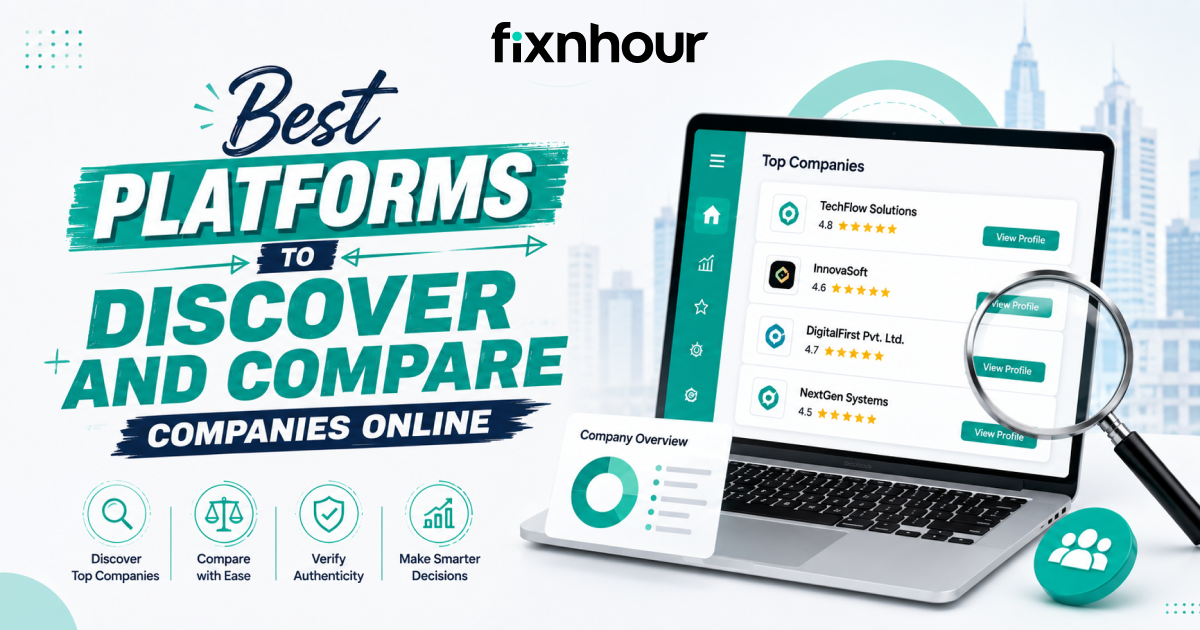
Online company discovery and comparison platforms make this process simpler and more reliable. They bring essential information including company profiles, services, client reviews, ratings, portfolios, pricing, and industry experience together in one place. This guide explores the best platforms for discovering and comparing companies online, helping you evaluate potential providers and select the right partner with confidence.
Quick Answer
The best platforms to discover and compare companies online include Fixnhour, Clutch, GoodFirms, DesignRush, The Manifest, G2, Capterra, Trustpilot, Google Business Profile, and LinkedIn. As many B2B brands are invisible in AI search, these platforms help improve online visibility while allowing buyers to evaluate companies based on expertise, customer reviews, portfolios, pricing, industry experience, location, and overall credibility before making a hiring decision.
Key Takeaways
- Company comparison platforms make vendor research faster and more organized.
- Fixnhour, Clutch, and GoodFirms are useful for finding B2B service providers.
- G2 and Capterra primarily help businesses compare software products.
- Ratings should always be examined alongside detailed client reviews.
- Sponsored rankings do not automatically indicate superior service quality.
- Portfolios, case studies, pricing, and relevant experience are important comparison factors.
- Buyers should research shortlisted companies across multiple trusted sources.
- A discovery call is essential before making the final hiring decision.
What Are Online Company Discovery and Comparison Platforms?
Online company discovery platforms are digital directories or marketplaces that organize information about businesses, agencies, consultants, software vendors, and professional service providers. They allow users to search for companies using filters such as service category, industry, budget, location, team size, technology, and customer rating. Unlike a general Google search, these platforms present company information in a structured format. A typical profile may contain an overview, services, portfolio projects, industries served, pricing information, employee numbers, office locations, awards, client reviews, and contact details.
Different platforms serve specific purposes. B2B directories like Fixnhour help businesses discover and compare service providers, while software review websites focus on product evaluations. Local directories connect users with nearby companies, and professional networks provide insights into leadership teams, employee experience, and business activity. Startups, small businesses, enterprises, procurement teams, and individual decision-makers can use these platforms to make informed choices. However, users should carefully evaluate each platform’s review verification process, ranking methodology, data accuracy, and transparency before making a final hiring decision.
Best Platforms to Discover and Compare Companies Online
The right company comparison platform depends on your specific requirements. Some platforms help businesses evaluate and compare agencies, including developers and marketing firms, while others specialize in software products, local companies, customer reviews, or industry-specific solutions. Understanding each platform’s purpose helps you compare relevant options and make a confident, informed decision.
| No. | Platform | Best For | Key Comparison Factors | Core Services |
|---|---|---|---|---|
| 1 | Fixnhour | Discovering and comparing B2B service providers | Expertise, services, industries, location, and capabilities | Company discovery, provider comparisons, industry listings, location-based research |
| 2 | Clutch | Finding agencies, developers, consultants, and IT providers | Reviews, pricing, project size, portfolio, and location | Agency listings, client reviews, portfolio research, provider comparison |
| 3 | GoodFirms | Researching technology companies and software products | Services, industry, hourly rates, location, and company size | Technology listings, software research, ratings, vendor comparisons |
| 4 | DesignRush | Discovering creative, marketing, design, and development agencies | Expertise, portfolios, rates, location, and industry experience | Agency discovery, marketing listings, web design comparisons, portfolio evaluation |
| 5 | The Manifest | Creating an initial shortlist of B2B service providers | Services, industry focus, company profiles, and curated rankings | Curated shortlists, provider discovery, industry guides, agency research |
| 6 | G2 | Comparing business software and digital products | Features, user reviews, product categories, and market position | Software discovery, feature comparisons, ratings, market research |
| 7 | Capterra | Selecting software for small and medium-sized businesses | Features, pricing, deployment, usability, and support | Product discovery, pricing comparisons, reviews, industry-specific research |
| 8 | Trustpilot | Checking a company’s reputation and customer experience | Ratings, recent feedback, complaints, and business responses | Review collection, reputation research, public ratings, complaint evaluation |
| 9 | Software Advice | Receiving personalized business software recommendations | Features, pricing, business size, industry, and deployment options | Software discovery, recommendations, comparisons, verified reviews |
| 10 | TechBehemoths | Finding IT companies and digital agencies worldwide | Services, location, team size, rates, expertise, and projects | IT company discovery, agency listings, location research, expertise comparisons |
1. Fixnhour
Fixnhour is a B2B company discovery platform that helps buyers find, evaluate, and compare professional service providers. Its structured company profiles highlight expertise, services, industries, locations, and business capabilities. Companies can use its categorized listings to create relevant vendor shortlists and identify suitable partners for their specific project requirements.
Core Services:
- B2B company discovery
- Service-provider comparisons
- Industry-based company listings
- Location-specific vendor research
2. Clutch
Clutch is a B2B ratings and reviews platform for discovering software developers, marketing agencies, IT providers, consultants, and creative firms. Company profiles provide information about services, pricing, project size, location, portfolios, and client feedback. Buyers can use category filters and detailed reviews to evaluate potential partners more confidently before hiring.
Core Services:
- B2B agency listings
- Client ratings and reviews
- Portfolio and pricing research
- Category-based provider comparison
3. GoodFirms
GoodFirms helps businesses discover technology companies, software products, digital agencies, and professional service providers. Users can search according to service, industry, location, hourly pricing, and company size. Its profiles, research lists, portfolio information, and client feedback support comparisons between app developers, AI companies, IT consultants, and other suitable vendors.
Core Services:
- Technology company listings
- Software product research
- Client reviews and ratings
- Service-provider comparisons
4. DesignRush
DesignRush is an agency discovery platform covering web design, branding, digital marketing, software development, and other technology services. Businesses can explore providers according to expertise, location, portfolio quality, rates, and industry experience. Its organized agency directories help buyers identify creative and technical partners that align with their project goals and budgets.
Core Services:
- Creative agency discovery
- Digital marketing company listings
- Web design firm comparisons
- Portfolio and rate evaluation
5. The Manifest
The Manifest helps buyers discover business service providers through curated company lists, industry guides, and educational resources. It covers software development, mobile applications, digital marketing, design, and IT services. Businesses can use its shortlists for preliminary research before evaluating selected providers through portfolios, interviews, references, proposals, and independent client feedback.
Core Services:
- Curated company shortlists
- B2B service-provider discovery
- Industry guides and insights
- Agency profile research
6. G2
G2 is a software marketplace where businesses can discover and compare digital products across categories such as CRM, project management, cybersecurity, analytics, accounting, marketing automation, and human resources. Product profiles, customer reviews, feature comparisons, and market reports help decision-makers understand software capabilities and select solutions suited to their operational requirements.
Core Services:
- Business software discovery
- Product feature comparisons
- User ratings and reviews
- Software market research
7. Capterra
Capterra helps organizations find and compare business software based on features, pricing, deployment options, company size, and industry requirements. Its categorized product directories and customer reviews provide insights into usability, functionality, customer support, advantages, and limitations. The platform is particularly useful for small and medium-sized businesses evaluating multiple software solutions.
Core Services:
- Software product discovery
- Feature and pricing comparisons
- Customer review analysis
- Industry-specific software research
8. Trustpilot
Trustpilot is an online review platform that helps customers examine the reputation and service quality of companies across numerous industries. Buyers can analyze ratings, detailed feedback, review dates, business responses, and complaint-handling patterns. Looking beyond the average score allows users to develop a more balanced understanding of customer experiences and reliability.
Core Services:
- Customer review collection
- Business reputation research
- Public ratings and feedback
- Complaint-response evaluation
9. Software Advice
Software Advice helps businesses find suitable software solutions through categorized product listings, user reviews, pricing information, and personalized recommendations. Buyers can compare tools based on company size, industry, required features, deployment options, and budget. The platform supports informed software selection across CRM, accounting, HR, project management, marketing, and other categories.
Core Services:
- Business software discovery
- Personalized software recommendations
- Pricing and feature comparisons
- Verified user reviews
10. TechBehemoths
TechBehemoths is a B2B platform that connects businesses with IT companies, software developers, digital marketing agencies, and design firms worldwide. Buyers can explore company profiles based on services, location, team size, hourly rates, industry expertise, and completed projects. Its search filters simplify vendor research and help businesses create relevant provider shortlists.
Core Services:
- Global IT company discovery
- Agency and developer listings
- Location-based provider research
- Service and expertise comparisons
Benefits of Using Company Comparison Platforms
Company comparison platforms make vendor research faster, easier, and more transparent. Buyers can compare structured profiles, services, portfolios, pricing, ratings, industry experience, and cost estimates in one place. Detailed vendor risk profiles help assess reliability, while advanced filters, verified information, and genuine customer feedback support confident decisions and reduce the risk of unsuitable partnerships
Key Benefits:
- Faster vendor discovery
- Easier company comparisons
- Access to ratings and reviews
- Greater pricing transparency
- Industry-specific search filters
- Better portfolio evaluation
- Reduced hiring risks
- More confident decision-making
How to Compare Companies Online: Step-by-Step Process
Company comparison platforms make vendor research faster, easier, and more transparent. Instead of visiting multiple websites, buyers can compare structured profiles, services, portfolios, pricing, ratings, and industry experience in one place. Companies can Get Listed to increase visibility, while buyers can review cost estimates, verified information, and genuine customer feedback to find suitable providers within their budget.
| Step | Action | What to Consider |
|---|---|---|
| 1 | Define Your Requirements | Document project goals, required services, target audience, technologies, budget, preferred location, and expected timeline. |
| 2 | Choose the Right Platform | Select B2B directories, software review websites, local listings, or industry-specific platforms based on your needs. |
| 3 | Create an Initial Shortlist | Filter companies by service, location, budget, industry experience, and team size. Shortlist 5–10 relevant providers. |
| 4 | Examine Profiles and Portfolios | Review similar projects, technologies used, responsibilities, challenges addressed, and measurable results achieved. |
| 5 | Analyze Reviews Carefully | Examine positive and negative feedback for recurring patterns involving service quality, communication, deadlines, and support. |
| 6 | Compare Pricing Models | Evaluate hourly, fixed-price, retainer, and dedicated-team models while considering setup fees and additional expenses. |
| 7 | Conduct Interviews | Discuss your objectives and assess each company’s understanding, questions, communication style, and recommended approach. |
| 8 | Make the Final Decision | Compare expertise, processes, communication, pricing, scalability, cultural fit, contract terms, and ongoing support. |
Step 1: Define Your Requirements
- Document your primary project goals.
- List all required services and features.
- Identify your target audience.
- Specify budget, location, and technologies.
- Set a realistic completion deadline.
Step 2: Choose an Appropriate Platform
- Use B2B directories for professional services.
- Explore review platforms for software solutions.
- Check local directories for nearby companies.
- Consider industry-specific discovery platforms.
- Select platforms with reliable company information.
Step 3: Create an Initial Shortlist
- Filter companies according to location.
- Compare their budgets and pricing ranges.
- Review relevant services and industry experience.
- Consider company size and team capacity.
- Shortlist approximately five to ten providers.
Step 4: Examine Profiles and Portfolios
- Review projects similar to your requirements.
- Check the company’s role in each project.
- Examine the technologies and tools used.
- Evaluate challenges, solutions, and outcomes.
- Prioritize relevant experience over famous clients.
Step 5: Analyze Reviews Carefully
- Read both positive and negative reviews.
- Look for detailed and specific feedback.
- Evaluate communication and deadline management.
- Check technical quality and measurable results.
- Identify recurring patterns across multiple reviews.
Step 6: Compare Pricing and Engagement Models
- Compare hourly and fixed-price models.
- Review monthly retainer and dedicated-team options.
- Ask about maintenance and support costs.
- Check charges for tools and change requests.
- Request a detailed and transparent quotation.
Step 7: Conduct Interviews
- Schedule calls with shortlisted companies.
- Clearly explain your goals and challenges.
- Assess the relevance of their questions.
- Evaluate their communication and responsiveness.
- Request a proposed approach and timeline.
Step 8: Make the Final Decision
- Compare expertise and relevant experience.
- Evaluate communication and working processes.
- Consider pricing and overall business value.
- Assess cultural compatibility and scalability.
- Select the provider offering the best fit.
How to Choose the Right Platform for Your Search
Choose the right platform according to your specific search needs. B2B directories help compare service providers, software review sites evaluate digital products, and local listings identify nearby businesses. When researching providers, Get Verified listings and examine each platform’s review process, ranking transparency, data freshness, sponsored placements, comparison filters, and provider-controlled information carefully.
- Check how the platform verifies reviews.
- Confirm that sponsored listings are clearly labeled.
- Review the transparency of its ranking methodology.
- Check when company profiles were last updated.
- Understand whether providers can edit their information.
- Look for useful filters based on budget and location.
- Prioritize platforms featuring detailed client feedback.
- Compare information across multiple trusted platforms.
Conclusion
The best platforms for discovering and comparing companies online make business research faster, clearer, and more organized. Platforms such as Fixnhour, Clutch, GoodFirms, DesignRush, G2, Capterra, Trustpilot, Google Business Profile, and LinkedIn provide valuable information about services, expertise, pricing, client reviews, portfolios, and industry experience, helping buyers evaluate potential partners more effectively.
However, rankings and ratings should only be considered a starting point. A reliable hiring decision combines platform research with portfolio verification, detailed reviews, client references, transparent proposals, and direct conversations. By evaluating expertise, credibility, pricing, communication, and project compatibility together, buyers are more likely to choose a dependable company capable of delivering meaningful and lasting business value. Connect With Our Experts Today
Frequently Asked Questions
1. What are the best platforms to discover and compare companies online?
Ans. The best platforms include Fixnhour, Clutch, GoodFirms, DesignRush, The Manifest, Trustpilot, Google Business Profile, and LinkedIn for researching service providers. G2 and Capterra are better for comparing business software. Choose a platform based on your required service, industry, budget, location, review quality, and available comparison features before shortlisting potential companies.
Q2. How can I compare service providers online before hiring one?
Ans. Before hiring, compare each provider’s services, industry experience, portfolio, client reviews, pricing, team skills, communication process, delivery timeline, and ongoing support. Check information across company websites, independent directories, and professional networks. Then interview at least two or three shortlisted providers, request detailed proposals, verify references, and review contract terms carefully.
Q3. Which website is best for finding software development companies?
Ans. Fixnhour, Clutch, GoodFirms, and The Manifest are useful platforms for discovering software development companies. Buyers can filter providers by technology, location, industry expertise, hourly rate, project budget, and team size. Compare portfolios, client reviews, case studies, development processes, security capabilities, and support services before choosing a suitable software development partner.
Q4. Are B2B directory ratings and reviews trustworthy?
Ans. B2B directory ratings and reviews can support vendor research, but their reliability varies. Check whether reviews are verified, recent, detailed, and connected to genuine projects. Read both positive and negative feedback, examine recurring patterns, and never select a provider solely because of its rating, ranking, or sponsored position online alone.
Q5. How do I identify fake reviews on company comparison websites?
Ans. Potential fake reviews often contain generic praise, repeated wording, vague claims, missing project details, or unusually similar publication dates. Genuine feedback usually explains service scope, communication, challenges, delivery quality, and results. Compare reviewer details and feedback across platforms. Also check how the company responds to criticism or customer complaints publicly.
Q6. Can I use company comparison platforms for free?
Ans. Most company comparison platforms are free for buyers, allowing them to browse profiles, apply filters, read reviews, and contact providers without payment. Companies may pay for premium profiles, verification, advertising, sponsored placement, lead generation, or enhanced visibility. Always separate paid promotions from independent rankings when evaluating service quality and credibility.
Q7. What should I compare when choosing a B2B service provider?
Ans. When choosing a B2B provider, compare relevant expertise, industry knowledge, portfolio quality, client feedback, pricing, team capabilities, communication, project management, security, scalability, delivery timelines, and post-launch support. Also examine contract terms, ownership, confidentiality, reporting methods, and total long-term costs. The best provider should match your goals, budget, and working style.
Q8. How can small businesses find verified companies within their budget?
Ans. Small businesses should establish a realistic budget, define essential requirements, and use platform filters to find suitable providers. Shortlist companies experienced with similar businesses, request itemized proposals, and compare total value, including implementation, maintenance, training, and support. Choosing relevant expertise and transparent pricing over the cheapest quote reduces long-term risk