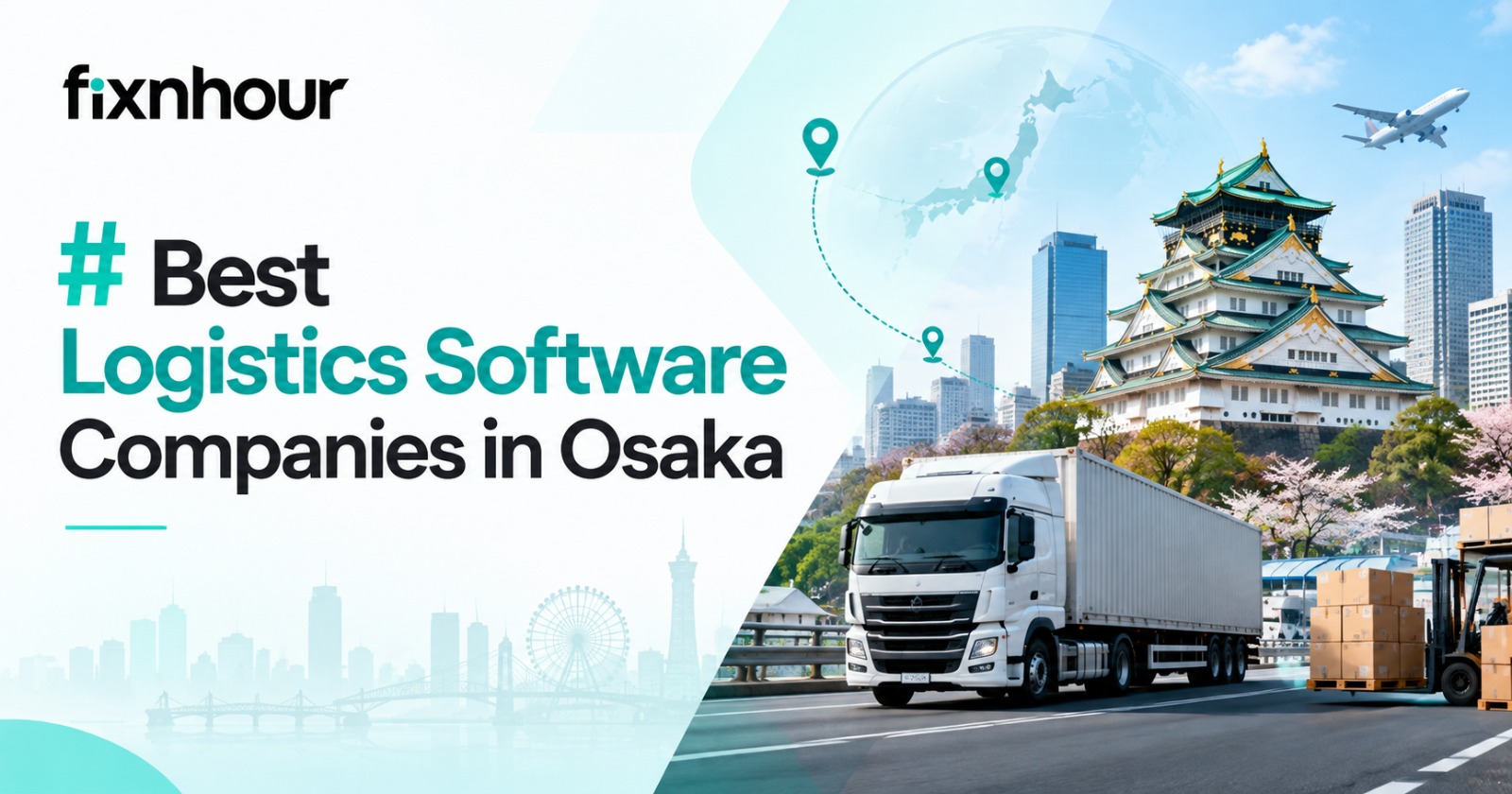
Osaka is one of Japan’s major commercial and logistics hubs, making efficient technology increasingly important for companies managing warehouses, transportation, inventory, orders, and supply chains. As logistics operations become more complex, businesses are turning to logistics software development companies in Osaka for solutions that can reduce manual work, improve visibility, and make everyday operations easier to manage. From warehouse management systems (WMS) and transportation management systems (TMS) to fleet tracking, inventory management, delivery applications, automation, and AI-powered analytics, modern logistics software can connect different parts of the supply chain in one digital environment.
Finding the right technology partner, however, is not always straightforward. A company may be excellent at general software development but have limited knowledge of warehouse or transportation workflows. This list highlights companies and technology providers with relevant logistics, warehouse, automation, or software capabilities that businesses can consider when evaluating logistics software companies in Osaka.
What Is Logistics Software?
Logistics software is a category of digital technology designed to manage and optimize the movement, storage, tracking, and delivery of goods. Instead of relying on spreadsheets, disconnected applications, phone calls, and manual updates, businesses can use a centralized system to coordinate logistics operations.
A modern logistics platform can connect warehouses, drivers, suppliers, customers, transportation providers, and internal teams. Depending on the business, it may also integrate with ERP, e-commerce, accounting, barcode scanners, GPS devices, IoT sensors, and other enterprise applications.
Common Logistics Software Types
- Warehouse Management System (WMS): Manages receiving, storage, picking, packing, inventory, and shipping.
- Transportation Management System (TMS): Helps plan transportation, manage carriers, optimize routes, and monitor shipments.
- Fleet Management Software: Tracks vehicles, drivers, maintenance, fuel, and fleet performance.
- Order Management System (OMS): Centralizes orders and connects fulfillment, inventory, and shipping processes.
- Supply Chain Management Software: Provides broader visibility across suppliers, inventory, transportation, and distribution.
Key Features to Look for in Logistics Software
The best logistics software comany is not necessarily the one with the largest number of features. It should be the one that solves your actual operational problems without making everyday workflows unnecessarily complicated. Before selecting a logistics software development company in Osaka, define the features your team actually needs.
Essential Logistics Software Features
- Real-time shipment tracking
- Inventory and stock management
- Warehouse management
- Order management
- Route optimization
- Driver and fleet management
- Barcode and QR-code support
- Automated notifications
- Analytics and reporting
- ERP and accounting integration
- API connectivity
- Mobile application support
Best Logistics Software Companies in Osaka
The companies below represent different approaches to logistics technology, including custom software development, WMS, TMS, warehouse automation, supply chain systems, and logistics-focused IT solutions. The right choice depends on your operational requirements, technology stack, budget, and long-term growth plans.
1. Logisteed Solutions
Logisteed Solutions is a logistics-focused IT company within the Logisteed Group and has extensive experience developing logistics systems for manufacturing, wholesale, retail, and logistics businesses. Its solutions include warehouse management systems (WMS), transportation management systems (TMS), logistics management, freight calculation, and smart warehouse technologies. The company also handles requirements definition, system design, development, testing, and implementation, making it relevant for businesses looking for an end-to-end logistics technology partner.
Key strengths:
- WMS and TMS development
- Logistics and supply chain IT solutions
- Smart warehouse and logistics DX
- System integration and implementation
2. First Net Japan
First Net Japan is an Osaka-based system development company that provides customized business software solutions. Its logistics-related capabilities include inventory management, order management, warehouse operations, web systems, and integrations with external platforms. Its approach is particularly useful for businesses that need software designed around their existing workflows instead of forcing their operations into a rigid off-the-shelf platform.
Key strengths:
- Custom logistics software development
- Inventory and order management
- Web and business system development
- API and third-party system integration
3. DNS Inc.
DNS Inc. provides engineering and software capabilities for material-handling and warehouse automation environments. The company has experience developing systems for automated warehouses and supports logistics automation through IT engineering. Its Osaka branch also gives businesses in the region a local point of contact for logistics technology requirements.
Key strengths:
- Automated warehouse systems
- Material-handling software
- Logistics automation
- System engineering and support
4. Meito Inc.
Meito combines logistics operations with internally developed technology, making it an interesting option for businesses involved in cross-border e-commerce and fulfillment. Its technology ecosystem includes WMS, OMS, ERP, supply chain management, customs systems, API integrations, and automated sorting. The company operates logistics facilities in Osaka and uses its own systems to connect warehouse and fulfillment activities.
Key strengths:
- WMS and OMS solutions
- ERP and supply chain integration
- Customs and logistics software
- Automated fulfillment and sorting
5. Sumitomo Heavy Industries Material Handling Systems
Sumitomo Heavy Industries Material Handling Systems brings together warehouse automation equipment and software technologies. Its logistics portfolio includes automated warehouses, AGVs, AMRs, picking systems, sorting systems, and warehouse management systems (WMS). This combination can be particularly valuable for organizations looking beyond basic software and planning a broader warehouse automation strategy.
Key strengths:
- Warehouse management systems
- Automated storage and retrieval
- AGV and AMR solutions
- Picking and sorting automation
6. Seiwa Logitem
Seiwa Logitem operates a dedicated system business focused on IT solutions for logistics-related operations. Its services include software planning, development, sales, and logistics-oriented systems such as shipment management. The company is also involved in web consulting and digital solutions, making it a potential option for businesses seeking technology support alongside logistics expertise.
Key strengths:
- Logistics software development
- Shipment management systems
- Custom business software
- Logistics IT consulting
7. Daikyo System Development
Daikyo System Development is an Osaka-based system development company serving multiple industries, including manufacturing, infrastructure, and logistics. Its capabilities include business systems, core systems, database development, and ongoing maintenance. For logistics organizations, this broader enterprise software experience can be useful when logistics applications need to communicate with existing business systems.
Key strengths:
- Business and enterprise software
- Logistics system development
- Database solutions
- Maintenance and operational support
8. AD5
AD5 is an Osaka-based software development company that emphasizes in-house development and customized digital solutions. Its listed capabilities include logistics systems, business systems, database development, cloud technologies, and API or system integrations. Its agile approach can be useful for businesses that want to develop a logistics platform incrementally and adapt features as operational requirements become clearer.
Key strengths:
- Custom software development
- Logistics and business systems
- Cloud and database technologies
- API and system integration
9. Trio System Plans
Trio System Plans provides system development services in Osaka and works with businesses across sectors including logistics. The company develops business systems and also has experience with packaged systems and implementation. Its combination of development and implementation capabilities can be useful for organizations looking for technology support that goes beyond simply writing software.
Key strengths:
- Business system development
- Logistics-related software
- Package implementation
- System consulting and maintenance
10. Logicore
Logicore combines logistics operations with technology, including a proprietary warehouse management system (WMS) used to manage warehouse locations and inventory. Its technology supports warehouse operations alongside storage and distribution activities. This operational perspective can be valuable for companies looking for logistics solutions that are closely connected to real warehouse workflows.
Key strengths:
- Warehouse management systems
- Inventory management
- Warehouse operations technology
- Distribution and fulfillment support
How to Choose the Best Logistics Software Company in Osaka
Choosing a logistics software development company should start with your business process, not with a technology list. Before approaching developers, identify where your current logistics operation loses time, money, visibility, or accuracy. A good technology partner should be able to understand those challenges and translate them into practical software requirements.
1. Check Logistics Industry Experience
Look for experience with WMS, TMS, inventory management, transportation, fulfillment, warehouse operations, or supply chain systems.
2. Review Previous Projects
Ask potential providers about relevant case studies, previous implementations, integrations, and measurable outcomes.
3. Evaluate Technical Capabilities
Check whether the company can work with cloud platforms, APIs, mobile applications, databases, AI, IoT, automation, and enterprise systems where required.
4. Consider Scalability
Your logistics software should be able to grow with your business. Ask how the system will handle additional warehouses, users, orders, locations, vehicles, and integrations.
5. Look Beyond Development Cost
A cheaper initial quote may not necessarily represent better value. Consider development quality, support, security, scalability, maintenance, and the company's understanding of logistics operations.
6. Check Reviews and Reputation
Verified reviews and independent research can provide additional context when comparing logistics software companies. Look for consistent feedback around communication, technical expertise, delivery quality, and post-launch support.
Why Choose Fixnhour to Find Logistics Software Companies?
Finding a suitable technology provider can take considerable time when businesses have to search through dozens of websites and compare services manually. Fixnhour is designed to make that process simpler by helping users discover top-ranked companies backed by trusted research and verified reviews.Get verified with fixnhour and Whether you are searching for logistics software development companies in Osaka, a WMS provider, a custom software development team, or an AI and automation partner, comparing companies based on relevant capabilities can help you make a more informed decision.
What You Can Explore on Fixnhour
- Discover technology companies across different industries
- Compare services and areas of expertise
- Explore verified reviews and company information
- Find technology partners based on project requirements
Final Thoughts
The right logistics software can become much more than an internal business tool. When designed properly, it can connect warehouses, transportation teams, inventory, orders, customers, and management into one efficient digital workflow. The best logistics software companies in Osaka are not necessarily the companies offering the most features. The better choice is a provider that understands your logistics challenges, has relevant technical expertise, communicates clearly, and can build a solution that continues to work as your business grows.
From WMS and TMS development to fleet management, inventory software, warehouse automation, AI, IoT, and supply chain visibility, Osaka businesses have a range of technology options to explore. Take the time to compare capabilities, experience, reviews, technology expertise, and long-term support before making your final decision. With Fixnhour, businesses can make that research process easier by discovering and comparing trusted companies in one place. Contact us for more queries.
Frequently Asked Questions
Q1. What are logistics software companies?
Ans. Logistics software companies develop or provide digital solutions that help businesses manage transportation, warehousing, inventory, orders, deliveries, and supply chain operations. Depending on the provider, solutions may include WMS, TMS, fleet management, order management, route optimization, tracking, analytics, and automation.
Q2. What is a WMS in logistics?
Ans. A Warehouse Management System (WMS) is software used to manage warehouse activities such as receiving, put-away, inventory tracking, picking, packing, and shipping. A WMS can improve inventory accuracy and provide greater visibility into warehouse operations.
Q3. What is a TMS?
Ans. A Transportation Management System (TMS) helps businesses plan, execute, and monitor transportation activities. Typical capabilities include carrier management, shipment planning, route optimization, freight management, delivery tracking, and transportation reporting.
Q4. Can logistics software integrate with ERP systems?
Ans. Yes. Logistics software can often integrate with ERP platforms through APIs, middleware, database connections, or other integration methods. Integration can synchronize information such as orders, inventory, customers, products, invoices, and shipment information.
Q5. Can AI be used in logistics software?
Ans. Yes. AI can support logistics use cases such as demand forecasting, route optimization, predictive maintenance, inventory planning, anomaly detection, and intelligent warehouse operations. The appropriate AI features depend on the type and quality of data available to the business.
Q6. How long does it take to develop logistics software?
Ans. The timeline depends on the project's scope. A relatively simple logistics application may require considerably less development time than an enterprise WMS or TMS with multiple integrations, mobile applications, automation, analytics, and complex business workflows. A detailed requirements analysis is usually needed before estimating the timeline.
Q7. How do I choose a logistics software development company in Osaka?
Ans. Start by identifying your logistics challenges and required features. Then compare providers based on logistics industry experience, WMS/TMS expertise, software development capabilities, integration experience, previous projects, reviews, scalability, pricing, and ongoing support.
Q8. Why should businesses use custom logistics software?
Ans. Custom logistics software can be designed around a company's specific workflows rather than requiring employees to adapt completely to a standard platform. It can be particularly useful when a business has unique warehouse processes, specialized delivery requirements, complex integrations, or plans for long-term digital transformation