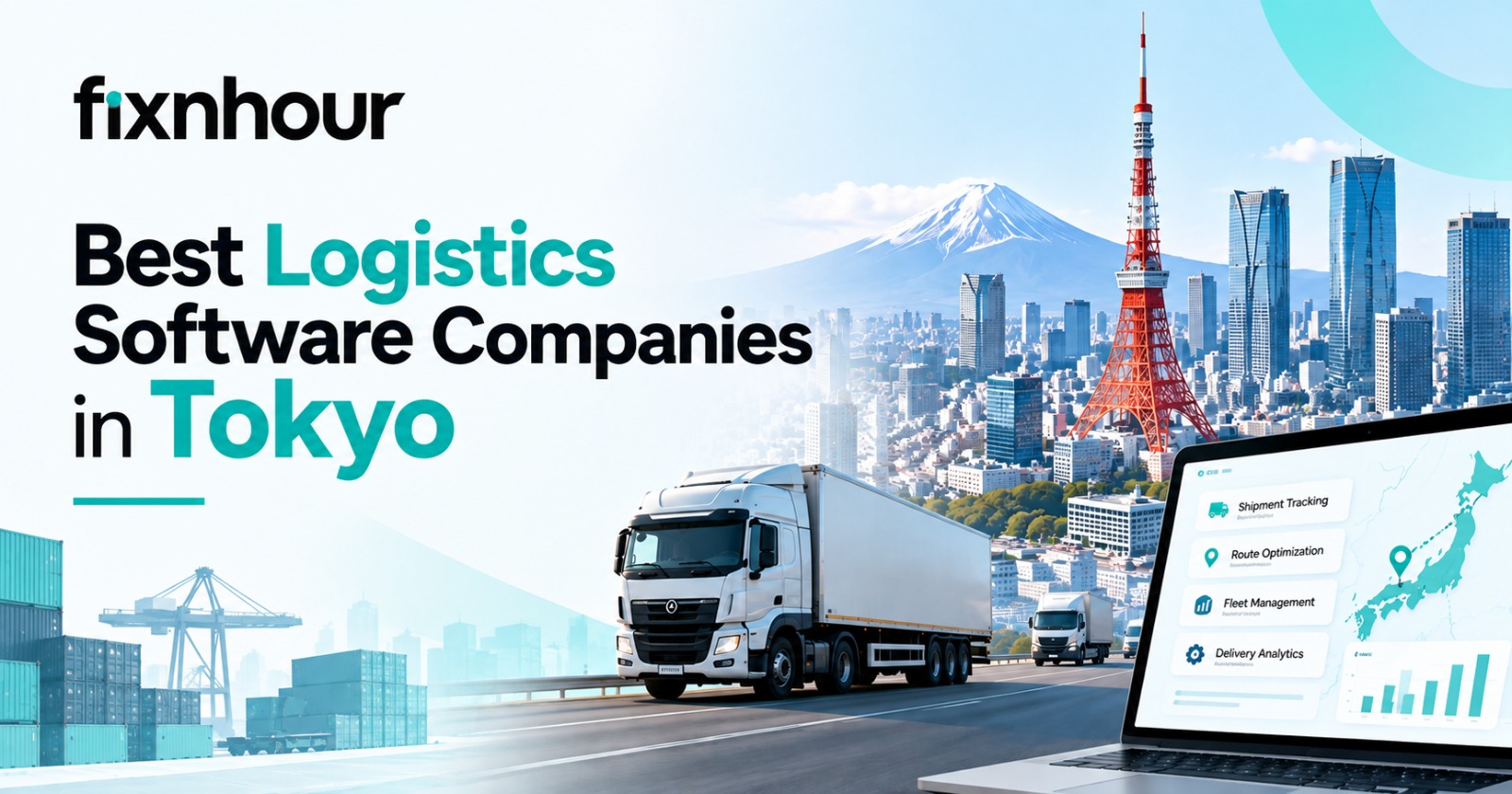
Tokyo is one of Asia’s most important technology and business hubs, and its logistics industry is becoming increasingly dependent on digital solutions. From e-commerce fulfillment and warehouse management to transportation planning, fleet tracking, and last-mile delivery, businesses need reliable software to keep operations efficient. Choosing the right logistics software company in Tokyo can be challenging.
Some providers specialize in transportation management systems (TMS), while others focus on warehouse management software (WMS), supply chain optimization, AI, automation, fleet management, or custom software development. This guide explores some of the leading logistics technology companies businesses can consider when looking for a technology partner in Tokyo. It also explains the major types of logistics software, important features, development costs, current technology trends, and the factors businesses should consider before selecting a provider.
Types of Logistics Software Companies in Tokyo
Before choosing a company, it is important to understand what type of logistics software your business actually needs. A transportation company may need a TMS, while a warehouse operator may require WMS technology.Top mobile app development companies specialize in creating custom Android, iOS, and cross-platform apps tailored to business goals. Knowing the difference can save time and prevent businesses from choosing a platform with unnecessary features.
Transportation Management System Companies
A Transportation Management System (TMS) helps businesses plan and manage transportation activities. Typical features include:
- Shipment planning
- Carrier management
- Dispatch management
- Freight management
- Route optimization
- Shipment tracking
Warehouse Management Software Companies
A Warehouse Management System (WMS) helps businesses control inventory and warehouse operations. Common features include:
- Inventory management
- Barcode and RFID
- Picking and packing
- Receiving
- Order fulfillment
- Warehouse analytics
Fleet Management Software Companies
Fleet management platforms help businesses manage vehicles and drivers more effectively. Common features include:
- GPS tracking
- Driver management
- Vehicle monitoring
- Maintenance management
- Fuel tracking
- Route planning
Last-Mile Delivery Software Companies
Last-mile delivery software helps businesses manage the final stage of delivery. Important features include:
- Route optimization
- Driver applications
- Real-time tracking
- Delivery scheduling
- Customer notifications
- Electronic proof of delivery
Supply Chain Management Software Companies
Supply chain software provides visibility across multiple stages of the supply chain. It can support:
- Demand forecasting
- Inventory optimization
- Procurement
- Supplier management
- Supply chain analytics
- Risk management
AI-Powered Logistics Software Companies
AI is becoming increasingly useful in logistics because it can analyze large amounts of operational data and automate complex decisions. Examples include:
- AI route optimization
- Demand forecasting
- Predictive analytics
- Automated document processing
- Intelligent warehouse planning
- AI-powered decision-making
Key Logistics Software Solutions Offered in Tokyo
Modern logistics platforms can connect multiple operations into one digital ecosystem. Instead of managing transportation, inventory, warehouses, drivers, and customers separately, businesses can use integrated software to create better visibility.
Transportation Management
Transportation software can help businesses:
- Plan shipments
- Manage carriers
- Optimize routes
- Monitor deliveries
- Analyze transportation costs
Warehouse Management
Warehouse technology can improve:
- Inventory accuracy
- Picking efficiency
- Order fulfillment
- Stock visibility
- Warehouse productivity
Fleet and Driver Management
Fleet software can provide:
- Live vehicle tracking
- Driver information
- Vehicle utilization
- Maintenance records
- Route planning
Route Optimization
Route optimization can consider:
- Delivery locations
- Traffic
- Vehicle capacity
- Delivery windows
- Driver availability
- Delivery priorities
Real-Time Shipment Tracking
Tracking technology can provide:
- Shipment location
- ETA
- Delivery status
- Delay alerts
- Exception notifications
Logistics Analytics
Analytics platforms can help management understand:
- Delivery performance
- Transportation costs
- Inventory levels
- Warehouse productivity
- Driver performance
- Supply chain KPIs
Best Logistics Software Companies in Tokyo
Tokyo's logistics technology market includes companies working across transportation, warehouse operations, international trade, supply chain management, automation, and enterprise digital transformation.Logistics software helps organizations automate transportation, warehouse activities, shipment tracking, route planning, fleet operations, carrier management, order fulfillment, and delivery communication from centralized digital platforms. The companies below have different strengths, so the best option ultimately depends on the size and requirements of your business.
1. Hacobu
Hacobu is a Tokyo-based logistics technology company focused on digital transformation in the logistics industry. Its MOVO platform provides cloud-based solutions designed to improve transportation and logistics operations. The company's solutions cover areas such as fleet management, logistics visibility, warehouse and yard operations, and transportation-related workflows. Hacobu is particularly relevant for organizations looking to move away from fragmented logistics processes and adopt connected digital systems.
Key highlights:
- Cloud-based logistics management solutions
- Transportation and fleet management capabilities
- Logistics digital transformation services
- Solutions designed for improving operational visibility
2. Shippio
Shippio is a Tokyo-based logistics technology company focused on international logistics and trade digitalization. Its platform is designed to help businesses manage international logistics processes through greater digital visibility and automation. This makes Shippio particularly interesting for manufacturers, retailers, importers, exporters, and other businesses dealing with international supply chains. Its technology also incorporates AI-powered capabilities for processing logistics documents and streamlining trade-related workflows.
Key highlights:
- International logistics management
- Trade management technology
- Digital freight forwarding
- AI-supported logistics workflows
3. GROUND Inc.
GROUND is a Tokyo-based LogiTech company with a strong focus on warehouse technology, AI, automation, and logistics optimization. Its GWES platform is designed to connect warehouse systems, equipment, data, and optimization capabilities. The company is particularly relevant for organizations operating large distribution centers or warehouses where automation and operational visibility are important. Its technology can work with existing systems and infrastructure instead of requiring businesses to completely replace their technology environment.
Key highlights:
- AI-powered warehouse optimization
- Warehouse execution technology
- Integration with WMS, ERP, and warehouse equipment
- Data-driven logistics optimization
4. OPENLOGI
OPENLOGI focuses on logistics and fulfillment technology, with solutions particularly relevant to businesses operating e-commerce and online retail operations. For growing online businesses, logistics can quickly become difficult to manage as order volumes increase. Technology that connects orders, inventory, fulfillment, warehousing, and shipping can help businesses create a more scalable operation.
Key highlights:
- Logistics and fulfillment technology
- E-commerce logistics support
- Warehouse and inventory workflows
- Scalable fulfillment operations
5. NEC Corporation
NEC is a major Japanese technology company headquartered in Tokyo, with expertise spanning enterprise IT, AI, IoT, analytics, and digital transformation. For logistics organizations, large technology providers such as NEC can be relevant when the project involves complex enterprise systems, data integration, AI, or supply chain transformation rather than a simple standalone logistics application.
Key highlights:
- Enterprise technology solutions
- AI and analytics
- IoT capabilities
- Supply chain digital transformation
6. Hitachi
Hitachi offers technology across industrial operations, IoT, data analytics, cloud, and digital transformation. Its Lumada ecosystem provides businesses with technology for connecting operational data and creating more intelligent digital processes. For logistics and supply chain organizations, these capabilities can support connected operations, data visibility, asset management, and optimization.
Key highlights:
- IoT and connected technology
- Data analytics
- Enterprise digital transformation
- Industrial technology expertise
7. Fujitsu
Fujitsu is a major Japanese technology provider with capabilities in cloud computing, AI, data analytics, enterprise systems, and digital transformation. Its broad technology expertise makes it suitable for organizations that need to modernize complex supply chain operations or integrate logistics technology with existing enterprise systems.
Key highlights:
- Cloud technology
- AI and data analytics
- Supply chain digital transformation
- Enterprise software integration
8. NTT DATA
NTT DATA is a global IT services and systems integration company with extensive experience in enterprise technology. Its capabilities include consulting, software development, cloud services, data platforms, and systems integration. For logistics businesses, a provider with strong integration expertise can be valuable because modern logistics environments often contain multiple systems, including ERP, WMS, TMS, e-commerce, inventory, and analytics platforms.
Key highlights:
- Enterprise software development
- Systems integration
- Cloud and data solutions
- Digital transformation services
How We Selected the Best Logistics Software Companies in Tokyo
Selecting a logistics software company requires more than checking whether a provider mentions logistics on its website. Businesses should look at technology capabilities, relevant experience, reputation, software products, client feedback, and the ability to solve specific operational problems. Our approach focuses on companies with relevant logistics, supply chain, software, automation, or enterprise technology capabilities. A well-designed and custom-curated Android app can increase a company's revenue in multifolds.
Market Reputation
Consider:
- Industry experience
- Company history
- Technology portfolio
- Market presence
- Recognized software products
Client Reviews and Feedback
Look for:
- Verified reviews
- Client satisfaction
- Communication quality
- Project management
- Technical expertise
Technical Capabilities
A strong logistics technology partner may offer:
- Custom software development
- Mobile application development
- AI and machine learning
- Cloud solutions
- API integration
- IoT
- Data analytics
Industry Expertise
Relevant experience can include:
- Logistics
- Transportation
- E-commerce
- Retail
- Manufacturing
- Warehousing
- Freight forwarding
- Supply chain management
How to Choose the Best Logistics Software Company in Tokyo
Choosing a logistics software company is a long-term decision. The provider you select may become responsible for critical systems that control orders, inventory, transportation, warehouses, and customer information. Instead of choosing a company based only on price, evaluate the complete picture.Fixnhour links you with trusted service providers
Define Your Requirements
Start with:
- Number of shipments
- Fleet size
- Warehouse locations
- Number of users
- Existing software
- Integration requirements
Evaluate Technical Expertise
Ask whether the company has experience with:
- Cloud platforms
- AI
- APIs
- Mobile apps
- IoT
- GPS
- Data analytics
- ERP integration
Consider Scalability
Ask whether the solution can support:
- More users
- More orders
- Additional warehouses
- New locations
- New integrations
Compare Total Cost
Consider:
- Development
- Implementation
- Hosting
- Licensing
- Integration
- Maintenance
- Support
Check Post-Launch Support
A reliable provider should offer:
- Technical support
- Bug fixes
- Security updates
- Performance monitoring
- Software maintenance
- Future upgrades
Why Use Fixnhour to Find Logistics Software Companies?
Finding the right technology company can take considerable time. Businesses often have to visit dozens of websites, compare services, check reviews, and determine whether a company is genuinely experienced in the required technology. Fixnhour is designed to make this discovery process easier by helping businesses connect with top-ranked companies backed by trusted research and verified reviews
For businesses searching for logistics technology partners, Fixnhour can be particularly useful when comparing providers across software development, AI, automation, SaaS, mobile applications, and other technology categories.
Discover Research-Backed Companies
Businesses can:
- Discover technology companies
- Compare company capabilities
- Explore relevant services
- Research potential providers
Compare Technology Expertise
Look for companies specializing in:
- Web development
- AI applications
- Mobile apps
- Game development
- AI and automation
- SaaS solutions
- Software development
Make a More Confident Hiring Decision
Before contacting a company, compare:
- Experience
- Services
- Technology capabilities
- Reviews
- Project suitability
- Support
Final Thoughts
The best logistics software company in Tokyo is not necessarily the largest provider or the company with the most features. The right partner is one that understands your operational challenges and can build or provide technology that supports your current needs while allowing your business to grow. Some businesses may need transportation management and fleet tracking. Others may prioritize warehouse automation, supply chain analytics, international trade management, AI-powered optimization, or last-mile delivery software.
You can also search Best Platforms to Discover and Compare Companies Online. Before making a decision, define your requirements, compare relevant experience, review integration capabilities, understand the total cost, and evaluate post-launch support. For businesses still researching technology providers, Fixnhour provides a convenient way to discover and compare technology companies backed by trusted research and verified reviews.
Frequently Asked Questions
Q1. What are the best logistics software companies in Tokyo?
Ans. The best logistics software company depends on the specific requirements of the business. Tokyo has providers and technology companies working across transportation management, warehouse management, international logistics, supply chain optimization, enterprise software, AI, automation, and systems integration. Companies such as Hacobu, Shippio, and GROUND are particularly relevant in different areas of logistics technology. Hacobu focuses on logistics digital transformation and its MOVO platform, while Shippio focuses on international logistics and trade digitalization. GROUND is strongly focused on warehouse technology, AI, optimization, and logistics facility operations.
Q2. What does a logistics software company do?
Ans. A logistics software company develops or provides technology that helps businesses manage and optimize logistics operations. Depending on the provider, this may include transportation management systems, warehouse management systems, fleet management platforms, delivery applications, inventory management software, supply chain platforms, and logistics analytics. The purpose of logistics software is to replace fragmented manual processes with connected digital workflows.
Q3. How much does logistics software development cost in Tokyo?
Ans. Logistics software development costs in Tokyo can vary significantly depending on the project's complexity. A simple delivery tracking application and a large enterprise supply chain platform require completely different levels of development, infrastructure, testing, and integration. The major cost factors include the number of features, number of users, mobile applications, GPS tracking, real-time notifications, AI functionality, API integrations, ERP connectivity, warehouse integrations, cloud infrastructure, security, and reporting requirements. The best way to obtain an accurate estimate is to prepare a detailed project specification before contacting logistics software development companies in Tokyo. Include the number of users, expected order volume, required integrations, platforms, security requirements, and essential features.
Q4. What is a Transportation Management System (TMS)?
Ans. A Transportation Management System, or TMS, is software that helps businesses plan, execute, monitor, and optimize transportation activities. A TMS can manage many stages of transportation, including shipment planning, carrier selection, dispatch, freight management, route planning, shipment tracking, delivery monitoring, and transportation analytics. One of its biggest advantages is centralized visibility. Instead of managing transportation information across spreadsheets, emails, phone calls, and separate systems, teams can access important information through a single platform.
Q5. What is Warehouse Management Software (WMS)?
Ans. Warehouse Management Software, commonly called a Warehouse Management System or WMS, is technology designed to manage and optimize warehouse operations. A WMS can control processes such as receiving goods, storing products, tracking inventory, picking orders, packing shipments, and dispatching products. The biggest benefit is improved visibility. Warehouse employees can see where products are stored, how much inventory is available, which orders need to be processed, and what activities are taking place. For Tokyo businesses with complex inventory operations, choosing a logistics software company with genuine warehouse experience can make implementation much smoother.
Q6. Can logistics software include AI and automation?
Ans. Yes. AI and automation can be integrated into modern logistics software to improve decision-making and reduce repetitive manual tasks. One of the most common applications is route optimization. Software can analyze delivery locations, vehicle capacity, delivery windows, and operational constraints to create more efficient delivery plans. AI can also support demand forecasting by analyzing historical sales and operational data. Better forecasts can help businesses make more informed inventory and procurement decisions. Document processing is another practical use case. Logistics businesses handle large numbers of invoices, shipment documents, customs forms, and other paperwork. AI-powered OCR can extract information from these documents and convert it into structured digital data.
Q7. How does logistics software improve last-mile delivery?
Ans. Last-mile delivery is the final stage of moving an order from a warehouse, distribution center, or local hub to the customer. It is often one of the most operationally challenging parts of the logistics process. Logistics software can improve last-mile delivery by connecting route planning, driver management, tracking, customer communication, and delivery analytics. Route optimization is one of the most valuable capabilities. Instead of manually assigning delivery stops, software can generate routes based on location, vehicle capacity, delivery windows, priorities, and other constraints.For e-commerce businesses, these capabilities can have a direct impact on customer experience. Faster and more predictable deliveries can increase customer satisfaction while better route planning can help control operational costs.
Q8. How do I choose the right logistics software company in Tokyo?
Ans. Start by clearly identifying the problem you want the software to solve. Don't begin by comparing dozens of feature lists. If transportation planning is your main challenge, look for a company with TMS and route optimization expertise. If warehouse productivity is the problem, prioritize WMS and warehouse automation experience. If you're an e-commerce business, you may need inventory, order management, fulfillment, and last-mile delivery capabilities. Next, examine the company's experience. Look for relevant case studies, client reviews, technology capabilities, and experience with businesses similar to yours