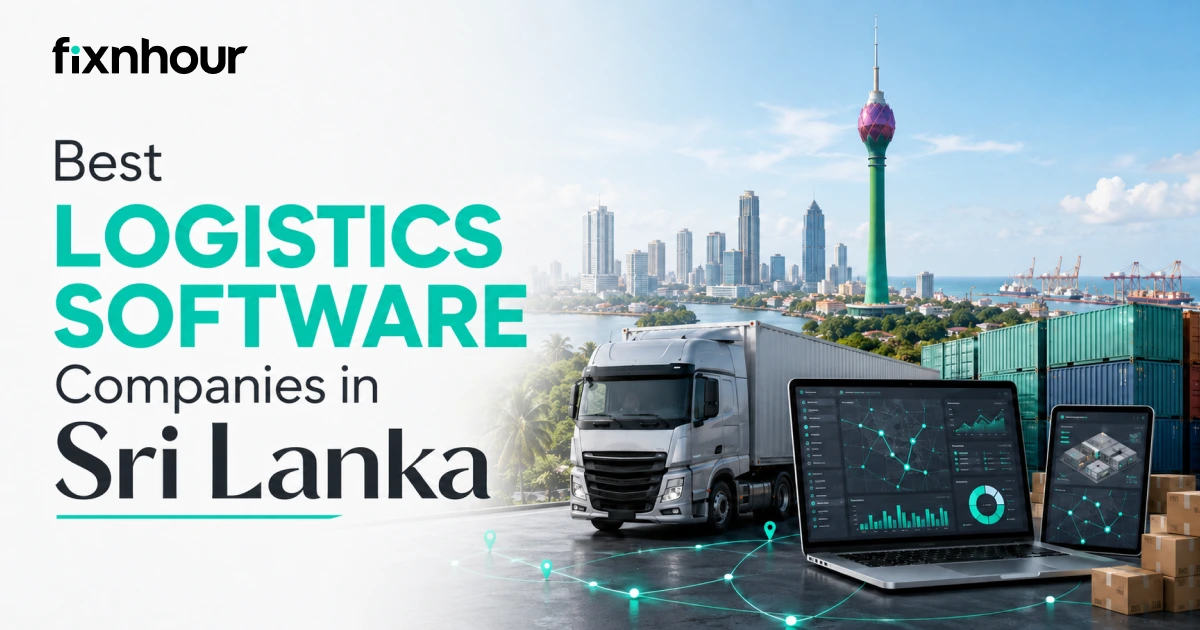
Sri Lanka’s logistics sector supports retail, manufacturing, exports, e-commerce, freight forwarding, warehousing, and last-mile delivery. As these operations become more complex, businesses need digital systems that can provide accurate inventory information, automate dispatching, track vehicles, optimize routes, and improve shipment visibility.
The best logistics software companies in Sri Lanka provide solutions covering transportation management systems, warehouse management systems, fleet tracking, supply chain management, ERP integration, and logistics analytics. This guide explores notable providers, essential features, costs, benefits, challenges, and the steps businesses should follow when selecting a platform.
Quick Answer
Some notable logistics software providers serving Sri Lankan businesses include KLOUDIP, Xiteb, Blue Lotus 360, Logistix 360, CIS World, and DMS Software Technologies. Global platforms such as SAP, Oracle, Odoo, Zoho Inventory, and Microsoft Dynamics 365 are also available. Businesses can use Fixnhour to compare suitable logistics technology providers. The best choice depends on company size, budget, integrations, and requirements for fleet tracking, warehouse management, freight billing, transportation management, or real-time shipment visibility.
Key Takeaways
Selecting logistics software requires more than comparing features or subscription prices. Businesses must evaluate operational requirements, implementation support, integrations, scalability, and the provider’s understanding of transportation and supply chain workflows.
- Logistics software helps centralize transportation, fleet, inventory, warehouse, and delivery operations.
- Sri Lankan businesses can choose local providers, regional platforms, or global enterprise systems.
- Cloud-based platforms may reduce infrastructure requirements and simplify remote access.
- TMS software focuses on transportation, while WMS platforms manage warehouse operations.
- GPS, IoT, telematics, and mobile applications improve fleet and shipment visibility.
- Total costs may include licenses, customization, hardware, integrations, training, and maintenance.
- A product demonstration and pilot project should be completed before full implementation.
- The right platform should support future branches, vehicles, warehouses, users, and shipment volumes.
Best Logistics Software Companies in Sri Lanka
The following logistics software companies in Sri Lanka provide solutions for transportation, warehouse management, inventory control, fleet tracking, ERP, and supply chain operations. Businesses can also compare experienced Software Development Companies when custom logistics platforms or specialized integrations are required. Each provider offers different capabilities, deployment models, and support services. Compare scalability, industry experience, implementation timelines, pricing, security, customization, and after-sales support before choosing a suitable technology partner.
| # | Company | Core Expertise | Key Services | Best Suited For |
|---|---|---|---|---|
| 1 | KLOUDIP | Fleet management & telematics | GPS tracking, fuel management, driver monitoring, IoT solutions | Transport and fleet-based businesses |
| 2 | Xiteb | Logistics & warehouse management | 3PL software, inventory management, barcode tracking, CRM integrations | 3PL, warehouse and distribution companies |
| 3 | Blue Lotus 360 | Warehouse management | Inventory tracking, bin management, picking & packing, shipping | Warehouses and distribution operations |
| 4 | Digiratina Technology Solutions | Custom logistics software | Custom software, mobile apps, APIs, DevOps | Businesses requiring tailored logistics platforms |
| 5 | Amplifyn | Digital logistics products | Custom software, UX/UI, web/mobile apps, dashboards | Companies prioritizing user-friendly logistics applications |
| 6 | DMS Software Engineering Pvt Ltd | ERP & supply chain systems | Cloud ERP, inventory, purchasing, analytics, integration | Businesses connecting logistics with ERP operations |
| 7 | Bileeta | Fleet, warehouse & ERP | Fleet management, inventory, fuel monitoring, supply chain ERP | Enterprises managing integrated logistics operations |
| 8 | Fcode Labs | Logistics product engineering | Cloud apps, AI solutions, data engineering, automation | Businesses building scalable digital logistics products |
| 9 | SIX | Warehouse & supply chain management | WMS, inventory tracking, picking, shipping, fulfilment | Warehousing and supply chain businesses |
| 10 | DesignSoft Technologies | Customized ERP solutions | ERP, procurement, inventory, distribution, automation | Businesses requiring integrated enterprise management |
1. KLOUDIP
KLOUDIP offers fleet management, GPS tracking, telematics, and IoT solutions for vehicles, machinery, cargo, and other mobile assets. Its technology helps logistics businesses monitor vehicle locations, evaluate driver behaviour, track fuel usage, strengthen asset security, and schedule maintenance activities. Centralized operational information can help transportation companies improve fleet visibility, reduce unnecessary costs, increase vehicle utilization, and make more informed decisions across daily logistics operations.
Key Services:
- GPS vehicle and asset tracking
- Fleet and fuel management
- Driver behaviour monitoring
- IoT and telematics solutions
2. Xiteb
Xiteb provides logistics management technology supporting third-party logistics, warehouse, inventory, transportation, and supply chain processes. Its solutions help businesses manage stock across multiple locations, process customer orders, automate documentation, and monitor warehouse activities using barcode-based workflows. Integration with accounting and customer management systems can provide better data consistency, while reporting tools help decision-makers evaluate inventory levels, order fulfilment, and overall logistics performance.
Key Services:
- Third-party logistics software
- Warehouse and inventory management
- Barcode-based stock control
- QuickBooks and CRM integrations
3. Blue Lotus 360
Blue Lotus 360 delivers warehouse management capabilities that help logistics businesses improve inventory accuracy, warehouse coordination, and order fulfilment. The system supports the complete movement of goods, including receiving, inspection, put-away, bin allocation, picking, packing, and shipping. By centralizing warehouse information and standardizing operational workflows, businesses can reduce stock-handling errors, maintain better product visibility, process orders efficiently, and strengthen coordination between warehouse and delivery teams.
Key Services:
- Warehouse management software
- Inventory and bin tracking
- Picking and packing workflows
- Delivery and shipping management
4. Digiratina Technology Solutions
Digiratina Technology Solutions is a software development company operating in Sri Lanka and Singapore, with experience serving logistics and supply chain businesses. It develops custom software products, mobile applications, APIs, and modernized enterprise systems based on specific operational requirements. Its testing and DevOps capabilities can also support reliable deployment, maintenance, and scalability, making the company suitable for businesses seeking tailored logistics platforms rather than standard off-the-shelf applications.
Key Services:
- Custom logistics software development
- Supply chain and mobile applications
- API and third-party integrations
- Software testing and DevOps
5. Amplifyn
Amplifyn is a Sri Lankan digital product and custom software company with experience across logistics and supply chain projects. It helps businesses design accessible logistics applications, operational dashboards, web platforms, and mobile interfaces. Its combination of UX/UI design, low-code development, and custom engineering can support organizations seeking user-friendly digital products that simplify workflows, present operational data clearly, and improve interactions among managers, employees, delivery teams, and customers.
Key Services:
- Custom software development
- Logistics application UX/UI design
- Web and mobile application development
- Operational dashboard development
6. DMS Software Engineering Pvt Ltd
DMS Software Engineering Pvt Ltd provides business software and cloud-based ERP capabilities supporting inventory, purchasing, reporting, and supply chain operations. Its integrated systems can help companies connect logistics processes with finance, sales, procurement, and administrative functions. Centralized operational data enables teams to reduce information silos, standardize business workflows, monitor stock and purchases, generate useful reports, and make informed decisions across interconnected departments and business locations.
Key Services:
- Cloud-based ERP software
- Inventory and purchasing management
- Business reporting and analytics
- Process and data integration
7. Bileeta
Bileeta is a Sri Lankan enterprise software provider offering cloud-based ERP solutions for fleet, warehouse, inventory, distribution, and supply chain management. Its fleet capabilities allow businesses to maintain vehicle and driver records, monitor fuel consumption, schedule preventive maintenance, and allocate transportation resources. Integrated operational dashboards provide greater visibility into logistics performance, helping managers control costs, improve vehicle availability, coordinate warehouse activities, and make data-driven decisions across supply chain operations.
Key Services:
- Fleet and vehicle management
- Warehouse and inventory management
- Fuel and maintenance monitoring
- Supply chain ERP integration
8. Fcode Labs
Fcode Labs is a software product engineering company with operations in Sri Lanka and Singapore. It develops customized digital solutions for transportation and logistics businesses, including cloud platforms, mobile applications, AI-powered systems, and data engineering tools. Its development capabilities can help logistics companies automate operational workflows, integrate disconnected systems, improve data visibility, modernize legacy applications, and build scalable software products tailored to evolving transportation and supply chain requirements.
Key Services:
- Custom logistics software development
- Cloud and mobile application development
- AI and data engineering solutions
- Software testing and automation
9. SIX
SIX provides warehouse, inventory, and supply chain management solutions for companies requiring better control over stock movement and order fulfilment. Its warehouse capabilities support receiving, put-away, storage, inventory tracking, picking, and shipping processes. Warehouse layout optimization can help businesses use available space efficiently, while broader supply chain functions support procurement and distribution. These connected capabilities can improve inventory visibility, fulfilment accuracy, and coordination across logistics operations.
Key Services:
- Warehouse management systems
- Inventory and stock tracking
- Receiving, picking, and shipping
- Supply chain and fulfilment management
10. DesignSoft Technologies
DesignSoft Technologies is a Colombo-based business software provider developing customized enterprise applications for different industries. Its solutions can connect inventory, purchasing, procurement, sales, distribution, finance, and reporting within a centralized management environment. Logistics businesses can use these integrated systems to automate repetitive processes, improve departmental coordination, maintain consistent operational records, monitor stock and distribution activities, and obtain consolidated reports for planning, control, and informed business decision-making.
Key Services:
- Customized ERP development
- Inventory and procurement systems
- Sales and distribution management
- Business automation and integration
Essential Features of Modern Logistics Software
Modern logistics software connects transportation, warehouse, inventory, fleet, and delivery operations within one centralized platform. It should provide real-time shipment visibility, automated dispatch, route optimization, inventory tracking, analytics, and seamless integrations with ERP, CRM, GPS, payment, and carrier systems. Scalable architecture, mobile access, security, alerts, and customizable reporting help businesses reduce costs, improve accuracy, accelerate decisions, and strengthen customer service.
Transportation Management Features
- Shipment planning and dispatching
- Route and load optimization
- Carrier and driver management
- Freight rate calculation
- Shipment status tracking
- Electronic proof of delivery
Warehouse Management Features
- Goods receiving and inspection
- Barcode or RFID scanning
- Bin and location management
- Picking, packing, and shipping
- Cycle counting and stock adjustments
- Returns and damaged-stock management
Fleet and Delivery Features
- Live GPS vehicle tracking
- Fuel consumption monitoring
- Driver performance analysis
- Preventive maintenance scheduling
- Geofencing and alerts
- Customer tracking links
Benefits and Challenges of Logistics Software for Sri Lankan Businesses
Logistics software helps Sri Lankan businesses improve transportation, inventory, warehouse, fleet, and delivery management through connected workflows. Companies can also explore Logistics Software Companies in Abu Dhabi to compare international solutions and specialized technology providers. Although these platforms offer real-time visibility, automation, accurate reporting, and better customer service, implementation challenges may include high costs, legacy-system integration, poor data quality, connectivity limitations, employee resistance, and training requirements.
Key Benefits:
- Real-time shipment, vehicle, and inventory visibility
- Better route planning and delivery scheduling
- Improved inventory and order accuracy
- Reduced transportation and warehouse costs
- Faster customer service and communication
- Data-driven operational decision-making
Common Challenges:
- High implementation and training expenses
- Integration difficulties with legacy systems
- Inaccurate or duplicated business data
- Employee resistance to new workflows
- Internet connectivity limitations
- Excessive software customization
- Limited internal ownership and support
Best Practices for Successful Implementation
Successful logistics software implementation requires more than selecting the right platform. Businesses can evaluate experienced Logistics Software Companies in the USA when seeking advanced platforms, custom integrations, and technical expertise. Clearly defined objectives, accurate data, realistic timelines, employee training, and leadership support are essential. Phased deployment, regular testing, performance monitoring, internal ownership, and continuous feedback help reduce disruption, encourage adoption, and deliver measurable long-term operational improvements.
Follow these best practices:
- Establish measurable goals before purchasing software.
- Prioritize essential workflows during the first implementation phase.
- Clean inventory, customer, vehicle, driver, and supplier data.
- Involve warehouse teams, dispatchers, drivers, and managers in testing.
- Use role-based permissions to protect operational and financial data.
- Integrate the platform with accounting, ERP, CRM, and e-commerce systems.
- Provide practical training based on everyday scenarios.
- Monitor on-time delivery, order accuracy, fleet utilization, fuel consumption, and cost per shipment.
- Schedule regular system reviews and employee refresher training.
- Maintain documented backup, recovery, and business-continuity procedures.
Conclusion
The best logistics software companies in Sri Lanka provide different strengths across fleet management, transportation, warehouse operations, inventory control, ERP, IoT, and supply chain analytics. The right platform should solve clearly defined operational problems while supporting reliable integration, security, reporting, employee adoption, and future growth.
Before signing a contract, businesses should compare shortlisted providers through scenario-based demonstrations, customer references, technical reviews, and a pilot project. A carefully selected and properly implemented system can improve shipment visibility, delivery performance, warehouse accuracy, fleet utilization, customer communication, and overall logistics profitability. Talk to Our Experts
Frequently Asked Questions
Q1. Which is the best logistics software company in Sri Lanka?
Ans. The best logistics software company in Sri Lanka depends on your operational requirements. KLOUDIP specializes in fleet tracking and telematics, while Xiteb and Blue Lotus 360 support warehouse, inventory, and logistics management. Logistix 360 and CIS World address transportation and supply chain needs. Compare features, demonstrations, integrations, scalability, implementation costs, industry experience, customer support, security, and long-term maintenance before deciding.
Q2. How much does logistics management software cost in Sri Lanka?
Ans. Logistics software pricing in Sri Lanka varies according to user numbers, vehicles, warehouses, shipment volumes, required modules, integrations, hardware, and customization. Cloud-based platforms commonly charge monthly or annual subscription fees, while custom solutions require tailored quotations. Businesses should calculate total ownership costs, including implementation, data migration, training, hosting, maintenance, GPS devices, barcode scanners, technical support, upgrades, and future business expansion.
Q3. What is the best fleet management software for Sri Lankan transport companies?
Ans. The best fleet management software depends on fleet size, vehicle types, routes, and reporting requirements. A suitable platform should provide GPS tracking, geofencing, driver monitoring, fuel analysis, maintenance scheduling, alerts, and performance reports. KLOUDIP is one local option to evaluate. Before choosing, test tracking accuracy, mobile coverage, hardware compatibility, usability, support quality, scalability, security, installation requirements, and per-vehicle subscription costs.
Q4. Which warehouse management system is suitable for small businesses in Sri Lanka?
Ans. Small businesses should choose a warehouse management system that is affordable, easy to implement, and scalable. Essential features include barcode scanning, accurate inventory records, receiving, picking, packing, order management, reporting, and accounting integration. Modular cloud-based systems are often more practical than complex enterprise platforms. Blue Lotus 360, Xiteb, Odoo, and Zoho Inventory are possible options worth comparing through product demonstrations.
Q5. Can logistics software integrate with ERP and accounting systems?
Ans. Yes, many modern logistics platforms integrate with ERP, CRM, accounting, e-commerce, mapping, payment, warehouse, and carrier systems. Integrations may use built-in connectors, APIs, webhooks, or customized development. Before implementation, businesses should confirm data compatibility, synchronization frequency, security controls, error handling, integration costs, and ownership. They should also establish who will monitor, maintain, troubleshoot, document, and update each connection long term.
Q6. Should a logistics company choose custom software or SaaS?
Ans. SaaS logistics software is usually faster to deploy, easier to maintain, and less expensive initially. It suits businesses with standardized processes and limited technical resources. Custom software provides greater flexibility, ownership, and control over specialized workflows and integrations. Businesses should choose custom development only when available platforms cannot support critical operations, customer experiences, security requirements, scalability, or competitive business needs.
Q7. What features should transportation management software include?
Ans. A transportation management system should support shipment planning, dispatching, route optimization, carrier management, freight calculation, GPS tracking, document handling, electronic proof of delivery, notifications, and performance reporting. Advanced solutions may include load optimization, predictive arrival times, automated billing, mobile driver applications, customer portals, and analytics. Businesses should prioritize features that match shipment volumes, transport modes, service requirements, and existing systems.
Q8. How long does logistics software implementation take in Sri Lanka?
Ans. Implementation time varies by platform complexity, business size, modules, integrations, data quality, customization, hardware installation, testing, and employee training. A straightforward cloud-based logistics system may be configured within several weeks, whereas a customized or enterprise platform can require several months. A phased rollout with defined milestones, pilot testing, user feedback, and ongoing support can reduce disruption and improve adoption considerably.