In today's digital age, automation has become more than just a productivity tool; it's a strategic business enabler. Organizations are leveraging technologies like hyperautomation, artificial intelligence (AI), workflow orchestration, and no-code platforms to streamline processes, enhance decision-making, and drive innovation. Those companies that adopt these technologies are creating agile, future-proof businesses that can respond to market demands as they evolve.
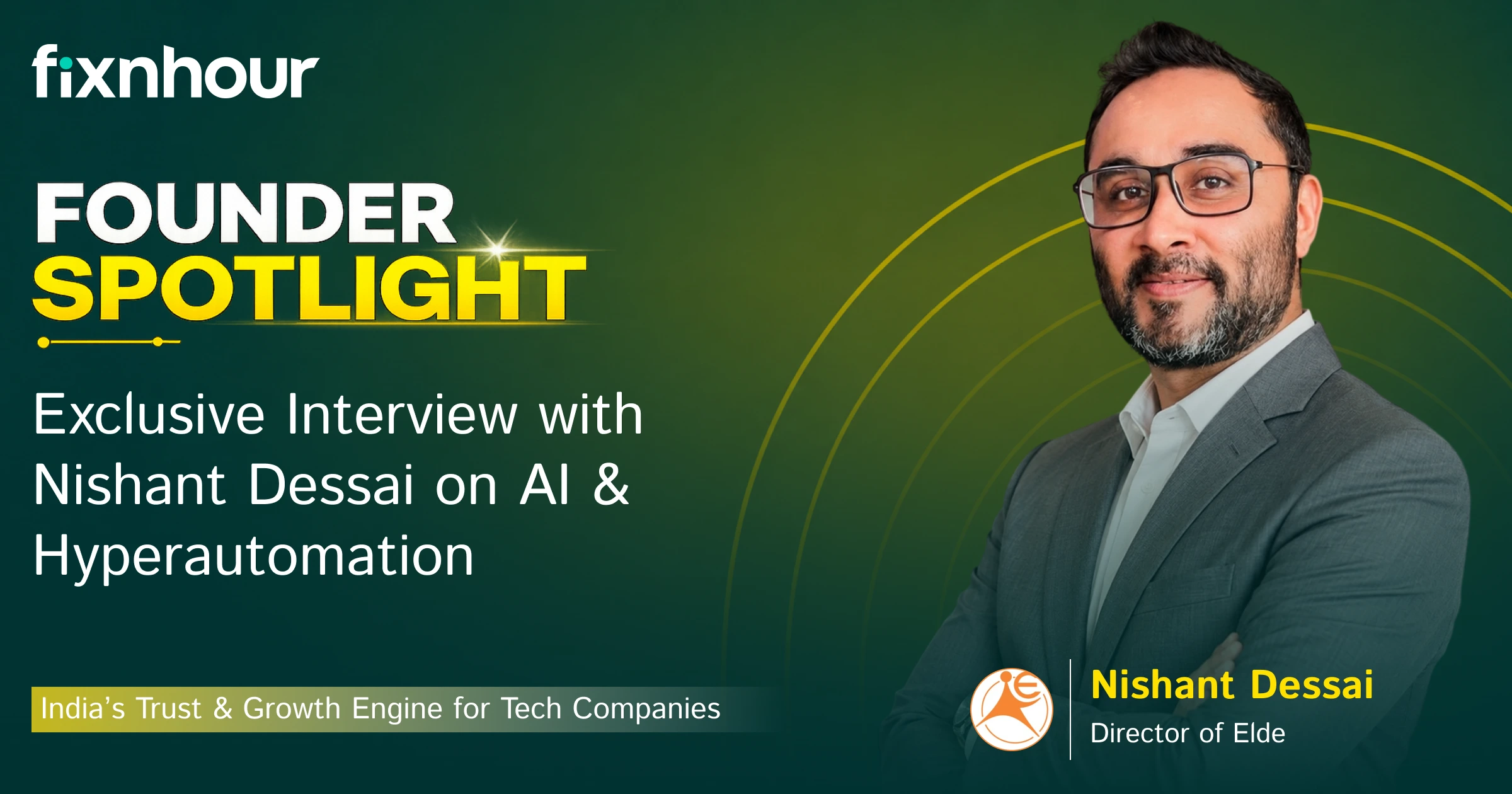
One of the leaders spearheading this change is Nishant Dessai, director of Elde, a company that specializes in intelligent automation and digital transformation solutions. Nishant's background in enterprise technology has equipped him with a deep understanding of how to streamline business processes, leverage AI in workflows, and create scalable automation solutions that drive tangible business outcomes.
Key Takeaways
- Digital transformation should start with business goals, not technology.
- Hyperautomation integrates processes, AI, analytics, and workflows into a single intelligent system.
- No-code platforms allow business users to participate and support IT governance.
- AI should be used to address actual business challenges, not for the sake of the hype.
- People and culture are as important as software for successful transformation.
- Continuous learning and curiosity are essential leadership qualities in technology.
- Innovation is a process of experimentation and collaboration.
- The success of digital transformation is always measured by business outcomes.
- Organizations that combine intelligent automation with empowered teams will lead the future.
- Technology is best when it allows individuals to concentrate on creativity, strategy, and growth.
Who is Nishant Dessai?
Digital transformation is not just about digitizing processes; it's about building intelligent enterprises where people, processes, and technology come together. In today's world, organizations are moving beyond automation and towards hyperautomation, AI, and no-code platforms to boost productivity, minimize complexity, and drive innovation. Nishant Dessai, director at Elde, a company specializing in assisting organizations in orchestrating, automating, and optimizing business processes with intelligent digital solutions, is leading this transformation. As a leader, Elde collaborates with businesses to implement automation, AI-powered analytics, workflow orchestration, and no-code digital transformation solutions that enhance operational efficiency and support business growth. Elde Info Solutions Pvt. Ltd.
Nishant has a wealth of enterprise technology and digital transformation experience and feels that technology should address business problems, not add to them. His philosophy is focused on how to integrate business goals with the latest automation technologies to make organizations more agile, productive, and future-ready. From empowering citizen developers with no-code platforms to adopting hyperautomation strategies and integrating AI into enterprise workflows, Nishant's mission is always the same: to deliver measurable business outcomes rather than just technology. In this exclusive Fixnhour Founder Spotlight, Nishant discusses his thoughts on the future of enterprise automation, the increasing importance of AI, and the need for organizations to reimagine their digital transformation strategies.
Q1. Nishant, tell us about your professional journey. What inspired you to focus on hyperautomation and digital transformation?
I've always been interested in how technology can help businesses perform better, and that's what I've been working on for the past few years. Fixnhour As I started my career, I noticed that a lot of organizations were spending a lot of money on technology but still had inefficient processes, disconnected systems, and manual operations. It became clear that implementing software alone wasn't enough. Real transformation occurs when technology makes work easier, better decision-making possible, and allows people to concentrate on higher-value activities.
This realization took me on a journey towards business process management, enterprise automation, and finally hyperautomation. Our goal at Elde is not just to automate tasks but to rethink the way organizations work. We enable businesses to integrate their people, processes, and digital systems into a single intelligent ecosystem that can evolve to meet business needs. Digital transformation is all about delivering improved business outcomes, not more technology.
Q2. Hyperautomation has become one of the biggest technology trends. How do you define it?
Many organizations believe that automation is about replacing manual work with software. Hyperautomation is much more than that. It integrates workflow automation, artificial intelligence, analytics, business process management, robotic process automation, and orchestration in a single unified ecosystem. The aim is not just to automate individual tasks but to develop smart business processes that can self-improve. (arXiv)
Picture a company where data seamlessly moves from one department to another, approvals are processed electronically, AI offers suggestions, and leadership gets real-time data without having to manually gather reports. Envision a company where data moves effortlessly among departments, approvals are completed electronically, AI supplies suggestions, and leadership receives real-time data without having to manually gather reports. That's the path that businesses are taking. By leveraging hyperautomation, companies can be more agile, efficient, and responsive to market shifts.
Q3. Why do you believe no-code platforms are becoming increasingly important?
No-code platforms are making innovation accessible to everyone. In the past, each business need relied on software developers. Simple workflow improvements were still taking a long time to develop. Elde Info Solutions Pvt. Ltd. Business users can now be actively involved in the development of solutions. No-code platforms allow operations teams, HR, finance, and business managers to automate processes without needing a lot of coding expertise. This helps to minimize development delays and enable IT teams to concentrate on strategic projects. Low-code and no-code platforms are also becoming more popular, as they can be used to quickly and cost-effectively develop applications that are accessible to business users. (arXiv) But, of course, governance is still necessary. Citizen development should be used in addition to enterprise architecture, not in place of it. No-code is a great enabler of innovation when used properly.
Q4. Artificial intelligence is transforming enterprise software. How do you see AI changing business operations?
AI is emerging as the intelligence layer of enterprise systems. Instead of replacing workers, AI can help organizations make better decisions, find patterns, automate repetitive analysis, and enhance customer experiences. For instance, AI can prioritize service requests, analyze operational data, make recommendations, identify anomalies, and provide valuable insights much quicker than traditional reporting systems. But the real power of AI lies in its ability to be embedded in current business workflows. Businesses should not adopt AI just because it's in vogue. Rather, they should pose one question: What business problem are we solving? The power of AI becomes measurable when it's aligned with business goals.
Q5. What differentiates successful digital transformation initiatives from unsuccessful ones?
Technology is a rare reason for a digital transformation project to fail. People and processes do. A lot of organizations buy high-tech technology without changing the way they work or training their staff to adapt to the change. The first step to successful transformation is to know the business goals. Technology should be used to help achieve those goals, but not to set them. Employee engagement, measurable outcomes, continuous learning, and leadership alignment are all equally significant. Digital transformation is not an IT project. It's a business change program powered by technology.
Q6. How do you encourage innovation inside organizations?
Culture is the first step to innovation. Staff should be able to challenge current procedures and make suggestions for change. We are open to experimentation at Elde, but we are also business-disciplined. Not all ideas make it to a successful product, but all experiments provide valuable lessons. Continuous improvement makes organizations much more resilient than those hoping for a perfect solution. Innovation isn't a one-time event. It's a mindset that is ongoing.
Q7. What advice would you give organizations beginning their automation journey?
Begin with business issues. Not technology. There are too many tools to choose from for many organizations. Rather than asking what automation platform to buy, ask what business process is the biggest pain point. Successfully automate one meaningful process. Measure the results. Take lessons from the implementation. Then expand gradually. Digital transformation should build confidence by making measurable improvements, not trying to make massive changes in an organization overnight.
Q8. What leadership qualities have shaped your professional journey?
I think the most important thing I've had in my career is curiosity. Technology evolves continuously. Leaders who cease learning cease leading innovation. I also think transparency fosters better teams. When people know why they are doing something, they do a better job. Finally, collaboration matters. The best technology solutions come when business teams and technology teams work together to solve problems. Leadership is all about helping others to be successful.
Q9. What is your long-term vision for Elde?
Our mission is to enable organizations to be intelligent enterprises. We want businesses to go beyond individual automation initiatives and into connected ecosystems where AI, workflow automation, analytics, and business intelligence work in harmony. We will continue to invest in hyperautomation, no-code platforms, AI-powered solutions, and business process optimization while keeping our focus on measurable customer outcomes. Our success is easy. If our solutions make our customers faster, more productive, and more competitive, we've done our job.
Q10. What message would you like to share with entrepreneurs and technology leaders?
Technology should always add business value. Avoid implementing AI just because everyone is talking about AI. Avoid automating processes just because it is possible. Emphasize meaningful problems. Invest in your staff. Create systems that make work easier, not harder. Businesses that integrate intelligent technology with empowered teams will shape the future.
About the Leader
Nishant Dessai is the director at Elde, spearheading efforts in hyperautomation, no-code platforms, AI-powered business solutions, and enterprise digital transformation. He loves to help organizations orchestrate, automate, and optimize their operations with intelligent technology so that businesses can increase productivity, speed up innovation, and deliver measurable business outcomes. Under his leadership, Elde continues to help enterprises embrace modern automation while building scalable, future-ready digital ecosystems.
Final Thoughts on the Leader
When speaking with Nishant Dessai, it becomes clear that a key fact of modern digital transformation is that successful companies are no longer competing on technology; they are competing on how well they use technology in their business strategy.
His experience at Elde shows that hyperautomation, AI, and no-code platforms are best when they deliver real business results, not just digitization of current processes. Nishant's emphasis on orchestration, automation, and optimization is driving enterprises to be more agile, productive, and resilient in today's digital era. Contact us today