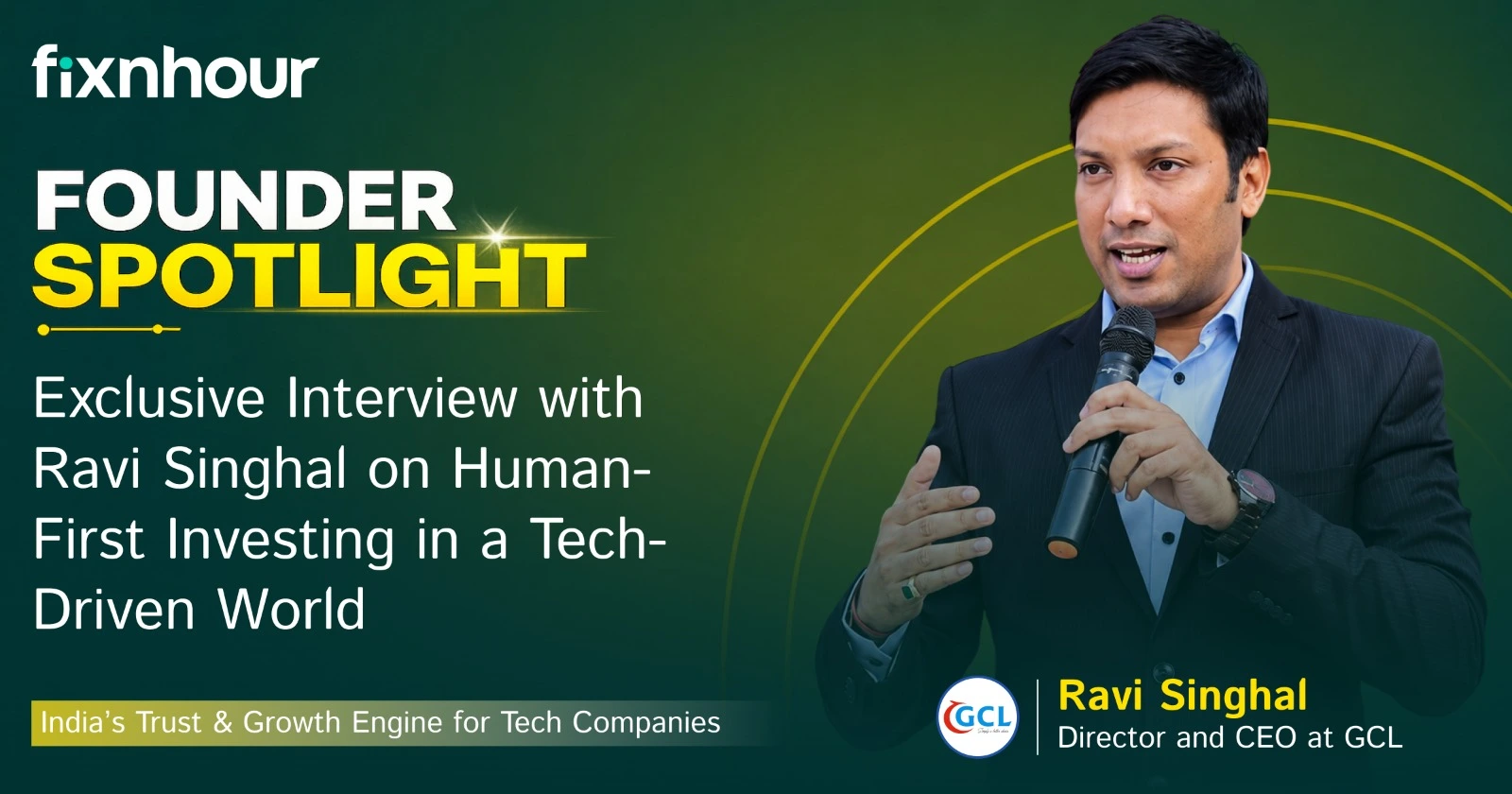
As investing gets faster, easier, and more technology-driven, many investors are drowning in data and do not know how to best make financial decisions. The investment landscape has been revolutionized by trading platforms, AI-driven tools, and real-time market data, but the need for trusted human guidance is greater than ever. Few understand this balance of technology and human insight better than Ravi Singhal, director and CEO of GCL. Having worked across financial markets, broking, technology, and global business environments for over 18 years, Ravi has experienced how investing has transformed from relationship-driven advisory models to today’s digital-first ecosystem.
He has stayed true to a simple but powerful idea throughout his career: successful investing is not just about having information; it’s about understanding, discipline, risk management, and trust. Under his leadership, GCL has emphasized the integration of technological innovation and personalized financial guidance, assisting investors in navigating the complexities of the market with greater confidence and clarity. In this exclusive Founder Spotlight Interview with Fixnhour, Ravi Singhal talks about his professional journey, leadership philosophy, insights into investor behavior, the importance of human-first investing, and his vision for the future of wealth creation in an increasingly technology-driven world.
Who is Ravi Singhal?
In today's investment world, opening a trading account takes minutes, market updates arrive every second, and there are thousands of investment recommendations at the click of a button. But while investors have never had more access to information and technology, many still struggle. Because access doesn’t mean understanding. It is a challenge that has occupied Ravi Singhal, director and CEO of GCL, for about two decades. Ravi has over 18 years of experience in finance, broking, technology, and global markets. He has seen the evolution of investing from the traditional relationship-based advisory services to the app-driven, algorithm-powered trading ecosystem of today.
Ravi says technology has made investing easier, but it has, in the process, lost something important: human guidance. At GCL, he is on a mission to bring human-first thinking back to investing by mixing technology with personalized advisory, risk management, and meaningful investor relationships. His philosophy is straightforward: real investors don’t need more apps. “When it’s really important they need to talk to a real person. Ravi’s experience has spanned across India and international markets, giving him valuable insights into investor behavior, market psychology, risk management, and wealth creation throughout his career. Today he heads GCL, helping investors make better decisions, avoid expensive mistakes, and have more confidence in their market activities. In this exclusive Founder Spotlight Interview, Ravi shares his journey, lessons from nearly two decades in finance, and his vision for the future of investing.
Q1. Talk about your career path. What got you interested in finance and investing?
It is a combination of tech, finance, and real-world market experience that I have had on my journey. I have spent the last 18 years working in a variety of industries, geographies, and roles. Some were in technology. Most of it was in financial markets. The interesting thing was understanding how people make financial decisions. Investing is more than just numbers. It is about behavior, emotions, risk, and trust. And over time I realized a lot of investors have the tools but not the guidance. That insight then helped me figure out how to deal with wealth management and broking.
Q2. Why did you choose to be a leader at GCL?
At GCL we wanted to do something different. The industry has become more automated, more scaled, and more transactional. Although those things are important, we felt that investors still needed human support. Decisions on investments are often uncertain. People want someone who gets their goals, appetite for risk, and concerns. Our mission has always been to marry technology with meaningful human connections. Technology should be used to enhance, not replace, investor trust and human judgement.
Q3. There are a plethora of trading apps available today. What do you think investors are not seeing yet?
I think many investors have information, but they don’t have clarity. Apps give data. Markets are noisy. Social media is a forum for opinions. Most investors really need perspective. Successful investing is not responding to every market move. It’s about risk perception, discipline, and staying focused on the long-term goals. They’re frequently missing from digital-first investing experiences.
Q4. You’ve long talked about “human-first investing.” What’s that?
Human-first investing means understanding that every investor is different. Everybody has different goals. different financial circumstances. Different risk appetites. Different life situations. A human-first approach is about getting to know the person behind the portfolio. Technology can give you information, but it can’t understand human priorities. That’s where experienced advisers still have a role.
Q5. What are the biggest mistakes investors typically make?
One of the biggest mistakes is to decide based on emotions. Fear and greed still drive many investment mistakes. Investors typically buy when they are excited and sell when they are panicked. The other common mistake is chasing returns without knowing risk in the short term. Successful investing requires discipline, patience, and a long-term perspective. The market rewards consistency over impulsiveness."
Q6. How important is risk management to wealth creation?
It is all about risk management. The majority of the investors are interested in returns. Very few are focused on protecting capital. But managing the downside risk is the start of creating lasting wealth. A sound investing philosophy is about more than making money. It’s about not losing what you don’t need to lose. At GCL, the foundation of every conversation we have with our clients is risk management. It is as important to protect wealth as it is to grow it.
Q7. What impact has technology had on the broking industry over the years?
Because of technology, investing has changed in every single way. execution is speedierIt’s easier to get information. Markets have gotten more transparent. That’s a good thing. But technology has also brought us a wave of information overload. Investors are bombarded with updates, alerts, recommendations, and opinions all the time. The problem today is not the information. It is filtering information effectively. Technology should simplify decision-making, not complicate it.
Q8. What part does trust play in financial advisory relationships?
Trust is everything. Advisors are being entrusted with their clients’ hard-earned money and future goals. This is a responsibility that should never be taken lightly. Honesty, consistency, transparency, and long-term commitment are the qualities that build trust. Clients don’t want an individual who is always right. They need someone who will give them responsible advice in good and bad market conditions.
Q9. What have you learned from financial markets over the past 18 years?
The biggest lesson is to be humble. Markets have a way of reminding everybody that certainty is an illusion. No one can know all the results. The best investors prepare, not predict. Markets also teach us patience. Wealth creation is seldom the result of one big decision. Usually, it is the result of many consistent, disciplined decisions made over time.
Q10. What is the new investor's approach to the market?
Begin with education. Know what you’re doing it for. Understand your risk tolerance. Emphasise the value of long-term investment, not short-term speculation. The most important thing is not to feel pressured to know everything immediately. Investing is a voyage. The aim should be to learn always and improve gradually. The sooner good investing habits are established, the better the long-term results tend to be.
Q11. Fixnhour is building a trusted ecosystem of technology companies globally. What do you think about platforms like Fixnhour helping founders and business heads?
“Trust and transparency are becoming a bigger and bigger deal. With so many choices, it’s difficult for business leaders to know which technology partners they can trust. Platforms like Fixnhour make that process easier. By showing founder stories, company expertise, client experiences, and industry insights, founders can make better decisions. I love the emphasis on founder-led storytelling, especially because businesses are built by people, not just products. Sometimes the vision behind a company tells more than a service brochure ever could.
Q12. What advice would you give to founders regarding technology and business partners?
Pick partners on trust and alignment, not just cost. The best partnerships are built on shared values, thinking in the long term and growing together. Think: Do they have my business? Can they help me solve my problem? Is the communication clear? When trouble comes, will they help me? A good partner is part of your team.
Q13. What is your professional motivation today?
Help people make better financial decisions. Over the years, I have seen people build wealth through discipline and patience. I have also seen people losing their money without any proper guidance. If we can help investors avoid costly mistakes and build confidence in their financial journey, that makes a meaningful impact. That is still one of my biggest motivators.
Q14. What do you see as the future of investment?
I think the future is going to be a mix of technology and human expertise. Technology will continue to improve the efficiency, accessibility, and delivery of information. But human guidance will still be required. Investing is really about people and goals and life decisions. The winners will be the firms that can combine digital innovation with trusted human relationships. The future belongs to those organizations that know both.
Conclusion
Ravi Singhal’s journey provides a refreshing perspective in an increasingly automated financial universe. Technology continues to change investing, but his approach is a reminder that successful investing is still very human. Through GCL, Ravi is helping investors navigate complexity with clarity, confidence, and personalization. His philosophy is to challenge the assumption that better outcomes come from more technology.
Instead, he promotes something timeless: technology should serve wisdom, not replace wisdom. As financial markets continue to evolve, leaders like Ravi Singhal show that trust, relationships, and human understanding will be just as critical as innovation. Contact us today