Search is changing more rapidly than ever. While the core principles of SEO keyword research, creating quality content, technical SEO, and building authority continue to hold true, the evolution of AI-driven search engines and generative platforms reshapes the way consumers access, assess, and rely on information for online search. Beyond mere visibility, businesses need to prioritize originality, credibility, expertise, and authentic value in the era of AI-generated content.
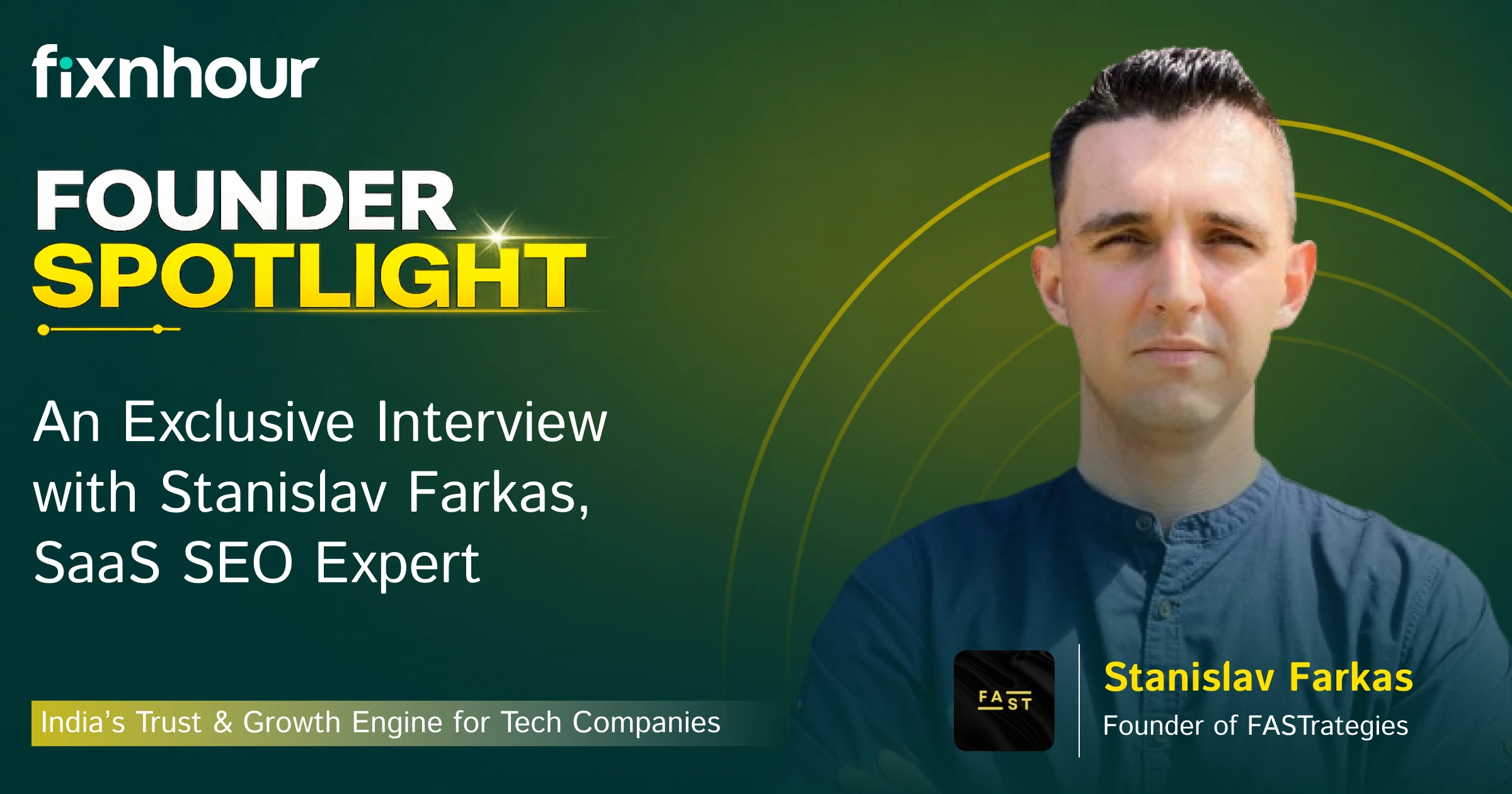
In this Fixnhour exclusive interview with a SaaS SEO and inbound marketing expert with over 5 years of experience, Stanislav Farkas, we'll discuss how SEO is evolving in this new environment. Stanislav discusses SaaS SEO strategy, search intent, technical optimization, link building and more. He also tells you why you might need to use data, creativity, automation, authenticity and human expertise in future to achieve sustainable organic growth.
Key Takeaways
- SEO should be used to grow your business, not just for rankings and traffic.
- Qualified visibility, leads, trust and sustainable growth are better metrics for SEO success.
- The advent of AI is changing the landscape of content generation and information retrieval, leaving creativity and expertise more vital than ever before.
- Businesses can stand out from the competition through strong brand signals, quality backlinks, and human experience.
- In the modern era of SEO, SaaS optimization involves technical optimization, search intent, semantic relevance, content strategy, authority building, AI optimization.
- In both conventional and AI-powered search, establishing brand credibility and trust has become a top priority.
- Though automation grows, human relation is still the value, communities are still valuable, creativity is still the value and a true expertise is still valuable.
- Search of the future will be even more data + creativity, AI + expertise, automation + authenticity, visibility + trust.
Who is Stanislav Farkas?
Search is in one of its greatest transformations in years. For many years, the SEO playbook was a pretty well known one: learn about keywords, produce helpful content, optimize pages, build authority, fix technical issues, and enhance rankings. All that basics still apply. However, things are changing very rapidly around them. Now, people are finding information not just from traditional search results. AI search experiences and generative are driving new discovery journeys. Meanwhile, the rise of AI-generated content is making it easier to publish and more difficult to get noticed. For Stanislav Farkas, this change is more significant than ever, as he strives to establish a second principle Quality first.
Stanislav Farkas has over five years of experience in SEO and Inbound marketing and works with SaaS and digital-first brands in technical SEO, on-page optimization, link building, content strategy, semantic SEO and AI search optimization. He's not just looking to get more traffic. His specialty is to convert organic traffic into a sustainable lead generation funnel that can drive visibility, generate qualified leads and provide long-term company value. But he has another side to his story. Stanislav has also established online and offline communities, managed remote teams and organized location independent and digital nomad retreat projects like Autumn Escape throughout the world. All those factors SEO, tech, remote and community have motivated him to believe sustainable growth can occur when data is combined with creativity and strategy with authenticity. In this Fixnhour Founder Spotlight, we dive into how SEO has evolved into a SaaS business, the importance of the intent behind a search rather than just the volume, how artificial intelligence is transforming search, what link building in an authority-driven internet will look like, and why the human touch will be even more impactful as marketing becomes more automated.
Q1. Stanislav, how did your journey into SEO begin, and what made you decide to specialize in SaaS SEO?
This was all because of my curiosity about the way of business growth online. I was drawn to SEO right off the bat due to its ability to bring together a variety of disciplines. A technical aspect. Data and analytics. Content and creativity is present. There's psychology because you have to know what people are really looking for when they search. Then there's business strategy: traffic on its own isn't worth much if it doesn't lead to a worthwhile effect. The journey to the customer is complex and that's what made SaaS interesting. You aren't just looking to create a visit. Users need to be educated, trust needs to be gained, and skills need to be honed, and then Organic traffic needs to be tied to qualified leads and revenue. This equates to SaaS SEO being a much wider strategic challenge.
Q2. You describe organic search as a growth pipeline rather than simply a traffic channel. What does that distinction mean?
Traffic is just one of the metrics. A business can get loads of organic traffic and only experience minimal revenue gains. This occurs when SEO strategies take the back seat. In my mind I think of organic search as a pipe. To whom should we appeal? What issues are they looking for? What stage are they at in the buying process? What should be their content at this time? What should they do when they get here? Linking SEO to search intent, content, conversion, and business goals can make a major difference. The intent shouldn't just be to drive more traffic. It should be more relevant visibility that leads to growth.
Q3. What do SaaS companies most commonly get wrong when building an SEO strategy?
Many people make the mistake of being driven by the volume of traffic. A keyword that has a thousand searches might seem like a lucrative choice, but it's important to remember that it's people who search for them who will provide the business value and if they don't relate to your product or buying process, it's a value that might not be much. The other error they can make is to publish content without developing a clear plan around it. While more content can lead to more organic growth, businesses may create dozens or hundreds of articles in the hope that they will lead to the same. It doesn't. You have to know what are the intent of the search, topical relevance, internal linking, technical foundations, authority and content relationship with the product. These work best when they are working together within a system of SEO.
Q4. You work across technical SEO, on-page optimization, content, and link building. Which one matters most?
It will depend on the current status of the company. Even a good content website can have technical issues that can cause it to have trouble. If your website is technically perfect, but lacks content that is useful, there's not much to rank it for. Good content can also be limited in competitive markets if it does not have authority. That's why I don't believe that SEO should be done in isolation as it were. Technical SEO sets the groundwork. Content is what makes value and relevance. On page optimization can aid search engines and users recognize that value. Links and mentions have a positive impact on authority. The strategy should identify the constraint that is limiting growth and make a priority of it.
Q5. AI is changing how people search. What does “AI Search Optimization” mean to you?
The search trip is growing. While traditional search engines are still highly relevant, AI-powered tools are becoming more popular for users to conduct research, compare options, and get immediate answers. That implies that brands must break out of the mould of ranking one page for one keyword. Clear entities are required. You should have topical authority. You must have reliable information. You're looking for repeated brand signals. You must have answers to real questions, answers that are clear. But your value is found outside your website, in other people's mentions and authoritative sources and you need it. The platforms and algorithms will keep developing but the basic idea is: Be easily understood by humans and machines in terms of who you are, what you know and why your information should be trusted.
Q6. With AI making content creation incredibly cheap, do you think the internet is heading toward a content-quality problem?
Let's see the challenge already here. AI can significantly lower the expenses of creating words. However, word production and value production are not the same. If 10 companies have the same AI system and each one writes the same article about the same topic, there is a possibility that the web can be inundated with similar articles. This makes a person's first-hand experience more valuable. Customer insights matter. Expert opinions matter. Original research matters. Real examples matter. Editorial judgement is important. While AI can enhance the efficiency of marketers, brands must have something to say. It may not be the number of published contents that will become a future advantage. It can result in the creation of the most helpful and trustworthy papers.
Q7. Link building remains one of your key areas of expertise. What does high-quality link building look like today?
The relevance and quality is most important. However, a backlink is not worth anything by itself. These factors to take into account include the website, context, audience, content quality, topical relevance and natural placement. Link building should be part of an overall authority building plan. It can impact search visibility, but it can also introduce a brand to audiences, and boost their industry footing. I feel that sustainable link building should be more like digital PR, partnerships, useful content and good industry relationships than just link building at scale.
Q8. How do you think AI will change the role of SEO professionals over the next few years?
Many executions will be quicker. Research can be accelerated. Content briefs can get quicker. Data analysis can be made quicker. Technical investigation may be speeded up. Some repetitive tasks can be progressively automated. This is a call to SEO folks to get up a value chain. The application of strategy is more important. Judgement is needed more than ever. The awareness of customer is growing in significance. The meaning of the data becomes more important to know. Now being able to relate SEO efforts to business results becomes critical. It's important to remember that the best SEO specialists will not be "competing" with AI. They will gain knowledge on how to leverage AI tools and will bring the context, creativity, and strategic thinking that AI cannot do on its own.
Q9. You have managed remote teams and are also passionate about location-independent work. What has remote work taught you about leadership?
Clarity is key to remote leadership. A lot of information is transferred informally when everyone is in the same office. When you have distributed teams, communication must be more conscious. Humans require clarity of expectations. They need ownership. Good documentation is required. They need to understand priorities. Trust is also of utmost importance. The constant recourse to "Are they working? or not working??" is not a healthy way to establish a remote culture. It is critical that you concentrate on results. With people knowing what they're accountable for and a chance to execute, remote teams can be very effective.
Q10. You have also built communities and organized experiences such as Autumn Escape. What did community building teach you that SEO couldn't?
Web traffic can be driven to a website through SEO. Community is your teacher of what it takes to keep people connected. It's a very different lesson that. People want belonging. They want to have these conversations for a reason. They desire to connect with others who get them. Arranging offline events for digital nomads and location independent individuals proved to be a powerful reminder of the value of real-life connections. It also brought about a change in my thinking about marketing. So, analytics dashboards, conversion rates, backlinks, and any search query is really a person behind it all. Remembering that makes marketing a better thing.
Q11. Do you see a connection between community building and modern SEO?
Absolutely. When there are vibrant communities, there are certainly many signals a brand can wish for. Individuals talk about the brand name. They share content. They recommend resources. These generate word of mouth. They talk about the company on various platforms. Those activities can help build awareness and authority. What communities build is more than just optimised it's real trust. AI-driven information is becoming more prevalent, and trustworthy communities and known experts could gain increased importance in shaping people's trust in information and brands.
Q12. What is the biggest lesson you've learned from working with different brands, teams, and communities?
There are few simple growth formulas. While one SaaS business may find success with a particular strategy, it may not be the same for another. Every firm's products are different, customers, markets, and authorities are different, resources are different and the competitive environment is different for each firm. Knowing is the first step in strategy. Understand the business. Understand the customer. Understand the market. Know about the data available at the time. Next, decide what is to be given top priority. It's good to follow the good practice, but copying somebody else's playbook is dangerous.
Q13. What advice would you give SaaS founders investing in SEO today?
Focus on the longer term but take a regular measure. While the benefits of SEO can be enormous, it takes a certain level of consistency to reap them. Don't follow every latest fad. Develop good technical groundings. Know your customers inside and out. Develop content about authentic issues. Develop genuine authority. Build relevant relationships. Leverage AI for efficiency without compromising originality. And correlate SEO data with business results. When it becomes consistent in converting to qualified leads, then organic search is no longer a marketing strategy, it's a marketing engine. It turns into a part of the company's growth framework.
Q14. Looking five years ahead, what do you believe the future of search and digital marketing will look like?
I believe the lines are going to get blurring between SEO, content marketing, brand building, digital PR, AI optimization and community. Search will be expanded to more places. Users can navigate from one traditional search engine to AI assistants, social platforms, communities and specialized tools in the same buying journey. It's a time for companies to consider discoverability on a wider scale. The objective will NOT be just: What is the secret to having the top spot in Google rankings? It will be becoming more and more: How do we be seen as one of the most trusted and visible sources wherever our audience turns to for answers? AI will make a significant impact in that future. I don't think that the future is less human, though. I believe that authenticity, expertise, creativity, relationships and community only grow more important as automation is more prevalent.
About Stanislav Farkas
Stanislav Farkas is a SaaS SEO and inbound marketing specialist with over 5 years of experience supporting digital-first business with a focus on improving their organic visibility and sustainable growth. His specializations are technical SEO, on page optimization, search intent modelling, link building, off page optimization, content strategy, semantic SEO, how to optimize content using AI search tools, and Saas content marketing. In addition to SEO, Stanislav has had experience of managing remote teams and building online and offline communities. He's also created international coliving trips like the digital nomad and location-independent professional's Autumn Escape.
His mission is to help companies stand out, be found, and be ranked for their efforts where it matters most, with quality-first SEO, intelligent automation and thought leadership. The philosophy of his own personal journey is captured in the following: “When you do what you love, you find no enemies.”
Final Thoughts on the Expert
Stanislav Farkas's journey is a testament to the changes occurring within the SEO industry as a whole. The primary focus of SEO started to be website optimization for search engines. It grew to content. The technical performance became more complex. Link building evolved. The concept of user intent came to the fore. Brands started to link up to broader growth strategies and recognise the value of connecting to organic visibility. But now it's AI that is forcing another change. Google's future of SEO might not be limited to where pages rank in 10 blue links. With the growing number of search engines, AI platforms, communities, and digital experiences, companies are required to think about how they're understood, referenced, trusted, and surfaced.
The future of technical SEO and content marketing, link building, AI optimization, remote leadership, and community building can be interestingly viewed through Stanislav's combination. Because optimization can help a company become visible. Visibility is not enough for sustainable growth. Visibility needs relevance. Relevance needs authority. Authority needs credibility. Then, the final requirement for credibility is trust. The most significant possibility that AI offers to SEO professionals is not just automation, but the ability to do more work. It's a chance to spend more time understanding the individuals behind the searches, and less time just repeating the execution of the same search. Talk to our experts