AI is transforming the landscape of customer support for tech businesses, automating processes, enhancing customer service, and fostering trust. Support is not just a department anymore, especially for SaaS and AI businesses, but a crucial component of customer retention, efficiency, product enhancements, and business expansion.
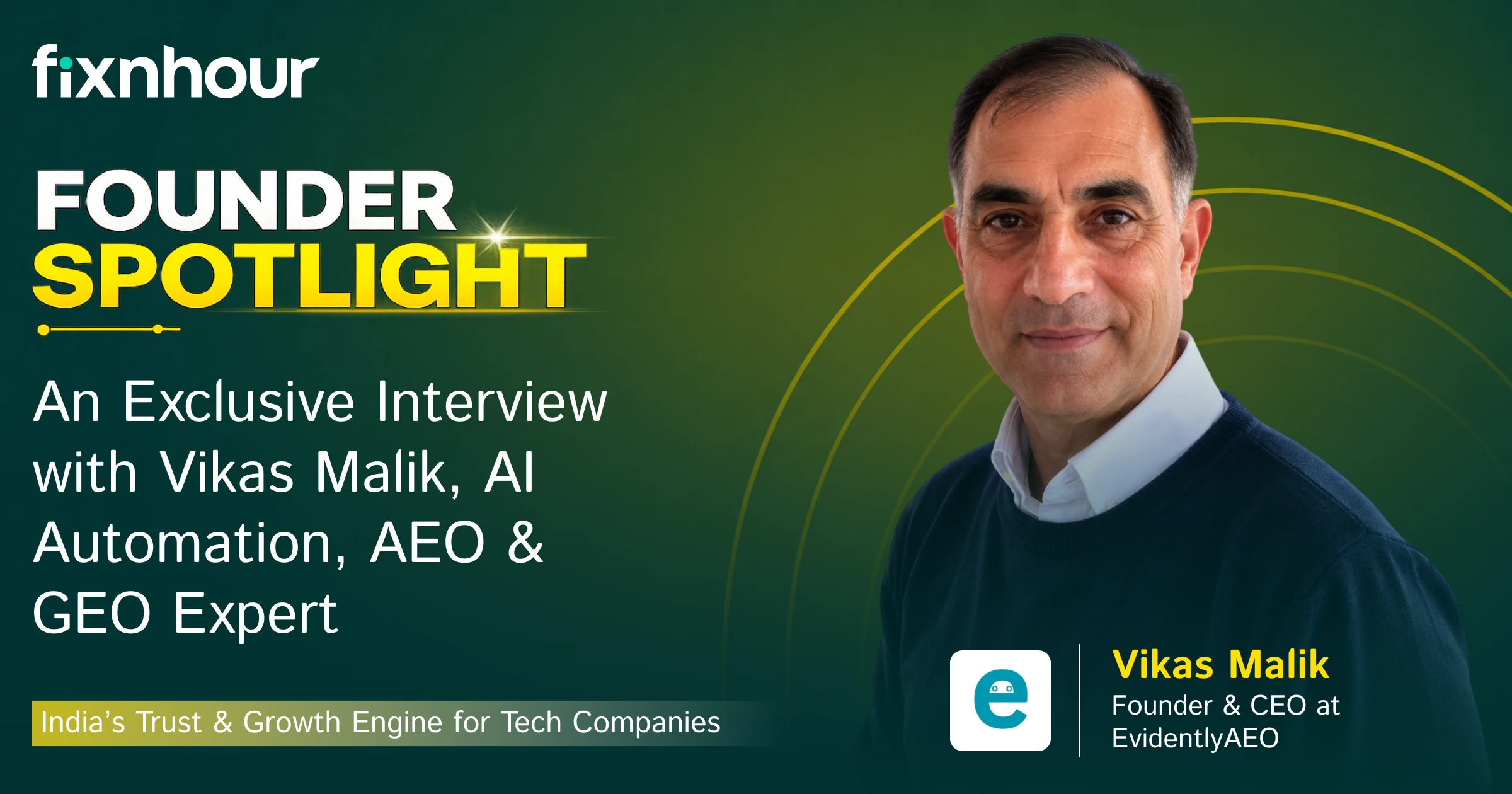
Vikas Malik has over two decades of experience creating and growing global Customer Support, Professional Services, and Escalation teams in SaaS and AI business models. He has experience in AI automation, operational excellence, customer experience, AEO, GEO, MarTech, incident management, and support monetization. He's worked his career on optimizing resolution times, scaling better, automating repetitive support issues and building better customer experiences with intelligent systems and structured processes.
Key Takeaways
- Customer support is a cost of operation, but it is more than that. If done strategically, it can lead to better customer retention, build trust in the customer, provide product insights, improve margins, and provide direct services revenue.
- Chatbots can revolutionize customer support by intelligently categorizing customer cases, automatically identifying problem areas, automating knowledge, providing self-service options, predicting future issues and resolving them, and enabling quicker response to issues.
- Don't aim for automation as an end goal. It is important to assign repetitive, predictable tasks to AI and leave the complex judgmental, expert, communication and empathy tasks to the experienced humans.
- Reliability and support directly impact SaaS business performance. These improvements can lead to faster resolutions, less critical escalations, proactivity in communication, and improved customer experiences that can all positively impact business economics and retention.
- AEO and GEO are now gaining significance for gaining customers. Brands must stand out and establish credibility not just on traditional search engines, but also on AI-driven discovery platforms.
- Successful companies will be leveraging AI automation to achieve operational excellence. Product intelligence, customer support, discoverability, and customer trust should not be siloed and should be integrated and combined.
- The story of Vikas Malik is a cautionary tale for SaaS founders: technology and great customer experience and operations can deliver business value.
Who is Vikas Malik?
Customer support is still considered as a department that comes into the picture when things go wrong for many technology companies.But for Vikas Malik , that way of thinking is outmoded.Vikas has 20+ years of experience building and leading customer support, professional services, and escalation teams in SaaS, AI environments, globally. His career has spanned hyper-growth, significant platform shifts, high severity incidents, and instances where every minute of downtime may have a direct impact on customer trust, retention and revenue.His work is increasingly at the crossroads of several areas of importance for today's business: AI Automation, Operational Excellence, Customer Experience, and Monetization.Vikas's emphasis on support is one that sees it through a more cost-effective lens, but one that is also designed to be faster, more proactive, more scalable, and more commercially valuable.
His methodology includes frameworks for L1-L3 escalation, executive incident command, intelligent case triage, automated diagnostics, knowledge automation, proactively detecting incidents, and AI-powered self-service.The results he calls out are quite meaningful: 37-68% MTTR reduction, 30-46% fewer critical escalations, 28%+ case deflection via AI-powered automation and 37%+ on support operating costs reduction. His efforts have also spread to premiumizing support and professional services, as well as packaging and delivering them as outcomes.His current passions are AI Automation, Martech, Answer Engine Optimization (AEO), Generative Engine Optimization (GEO), SaaS and AI platforms, all of which illustrate how fast customer discovery and customer service is being transformed by AI.This Fixnhour Founder Spotlight delves into Vikas Malik's 20-year career, what lessons leaders can take from high-severity incidents, the impact of AI on customer support, and the importance of leveraging support for product roadmaps and how customer operations can become a growth engine for SaaS businesses.
Q1. Vikas, after more than 20 years across technology, support, and professional services, what have been the biggest shifts you've witnessed?
One of the greatest things that have changed is the growing linkage between technology operations and business outcomes.The focus on support was previously seen as a reactive activity. An object gets broken, a ticket is issued and the support team resolves the ticket.That model is NOT sufficient anymore.In the SaaS and AI industry, reliability is a factor that directly impacts revenue, retention and reputation.Customers want quicker resolutions, more transparency, anticipatory communication, and more and more, preventative solutions. reflects this growing connection between technology expertise, reliable service delivery, and business outcomes.The second big change is automation.Now, AI can be applied to triage, diagnostics, knowledge discovery, routing, self-service and proactive incident discovery.That alters the economics of support drastically.
Q2. You describe support as something that can become a revenue-generating business rather than a cost center. How does that transformation happen?
It begins by reshaping the ways leadership measures supports.But looking at its cost alone, the only natural goal is to cut costs.Support impacts retention, expansion, customer satisfaction, product adoption and trust.The outcomes have economic worth.But there's also direct monetization.Businesses can develop superior support packages, advanced professional services, outcome based services, quicker response time guarantees, professional advisory programs, and more.The objective isn't to charge customers for every interaction.The key is to see where differentiated service and deeper knowledge can provide sufficient value added for customers to want to spend money on.That's when support becomes a part of the business plan.
Q3. You have achieved significant reductions in MTTR. What separates organizations that resolve incidents quickly from those that remain trapped in firefighting?
Preparation.In serious events, you don't want to see people making the decision for the first time on who gets what.Escalation paths are needed to be clearly defined.There needs to be a leadership of the incident.You must have some sort of communication.The right telemetry and diagnostic information is required.And teams should be familiar with when to transfer an issue from one escalation level to another.Technical fix is only part of incident management.There is also a need for coordination.The best organisations develop those skills in advance of the critical incident.
Q4. You've been involved in high-severity incidents where customer trust and revenue are at risk. What have those moments taught you about leadership?
Leaders are exposed very soon in high severity incidents.People seek clarity when there is a lot of pressure.The leader must be able to distinguish between fact and assumption, and assertive enough to keep the organization going.Typically, there are several conversations going on at once.Engineering needs to investigate.Support must be aware of the impact on customers.Executives need visibility.Customers need communication.There has to be someone to keep the whole picture.The key to being calm is not being unhurried.It's about making urgency not chaos.
Q5. Where is AI already creating the biggest measurable impact inside customer support?
One of the best prospects is decreasing repetitive manual labour.Take case triage.In the past, someone had to read a ticket, assess its priority, assign a severity, collect account details and pass it on to the appropriate team.Before an engineer even touches the case, AI can help with classification and enrichment.Another key area is diagnostics.AI capabilities can link logs, telemetry, past incidents or known solutions to quickly investigate.There's also self-service.Customers can be guided on a reliable basis immediately on common matters and a significant percentage of cases can be solved without manual action.That's how automation can enhance and boost customer experience and economics.
Q6. You report more than 28% case deflection through AI-driven self-service and automation. How do you automate support without making the customer experience feel impersonal?
This is very crucial.Automation should eliminate friction, NOT eliminate human.Users do not have to deal with a person with every trivial detail. There may be an experience of getting a correct answer right away, which might be the better experience.However, where there is an issue that's complicated, sensitive, commercially significant and frustrating, there has to be an effective pathway to a person who has the knowledge to solve the problem.The target should be:Automate things that machines can deal with efficiently; and raise human interactions to areas where judgement, empathy and expertise add more value.Lack of automation presents barriers.Good automation translates to speed.
Q7. Support teams often possess enormous amounts of customer intelligence. Why do companies struggle to turn that information into better products?
Because of the fact that the information is typically dispersed.Support represents one aspect of the customer experience.Product sees another.In engineering, there are technical problems.SRE sees reliability.Commercial concerns are heard by sales and customer success.When such signals are missing, companies will continuously address symptoms and fail to address root causes.There should be a formal system for implementing an iterative cycle between Support and Product and Engineering.What issues repeat?What is confusing about these features?What events impact the most valuable customers?What issues are causing unnecessary support volume?Support becomes downstream of Product if those observations are made into decisions for the roadmap.It is now an input to Product.
Q8. You have reduced support operating costs significantly. Is AI primarily a cost-cutting opportunity, or is that the wrong way for leaders to think about it?
One advantage is cost reduction, but I think only looking at headcount reduction is missing a golden opportunity.AI can benefit the velocity.It can help to make the plant more uniform.It can facilitate pro-active support.It can accommodate more people and more cost for teams without proportional cost increases.It can provide experienced engineers with a better context prior to investigation.Most of all, it can give humans more time to work on complex problems and valuable customer interaction.Rather than simply asking:How many jobs can be automated with AI?It is:“How better can this organisation be made with AI?”
Q9. As someone working across AEO and GEO, how do you see AI changing the way SaaS companies are discovered and trusted?
Discovery is getting divided.While traditional search is still relevant, customers are now asking the AI systems specific questions, and they do expect summaries of recommendations.That's a new challenge for brands.Just thinking about ranking a webpage isn't sufficient anymore.Businesses must consider if their expertise, authority, product information, and brand signals can be interpreted and brought to the forefront of AI-driven discovery environments.That is where Answer Engine Optimization and Generative Engine Optimization come into play.However, at the heart of it is trust.From Google, AI assistant, recommendation or other channels, there should be clear authority and consistent information for credible brands.
Q10. What do SaaS founders often underestimate when they begin scaling customer support globally?
Complexity.What works for the first 50 customers doesn't necessarily work for 5,000.Introducing other time zones, customer expectations, service levels, products, integrations, languages, and levels of technical complexity as companies go global.You must have processes but not be bureaucratic.Automation, but not at the expense of creating poor customer experiences.A specialization is required without building silos.But you must scale and keep the support costs proportional to the number of customers!Planning that operating model in the early stages offers a big benefit.
Q11. How should Product, Engineering, SRE, Support, and GTM teams work together in an AI-first SaaS organization?
They require common goals.Customers are not concerned with any internal department having responsibility for a problem.They know if the product is working or if the company is doing something about it when it's not.Product optimises for feature velocity, Engineering optimises for delivery, SRE optimises for uptime, Support optimises for ticket closure and GTM optimises for revenue, then you can achieve local optimisation without improving the overall customer experience.Important: shared metrics, structured feedback loops.If you were to have an incident, understandings gained from the incident should help to enhance engineering.Product should be shaped by Customer signals.GTM should benefit from reliability enhancements.The insights provided should help to support retention.This is how functions transition from departments to a system.
Q12. After two decades of leadership, what has changed most about the way you manage people?
At the start of your career, you may think that one of the hallmarks of leadership is to be a resolute problem solver.Leadership is the art of fostering an atmosphere in which correct solutions may grow out of a group of people, experience teaches.People need clarity.They need ownership.They must be given background information on the significance of their work.They need psychological safety to raise issues as soon as they're problems, not incidents.Leaders' behavior is also observed during challenging moments.Panic, when it is created by the leader, spreads.When the leader is calm, transparent and wants to solve the problem, not find the fault, the team changes its behavior.In times of crisis, culture really comes into view.
Q13. What advice would you give founders building SaaS or AI platforms today about customer trust?
Think trust now, before the problems occur.Trust is inherent in the product.Built in reliably.It is an integral part of security.It is an integral part of communication.It is embedded in your ability to identify issues and to be clear about what is going on.AI adds another layer, as customers are becoming more interested in how AI systems are making decisions, and how their information is being used.Trust should be part and parcel of the business, rather than its responsibility to customers.
Q14. Looking at the next five years, what are you most excited to build at the intersection of AI automation, SaaS, AEO, GEO, and customer operations?
I feel we're going towards more intelligent and proactive operating models.Problems will be identified before customers even realize that there is one.We will see AI's ability to connect infrastructure, product usage, customer history, and knowledge.Normal resolutions will be more independent.Human experts will focus on complex scenarios and situations that involve judgement.AI is also impacting the way companies are found, assessed, and trusted even before a customer calls them.This interesting relationship between discovery, customer experience, operations and retention.The point I'm going to look at is how do I create systems and businesses that link those things together.After all, the aim of AI automation shouldn't be to save money.It should make companies faster, more reliable, more trusted and more valuable to customers.
About Vikas Malik
Vikas Malik is a technology and operations leader with over 20 years' experience of building and operating global customer support, professional services, and escalation teams for SaaS and AI-based products.His areas of expertise include AI automation, AEO, GEO, MarTech, SaaS, Ai platforms, Incident management, Customer support transformation, Professional services and monetisation.In his experience, Vikas has seen outcomes such as: 37–68% decrease in MTTR; 30–46% fewer critical escalations; 28%+ case deflection from AI-driven automation; and 37%+ decrease in support operating costs, to name a few, plus multi-million dollar services and support monetization.His approach to operating is focused on making support a scalable, intelligent, customer-centric and revenue-generating function, rather than a cost center.And, maybe the simplest way to state that philosophy is this:Do not "clean up" the incident. Improve and get insight from it, automate what can be automated, make the product better and make customer trust your competitive edge.
Final Thoughts on the Founder
Vikas Malik's journey brings to light an intriguing shift within SaaS and AI firms.Customer support has long been considered as a last-mile player in the value chain.Marketing generated demand.Sales acquired customers.Product built features.Engineering shipped them.And Support took care of all the problems that arose later.That particular model is going the way of the dinosaur.Modern support systems sit on some of the most valuable information within a tech company; it's what problems customers have, where products fall, what frustrates them, what makes them likely to leave, what they'll pay for to avoid leaving, and more.With the power of AI, that information becomes even more potent.Combining case history, telemetry, diagnostics, knowledge base, customer signals and incident patterns will enable support to shift from ticket resolution to predicting customer operations.Vikas's approach to automation of support is therefore more than just that.
It's a matter of changing the economics and strategic function of the role.Reduce MTTR.Prevent repeat incidents.Automate routine work.Improve margins.Incorporate customer data into Product.Create premium services.Protect retention.Strengthen trust.Where applicable, make some money.He has had a unique experience with AEO and GEO.AI is starting to impact the entire customer journey – from finding a business to getting assistance after customers buy from them.Businesses that do know both can definitely benefit.In the age of AI, the customer is the key to victory, and the customer retains the key to victory: the same thing – the asset.Trust. Talk to our experts