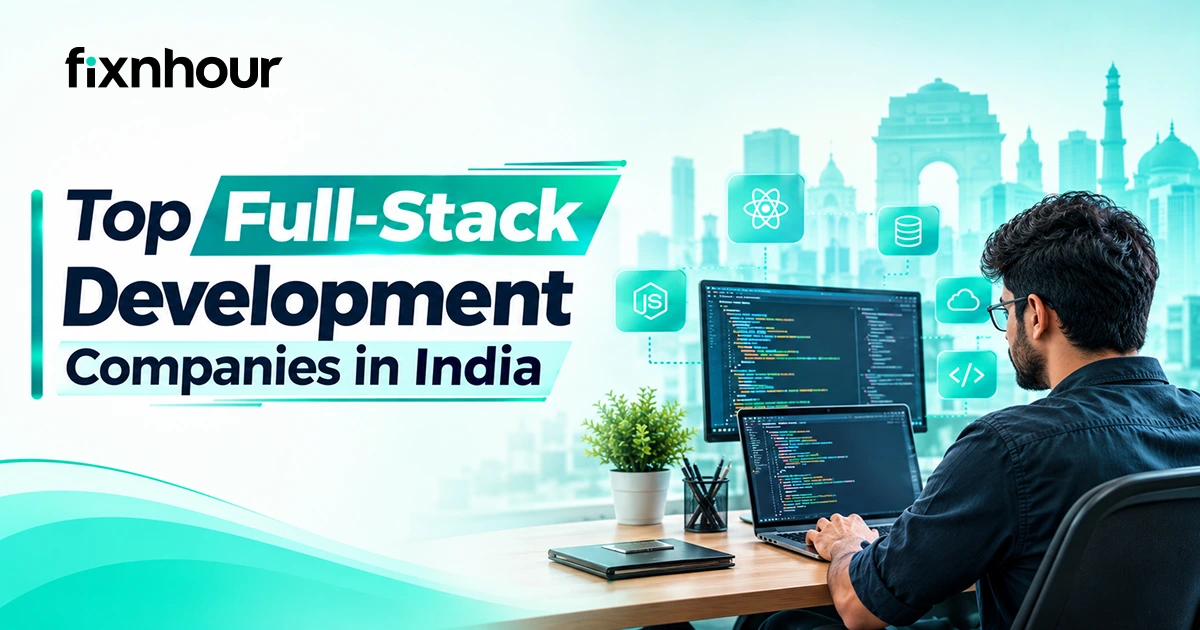
India has become a preferred destination for businesses looking for reliable, scalable, and cost-effective software development services. The top full-stack development companies in India help startups, SMEs, and enterprises build complete digital products by managing frontend interfaces, backend systems, databases, APIs, cloud infrastructure, testing, deployment, and ongoing maintenance.
From SaaS platforms and e-commerce solutions to enterprise applications and MVPs, Indian development companies work with modern technologies such as React.js, Next.js, Node.js, Python, Java, PHP, MongoDB, PostgreSQL, AWS, Azure, Docker, and Kubernetes. This guide explains leading companies, services, costs, benefits, selection criteria, challenges, and emerging full-stack development trends.
Quick Answer
The best full-stack development companies in India combine frontend and backend expertise with cloud, database, API, security, and DevOps capabilities. Fixnhour businesses should compare companies based on relevant portfolios, developer experience, technology stacks, client reviews, communication, scalability, security practices, pricing models, and post-launch support before choosing a development partner.
Key Takeaways
Choosing a full-stack development company becomes easier when businesses understand the technical, financial, and operational factors involved. Web Development Companies in India: India offers development partners for projects ranging from early-stage MVPs to complex enterprise platforms. These key takeaways summarize the most important considerations businesses should evaluate before selecting a full-stack software development partner.
- India offers a large pool of experienced software developers.
- Full-stack teams handle frontend and backend development.
- Development costs depend on features, complexity, technologies, and team size.
- React, Node.js, Python, Java, and cloud technologies remain widely used.
- Startups can accelerate MVP development with integrated development teams.
- Portfolio quality and technical expertise should outweigh low pricing.
- Security, scalability, testing, and code ownership must be discussed early.
- Post-launch maintenance is important for long-term application performance.
Statistics & Insights
India's software development ecosystem continues expanding as domestic and international companies invest in digital transformation, SaaS products, cloud applications, AI-powered platforms, and mobile-first experiences. Python & Django Development Companies in India: Strong engineering talent, established IT hubs, global delivery experience, and comparatively competitive development costs have positioned India as an important destination for outsourced software and full-stack development.
Why India Is a Major Full-Stack Development Hub
Major technology centers such as Bengaluru, Hyderabad, Pune, Chennai, Delhi NCR, Mumbai, Ahmedabad, Jaipur, and Noida have strong developer ecosystems. Indian development companies also have significant experience working with clients across the United States, United Kingdom, Europe, Australia, and the Middle East.
Technologies Driving Full-Stack Development
Modern Indian full-stack teams commonly work with:
- Frontend: React.js, Next.js, Angular, Vue.js and TypeScript
- Backend: Node.js, Python, Django, Java, Spring Boot, PHP and .NET
- Databases: PostgreSQL, MySQL, MongoDB and Redis
- Cloud: AWS, Microsoft Azure and Google Cloud
- DevOps: Docker, Kubernetes, GitHub Actions and CI/CD pipelines
Top Full-Stack Development Companies in India
India has hundreds of software development providers serving different industries, technologies, and project sizes. WordPress Developers in India The right company depends on project complexity, budget, required technology stack, industry expertise, scalability needs, and engagement model. The following established Indian technology companies are worth researching when creating a shortlist for full-stack development requirements.
| Rank | Company | Description | Key Strengths |
|---|---|---|---|
| 1 | Tata Consultancy Services (TCS) | TCS is a leading Indian technology and IT services provider offering full-stack development, cloud transformation, AI, data analytics, digital engineering, and enterprise modernization for large-scale business applications. | Enterprise application development; Cloud transformation; AI & data solutions; Digital engineering; Global delivery |
| 2 | Infosys | Infosys provides technology consulting and digital services focused on full-stack development, application modernization, cloud computing, automation, data analytics, and scalable enterprise technology solutions. | Application modernization; Cloud solutions; Digital engineering; Enterprise consulting; Data & automation |
| 3 | HCLTech | HCLTech delivers application engineering, cloud computing, digital platforms, cybersecurity, AI, infrastructure, and enterprise software services for organizations managing complex technology environments. | Digital engineering; Cloud-native development; Enterprise applications; Cybersecurity; AI & infrastructure |
| 4 | Tech Mahindra | Tech Mahindra provides application development, digital engineering, cloud, AI, enterprise integration, and transformation services to help businesses modernize and scale their digital systems. | Application development; Digital transformation; Cloud engineering; Enterprise integration; AI & automation |
| 5 | LTIMindtree | LTIMindtree offers application development, digital engineering, cloud transformation, data analytics, enterprise solutions, and modernization services for businesses building and upgrading digital platforms. | Digital engineering; Cloud transformation; Data & analytics; Enterprise solutions; Application modernization |
| 6 | Persistent Systems | Persistent Systems specializes in digital engineering, software product development, cloud transformation, AI, data solutions, and enterprise modernization for scalable and modern applications. | Product engineering; Cloud-native solutions; Software modernization; Data & AI; Application development |
| 7 | Mphasis | Mphasis provides application development, cloud transformation, infrastructure, automation, and digital engineering services designed to modernize enterprise technology environments and customer experiences. | Application development; Cloud services; Digital engineering; Enterprise modernization; Automation |
| 8 | Coforge | Coforge provides application engineering, cloud transformation, data solutions, intelligent automation, AI, and enterprise technology services for organizations pursuing digital transformation. | Application engineering; Cloud services; Data solutions; Intelligent automation; AI-driven solutions |
| 9 | Cybage Software | Cybage Software focuses on digital product engineering, software development, cloud engineering, DevOps, quality engineering, data solutions, and technology consulting for modern digital products. | Product engineering; DevOps services; Cloud development; Quality engineering; Data & digital solutions |
| 10 | Simform | Simform provides digital product engineering, full-stack development, cloud engineering, DevOps, application modernization, data engineering, and AI solutions for scalable digital products. | Product development; Cloud engineering; DevOps services; Application modernization; Data & AI solutions |
1. Tata Consultancy Services (TCS)
Tata Consultancy Services (TCS) is one of India’s largest technology and IT service providers, helping enterprises develop, modernize, and manage complex digital applications. The company offers expertise across full-stack application development, cloud transformation, artificial intelligence, data analytics, digital engineering, and enterprise modernization. TCS supports organizations across industries with scalable technology solutions and global delivery capabilities. Its extensive technical resources and enterprise experience make it suitable for businesses managing large-scale digital transformation and application development initiatives.
Key Strengths:
- Enterprise application development
- Cloud and digital transformation
- AI and data solutions
- Digital engineering services
- Global delivery capabilities
2. Infosys
Infosys is a global technology consulting and digital services company helping organizations build, modernize, and manage enterprise applications. Its capabilities include full-stack development, application modernization, cloud computing, automation, data analytics, digital engineering, and enterprise technology consulting. Infosys works with businesses undergoing large-scale digital transformation and supports the development of scalable, secure, and integrated technology environments. Its combination of consulting expertise, engineering capabilities, and global delivery resources makes it relevant for complex enterprise software development projects across multiple industries.
Key Strengths:
- Application modernization
- Cloud solutions
- Digital engineering
- Enterprise technology consulting
- Data and automation services
3. HCLTech
HCLTech is a global technology company providing application engineering, cloud computing, digital platforms, cybersecurity, artificial intelligence, infrastructure, and enterprise software services. The company helps organizations develop new digital products while modernizing existing technology environments and integrating applications across complex enterprise ecosystems. Its engineering capabilities cover different stages of software development, from architecture and application creation to cloud migration and ongoing modernization. HCLTech is particularly relevant for enterprises requiring scalable technology solutions supported by extensive engineering expertise and global delivery capabilities.
Key Strengths:
- Digital engineering
- Cloud-native development
- Enterprise applications
- Cybersecurity capabilities
- AI and infrastructure services
4. Tech Mahindra
Tech Mahindra provides technology consulting, application development, digital engineering, cloud, artificial intelligence, and enterprise transformation services to organizations across multiple industries. Its development capabilities help businesses create modern applications, integrate enterprise platforms, migrate workloads to cloud environments, and improve existing digital systems. The company combines engineering expertise with industry-focused consulting to support complex transformation initiatives. Tech Mahindra can be considered by enterprises seeking scalable application development capabilities alongside cloud engineering, automation, system integration, and broader digital modernization services.
Key Strengths:
- Application development
- Digital transformation
- Cloud engineering
- Enterprise integration
- AI and automation solutions
5. LTIMindtree
LTIMindtree is a technology consulting and digital solutions company providing application development, digital engineering, cloud transformation, data analytics, and enterprise technology services. It supports businesses developing new digital platforms as well as organizations modernizing legacy applications and technology infrastructure. Its capabilities cover cloud-native development, enterprise applications, data-driven solutions, and digital experience engineering. With experience serving organizations across different industries, LTIMindtree is suitable for enterprises seeking integrated technology services for complex application development, modernization, cloud adoption, and digital transformation initiatives.
Key Strengths:
- Digital engineering
- Cloud transformation
- Data and analytics
- Enterprise solutions
- Application modernization
6. Persistent Systems
Persistent Systems specializes in digital engineering, software product development, cloud transformation, artificial intelligence, data solutions, and enterprise modernization. The company works with enterprises and technology businesses to develop scalable applications, modernize existing software, and build cloud-native digital products. Its engineering-focused approach covers different stages of the software lifecycle, including architecture, development, integration, testing, and modernization. Persistent Systems is particularly relevant for organizations looking for product engineering expertise combined with capabilities in cloud platforms, data technologies, AI, and modern application development.
Key Strengths:
- Product engineering
- Cloud-native solutions
- Software modernization
- Data and AI
- Application development
7. Mphasis
Mphasis provides application development, cloud transformation, infrastructure, automation, and digital engineering services for organizations seeking to modernize technology environments and customer experiences. Its capabilities include developing enterprise applications, migrating workloads to cloud platforms, integrating digital systems, and improving existing software architectures. The company combines engineering expertise with automation and cloud technologies to support scalable digital transformation initiatives. Mphasis can be suitable for enterprises requiring application modernization, cloud adoption, digital engineering, and technology services designed around evolving operational and customer requirements.
Key Strengths:
- Application development
- Cloud services
- Digital engineering
- Enterprise modernization
- Automation solutions
8. Coforge
Coforge is a digital services and technology solutions provider offering application engineering, cloud transformation, data solutions, automation, artificial intelligence, and enterprise technology services. The company works with organizations across multiple industry verticals to develop applications, modernize legacy systems, adopt cloud technologies, and improve digital operations. Its engineering capabilities support businesses throughout different stages of application transformation and development. Coforge is relevant for enterprises seeking integrated technology expertise covering modern software engineering, intelligent automation, data-driven solutions, cloud adoption, and broader digital transformation initiatives.
Key Strengths:
- Application engineering
- Cloud services
- Data solutions
- Intelligent automation
- AI-driven solutions
9. Cybage Software
Cybage Software focuses on digital product engineering and technology consulting, helping businesses develop, modernize, test, and manage software products and applications. Its capabilities include software development, cloud engineering, DevOps, quality engineering, data solutions, and digital transformation services. The company supports different stages of product development, from engineering and deployment to testing and optimization. Cybage is particularly relevant for technology businesses and enterprises looking for product engineering expertise combined with modern development practices, cloud capabilities, automated delivery processes, and software quality services.
Key Strengths:
- Product engineering
- DevOps services
- Cloud development
- Quality engineering
- Data and digital solutions
10. Simform
Simform is a digital product engineering and software development company helping businesses design, develop, modernize, and scale technology products. Its capabilities include full-stack application development, cloud engineering, DevOps, application modernization, data engineering, and artificial intelligence solutions. The company works with businesses seeking modern software architectures and scalable digital products while supporting different stages of product development. Simform is suitable for organizations requiring flexible engineering capabilities for building new applications, modernizing existing systems, adopting cloud infrastructure, and implementing data-driven technology solutions.
Key Strengths:
- Product development
- Cloud engineering
- DevOps services
- Application modernization
- Data and AI solutions
What Services Do Full-Stack Development Companies Offer?
Full-stack development companies provide end-to-end technical services covering multiple layers of a digital product. FinTech App Development Companies in India Instead of coordinating separate providers for interfaces, servers, databases, integrations, and deployment, businesses can work with one integrated team. Service scope varies by company but typically covers planning, design, development, testing, deployment, and maintenance.
Frontend Development
Frontend developers build responsive, interactive, and accessible user interfaces using modern technologies like React.js, Angular, Vue.js, Next.js, JavaScript, and TypeScript, ensuring consistent performance and user experiences across devices.
- Responsive UI development
- Cross-device compatibility
- Accessibility optimization
- Frontend performance
Backend Development
Backend developers build secure and scalable server-side systems using Node.js, Python, Django, Java, PHP, Laravel, and .NET, handling application logic, authentication, integrations, data processing, and overall application functionality.
- Server-side development
- Authentication systems
- Business logic implementation
- Third-party integrations
Database and API Development
Full-stack teams design and manage SQL and NoSQL databases while developing REST and GraphQL APIs that enable secure data exchange between applications, payment systems, CRMs, analytics platforms, and external services.
- Database management
- REST API development
- GraphQL integration
- Third-party connectivity
Cloud and DevOps
Cloud and DevOps teams manage application deployment, scalability, automation, and infrastructure using AWS, Azure, Google Cloud, Docker, Kubernetes, monitoring tools, and CI/CD pipelines to support reliable and efficient software operations.
- Cloud infrastructure
- CI/CD automation
- Containerization and Kubernetes
- Performance monitoring
Benefits of Hiring a Full-Stack Development Company in India
Hiring an Indian full-stack development company can give businesses access to multiple technical skills through one coordinated development team. Computer Vision Companies in India This model can reduce communication gaps between frontend and backend specialists while supporting faster development and consistent architecture. Companies can also scale teams according to changing project requirements and development stages.
Access to Diverse Expertise
A full-stack team can include frontend developers, backend engineers, database specialists, UI/UX designers, QA engineers, cloud specialists, and DevOps professionals.
Faster Product Development
Integrated teams can reduce handoffs between separate vendors. Agile development, reusable components, automated testing, and continuous integration can further shorten development cycles.
Flexible Team Scaling
Companies can expand or reduce development capacity depending on product milestones, feature requirements, deadlines, and budgets.
End-to-End Support
A capable development partner can manage discovery, architecture, UI/UX, coding, testing, deployment, monitoring, updates, and maintenance.
Conclusion
India offers a broad ecosystem of full-stack development companies capable of supporting startups, growing businesses, and global enterprises. The strongest development partner is not necessarily the largest or cheapest company; it is the provider whose technical expertise, industry experience, communication process, security practices, and delivery model align with your product requirements.
Before making a decision, define your scope, compare relevant portfolios, evaluate developers, discuss ownership and security, and request transparent proposals. Get in touch with us A carefully selected full-stack development company can become a long-term technology partner that supports product development, modernization, scalability, and continuous digital growth.
Frequently Asked Questions
Q1. Which are the best full-stack development companies in India?
Ans. The best full-stack development companies in India include established IT service providers and specialized software development firms with expertise in modern frontend, backend, cloud, and database technologies. Businesses should compare companies based on technical expertise, portfolio quality, industry experience, client reviews, development approach, pricing, scalability, security practices, and ongoing support services.
Q2. How much does it cost to hire a full-stack development company in India?
Ans. The cost of hiring a full-stack development company in India depends on application complexity, features, technology stack, integrations, team size, and development timeline. Basic applications may cost several thousand dollars, while advanced SaaS products and enterprise platforms can exceed $100,000. Custom requirements, cloud infrastructure, security, maintenance, and third-party integrations can further affect costs.
Q3. How do I choose the right full-stack development company in India?
Ans. Choose a full-stack development company by evaluating its portfolio, technical expertise, industry experience, client testimonials, communication process, security standards, and development methodology. Check whether the company has experience with your preferred technology stack and project type. You should also compare pricing models, project timelines, scalability, quality assurance processes, and post-launch maintenance and support.
Q4. What technologies do full-stack developers in India use?
Ans. Full-stack developers in India commonly work with frontend technologies such as React.js, Next.js, Angular, and Vue.js alongside backend technologies including Node.js, Python, Django, Java, PHP, and .NET. They also use MongoDB, PostgreSQL, MySQL, AWS, Azure, Docker, Kubernetes, Git, APIs, and DevOps tools to develop scalable modern web applications.
Q5. Is India good for outsourcing full-stack development?
Ans. Yes, India is a popular destination for outsourcing full-stack development because of its large technology talent pool, competitive development costs, and extensive software engineering ecosystem. Indian companies offer flexible engagement models and experience serving international clients. Businesses can access developers specializing in frontend, backend, cloud, databases, DevOps, testing, and emerging technologies for different project requirements.
Q6. How long does full-stack application development take?
Ans. Full-stack application development can take anywhere from a few months to more than a year depending on project complexity. A basic MVP may take two to four months, while sophisticated SaaS or enterprise applications can require six months or longer. Features, integrations, architecture, testing requirements, team size, feedback cycles, and deployment complexity influence the overall timeline.
Q7. Should I hire a development company or freelancers?
Hiring a development company is generally suitable for complex projects requiring frontend and backend developers, UI/UX designers, QA engineers, DevOps specialists, and project managers. Companies can provide structured development processes and ongoing support. Freelancers may be more appropriate for smaller projects, individual development tasks, limited budgets, or assignments with clearly defined requirements and shorter timelines.
Q8. Can Indian full-stack companies work with international clients?
Ans. Yes, many Indian full-stack development companies regularly work with clients across the USA, UK, Europe, Australia, and other international markets. They typically use agile methodologies, project management platforms, video meetings, documentation, and version-control systems for collaboration. Many teams also provide overlapping working hours, dedicated project managers, regular progress updates, and flexible communication schedules for international projects.