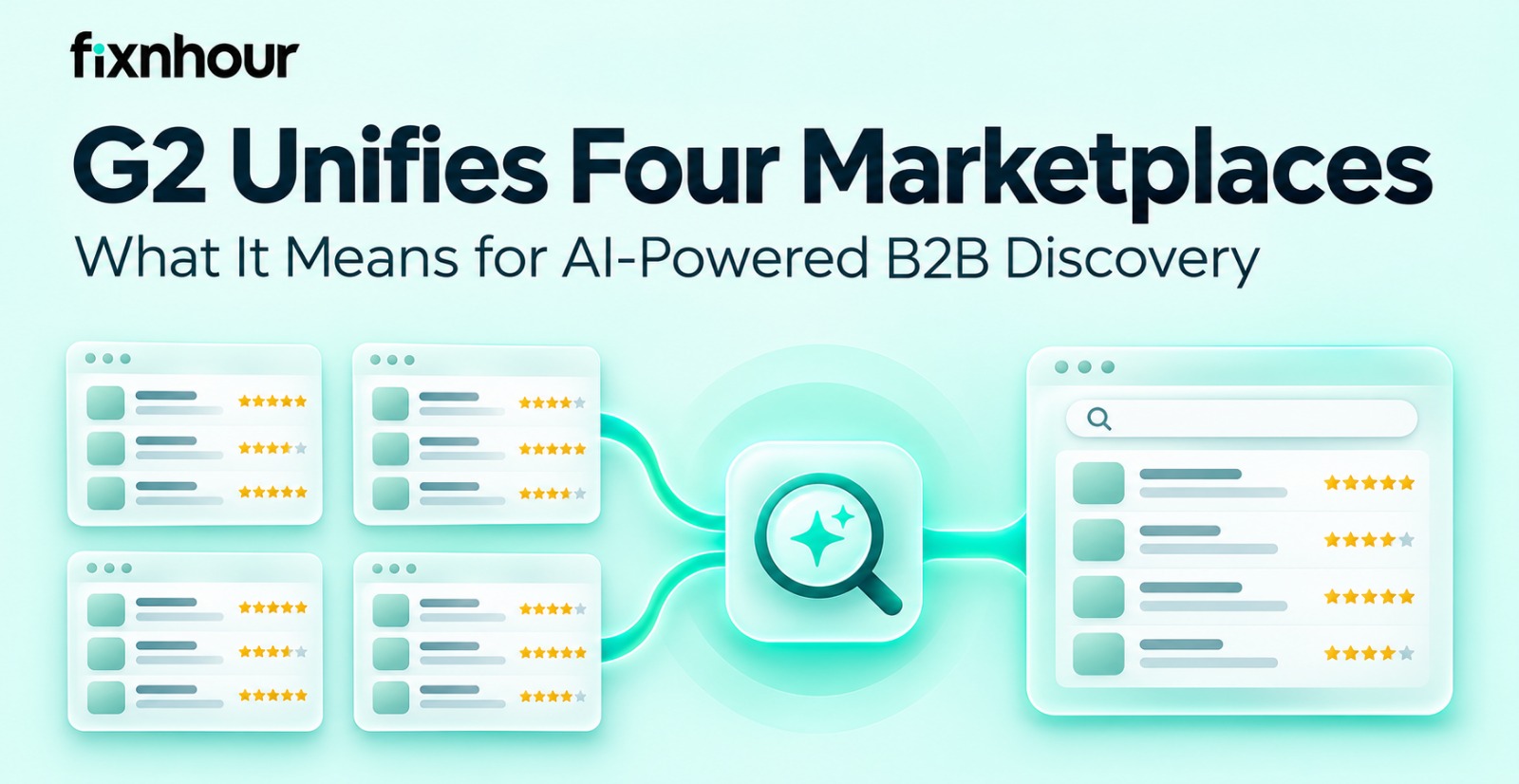
The way businesses discover software, compare technology providers, and make purchasing decisions is changing. Traditional search engines and software directories are no longer the only sources buyers rely on. AI-powered search engines, intelligent assistants, customer reviews, and online business platforms are increasingly influencing how companies evaluate technology solutions. In a significant development for the B2B technology industry, G2 has unified four major software marketplaces: G2, Capterra, Software Advice, and GetApp under a centralized vendor management experience called my.G2.
This move aims to simplify how software companies manage their listings, customer reviews, advertising campaigns, and buyer intent data across multiple platforms. It also reflects a broader shift toward AI-powered B2B discovery, where accurate product information, authentic customer experiences, and trusted online sources play an increasingly important role. For software companies, technology providers, and B2B service businesses, this development raises an important question: How will marketplace unification influence online visibility, customer acquisition, and the future of AI-driven software discovery? Let's explore what G2's announcement means and how businesses can prepare for this changing digital landscape.
Quick Answer
G2's marketplace unification brings four established B2B software discovery platforms under one centralized vendor management experience. Through my.G2, software companies can manage product listings, customer reviews, advertising campaigns, leads, and buyer intent information across G2, Capterra, Software Advice, and GetApp. For businesses, this means simplified marketplace management and more opportunities to reach potential software buyers. It also highlights the growing importance of customer reviews, reliable product information, and third-party credibility in AI-powered B2B discovery. The future of B2B service discovery is no longer just about searching for a company online. It is about finding the right partner quickly and confidently, based on verified data. In this guide, we'll explore the biggest trends shaping the future of B2B service marketplaces and what businesses need to know to stay ahead.
Key Takeaways
- G2 has unified four major software marketplaces: G2, Capterra, Software Advice, and GetApp.
- The my.G2 platform provides centralized management of software listings, reviews, advertising, and buyer insights.
- The four marketplaces collectively provide access to a broad audience of B2B software buyers.
- Unified review management helps new customer feedback reach multiple marketplace audiences.
- Centralized advertising and buyer intent information can support more focused marketing campaigns.
- AI-powered discovery is increasing the importance of authentic reviews and reliable business information.
- B2B companies should strengthen their SEO, Answer Engine Optimization (AEO), and online reputation strategies.
What Is G2's Marketplace Unification?
G2 is a well-known B2B software review and discovery platform that helps businesses research, compare, and evaluate technology products. Over the years, Capterra, Software Advice, and GetApp have also developed strong positions in the software discovery market. Each platform serves buyers with different research preferences and purchasing requirements. By bringing vendor management together through my.G2, G2 aims to simplify how software providers maintain their presence across these marketplaces. The four platforms continue to serve their individual audiences and retain their buyer-facing identities. The major change is the centralized experience available to vendors. Businesses are now moving toward verified B2B marketplaces that offer transparency, trust, and better business opportunities. This shift is reshaping how companies connect, evaluate partners, and make purchasing decisions in 2026.
The Four Marketplaces at a Glance
This unified approach aims to reduce the effort involved in managing multiple marketplace accounts while helping software vendors reach buyers across different discovery channels.
|
|
|
|
|---|---|---|
|
|
|
|
|
|
|
|
|
|
|
|
|
|
|
|
What Has Changed with the Introduction of my.G2?
The introduction of my.G2 is one of the most important aspects of this announcement. It brings several vendor management activities into a single platform.
Centralized Software Listing Management
Previously, software companies often had to manage product information across multiple marketplace accounts. This could involve updating descriptions, product features, pricing information, and company details separately. With the unified experience, vendors can manage their marketplace presence through one centralized interface. This can help companies:
- Maintain consistent product information.
- Update software descriptions more efficiently.
- Improve listing management.
- Reduce repetitive administrative work.
- Present a consistent brand message across marketplaces.
Unified Customer Review Management
Customer reviews are essential to software discovery because they provide practical insights into product quality, performance, customer support, and user experience. G2's unified review system allows newly collected reviews to gain exposure across the four marketplaces where a product is listed. This creates additional opportunities for software vendors to showcase customer feedback and build credibility. However, existing reviews are not automatically transferred or combined across all four marketplaces. Historical reviews remain on their original platforms.
Centralized Advertising Management
Advertising is another important part of the unified platform. G2 Ads Clicks allows eligible software vendors to manage pay-per-click advertising campaigns across the four marketplaces through a shared campaign experience. Businesses can benefit from:
- Centralized campaign management.
- Shared advertising budgets.
- Unified conversion tracking.
- Access to buyers researching software products.
- Better coordination of marketplace advertising activities.
Improved Buyer Intent Insights
Buyer intent data helps businesses identify potential customers who are actively researching software solutions. For example, a company offering CRM software may want to identify businesses comparing CRM platforms, exploring automation features, or reading reviews about competing products. A unified buyer intent experience can help sales and marketing teams understand these activities and identify relevant business opportunities.
AI-Powered Content and Marketing Support
AI is becoming an important part of modern B2B marketing. Businesses are using AI tools to understand customer requirements, create content, analyze market trends, and improve campaign performance. G2's Content Studio initiative connects buyer research and AI-powered insights with marketing content creation. This reflects a broader industry trend in which customer research, product information, and marketing activities are becoming increasingly connected.
How Does G2's Unification Impact AI-Powered B2B Discovery?
The biggest reason behind this development is the changing way buyers search for software. Previously, a business searching for CRM software might enter a query into Google, visit comparison websites, read reviews, and shortlist potential vendors. Discover top WhatsApp Business and Messaging Solutions companies on Fixnhour offering WhatsApp API integration, chatbots Today, buyers increasingly ask AI assistants questions such as:
- What is the best CRM software for small businesses?
- Which AI development platforms are suitable for enterprises?
- What are the most reliable project management tools?
- Which software providers offer the best customer support?
- Compare the leading automation platforms for growing businesses.
Why Customer Reviews Matter for AI Discovery
Customer reviews provide information beyond what businesses publish about their own products. They help potential buyers understand actual product experiences, including:
- Product performance and reliability.
- Ease of implementation.
- Customer support quality.
- Feature limitations.
- User satisfaction.
- Real-world business applications.
AEO vs SEO: Why Both Matter for B2B Businesses
The growth of AI-powered discovery is increasing interest in Answer Engine Optimization (AEO). Traditional SEO focuses on improving a website's visibility in search engine results, while AEO focuses on making information useful and accessible to AI-powered answer engines. Both approaches are important for businesses that want to reach potential customers across different discovery platforms. Fixnhour offers a search and comparison tool for CPaaS providers according to their expertise, services, industry experience, portfolios
|
|
|
|
|---|---|---|
|
|
|
|
|
|
|
|
|
|
|
|
|
|
|
|
|
|
|
|
|
|
|
|
|
|
|
|
What Does G2's Unified Platform Mean for B2B Companies?
The marketplace unification creates several opportunities for software vendors and technology companies.
1. Improved Brand Visibility
Businesses can manage their presence across four marketplaces through one centralized platform. This makes it easier to maintain consistent product information and strengthen brand visibility among different buyer groups.
2. Better Customer Trust
Authentic customer reviews help businesses demonstrate product quality and customer satisfaction. The wider distribution of new reviews can make customer feedback accessible to more potential buyers.
3. More Focused Lead Generation
Unified buyer intent information and advertising management can help marketing teams identify companies researching relevant software categories.
This allows sales teams to prioritize accounts that demonstrate interest in their products.
4. Simplified Marketing Operations
Managing multiple marketplace accounts separately can consume time and resources. A centralized system simplifies listing updates, review management, advertising, and reporting.
5. Stronger Competitive Positioning
Businesses can use customer feedback, product comparisons, and marketplace insights to understand their competitive position and identify opportunities to improve their offerings.
G2's AI Agent Evaluations: The Next Step in Software Discovery
Another important development is G2's expansion into AI Agent Evaluations. AI agents are becoming increasingly useful for business activities such as customer service, sales automation, workflow management, and operational support. However, selecting the right AI agent can be challenging because businesses need to understand its performance, reliability, capabilities, and suitability for specific tasks. G2 introduced its Agent Evaluations initiative in public beta in September 2026, initially focusing on Customer Experience Agents. In its November 10 announcement, G2 also shared early results for Voice AI Agents and highlighted further evaluation work involving AI SDR and Legal AI categories.This initiative reflects an emerging requirement in the software industry: businesses need better ways to evaluate AI-powered solutions before adopting them. For AI software developers and technology providers, independent evaluation and credible customer evidence can become important elements of product positioning.
How Can Businesses Prepare for AI-Powered B2B Discovery?
G2's announcement highlights why businesses need to rethink their digital marketing and online reputation strategies. Here are some practical steps companies can take.
Optimize Business and Software Listings
Maintain complete and accurate profiles on relevant software directories and B2B listing platforms.
Include:
- Company overview and service descriptions.
- Product features and capabilities.
- Industry expertise.
- Pricing information, where applicable.
- Website and contact details.
- Customer reviews and testimonials.
- Relevant images and product demonstrations.
Focus on Genuine Customer Reviews
Encourage satisfied customers to share honest experiences on relevant review platforms. Respond to feedback professionally and use customer suggestions to improve products and services. Avoid fake reviews or misleading ratings because long-term credibility depends on genuine customer experiences.
Publish Informative and Comparison-Based Content
Create content that answers actual buyer questions. For example:
- Best AI Development Companies for Startups.
- Top CRM Software for Small Businesses.
- Custom Software Development vs Off-the-Shelf Software.
- Best Automation Tools for Business Operations.
- How to Choose the Right Web Development Company. Comparison articles, detailed guides, and FAQs can help businesses attract relevant audiences and support informed purchasing decisions.
Build a Strong Third-Party Online Presence
Do not depend entirely on your company website. Develop a presence through relevant business directories, software marketplaces, industry publications, professional communities, and customer review platforms. Prioritize relevant and trustworthy sources rather than collecting links from unrelated websites.
Improve AI Search Visibility
Review how your business appears when potential customers search for your services using AI-powered platforms. Monitor brand mentions, third-party references, product recommendations, and relevant AI-generated answers. Use these insights to identify information gaps and improve your online presence.
How B2B Listing Platforms Like Fixnhour Support the Changing Discovery Landscape
As B2B discovery expands beyond traditional search engines, business directories and technology listing platforms continue to play a useful role in connecting buyers with relevant service providers. This is where Fixnhour can contribute to the evolving B2B discovery ecosystem. Fixnhour helps businesses discover technology companies and service providers across different categories, including:
- Web Development Companies
- AI App Development Companies
- Gaming App Development Companies
- AI and Automation SaaS Providers
- Software Development Companies
- Digital Solutions Providers
Why Business Listings Matter in the AI Discovery Era
A structured business profile can contribute to a company's overall digital presence by making important information easier for potential customers to find. Businesses should focus on:
- Creating complete and accurate company profiles.
- Clearly explaining their services and specializations.
- Maintaining consistent company information.
- Showcasing relevant experience and customer feedback.
- Building visibility across relevant industry platforms.
Challenges Businesses Should Consider
Although G2's marketplace unification offers several advantages, businesses should understand the challenges associated with the changing discovery landscape.
|
|
|
|
|---|---|---|
|
|
|
|
|
|
|
|
|
|
|
|
|
|
|
|
|
|
|
|
|
|
|
|
Conclusion
G2's decision to unify G2, Capterra, Software Advice, and GetApp represents an important development in the B2B software discovery industry. By introducing a centralized vendor management experience, the company aims to simplify listings, reviews, advertising, buyer intent, and marketing activities across four established marketplaces. More importantly, this development highlights how AI is changing the way businesses discover and evaluate software. Buyers increasingly expect reliable recommendations, authentic customer experiences, and relevant product information before making purchasing decisions.
For software companies and B2B service providers, maintaining accurate business listings, collecting genuine reviews, publishing informative content, and building a credible online presence will become increasingly important. Platforms such as Fixnhour can complement these efforts by helping businesses discover relevant technology partners and allowing service providers to showcase their expertise. The future of B2B discovery is not just about ranking higher on search engines. It is about building enough credibility, relevance, and trust to become a strong choice wherever buyers search for solutions, whether through traditional search engines or AI-powered assistants. Contact us for more queries.
Frequently Asked Questions (FAQs)
Q1. What are the four marketplaces unified by G2?
Ans G2 has unified G2, Capterra, Software Advice, and GetApp through a centralized vendor management experience called my.G2. Businesses can manage listings, reviews, advertising, leads, and other marketing activities from one platform.
Q2. What is my.G2?
Ans my.G2 is a centralized platform that allows software vendors to manage their presence across four marketplaces. It brings together product listings, customer reviews, advertising, buyer intent, leads, and content management.
Q3. Why did G2 unify four software marketplaces?
Ans G2 introduced the unified platform to simplify vendor operations, connect marketplace data, improve marketing management, and help software companies reach buyers across multiple discovery channels.
Q4. How does G2's marketplace unification impact AI-powered B2B discovery?
Ans The unified ecosystem provides broader access to software information, customer reviews, and third-party evidence. These resources can support AI-powered software discovery by helping buyers research and evaluate technology solutions.
Q5. What is Answer Engine Optimization (AEO)?
Ans Answer Engine Optimization is the process of improving a brand's visibility in AI-generated answers and conversational search experiences through useful content, accurate information, and credible online references.
Q6. How can customer reviews influence AI-powered software discovery?
Ans Customer reviews provide real-world information about product performance, customer satisfaction, and user experiences. They can help potential buyers evaluate software and provide useful third-party evidence for AI-powered discovery systems.
Q7. How can B2B companies improve their visibility across software marketplaces?
Ans B2B companies can improve their visibility by maintaining complete software listings, collecting authentic reviews, publishing informative content, updating product information, and building a credible presence across relevant directories.
Q8. What role do B2B listing platforms play in software discovery?
Ans B2B listing platforms help businesses discover and compare service providers, explore company profiles, and evaluate relevant technology solutions. They also give service providers an additional channel to showcase their expertise and reach potential customers