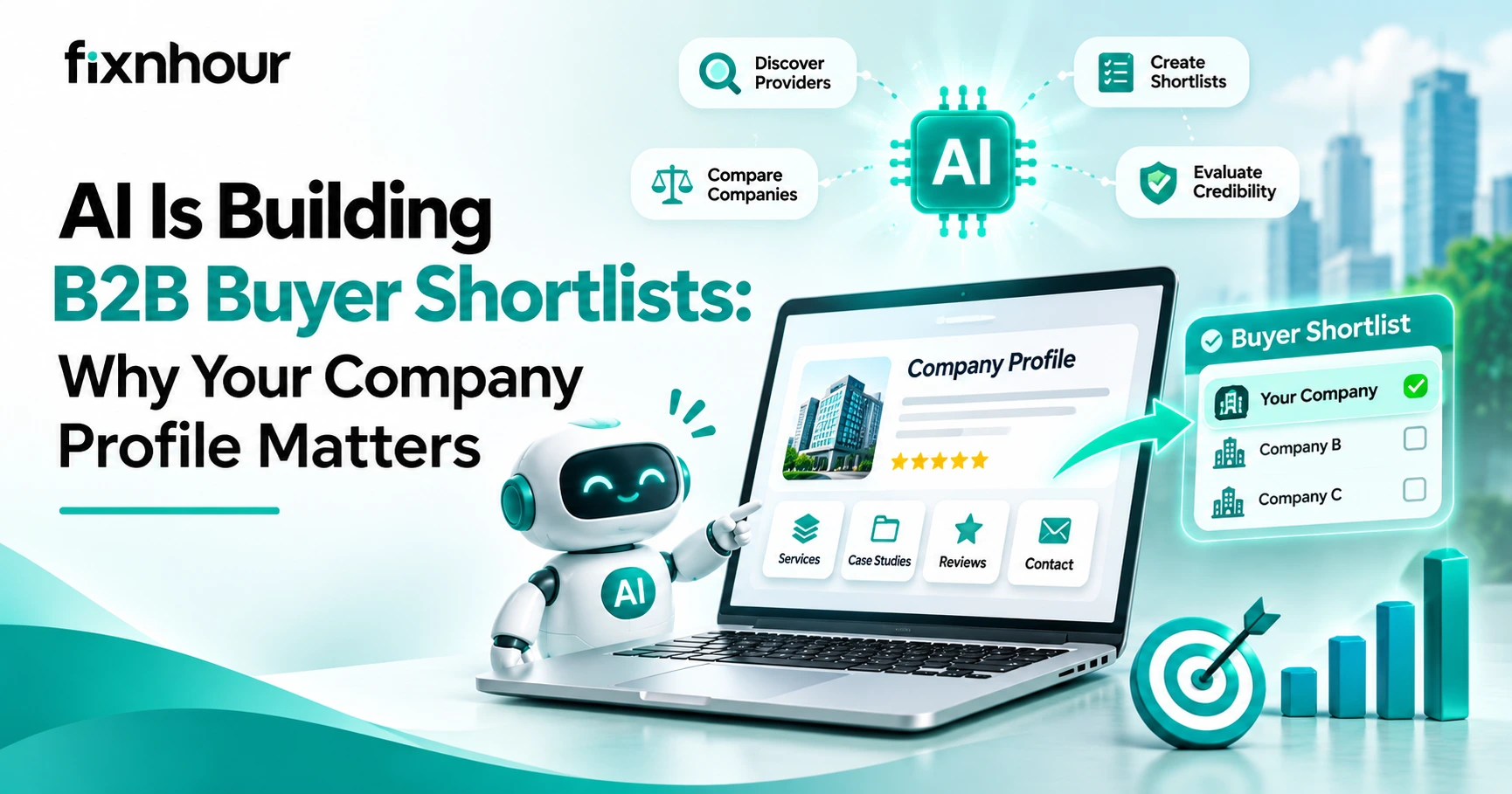
The way businesses discover and evaluate service providers is changing rapidly. Instead of spending hours browsing websites and comparing companies manually, B2B buyers can now use AI-powered tools such as ChatGPT, Google Gemini, Perplexity, and Google AI Overviews to research potential business partners and create vendor shortlists.
This shift makes a well-optimized B2B company profile increasingly important. Buyers want accurate information about services, expertise, industry experience, client reviews, and completed projects before contacting a company. AI-powered discovery tools can help organize and summarize this information when it is accessible through relevant sources.
Key Takeaways
- AI-powered discovery: Buyers can use AI tools to research and compare potential vendors.
- Complete profiles: Detailed business information makes company evaluation easier.
- Trust signals: Genuine reviews, case studies, and testimonials support credibility.
- Search visibility: Relevant keywords and structured information improve content discoverability.
- Business consistency: Accurate details across platforms help reduce confusion.
- Qualified leads: Clear service descriptions can attract buyers with relevant requirements.
- Regular updates: Fresh portfolios and accurate company information improve buyer confidence.
How AI Is Changing B2B Company Discovery
Traditional B2B discovery often involves searching Google, opening multiple websites, and manually comparing service providers.Future of B2B Service Discovery AI-powered research introduces a more conversational approach, allowing buyers to describe their requirements and receive organized information. This shift creates opportunities for companies that maintain accurate business profiles and demonstrate relevant industry expertise online.
From Traditional Google Searches to AI-Generated Vendor Recommendations
Traditional search engines primarily help buyers discover relevant web pages. AI-powered tools can also summarize information and organize companies according to buyer requirements.
For example, a business might search:
- Traditional search: "Top mobile app development companies in India"
- AI-powered search: "Find five mobile app development companies in India with healthcare experience and enterprise application portfolios."
How ChatGPT, Gemini, Perplexity, and Google AI Overviews Support B2B Research
|
AI Platform |
Role in B2B Company Discovery |
|---|---|
|
ChatGPT |
Helps buyers research vendors, develop comparison criteria, and evaluate available company information. |
|
Google Gemini |
Supports conversational business research and analysis of company capabilities. |
|
Perplexity |
Provides source-linked research that can help buyers investigate potential vendors. |
|
Google AI Overviews |
Summarizes information for eligible Google searches, including some commercial research queries. |
B2B Buyer Behavior: Statistics and Market Insights
B2B purchasing behavior continues to evolve as buyers adopt digital research tools and increasingly explore AI-assisted discovery.AI Is Changing the Way Businesses Industry research highlights the importance of self-service information, reliable vendor content, and consistent digital experiences. Understanding these developments helps businesses create company profiles that support modern purchasing decisions and informed vendor comparisons.
AI Adoption Trends in B2B Purchasing and Vendor Research
Several industry findings illustrate why digital company information matters.
|
Research Source |
Reported Finding |
Business Implication |
|---|---|---|
|
Gartner, 2021 |
Gartner predicted that 80% of B2B sales interactions between suppliers and buyers would occur through digital channels by 2025. |
Companies need strong digital discovery experiences. |
|
McKinsey, B2B Pulse 2024 |
B2B customers used an average of ten interaction channels during their buying journeys. |
Business information should remain consistent across channels. |
|
Gartner, 2024 |
Gartner predicted that traditional search engine volume would decline 25% by 2026 because of AI chatbots and virtual agents. |
Businesses should monitor emerging AI discovery channels. |
What Makes a B2B Company Profile AI-Friendly and Trustworthy?
An effective B2B company profile should clearly explain what your business does, whom it serves, and why buyers should consider its services.G2 Unifies Four Marketplaces Accurate descriptions, relevant keywords, completed projects, and verified contact details help potential customers evaluate your company. Well-organized information also makes your expertise easier for search systems to interpret.
Essential Information Every B2B Company Profile Should Include
|
Profile Element |
Why It Matters |
|---|---|
|
Company Name |
Establishes a recognizable business identity. |
|
Business Description |
Explains services, expertise, and value proposition. |
|
Service Categories |
Helps buyers identify relevant capabilities. |
|
Industry Experience |
Demonstrates familiarity with specific business requirements. |
|
Portfolio |
Shows examples of completed work. |
|
Client Reviews |
Provides evidence of customer experiences. |
|
Business Location |
Clarifies geographic presence and service availability. |
|
Contact Information |
Makes communication easier for potential buyers. |
|
Pricing Information |
Helps buyers assess budget compatibility. |
How Structured Business Information Helps AI Understand Your Company
Structured information organizes business details into clear categories that people and machines can interpret.For example, a software development company might specify its primary services as mobile app development, AI development, cloud integration, and enterprise software solutions.Fixnhour Relevant schema markup on the company's website can further clarify organizational information to search engines.
Why Reviews, Case Studies, and Verified Details Build Buyer Trust
Buyers are more likely to consider companies that provide credible evidence of their capabilities.A detailed case study should explain the client's challenge, the solution delivered, technologies used, and measurable business results.Genuine reviews and accurate business information can strengthen confidence during vendor evaluation.
Benefits and Challenges of Optimizing Your Company Profile for AI Discovery
Optimizing a B2B company profile offers opportunities to improve business discoverability, communicate expertise, and attract relevant inquiries.Businesses Are Switching from Traditional Directories to Verified B2B However, businesses must also address challenges involving outdated information, inconsistent listings, and limited performance tracking. Understanding both benefits and limitations helps companies develop realistic strategies for AI-assisted discovery and long-term digital visibility.
Key Benefits for B2B Service Providers
- Improved discoverability: Detailed listings create additional opportunities for buyers to find relevant services.
- Greater credibility: Case studies, certifications, and customer feedback support business trust.
- Qualified inquiries: Clear service information helps attract buyers with suitable project requirements.
- Competitive differentiation: Specific industry expertise helps distinguish companies from generic service providers.
How to Optimize Your B2B Company Profile for AI Buyer Shortlists: Step-by-Step
Creating an AI-friendly B2B company profile requires more than adding business keywords. Companies should focus on accurate information, clear service descriptions, industry expertise, and credible supporting evidence.Best Platforms to Discover & Compare Companies Following a structured optimization process helps improve buyer understanding, strengthens digital consistency, and creates a stronger foundation for search visibility and vendor evaluation.
Step 1: Audit Your Existing Company Information
Start by reviewing your company website and existing directory profiles. Identify missing details, outdated descriptions, incorrect contact information, and inconsistent service categories. This assessment helps establish a reliable foundation for profile optimization.
- Verify company name and website.
- Review contact information.
- Identify missing services.
- Check existing business listings.
Step 2: Write a Clear, Keyword-Relevant Company Description
Create a business description that explains your core services, target industries, and unique capabilities. Include relevant search terms naturally while prioritizing readability. Avoid exaggerated claims and generic promotional language.
- Explain your primary services.
- Mention relevant technologies.
- Identify target industries.
- Highlight genuine differentiators.
Step 3: Highlight Services, Industries, and Technical Expertise
Organize your company's capabilities into clear service categories. Describe the problems your team solves and the technologies it uses. This helps buyers determine whether your expertise matches their requirements.
- Add core service categories.
- Mention technical specializations.
- Describe industry experience.
- Explain typical project requirements.
Step 4: Add Verified Reviews, Case Studies, and Portfolio Projects
Support your company description with evidence of completed work. Detailed portfolios and authentic customer feedback can help potential clients assess delivery experience and business reliability.
- Publish relevant case studies.
- Include genuine client reviews.
- Explain project outcomes.
- Update completed project examples.
Step 5: Create or Update Profiles on Relevant B2B Listing Platforms
Choose directories that match your business category and target audience. Platforms such as Fixnhour, Clutch, and GoodFirms can provide additional places for potential buyers to discover company information.
- Select relevant listing platforms.
- Complete all important fields.
- Maintain consistent business details.
- Review profile accuracy regularly.
Step 6: Monitor Visibility, Buyer Inquiries, and Profile Engagement
Measure whether your profile optimization efforts support business objectives. Track relevant traffic, inquiries, and conversions while comparing performance across different discovery channels.
- Monitor website referral traffic.
- Track qualified inquiries.
- Review profile engagement.
- Evaluate lead conversion rates.
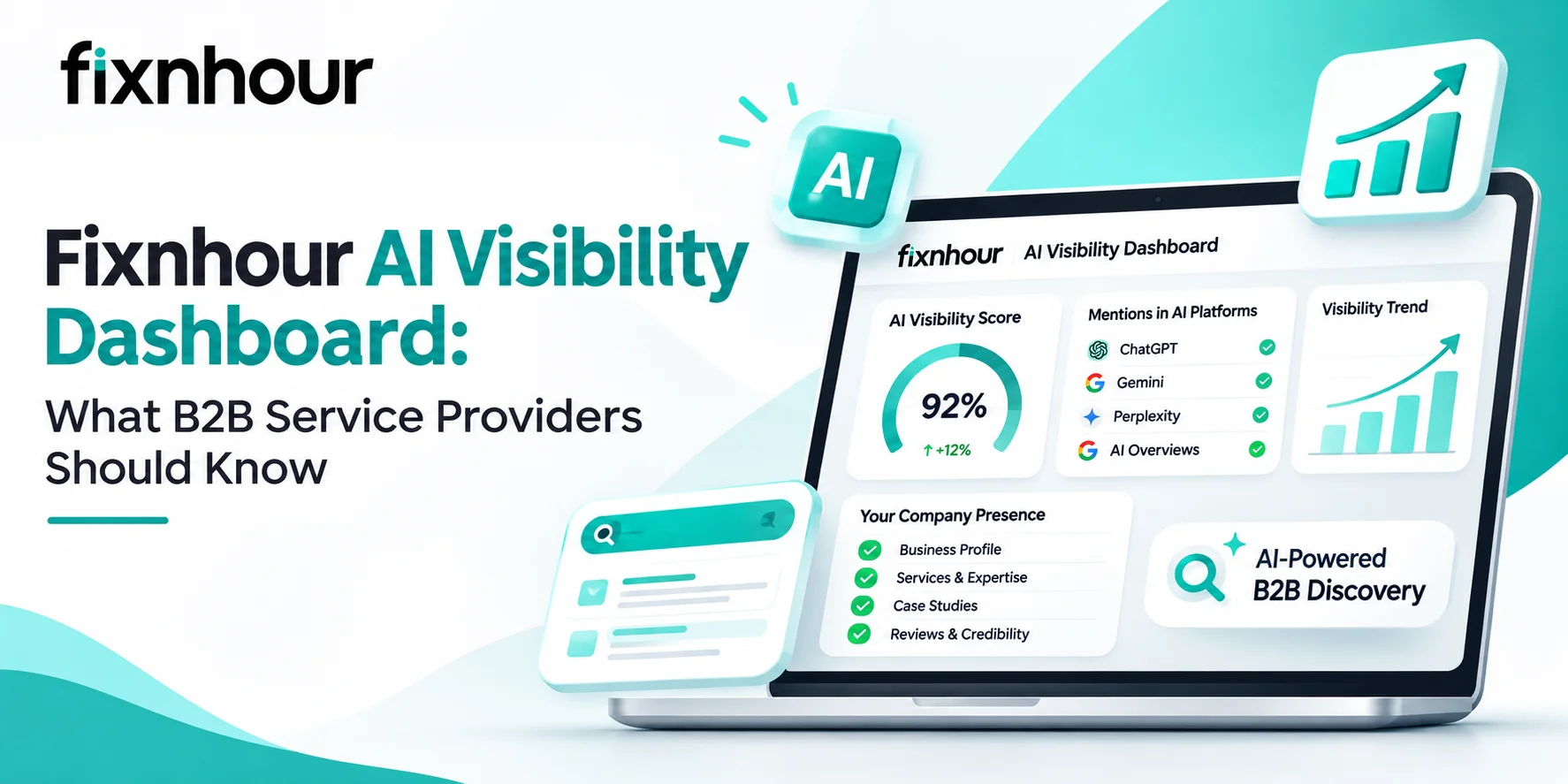
Also Read :- Fixnhour AI Visibility Dashboard: What B2B Service Providers Should Know
Conclusion
AI is changing how businesses discover, research, and compare potential service providers. A complete B2B company profile helps communicate your expertise, services, and credibility during the buyer's research journey.
Businesses should prioritize accurate information, relevant keywords, authentic reviews, and detailed portfolios to strengthen their digital presence. Combining SEO, AEO, and GEO practices can further support discoverability across traditional and AI-powered search experiences. Talk to our experts
Frequently Asked Questions
Q1. How does AI create a shortlist of B2B companies for buyers?
Ans. AI-powered tools can help buyers create company shortlists by researching publicly accessible business information and organizing potential vendors according to specific requirements. Depending on the platform, these tools may use search results, retrieved web pages, available business data, and information supplied by users.For example, a buyer searching for software development companies may specify technical expertise, industry experience, location, and project budget. AI can help compare available information against those criteria.However, AI-generated recommendations may be incomplete or outdated. Buyers should verify company credentials, references, pricing, and delivery capabilities before making purchasing decisions.
Q2. Why is a complete B2B company profile important for AI search visibility?
Ans. A complete B2B company profile provides clear information about a business's services, industry experience, location, and technical capabilities. This information helps potential customers understand whether the company matches their requirements.Well-organized profiles can also support search discoverability when the content is accessible and relevant to buyer queries.Including detailed service descriptions, authentic reviews, and project portfolios improves the usefulness of a company profile.Businesses should maintain consistent information across their websites and relevant directories. Although profile optimization cannot guarantee AI recommendations, it strengthens the information available for research and comparison.
Q3. How can I optimize my company profile for ChatGPT, Gemini, and Perplexity?
Ans. Start by ensuring your company website and relevant business listings contain accurate, comprehensive information. Describe your core services, technical expertise, target industries, and project experience using clear language.Include genuine customer testimonials, detailed case studies, and relevant business credentials.Use natural keywords that reflect the services buyers search for, such as enterprise software development, AI app development, or IT consulting.Maintain consistent company information across credible online sources. Because ChatGPT, Gemini, and Perplexity have different retrieval methods, no single optimization technique guarantees visibility across all three platforms.
Q4. What information should a B2B company profile include to attract qualified leads?
Ans. A B2B company profile should clearly communicate the services your business provides, the customers you serve, and the problems you solve.Essential information includes your company name, business description, website, location, contact details, service categories, and industry experience.Adding relevant portfolios, customer testimonials, certifications, and case studies can help potential clients evaluate your expertise.When possible, explain your project engagement models, typical budgets, and delivery capabilities.A detailed profile helps buyers determine whether your business matches their requirements before contacting your sales team, potentially improving inquiry relevance.
Q5. Can B2B listing platforms help my company appear in AI-generated recommendations?
Ans. B2B listing platforms can contribute to a company's online presence by publishing information about its services, expertise, and business capabilities.Directories such as Fixnhour, Clutch, and GoodFirms may provide additional sources that buyers can discover through search engines or AI-assisted research.However, appearing on a listing platform does not automatically mean AI tools will retrieve, cite, or recommend your company.Visibility depends on several factors, including source accessibility, relevance, available information, and the specific AI system.Businesses should treat directory listings as part of a broader digital visibility strategy rather than a guaranteed ranking method.
Q6. What is the difference between traditional B2B SEO and Generative Engine Optimization?
Ans. Traditional B2B SEO focuses on improving website visibility in search engine results through relevant content, technical optimization, internal linking, and other established search practices.Generative Engine Optimization, or GEO, focuses on making information useful and understandable for AI-powered search and answer systems.GEO strategies may emphasize clear explanations, credible sources, consistent business entities, and structured information.Both approaches share important principles, including relevance, accuracy, and helpful content.For B2B service providers, combining SEO and GEO can support discoverability across traditional search engines and emerging AI-assisted research experiences.
Q7. How often should businesses update their company profiles for better visibility?
Ans. Businesses should review their company profiles whenever important information changes, including service offerings, contact details, business locations, or company capabilities.A quarterly review is a practical starting point for checking profile accuracy and identifying outdated information.Companies should also update portfolios after completing relevant projects and add genuine customer feedback when available.Regular maintenance helps buyers access reliable information and reduces inconsistencies across different platforms.However, updating a profile frequently does not automatically improve search rankings or AI recommendations. The priority should be meaningful improvements that increase accuracy, relevance, and usefulness.
Q8. How can small IT and software development companies compete in AI-powered B2B discovery?
Ans. Small IT companies can improve their competitive positioning by highlighting specialized expertise, relevant industry experience, and proven project outcomes.Instead of relying on broad claims, businesses should clearly explain their capabilities in areas such as mobile app development, AI solutions, cloud integration, or enterprise software.Publishing detailed case studies and maintaining complete company profiles can help potential buyers evaluate their services.Smaller companies can also explore relevant B2B listing platforms to establish additional discovery opportunities.The most effective approach is to demonstrate genuine expertise, maintain accurate business information, and respond professionally to qualified inquiries.