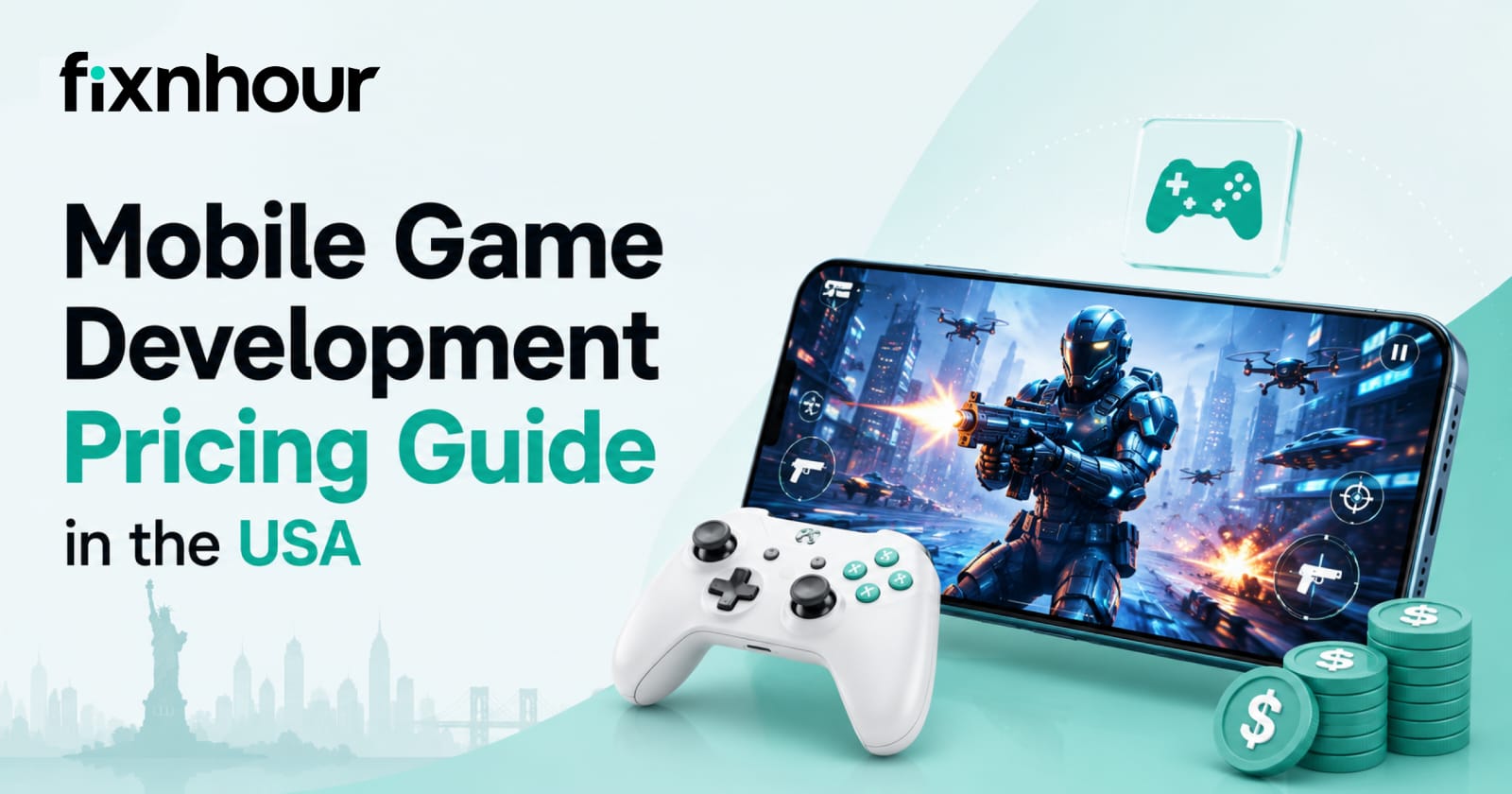
The mobile gaming industry in the USA continues to grow rapidly, creating exciting opportunities for startups, gaming studios, and enterprises looking to launch innovative mobile games. Whether you're planning a simple casual game or a feature-rich multiplayer experience, understanding the mobile game development cost in the USA is essential for effective budgeting and project planning.
The cost of developing a mobile game depends on several factors, including game complexity, platform selection (Android, iOS, or cross-platform), design quality, game engine, development team, backend infrastructure, and ongoing maintenance. While a basic mobile game may require a modest investment, advanced games with multiplayer functionality, AI, or AR/VR features demand significantly larger budgets.This Mobile Game Development Pricing Guide in the USA provides a detailed breakdown of development costs, pricing models, cost-driving factors, and practical tips to help you estimate your project budget.
Key Takeaways
- Mobile game development costs vary based on game type, complexity, and required features.
- Simple mobile games generally require lower budgets than multiplayer or AR/VR games.
- UI/UX design, animations, backend systems, and testing significantly influence pricing.
- Choosing the right game engine, such as Unity or Unreal Engine, impacts development costs.
- Android, iOS, and cross-platform development each have different pricing considerations.
- Post-launch maintenance, updates, and security should be included in your overall budget.
- Working with an experienced mobile game development company helps reduce project risks.
- Proper planning and MVP development can lower costs while accelerating your game's launch.
Also read : Web Design Company Pricing Guide 2026
Quick Answer
The cost of mobile game development in the USA typically ranges from $20,000 to $500,000+, depending on the game's complexity, features, design requirements, development team, and technology stack. A simple 2D or hyper-casual game generally requires a lower investment, while advanced multiplayer, 3D, AR/VR, or AAA-quality games can cost significantly more due to sophisticated gameplay mechanics, high-quality graphics, backend infrastructure, and ongoing maintenance.
To optimize your budget, many businesses start with a Minimum Viable Product (MVP), prioritize essential features, and scale the game over time. With careful planning and the expertise of Fixnhour, businesses can choose the right pricing model, reduce development costs, and build high-quality mobile games that deliver long-term value and maximize return on investment.
What Is Mobile Game Development?
Mobile game development is the process of designing, developing, testing, and launching games for smartphones and tablets. It combines creative storytelling, engaging gameplay, attractive visuals, and advanced programming to deliver interactive gaming experiences across Android and iOS devices.
Modern mobile games are built using powerful game engines like Unity and Unreal Engine, allowing developers to create everything from lightweight casual games to high-performance multiplayer and 3D gaming experiences.
Businesses invest in mobile game development to increase customer engagement, generate revenue through in-app purchases, subscriptions, advertisements, and strengthen their digital presence in the competitive gaming market.
Types of Mobile Games
- Hyper Casual Games
- Casual Games
- Puzzle Games
- Action Games
- Adventure Games
- Arcade Games
- Multiplayer Games
- Strategy Games
- RPG (Role-Playing Games)
- Casino Games
- Sports Games
- Educational Games
- AR/VR Mobile Games
Why Invest in Mobile Game Development?
The global demand for mobile gaming continues to rise, making it one of the most profitable segments of the digital entertainment industry. Businesses, startups, and gaming companies are investing in mobile game development to reach wider audiences, increase revenue, and create engaging digital experiences.
A well-designed mobile game not only attracts users but also improves customer retention through interactive gameplay, regular updates, and monetization strategies such as in-app purchases, subscriptions, and advertisements. With millions of smartphone users in the USA, investing in a high-quality mobile game can provide long-term business growth and a strong competitive advantage.
Key Benefits:
Reach Millions of Mobile Users
Mobile games are available on platforms like the Google Play Store and Apple App Store, allowing businesses to reach millions of smartphone users worldwide. This broad accessibility helps increase brand visibility, attract new customers, and expand your audience across different regions and markets.
Generate Recurring Revenue Through Multiple Monetization Models
Mobile games offer several ways to generate consistent income, including in-app purchases, advertisements, premium subscriptions, paid downloads, and virtual goods. These monetization models create recurring revenue while providing players with engaging experiences and additional content.
Increase Customer Engagement and Brand Loyalty
Interactive gameplay, daily rewards, achievements, and regular updates encourage players to spend more time using your game. A positive gaming experience helps build stronger customer relationships, improves user satisfaction, and increases long-term brand loyalty.
Expand Your Business into the Growing Gaming Industry
The mobile gaming industry continues to grow rapidly, creating new opportunities for businesses across various sectors. Developing a mobile game allows companies to enter this expanding market, attract a larger customer base, and strengthen their digital presence.
Build a Scalable Digital Product with Global Reach
A well-developed mobile game can easily scale as your business grows. By adding new levels, features, multiplayer functionality, and regional support, you can expand your game to reach global audiences while maintaining high performance and user satisfaction.
Create Long-Term ROI Through Continuous Updates and New Features
Launching a mobile game is just the beginning. Regular updates, bug fixes, new game modes, seasonal events, and feature enhancements keep players engaged and encourage them to return. Continuous improvements increase user retention, boost revenue opportunities, and help maximize your long-term return on investment (ROI).
Also read : SaaS Product Development Cost Explained: Complete Pricing Guide for Startups & Businesses in 2026
How Much Does Mobile GameDevelopment Cost in the USA?
The cost of mobile game development in the USA varies depending on the project's scope, game mechanics, graphics, platform compatibility, and technical requirements. A simple 2D game with limited features requires significantly less investment than a complex multiplayer or 3D game with advanced animations, cloud integration, and AI-powered gameplay.
Development costs also depend on the experience of the development team, technology stack, project timeline, and post-launch support. Understanding these pricing factors helps businesses set realistic budgets and avoid unexpected expenses during development.
In the next section, we'll break down the key factors that influence mobile game development pricing in the USA, along with estimated costs for different types of mobile games.
| Game Type | Estimated Cost (USD) | Development Time |
|---|---|---|
| Hyper Casual Game | $20,000 – $50,000 | 1–3 Months |
| Casual Game | $40,000 – $80,000 | 2–4 Months |
| Puzzle Game | $35,000 – $70,000 | 2–4 Months |
| Arcade Game | $40,000 – $90,000 | 2–5 Months |
| Action Game | $80,000 – $180,000 | 4–8 Months |
| Adventure Game | $100,000 – $220,000 | 5–9 Months |
| Multiplayer Game | $150,000 – $350,000 | 6–12 Months |
| RPG Game | $180,000 – $400,000 | 8–14 Months |
| AR/VR Mobile Game | $200,000 – $500,000+ | 8–15 Months |
| AAA Mobile Game | $500,000+ | 12–24 Months |
Also read: Advertising Agency Pricing Guide 2026
Factors That Affect Mobile Game Development Pricing in the USA
The cost of developing a mobile game is influenced by several technical, creative, and business factors. Every game has unique requirements, making it impossible to assign a fixed development price. From choosing the right platform to integrating advanced features, each decision directly impacts the overall budget. Understanding these factors helps businesses estimate costs more accurately and prioritize features that provide the highest return on investment.
1. Game Complexity
Game complexity is one of the most significant factors affecting mobile game development pricing in the USA. Games with advanced mechanics, realistic graphics, multiplayer functionality, and AI-driven features require more development time, skilled developers, and extensive testing. As the complexity increases, so do the overall development costs, project timeline, and resource requirements.
Simple Games
Simple games feature basic gameplay, minimal animations, and straightforward user interactions. They are easier and faster to develop, making them a cost-effective choice for startups or businesses with limited budgets.
Medium-Complexity Games
These games include multiple levels, engaging graphics, user accounts, in-app purchases, and social features. They require additional development, testing, and backend integration, resulting in higher costs than simple games.
High-Complexity Games
High-end games often include multiplayer functionality, AI-powered gameplay, real-time synchronization, realistic animations, cloud infrastructure, and advanced security systems. These projects require experienced developers, longer timelines, and larger budgets.
2. Platform Selection
The platform you choose has a direct impact on the overall mobile game development cost. Developing for Android, iOS, or both requires different technologies, testing processes, and optimization efforts. Selecting the right platform depends on your target audience, business goals, and available budget.
Android Game Development
Android development requires testing across a wide range of devices, screen sizes, and operating system versions. This additional testing effort can increase both development time and overall project costs.
iOS Game Development
iOS development generally involves fewer device variations but requires strict adherence to Apple's App Store guidelines and quality standards. It often delivers a more consistent user experience.
Cross-Platform Development
Cross-platform development allows developers to build a single codebase that works on both Android and iOS using frameworks like Unity. This approach can reduce development time, lower costs, and simplify future maintenance.
3. UI/UX Design
A well-designed UI/UX plays a crucial role in the success of any mobile game. Attractive interfaces, intuitive navigation, and engaging user experiences encourage players to spend more time in the game. High-quality UI/UX design requires skilled designers and additional planning, which contributes to the overall development cost.
4. Game Art & Animation
Game art and animation define the visual appeal and overall player experience. High-quality characters, environments, visual effects, and smooth animations require talented artists and designers. As visual quality improves, production time and development costs also increase.
Development costs increase based on:
- 2D or 3D graphics
- Character design
- Environment design
- Visual effects (VFX)
- Motion graphics
- Frame-by-frame animation
- Cinematic cutscenes
5. Game Features & Functionalities
Every additional feature adds complexity to the development process and increases the overall budget. Advanced functionalities require extra coding, backend integration, testing, and ongoing maintenance. Businesses should prioritize essential features during the initial launch to keep development costs under control.
Common features include:
- Multiplayer Mode
- Live Chat
- Voice Chat
- In-App Purchases
- Reward Systems
- Leaderboards
- Push Notifications
- Cloud Save
- Social Login
- Player Profiles
6. Game Engine
The game engine serves as the foundation of the development process and directly impacts performance, scalability, graphics quality, and project cost. Choosing the right engine depends on your game's complexity, target platform, and feature requirements. A suitable game engine can also reduce development time and improve efficiency.
Popular game engines include:
- Unity
- Unreal Engine
- Godot
- Cocos2d-x
7. Backend Development
Modern mobile games rely on powerful backend systems to manage user data, multiplayer functionality, cloud storage, and real-time communication. A secure and scalable backend ensures smooth gameplay, stable performance, and seamless user experiences. More advanced backend requirements naturally increase development costs.
Backend services include:
- User Authentication
- Multiplayer Servers
- Cloud Storage
- Matchmaking
- Data Synchronization
- Payment Processing
- Game Analytics
8. Quality Assurance & Testing
Quality Assurance (QA) ensures your game is stable, secure, and free from critical bugs before launch. Thorough testing improves gameplay performance, compatibility across devices, and overall user satisfaction. Investing in proper testing reduces post-launch issues and protects your app's reputation.
QA includes:
- Functional Testing
- Compatibility Testing
- Performance Testing
- Security Testing
- Bug Fixing
- Load Testing
9. Post-Launch Maintenance
Launching a mobile game is only the beginning of its lifecycle. Regular maintenance helps fix bugs, improve performance, introduce new content, and maintain compatibility with the latest operating systems and devices. Ongoing updates also keep players engaged and extend the game's long-term success.
Post-launch services include:
- Bug Fixes
- Security Updates
- New Features
- Seasonal Events
- Performance Optimization
- Content Updates
- Server Monitoring
Mobile Game Development Cost by Development Stage
The total mobile game development cost is divided across multiple stages, each playing a crucial role in delivering a successful game. From initial planning and UI/UX design to development, testing, deployment, and post-launch maintenance, every phase requires specific resources, expertise, and time. Understanding the cost associated with each development stage helps businesses estimate their budget accurately, prioritize essential tasks, and avoid unexpected expenses throughout the game development lifecycle. Similar to an AI Pricing Guide, breaking down costs by development stage provides greater transparency, helping businesses plan investments more effectively and make informed budgeting decisions. .
Research & Planning
The research and planning stage is the foundation of mobile game development. It includes defining the game concept, identifying the target audience, analyzing competitors, planning features, and creating a development roadmap. The estimated cost for this stage is around $3,000–$10,000.
UI/UX Design
UI/UX design focuses on creating attractive, user-friendly, and engaging interfaces for the game. This stage includes designing game screens, menus, buttons, navigation systems, and interactive elements that improve the overall player experience. The estimated cost for UI/UX design ranges from $5,000–$20,000.
Game Art & Animation
Game art and animation play an important role in improving the visual appeal of a mobile game. This stage includes character design, environment creation, 2D/3D graphics, visual effects, and animations. Depending on the complexity and quality of visuals, the estimated cost ranges from $10,000–$60,000.
Frontend Development
Frontend development involves building the core gameplay, user interactions, game mechanics, animations, and other player-facing features. Developers use game engines and programming technologies to transform the design concept into a functional game. The estimated cost for frontend development is around $15,000–$80,000.
Backend Development
Backend development manages the technical infrastructure behind the game, including user authentication, multiplayer servers, cloud storage, databases, payment systems, and analytics. A complex backend system requires more resources and development time. The estimated cost for backend development ranges from $10,000–$70,000.
Testing & QA
Testing and Quality Assurance (QA) ensure that the mobile game works smoothly across different devices and platforms. This stage includes bug testing, performance testing, security checks, compatibility testing, and optimization. The estimated cost for testing and QA is around $5,000–$25,000.
Deployment
The deployment stage involves preparing the game for release on platforms like the Google Play Store and Apple App Store. It includes final testing, app store submission, compliance checks, and launch preparation. The estimated deployment cost ranges from $2,000–$8,000.
Maintenance (Annual)
Post-launch maintenance is essential to keep the game updated, secure, and optimized for users. It includes bug fixes, performance improvements, security updates, new features, and content updates. Businesses typically spend around 15–20% of the total development cost annually on ongoing maintenance and support.
Mobile Game Development Pricing Models
Choosing the right pricing model is just as important as selecting the right development partner. Different pricing structures are designed to suit different project sizes, budgets, timelines, and business goals. Whether you're a startup building your first game or an enterprise developing a feature-rich gaming application, selecting the appropriate pricing model helps optimize costs, improve project efficiency, and ensure successful delivery. Similar to the question How much does PPC advertising cost, mobile game development pricing also depends on multiple factors, including project scope, features, development time, and technical requirements. Understanding these pricing models enables businesses to make informed decisions and maximize their return on investment .
Fixed Price Model
A fixed-price model works best for projects with clearly defined requirements, timelines, and deliverables. The development company provides a predetermined project cost before work begins, making budgeting easier and reducing financial uncertainty.
Best For:
- Small projects
- MVP development
- Clearly defined requirements
Hourly Pricing Model
In this model, businesses pay developers based on the number of hours worked. It offers flexibility for projects with evolving requirements or frequent changes during development.
Best For:
- Ongoing projects
- Feature enhancements
- Agile development
Dedicated Development Team
A dedicated team consists of developers, designers, testers, and project managers working exclusively on your project. This model provides maximum flexibility and better collaboration for large-scale or long-term game development.
Best For:
- Enterprise projects
- Multiplayer games
- Long-term partnerships
Time & Material Model
The Time & Material model charges based on actual time spent and resources used during development. It is ideal when project requirements are expected to evolve over time.
Best For:
- Complex projects
- Startups
- Innovative game ideas
- Projects with changing scope
Benefits of Investing in Mobile Game Development
Investing in mobile game development offers businesses an opportunity to reach millions of users while generating long-term revenue. A successful mobile game not only increases brand visibility but also creates multiple monetization opportunities through advertisements, subscriptions, and in-app purchases. With continuous innovation in gaming technology, businesses can build engaging experiences that improve customer loyalty and drive sustainable growth. Similar to a Web Development Company Pricing Guide, understanding mobile game development pricing helps businesses estimate project costs, compare development options, and make informed investment decisions before starting their project.
Key Benefits of Mobile Game Development
1. Increased Brand Awareness
A well-designed mobile game helps businesses increase brand visibility by reaching a larger audience. Interactive gaming experiences encourage users to spend more time with your brand, improving recognition and creating a lasting impression in a competitive market.
2. Higher Customer Engagement
Mobile games provide an interactive and entertaining experience that keeps users actively engaged. Features such as rewards, challenges, leaderboards, and daily missions encourage players to return regularly, increasing user interaction and overall engagement.
3. Multiple Revenue Streams
Mobile games offer several monetization opportunities, including in-app purchases, advertisements, premium subscriptions, sponsorships, and paid downloads. These revenue models allow businesses to generate consistent income while providing value to players.
4. Global Market Reach
Publishing a mobile game on platforms like the Google Play Store and Apple App Store enables businesses to reach millions of users worldwide. This global accessibility helps companies expand their customer base and grow their brand internationally.
5. Better Customer Retention
Regular updates, engaging gameplay, personalized experiences, and loyalty rewards encourage players to continue using the game over time. High customer retention leads to increased user satisfaction, stronger brand loyalty, and higher lifetime value.
6. Scalable Business Growth
Mobile games can be continuously improved by adding new features, levels, characters, and events. As the user base grows, businesses can expand their gaming ecosystem, attract more customers, and create new revenue opportunities without rebuilding the entire application.
7. Improved Competitive Advantage
A unique and feature-rich mobile game helps businesses stand out from competitors in the crowded gaming industry. Innovative gameplay, high-quality graphics, and a seamless user experience can strengthen your market position and attract a loyal player community.
8. Long-Term Return on Investment (ROI)
A successful mobile game can continue generating revenue long after its launch through in-app purchases, advertisements, subscriptions, and regular content updates. With proper maintenance and ongoing user engagement, businesses can achieve sustainable growth and maximize their long-term return on investment (ROI).
Also read : Email Marketing Agency Pricing in the USA: Everything You Need to Know
Challenges in Mobile Game Development
Developing a successful mobile game involves several technical and business challenges. From managing project budgets to ensuring smooth gameplay across multiple devices, developers must overcome various obstacles throughout the development lifecycle. Identifying these challenges early helps businesses reduce risks and deliver a better gaming experience.
Common Challenges in Mobile Game Development
1. Managing Development Costs
Managing development costs is one of the biggest challenges in mobile game development. Expenses can increase due to advanced features, design changes, longer development timelines, or unexpected technical issues. Proper budgeting, project planning, and feature prioritization help businesses control costs and avoid exceeding their allocated budget.
2. Selecting the Right Technology
Choosing the right technology stack, game engine, and development tools is essential for building a successful mobile game. Selecting unsuitable technologies can lead to poor performance, increased development time, and higher maintenance costs. Businesses should choose technologies based on their game requirements, scalability, and long-term business goals.
3. Cross-Platform Compatibility
Ensuring a mobile game works smoothly across different devices, screen sizes, and operating systems can be challenging. Developers must optimize the game for both Android and iOS while maintaining consistent performance, graphics quality, and user experience. Proper testing and cross-platform frameworks help overcome compatibility issues.
4. Data Security & Privacy
Mobile games often collect user information, payment details, and gameplay data, making security a top priority. Developers must implement strong encryption, secure authentication, and data protection measures to safeguard user information. Following privacy regulations also helps build user trust and prevents security risks.
5. User Acquisition & Retention
Attracting new players is only part of the challenge; keeping them engaged is equally important. Developers need effective marketing strategies, engaging gameplay, regular updates, rewards, and personalized experiences to increase player retention. A strong user acquisition and retention strategy contributes to long-term game success.
6. Performance Optimization
Players expect mobile games to load quickly and run smoothly without crashes or lag. Poor performance can lead to negative reviews and increased uninstall rates. Developers must optimize graphics, reduce loading times, improve frame rates, and ensure stable gameplay across various devices.
7. App Store Approval
Before a mobile game can be published, it must comply with the guidelines of the Google Play Store and Apple App Store. Failure to meet these requirements may result in delays or rejection. Developers should follow platform policies, ensure app quality, and complete all necessary testing before submission.
8. Continuous Content Updates
Launching a game is only the beginning of its lifecycle. To keep players engaged, developers must regularly release new levels, characters, events, features, and bug fixes. Continuous content updates improve user satisfaction, increase retention, and help maintain the game's popularity in a competitive market
Step-by-Step Mobile Game Development Process
Building a successful mobile game requires strategic planning, creative design, advanced development, and continuous optimization. Each stage of the development lifecycle plays a crucial role in ensuring the game is engaging, high-performing, and profitable. Following a structured process helps businesses reduce development risks, control costs, improve game quality, and launch a product that delivers an exceptional user experience. Similar to understanding How Much Does SEO Cost, knowing the factors that influence mobile game development expenses helps businesses plan their budgets effectively and make better investment decisions.
| Step | Process | Description |
|---|---|---|
| Step 1 | Define Your Game Idea | Every successful mobile game begins with a clear concept. Define your target audience, game genre, gameplay mechanics, business goals, and unique selling proposition (USP). A well-planned idea creates a strong foundation and guides the entire development process. |
| Step 2 | Conduct Market Research | Research current gaming trends, competitor strategies, player preferences, and monetization opportunities. Understanding the market helps you identify gaps, validate your game idea, and build a product that meets user expectations. |
| Step 3 | Create a Game Design Document (GDD) | Prepare a comprehensive Game Design Document (GDD) that outlines gameplay mechanics, storylines, character designs, game levels, UI/UX requirements, monetization strategy, technical specifications, and project milestones. This document keeps the development team aligned throughout the project. |
| Step 4 | Design UI/UX | Create visually appealing and user-friendly interfaces that enhance the gaming experience. This stage includes designing wireframes, game screens, menus, icons, navigation, and interactive elements to improve usability and player engagement. |
| Step 5 | Develop the Game | Transform the game concept into a functional application by developing the frontend, backend, gameplay mechanics, animations, multiplayer features, AI integration, cloud services, payment systems, and third-party API integrations. This is usually the most time-intensive phase. |
| Step 6 | Test & Optimize | Perform Quality Assurance (QA), functional testing, compatibility testing, performance optimization, security testing, and bug fixing. Continuous testing ensures the game runs smoothly across different devices and provides a seamless user experience before launch. |
| Step 7 | Launch the Game | Publish the game on the Google Play Store and Apple App Store after completing final testing and App Store Optimization (ASO). Ensure compliance with platform guidelines while executing marketing strategies to maximize downloads and user engagement. |
| Step 8 | Maintain & Update | Regularly maintain the game by releasing bug fixes, performance improvements, security updates, new features, seasonal events, and content updates. Monitoring player feedback and analytics helps improve the game and maintain long-term user engagement |
Step 1: Define Your Game Idea
Every successful mobile game begins with a clear and well-defined concept. Identify your target audience, game genre, gameplay mechanics, business objectives, and unique selling proposition (USP). A strong game idea serves as the foundation for the entire development process and helps developers, designers, and stakeholders stay aligned throughout the project.
Step 2: Conduct Market Research
Thorough market research helps you understand current gaming trends, player preferences, competitor strategies, and monetization opportunities. Analyzing successful mobile games allows you to identify market gaps and create a game that offers unique value while meeting user expectations.
Step 3: Create a Game Design Document (GDD)
A Game Design Document (GDD) acts as the blueprint for your project. It outlines gameplay mechanics, game levels, character designs, storylines, user interface, monetization strategy, technical specifications, and development milestones. A detailed GDD ensures clear communication among developers, designers, and project managers while minimizing misunderstandings during development.
Step 4: Design UI/UX
The UI/UX design stage focuses on creating visually appealing interfaces and intuitive user experiences. Designers develop wireframes, game layouts, menus, icons, navigation systems, and interactive elements that make gameplay enjoyable and easy to understand. A well-designed interface significantly improves player engagement and retention.
Step 5: Develop the Game
During this stage, developers transform the game concept into a fully functional application. This includes frontend development, backend infrastructure, gameplay programming, animations, multiplayer functionality, AI integration, payment systems, cloud synchronization, and third-party API integration. The development phase is typically the most time-consuming and resource-intensive part of the project.
Step 6: Test & Optimize
Quality Assurance (QA) and testing ensure the game performs smoothly across different devices and operating systems. Developers conduct functional testing, performance testing, compatibility testing, security testing, and bug fixing to identify and resolve issues before launch. Continuous optimization improves stability, loading speed, and overall user experience.
Step 7: Launch the Game
Once testing is complete, the game is prepared for release on the Google Play Store and Apple App Store. This stage includes final quality checks, app store optimization (ASO), compliance with platform guidelines, publishing, and marketing preparation. A successful launch strategy helps maximize downloads, user engagement, and initial revenue.
Step 8: Maintain & Update
Mobile game development does not end after launch. Regular maintenance is essential to keep the game secure, stable, and engaging for players. Developers continuously release bug fixes, performance improvements, new levels, seasonal events, feature updates, and security patches while monitoring user feedback and analytics to improve the gaming experience over time.
Conclusion
Developing a mobile game is a strategic investment that requires careful planning, the right technology stack, and an experienced development team. The mobile game development cost in the USA varies based on several factors, including game complexity, features, platform selection, UI/UX design, backend infrastructure, testing, and ongoing maintenance. Understanding these cost drivers helps businesses create realistic budgets and make informed decisions throughout the development process.
Whether you're a startup building your first mobile game or an established business expanding your gaming portfolio, choosing the right development approach is essential for long-term success. By following industry best practices, prioritizing key features, and partnering with a trusted mobile game development company, you can optimize development costs while delivering a high-quality, engaging gaming experience. With the right strategy and expert guidance, your mobile game can achieve better user engagement, higher revenue potential, and sustainable business growth. Contact us today
Frequently Asked Questions
Q1. How much does mobile game development cost in the USA?
ANS: The cost of mobile game development in the USA generally ranges from $20,000 to $500,000+, depending on the project's complexity, game type, features, graphics quality, platform selection, and development timeline. Simple 2D or hyper-casual games require a lower budget, while multiplayer, 3D, AR/VR, and AAA-quality games involve higher costs due to advanced gameplay mechanics, backend infrastructure, cloud integration, and ongoing maintenance. Planning your requirements in advance can help you estimate a more accurate budget.
Q2. What factors affect mobile game development pricing?
ANS: Several factors influence mobile game development pricing, including game complexity, platform selection (Android, iOS, or cross-platform), UI/UX design, game engine, backend development, animations, multiplayer functionality, third-party integrations, testing, security features, and post-launch maintenance. The experience of the development team and project timeline also play an important role in determining the overall development cost.
Q3. How long does it take to develop a mobile game?
ANS: The development timeline for a mobile game typically ranges from 2 to 18 months, depending on its scope and complexity. Simple games can often be completed within a few months, while feature-rich multiplayer or 3D games require additional time for planning, design, development, testing, optimization, and deployment. Proper project management helps ensure timely delivery without compromising quality.
Q4. Which game engine is best for mobile game development?
ANS: The best game engine depends on your project goals and technical requirements. Unity is one of the most popular choices for Android, iOS, and cross-platform game development because of its flexibility, large community, and extensive asset library. Unreal Engine is ideal for visually rich 3D games that require realistic graphics, advanced rendering, and high-performance gameplay. Choosing the right engine can improve efficiency while reducing long-term development costs.
Q5. Is cross-platform game development more affordable?
ANS: Yes. Cross-platform development is generally more affordable because developers can create a single codebase that works on both Android and iOS devices. This approach reduces development time, testing efforts, maintenance costs, and future updates while helping businesses launch their games faster and reach a broader audience with a lower overall investment.
Q6. How can businesses reduce mobile game development costs?
ANS: Businesses can reduce development costs by starting with a Minimum Viable Product (MVP), prioritizing essential features, choosing cross-platform development, using reusable assets, and planning the project carefully. Partnering with an experienced mobile game development company also helps avoid costly mistakes, improve development efficiency, and ensure better project management throughout the entire development lifecycle.
Q7. What is included in a mobile game development cost estimate?
ANS: A comprehensive mobile game development cost estimate usually includes project planning, market research, UI/UX design, game art, frontend and backend development, gameplay programming, animations, multiplayer integration, testing, deployment, and post-launch maintenance. Depending on the project, it may also cover server hosting, cloud infrastructure, analytics integration, security implementation, and ongoing technical support.
Q8. Why should I hire a professional mobile game development company in the USA?
ANS: Hiring a professional mobile game development company in the USA provides access to experienced developers, designers, project managers, and QA specialists who can build high-quality gaming solutions tailored to your business goals. They follow industry best practices, maintain transparent pricing, ensure on-time project delivery, provide reliable post-launch support, and develop scalable games that enhance user engagement, maximize return on investment, and support long-term business growth