Building a SaaS (Software as a Service) product is one of the most profitable ways to launch a digital business in 2026. From CRM platforms and project management tools to healthcare applications and AI-powered software, SaaS solutions are transforming how companies operate.However, one of the first questions entrepreneurs and business owners ask is: How much does SaaS product development cost?
The answer depends on several factors, including features, design complexity, development team, technology stack, integrations, and long-term maintenance requirements.In this guide, we'll break down everything you need to know about SaaS product development costs, helping you plan your budget and make informed decisions before starting your project.
What Is SaaS Product Development?
SaaS product development is the process of creating cloud-based software that users access through a web browser or mobile app. Instead of purchasing software outright, customers pay a monthly or annual subscription fee.
Popular SaaS products include:
- Customer Relationship Management (CRM) software
- Project management platforms
- Accounting software
- HR management systems
- AI-powered business tools
- E-learning platforms
Average SaaS Product Development Cost in 2026
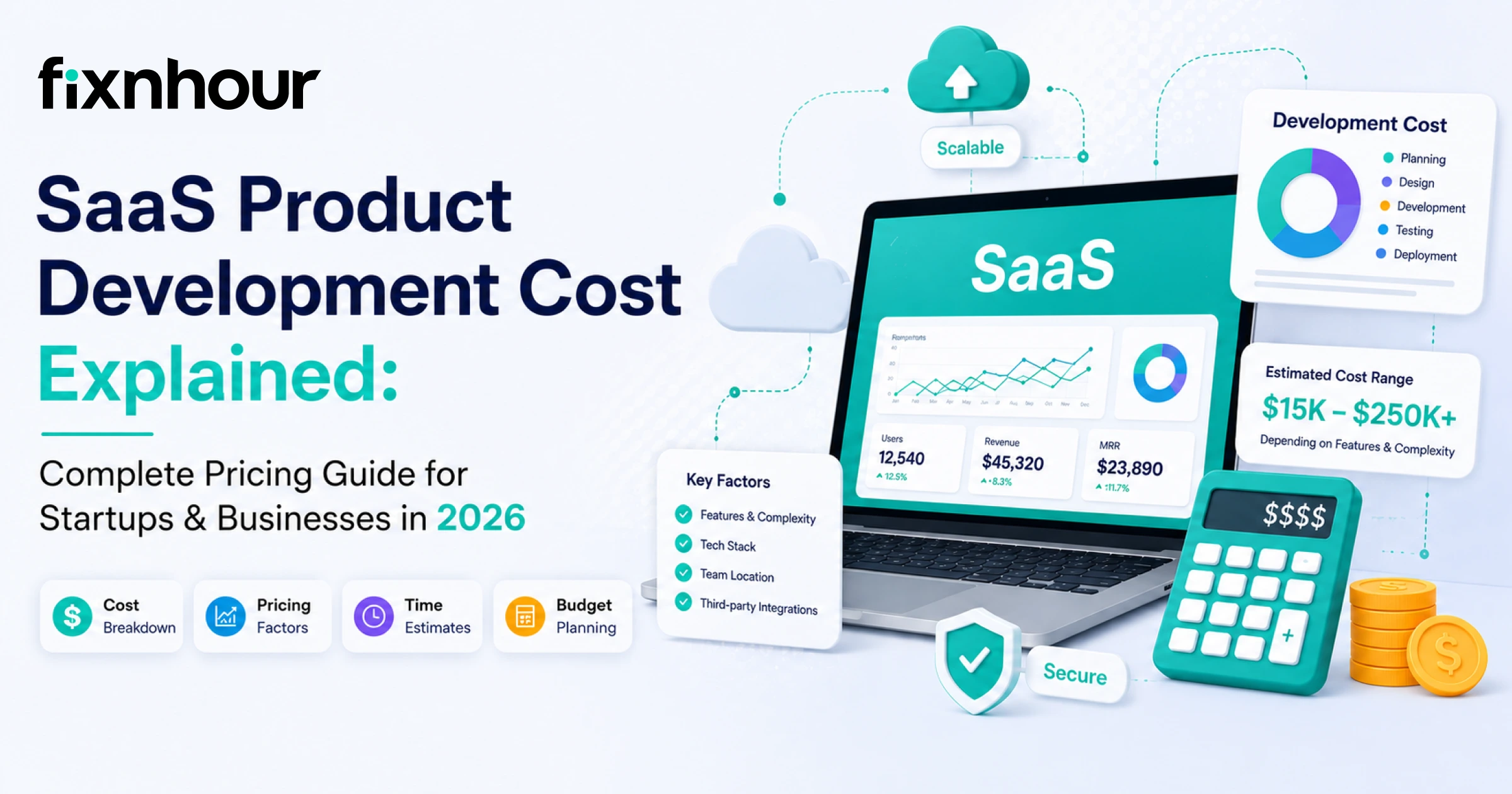
The average SaaS product development cost in 2026 depends on factors such as project complexity, features, technology stack, development team location, and integration requirements. A basic SaaS application may cost between $20,000 and $50,000, while advanced enterprise-grade platforms can exceed $250,000. Businesses should also budget for ongoing maintenance, security updates, cloud hosting, and future feature enhancements to ensure long-term scalability and success.
|
|
|
|
|
|
|
|
|
|
|
|
|
|
|
Also Read: HRMS vs. Payroll Software: Which One Does Your Business Need?
Key Factors That Affect SaaS Product Development Cost
Several factors influence SaaS product development costs, including project complexity, feature requirements, UI/UX design, technology stack, third-party integrations, cloud infrastructure, security measures, and development team expertise. Additional expenses may arise from testing, maintenance, scalability enhancements, compliance requirements, and ongoing updates needed to keep the SaaS platform competitive and reliable.
| Cost Factor | Description | Key Components | Impact on SaaS Development Cost |
|---|---|---|---|
| Feature Complexity | The number and complexity of features significantly affect development time and budget. | Basic Features: User Registration, Login Authentication, User Profiles, Subscription Management, DashboardAdvanced Features: AI-Powered Recommendations, Real-Time Analytics, Workflow Automation, Multi-Language Support, Chat Functionality | Higher feature complexity increases development effort, testing requirements, and overall project cost. |
| UI/UX Design Requirements | A user-friendly and visually appealing interface improves customer engagement and retention. | Custom UI Design, User Journey Mapping, Interactive Dashboards, Mobile Responsiveness, Accessibility Optimization | Advanced UI/UX design requires additional design, prototyping, and usability testing, increasing costs. |
| Technology Stack Selection | The choice of technologies impacts development speed, performance, scalability, and maintenance. | Frontend: React.js, Angular, Vue.jsBackend: Node.js, Python, .NET, PHP LaravelCloud Infrastructure: AWS, Microsoft Azure, Google Cloud Platform | Modern and scalable technologies may require specialized developers, affecting project costs. |
| Third-Party Integrations | SaaS platforms often integrate external tools and services to extend functionality. | Stripe, PayPal, Salesforce CRM, HubSpot, Google Analytics, Slack, Zoom | Integration complexity, API licensing, and maintenance can add significant development expenses. |
| Security & Compliance | Security measures protect user data and ensure regulatory compliance. | Data Encryption, Multi-Factor Authentication (MFA), GDPR Compliance, HIPAA Compliance, Secure Cloud Storage, Role-Based Access Control (RBAC) | Enhanced security and compliance requirements increase development, auditing, and ongoing maintenance costs. |
Feature Complexity
Features play the biggest role in determining development costs.
Basic features include:
- User registration
- Login authentication
- User profiles
- Subscription management
- Dashboard
Advanced features may include:
- AI-powered recommendations
- Real-time analytics
- Workflow automation
- Multi-language support
- Chat functionality
UI/UX Design Requirements
A well-designed SaaS platform improves user engagement and customer retention.
UI/UX costs depend on:
- Custom design requirements
- User journey mapping
- Interactive dashboards
- Mobile responsiveness
- Accessibility optimization
Technology Stack Selection
The technology stack impacts both development speed and long-term scalability.
Popular SaaS technologies include:
Frontend
- React.js
- Angular
- Vue.js
Backend
- Node.js
- Python
- .NET
- PHP Laravel
Cloud Infrastructure
- AWS
- Microsoft Azure
- Google Cloud Platform
Third-Party Integrations
Many SaaS products rely on external services.
Common integrations include:
- Stripe payment gateway
- PayPal payments
- Salesforce CRM
- HubSpot
- Google Analytics
- Slack
- Zoom
Security and Compliance
Security is essential for modern SaaS applications.
Businesses often require:
- Data encryption
- Multi-factor authentication
- GDPR compliance
- HIPAA compliance
- Secure cloud storage
- Role-based access control
Also Read :- How to Find the Right E-commerce Platform for Your Business in 2026
SaaS Development Cost Breakdown by Stage
SaaS development costs are distributed across multiple stages, including planning, market research, UI/UX design, development, testing, deployment, and maintenance. The development phase typically requires the largest investment, while ongoing costs include cloud hosting, security updates, performance optimization, feature enhancements, and technical support to ensure long-term product success. Fixnhour helps businesses connect with trusted SaaS development companies that can efficiently manage each stage of the development process while delivering scalable and cost-effective software solutions.
| Development Stage | Purpose | Key Activities |
|---|---|---|
| Product Discovery & Research | Validate the business idea and define project requirements before development begins. | • Market Research• Competitor Analysis• Business Planning• Feature Prioritization |
| UI/UX Design | Create an intuitive, engaging, and user-friendly experience for customers. | • Wireframes• Prototypes• Design Systems• User Testing |
| Frontend Development | Build the visual and interactive elements users engage with. | • Dashboards• User Interfaces (UI)• Mobile Responsiveness |
| Backend Development | Develop the core functionality and infrastructure of the SaaS application. | • APIs• Databases• Authentication Systems• Business Logic |
| Testing & Quality Assurance | Ensure the platform is secure, stable, and free from critical issues. | • Functional Testing• Performance Testing• Security Testing• Cross-Browser Testing |
| Deployment & Launch | Launch the SaaS product and ensure smooth operation in a live environment. | • Cloud Setup• Monitoring Tools• Performance Optimization |
Product Discovery and Research
Before development begins, businesses need to validate ideas and define project requirements.
Activities include:
- Market research
- Competitor analysis
- Business planning
- Feature prioritization
UI/UX Design
The design phase focuses on creating a user-friendly interface.
Includes:
- Wireframes
- Prototypes
- Design systems
- User testing
Frontend Development
Frontend development handles everything users interact with.
Includes:
- Dashboards
- User interfaces
- Mobile responsiveness
Backend Development
Backend development powers the core functionality of your SaaS product.
Includes:
- APIs
- Databases
- Authentication systems
- Business logic
Testing and Quality Assurance
Testing ensures a bug-free and secure platform.
Includes:
- Functional testing
- Performance testing
- Security testing
- Cross-browser testing
Deployment and Launch
Deployment makes your SaaS product available to customers.
Includes:
- Cloud setup
- Monitoring tools
- Performance optimization
Also Read: How Much Does It Cost to Build Custom CRM Software in 2026?
Hidden Costs of SaaS Product Development
Many businesses focus on development expenses but overlook hidden SaaS costs. These may include cloud hosting, third-party API subscriptions, security compliance, data storage, software licensing, performance optimization, technical support, bug fixes, and ongoing maintenance. Proper budgeting for these expenses helps avoid unexpected costs and ensures long-term product sustainability.
Cloud Hosting
Monthly cloud expenses can range from the following:
- Small SaaS: $50–$500/month
- Growing SaaS: $500–$5,000/month
- Enterprise SaaS: $5,000+/month
Maintenance and Updates
After launch, ongoing maintenance is essential.
Includes:
- Bug fixes
- Security patches
- Feature enhancements
- Performance improvements
Marketing and Customer Acquisition
Even the best SaaS product needs visibility.
Marketing costs may include:
- SEO
- Content marketing
- PPC advertising
- Email campaigns
- Social media marketing
How to Reduce SaaS Development Costs
Businesses can reduce SaaS development costs by starting with a Minimum Viable Product (MVP), prioritizing essential features, using scalable cloud services, adopting agile development practices, and leveraging reusable components. Partnering with an experienced SaaS development company also helps optimize resources, minimize risks, accelerate development, and control overall project expenses.
| Cost Optimization Strategy | Description | Key Benefits |
|---|---|---|
| Start with an MVP (Minimum Viable Product) | Develop only the essential features required to launch and test your SaaS product in the market. | • Faster launch• Lower development costs• Early user feedback• Reduced business risk |
| Prioritize Core Features | Focus on solving the primary customer problem instead of building every planned feature at the beginning. | • Faster development cycle• Quicker value delivery• Market demand validation• Better resource utilization |
| Use Agile Development | Implement an iterative development approach with continuous testing, feedback, and improvements. | • Better budget control• Increased flexibility• Faster feature releases• Reduced costly mistakes |
| Partner with an Experienced SaaS Development Company | Work with a skilled SaaS development partner to ensure efficient planning, execution, and scalability. | • Reduced development risks• Improved scalability• Faster time-to-market• Optimized project costs |
Start with an MVP
An MVP (Minimum Viable Product) includes only essential features.
Benefits:
- Faster launch
- Lower development costs
- Early user feedback
- Reduced business risk
Prioritize Core Features
Avoid adding every idea during the first phase.
Focus on:
- Solving one key problem
- Delivering value quickly
- Validating market demand
Use agile development.
Agile development helps businesses:
- Control budgets
- Improve flexibility
- Release updates faster
- Reduce costly mistakes
Partner with an Experienced SaaS Development Company
An experienced SaaS development company can help
- Reduce development risks
- Improve scalability
- Accelerate time-to-market
- Optimize project costs
SaaS Product Development Cost by Industry
SaaS product development costs vary across industries based on functionality, security, compliance, and integration requirements. Healthcare and fintech SaaS solutions often require higher investments due to strict regulations, while e-commerce, education, and CRM platforms may have lower costs. Industry-specific features significantly influence overall development budgets and project complexity.
| SaaS Industry | Key Requirements & Features |
|---|---|
| Healthcare SaaS | • HIPAA Compliance• Patient Data Security• Electronic Health Record (EHR) Integration |
| FinTech SaaS | • Secure Payment Systems• Banking Integrations• Regulatory Compliance & Security Standards |
| Education SaaS | • Learning Management Systems (LMS)• Video Conferencing Integration• Student Portals & Progress Tracking |
| E-commerce SaaS | • Inventory Management• Payment Gateway Integration• Analytics & Reporting Dashboards |
Healthcare SaaS
Healthcare platforms require:
- HIPAA compliance
- Patient data security
- Electronic health record integration
FinTech SaaS
FinTech products require:
- Secure payment systems
- Banking integrations
- Compliance regulations
Education SaaS
Educational platforms include:
- Learning management systems
- Video conferencing
- Student portals
E-commerce SaaS
E-commerce platforms often need:
- Inventory management
- Payment gateways
- Analytics dashboards
SaaS Development Trends Impacting Costs in 2026
Emerging technologies are reshaping SaaS development costs in 2026. Trends such as artificial intelligence, automation, low-code development, cloud-native architecture, enhanced cybersecurity, and advanced analytics influence project budgets. While these innovations may increase initial investment, they often improve efficiency, scalability, user experience, and long-term return on investment.
AI-Powered SaaS Applications
Artificial intelligence is becoming a standard feature in SaaS products.
Popular AI capabilities include:
- Predictive analytics
- Intelligent automation
- AI chatbots
- Personalized recommendations
Cloud-Native SaaS Architecture
Cloud-native development improves:
- Performance
- Reliability
- Scalability
Multi-Tenant SaaS Platforms
Multi-tenant architecture allows multiple customers to use the same application while maintaining data separation.
Benefits include:
- Lower infrastructure costs
- Easier maintenance
- Better scalability
Conclusion
Understanding SaaS product development costs is essential before launching your software idea. While a basic SaaS MVP may cost between $15,000 and $40,000, advanced platforms can exceed $500,000 depending on complexity and business requirements.
The key to success is focusing on essential features, starting with an MVP, and partnering with an experienced SaaS development company. By planning carefully and investing strategically, businesses can build scalable SaaS products that generate recurring revenue and long-term success. growth. Contact Us today to discuss your SaaS product development requirements and receive a customized cost estimate. Our team can help you plan, design, develop, and launch a scalable SaaS solution tailored to your business goals while optimizing development costs and maximizing long-term ROI.
Frequently Asked Questions
Q1. How much does it cost to develop a SaaS product in 2026?
Ans. The cost of SaaS product development typically ranges from $15,000 to $500,000+, depending on the project's complexity, features, design requirements, and technology stack. A basic MVP may cost less, while enterprise-grade SaaS platforms with AI, automation, and advanced security features require a larger investment. The best approach is to define your business goals and start with essential features first.
Q2. What factors influence SaaS development costs the most?
Ans. Several factors affect SaaS development costs, including feature complexity, UI/UX design, development team size, cloud infrastructure, third-party integrations, and security requirements. Projects requiring AI capabilities, payment gateways, real-time analytics, or compliance standards like GDPR and HIPAA generally cost more. Understanding these factors early helps businesses create a realistic budget and development roadmap.
Q3. Is building a SaaS MVP a good way to reduce costs?
Ans. Yes, developing a Minimum Viable Product (MVP) is one of the most cost-effective ways to launch a SaaS product. An MVP focuses only on the core features needed to solve a specific problem. This approach reduces development expenses, speeds up time-to-market, and allows businesses to gather real user feedback before investing in advanced functionality and future updates.
Q4. How long does it take to develop a SaaS product?
Ans. The timeline depends on the complexity of the project. A simple SaaS MVP may take 3 to 6 months, while a medium-sized platform can take 6 to 12 months. Enterprise SaaS applications with custom integrations, advanced security, and AI-powered features may require over a year of development. Proper planning and agile development practices can help accelerate the process.
Q5. What are the ongoing costs after launching a SaaS product?
Ans. After launch, businesses should budget for cloud hosting, software maintenance, security updates, bug fixes, customer support, and feature enhancements. Ongoing costs typically range from 15% to 25% of the initial development cost annually. Regular updates and performance improvements are essential for retaining customers and staying competitive in the SaaS market.
Q6. Should I hire freelancers or a SaaS development company?
Ans. Freelancers may be suitable for smaller projects with limited budgets, but a professional SaaS development company often provides a more reliable solution. Development agencies offer access to designers, developers, QA engineers, and project managers under one roof. This ensures better communication, scalability, quality control, and long-term support throughout the SaaS product lifecycle.
Q7. Is custom SaaS development worth the investment?
Ans. Absolutely. Custom SaaS development allows businesses to create software tailored to their specific needs and target audience. Unlike off-the-shelf solutions, custom SaaS products provide greater flexibility, scalability, and competitive advantages. While the upfront investment may be higher, a well-built SaaS platform can generate recurring revenue and deliver strong long-term returns on investment.