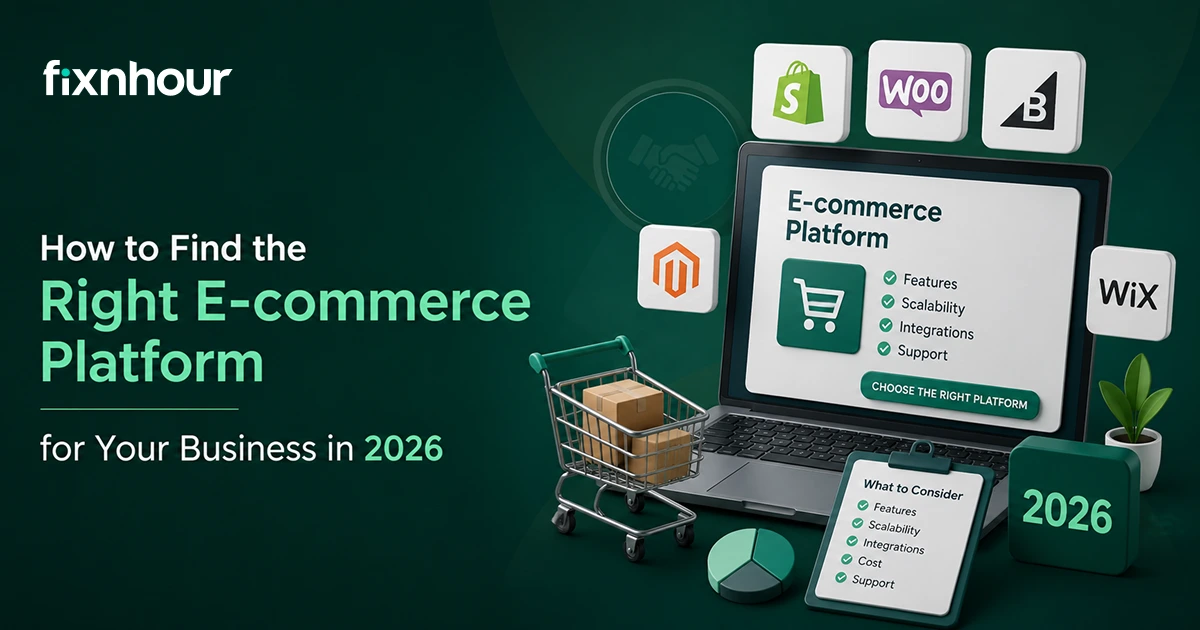
Choosing the right e-commerce platform is one of the most important decisions for any online business in 2026. With changing customer expectations, advanced AI integrations, mobile-first shopping, and growing competition, businesses need a platform that can support both current operations and future growth. Whether you are launching a startup, scaling an existing online store, or expanding into global markets, the platform you choose will directly impact user experience, sales performance, security, and long-term success.
From customization and payment integrations to SEO capabilities and scalability, every feature matters when selecting an e-commerce solution. Popular platforms like Shopify, WooCommerce, Magento, and BigCommerce each offer unique advantages for different business needs. Understanding your goals, budget, and technical requirements can help you make the right choice. In this guide, we’ll explore the key factors to consider when finding the best e-commerce platform for your business in 2026.
The E-commerce Platforms Companies industry is changing fastly. Customers now expect faster websites, smooth checkout, mobile friendly stores, and secure payments. That’s why modern businesses need Scalable eCommerce Solutions. Whether you are starting a small fashion store or a large electronics brand, selecting the right platform matters a lot. The right platform can save time, boost sales, and make shopping easier for customers. Today, many businesses go with platforms like Shopify, Magento, WooCommerce, and BigCommerce. As every business has different needs. That’s why understanding how to choose the right eCommerce Platform is important before making any decision.
Key Factors to Look at Before Choosing an E-commerce Platform
Before choosing an e-commerce platform, businesses should evaluate important factors such as scalability, pricing, customization options, payment gateways, mobile responsiveness, SEO features, security, and third-party integrations. A reliable platform should also provide strong customer support, easy inventory management, and a smooth user experience to help your online store grow successfully in 2026.
1. Ease of Use
The platform should be easy to use. Listing products, updating prices, and managing orders should not feel complicated.
A user-friendly dashboard saves time.
2. Mobile Friendly Design
Most customers shop using phones now. The website must look clean and load fast on mobile devices.
This is one of the best features of the eCommerce Website Builder in 2026.
3. Scalability
The business will grow. The platform should grow with it.
Choose Scalable eCommerce Solutions for Businesses that can handle more products, more traffic, and more orders without reducing speed.
4. SEO Features
Good SEO helps the website rank on Google. The platform should allow easy meta tags, fast loading speed, image optimization, and clean URLs. At Fixnhour, we always suggest platforms that support strong SEO because visibility matters in online business.
5. Security and Payment Options
Customers only trust secure websites. The platform should support safe payment gateways, SSL certificates, and secure checkout systems.
Also Read: Best Top Industries Using Online Business Platforms
Essential Features Every Modern E-commerce Platform Should Have
In 2026, customers expect more than just an online store. They expect convenience. A modern Fixnhour e-commerce platform should include mobile responsiveness, secure payment gateways, SEO tools, AI-powered personalization, multi-channel selling, inventory management, analytics, and fast loading speeds. Features like easy customization, third-party integrations, customer support, and scalable architecture are also essential for improving user experience, increasing conversions, and supporting long-term business growth in the competitive digital marketplace.
- Fast website speed
- Simple checkout process
- AI powered product recommendations
- Multiple payment methods
- Inventory management
- Social media integration
- Mobile optimization
- Customer support tools
Comparing the Best E-commerce Platforms in 2026
There are various e-commerce platforms. Every platform offers different features. That’s why a careful comparison is essential before finalizing the right one.
1. Shopify - Shopify Developer Best for beginners and small ventures. Easy setup and smooth management.
2. WooCommerce - WooCommerce Developers Perfect for WordPress users. Flexible and cost effective.
3. Magento - magento developers Good for large enterprises who require advanced customization.
4. BigCommerce - BigCommerce Developers Strong built-in tools and great scalability.
- Business goals.
- Product size
- Budget
- Features required
How to Choose the Best E-commerce Platform Based on Business Type
The Rise of AI-Powered E-commerce Platforms in 2026 depends on your business type, target audience, and growth goals. Small businesses may prefer user-friendly platforms with affordable pricing, while large enterprises often need advanced customization and scalability. B2B companies require bulk ordering and CRM integrations, whereas fashion or retail brands benefit from visually rich storefronts and mobile optimization. Selecting a platform that aligns with your operational needs helps improve performance, customer experience, and long-term success.
- Small businesses usually prefer Shopify or WooCommerce
- Large brands often choose Magento
- Service based businesses need booking friendly websites
- Multi vendor stores need advanced marketplace features
The Best eCommerce Platform for Small Business 2026 is not always the best for large enterprises. That’s why choosing smartly matters. Also, businesses looking for eCommerce Platform Comparison should focus on long-term value instead of only pricing.
Conclusion
In 2026, selecting the right platform plays an important role in the business growth. A strong platform improves customer experience, boosts sales, and supports business growth. In conclusion, choosing the right e-commerce platform is essential for building a successful and scalable online business in 2026. By evaluating your business type, budget, features, and long-term goals, you can select a platform that delivers the best performance and customer experience. Whether you need a simple online store or a fully customized enterprise solution, the right platform can drive growth and increase conversions. Contact us today to find the perfect e-commerce solution for your business needs.
Frequently Asked Questions
Q1. What is the best e-commerce platform for small businesses?
Ans. The best e-commerce platform for small businesses depends on budget, ease of use, and scalability. Platforms like Shopify and WooCommerce are popular because they offer user-friendly interfaces, secure payment options, and customization features. Small businesses should choose a platform that supports future growth while keeping operational costs manageable.
Q2. Why is scalability important in an e-commerce platform?
Ans. Scalability helps your online store handle increasing traffic, products, and customer demands without affecting performance. A scalable e-commerce platform supports business expansion, integrates advanced tools, and improves user experience. Choosing a scalable solution ensures your website can grow smoothly as your business reaches new markets and customers.
Q3. Which features should an e-commerce platform include?
Ans. A reliable e-commerce platform should include mobile responsiveness, secure payment gateways, SEO tools, inventory management, analytics, and third-party integrations. Additional features like AI personalization, fast loading speed, and multi-channel selling can improve customer engagement and increase online sales. These tools help businesses stay competitive in the digital marketplace.
Q4. How does SEO impact an e-commerce website?
Ans. SEO improves your e-commerce website’s visibility on search engines, helping attract more organic traffic and potential customers. Platforms with built-in SEO tools allow businesses to optimize product pages, meta tags, URLs, and site speed. Strong SEO strategies increase rankings, improve user experience, and drive higher conversions and online revenue.
Q5. Is mobile optimization necessary for e-commerce businesses?
Ans. Yes, mobile optimization is essential because most online shoppers use smartphones for browsing and purchasing products. A mobile-friendly e-commerce platform ensures fast loading speeds, easy navigation, and secure checkout experiences. Mobile optimization improves customer satisfaction, increases engagement, and helps businesses achieve better search engine rankings and conversion rates.
Q6. How can businesses choose the right e-commerce platform?
Ans. Businesses should compare pricing, customization, scalability, integrations, security, and support services before selecting an e-commerce platform. Understanding business goals, target audience, and technical requirements helps narrow down the best option. Choosing the right platform improves store performance, customer experience, and long-term growth opportunities in the competitive e-commerce industry.