In today's digital-first business environment, establishing credibility is essential for attracting customers, building professional relationships, and generating business opportunities. Whether you are a startup, an established enterprise, or a service provider, online business verification helps demonstrate that your company is legitimate and trustworthy.
Business verification involves confirming a company's identity, registration details, ownership, and operational information. With the increasing number of fraudulent listings and online scams, customers and business partners are becoming more cautious when choosing service providers. This guide explains the information required to verify a business online, essential documents, verification methods, costs, benefits, challenges, and best practices.
Quick Answer
To verify a business online through platforms like Fixnhour, you typically need its legal business name, registered address, contact information, business registration certificate, tax identification number, and proof of ownership or authorization. Some platforms may also require identity documents, business licenses, website ownership details, or additional supporting documents, depending on their verification policies.
Key Takeaways
- Online business verification helps establish business authenticity and credibility.
- Legal registration documents are important for confirming business legitimacy.
- Consistent business information can reduce verification delays.
- Verification requirements vary depending on the platform and country.
- Verified business profiles can improve customer confidence.
- Both free and paid business verification methods are available.
- AI and automated verification technologies are shaping the future of business authentication.
What Is Online Business Verification and Why Does It Matter?
Online business verification is the process of confirming a company's identity, legal existence, ownership, and operational details through reliable digital platforms. Understanding why business verification matters helps customers distinguish legitimate businesses from fraudulent companies. For businesses, verification supports professional credibility, transparency, and customer acquisition while creating a more trustworthy environment for digital transactions, partnerships, and long-term business relationships across different industries.
Understanding Online Business Verification
Business verification involves reviewing company registration records, contact information, ownership details, and supporting documents. Government authorities, business directories, financial institutions, and online platforms use different verification methods to determine whether a company operates legitimately and meets their specific requirements.
How Does Business Verification Work?
Verification platforms compare submitted business information with official documents, government databases, or other reliable sources. Depending on the verification method, businesses may need to complete email authentication, phone verification, document submission, identity confirmation, or physical location verification.
What Information Is Required to Verify a Business Online?
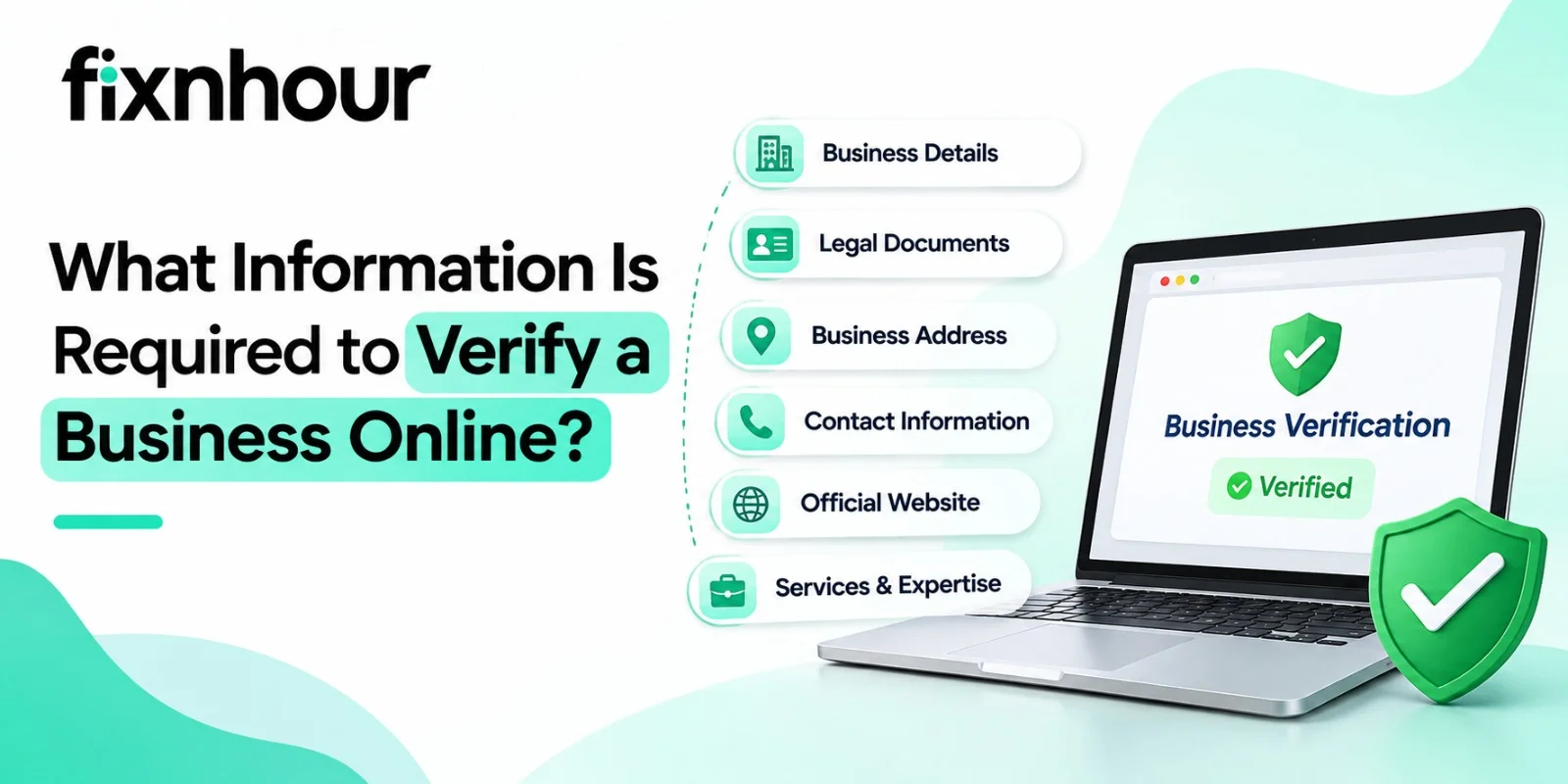
Businesses must provide accurate and up-to-date information to complete online verification successfully and establish a verified business profile. Although documentation requirements differ depending on the platform, business structure, industry, and country, most verification processes focus on confirming company identity, legal registration, ownership, and contact details. Preparing the necessary information beforehand can simplify the verification process and reduce unnecessary delays or rejections.
Basic Business Information
Basic business information establishes a company's identity and helps verification platforms confirm its digital presence. Businesses should ensure their information remains consistent across official documents, websites, search engines, professional networks, and business directories to avoid discrepancies during verification.
Essential information includes:
- Legal business name
- Registered business address
- Official phone number and email address
- Business website URL
- Business category and industry
- Business operating hours, where applicable
Legal and Business Registration Documents
Legal documents help demonstrate that a company is registered with the appropriate authorities. Depending on the jurisdiction and business structure, companies may need incorporation certificates, business licenses, tax registration documents, or other official records to establish their legal identity.
Business Ownership and Identity Verification
Ownership verification confirms that the person submitting the application has permission to represent the company. Platforms may request government-issued identification, authorization letters, partnership agreements, or director information to prevent unauthorized individuals from claiming or misrepresenting an existing business.
Business Address and Digital Presence Verification
Address verification confirms a company's registered or operational location. Businesses may provide utility bills, rental agreements, official correspondence, or physical location evidence. Website ownership and professional email addresses can also support digital identity verification when required by the platform.
Which Platforms Allow You to Verify a Business Online?
Several online platforms enable companies to establish their business identity and demonstrate credibility while helping customers find verified companies. Government portals primarily confirm legal registration, while search engines and business directories help establish profile ownership and digital visibility. Choosing the right platform depends on whether a business wants to demonstrate legal compliance, attract customers, strengthen its reputation, or establish professional credibility online.
Google Business Profile Verification
Google Business Profile enables eligible businesses to manage their information across Google Search and Maps. Available verification methods may include phone, email, video recording, live video calls, or mail, depending on the business category, location, and Google's eligibility requirements.
Government Business Registration Portals
Government portals allow individuals and organizations to cross-check official business records. In India, the Ministry of Corporate Affairs, GST Portal, and Udyam Registration Portal provide different registration-related information that can help users assess a company's legal identity.
B2B Business Directories and Review Platforms
B2B platforms such as Fixnhour, Clutch, and GoodFirms help companies showcase their services, experience, and professional capabilities. Buyers can explore business profiles and compare potential service providers. The verification requirements and review procedures vary between individual platforms.
|
Platform |
Primary Purpose |
|---|---|
|
Google Business Profile |
Business profile ownership and local presence |
|
MCA Portal |
Company and LLP registration checks |
|
GST Portal |
GST registration validation |
|
Udyam Portal |
MSME registration validation |
|
Fixnhour |
B2B business discovery |
|
Clutch and GoodFirms |
Service provider discovery and reviews |
Business Verification Statistics and Market Insights
The growing dependence on digital transactions has increased the importance of reliable business verification. Fraudulent websites, fake business profiles, and identity theft create significant challenges for customers and organizations. Companies looking to list business online should maintain transparent information and consistent digital identities to help potential buyers make better-informed decisions while supporting a safer and more reliable online business environment.
Rising Online Fraud and Business Impersonation
According to the Federal Trade Commission (FTC), reported consumer fraud losses reached approximately $16 billion in 2025. These figures highlight the importance of independently checking business information before entering professional agreements, sharing confidential information, or completing financial transactions.
Growing Adoption of Digital Verification Solutions
Know Your Business (KYB), automated document verification, and digital identity authentication are becoming important tools for assessing business legitimacy. These technologies help organizations identify potential risks, streamline onboarding, and reduce dependence on manual verification procedures.
Also read: How Can Buyers Identify Verified IT and Software Companies
How to Verify a Business Online: Step-by-Step Process
Online business verification becomes easier when organizations follow a structured approach. Preparing accurate information, selecting a suitable platform, and submitting relevant documents can help businesses avoid unnecessary complications. A verified business profile can also enhance credibility and improve opportunities to generate Fixnhour B2B leads. Business owners should monitor their verification status and respond promptly to additional requests. The following steps provide a practical framework for completing business verification across different digital platforms.
|
Steps |
Short Description |
Key Requirements |
|---|---|---|
|
Step 1: Collect Essential Business Information |
Gather accurate business details and ensure consistency with official records. |
Legal business name, registered address, contact details, website URL, and business category. |
|
Step 2: Prepare Legal and Supporting Documents |
Arrange valid documents to establish business legitimacy and prevent verification delays. |
Registration certificate, tax identification documents, ownership proof, and business licenses. |
|
Step 3: Choose a Business Verification Platform |
Select a reliable platform that aligns with your business objectives and industry requirements. |
Platform eligibility, security, documentation requirements, and verification options. |
|
Step 4: Create or Claim Your Business Profile |
Establish a professional business profile with accurate and relevant company information. |
Company details, service descriptions, contact information, business images, and branding materials. |
|
Step 5: Submit Documents and Complete Verification |
Submit supporting documents and complete the required authentication process. |
Legal documents, email confirmation, phone authentication, or video verification. |
|
Step 6: Track Verification Status and Update Your Profile |
Monitor verification progress and maintain accurate business information. |
Application status tracking, additional document submission if requested, and regular profile updates. |
Step 1: Collect Essential Business Information
Start by gathering accurate business information, including your legal company name, registered address, official contact details, website URL, and business category. Ensure all information matches official registration records to establish consistency, prevent verification errors, and simplify the overall application process.
- Collect your legal business name and registered address.
- Gather official phone numbers and email addresses.
- Identify your business category and industry.
- Cross-check information against official business records.
Step 2: Prepare Legal and Supporting Documents
Prepare all necessary legal and supporting documents required by your selected verification platform. Valid registration certificates, applicable tax documents, ownership proof, and business licenses help establish company legitimacy while reducing the chances of application rejection, documentation errors, and verification delays.
- Collect valid business registration certificates.
- Prepare applicable tax identification documents.
- Arrange business ownership and identity proof.
- Ensure all supporting documents are updated and readable.
Step 3: Choose a Business Verification Platform
Select a reliable business verification platform that aligns with your business objectives and industry requirements. Government portals, search engines, and B2B business directories offer different verification or listing options to support legal identity checks, online visibility, credibility, and customer engagement.
- Identify your business verification objectives.
- Compare available business verification platforms.
- Review platform eligibility and documentation requirements.
- Choose a secure and reputable platform.
Step 4: Create or Claim Your Business Profile
Create a new business profile or claim an existing listing on your selected platform. Provide accurate company information, professional service descriptions, contact details, and relevant business categories to establish a comprehensive digital presence that supports business credibility and customer discoverability.
- Register or claim your existing business listing.
- Add accurate company and contact information.
- Include professional business descriptions and services.
- Upload relevant business images and branding materials.
Step 5: Submit Documents and Complete Verification
Submit the required business documents through the platform's official verification channel and complete the available authentication process. Depending on platform requirements, verification may involve email confirmation, phone authentication, video verification, or document reviews to establish business identity and ownership legitimacy.
- Upload the required legal and supporting documents.
- Complete the available identity verification method.
- Confirm your business contact details.
- Review all submitted information before final submission.
Step 6: Track Verification Status and Update Your Profile
Regularly monitor your business verification status and respond promptly to additional information requests. Once verification is completed, maintain an accurate business profile by updating company details, service offerings, contact information, and supporting documents whenever necessary to ensure continued online credibility.
- Monitor your verification application status.
- Respond promptly to additional verification requests.
- Update business information whenever changes occur.
- Maintain consistent and accurate business profiles.
What Are the Benefits of Verifying Your Business Online?
Business verification offers several advantages beyond confirming a company's legal identity. It helps organizations establish professional credibility, improve online discoverability, and build stronger customer relationships. Verified business listings boost visibility by enabling potential buyers to access accurate information, evaluate service capabilities, and make informed decisions when selecting business partners or purchasing professional services in competitive digital markets.
Increased Customer Trust and Business Credibility
Online business verification helps establish trust by demonstrating that a company is legitimate and transparent. Accurate business information, verified contact details, and official registration documents give potential customers greater confidence when evaluating services, making purchasing decisions, and establishing professional business relationships.
Improved Online Visibility
Verified and well-optimized business profiles can improve online discoverability across search engines, business directories, and digital marketplaces. Maintaining accurate company information and consistent business listings helps potential customers find relevant services more easily while supporting brand recognition and organic search visibility.
Better B2B Lead Generation Opportunities
A credible and professionally maintained business profile helps attract potential clients searching for reliable service providers. By showcasing business expertise, industry experience, and service offerings, companies can generate qualified leads, establish valuable professional connections, and create opportunities for long-term business growth.
Protection Against Business Impersonation
Online business verification helps reduce the risks associated with fraudulent listings, unauthorized profiles, and business identity misuse. Maintaining accurate official business information allows companies to identify suspicious activities, protect their brand identity, and provide customers with reliable information for safer transactions.
Stronger Brand Reputation
A verified business presence demonstrates professionalism, transparency, and commitment to maintaining accurate company information. Consistent business details, genuine customer reviews, and reliable service delivery help strengthen brand reputation, build lasting customer relationships, and establish a competitive advantage in the digital marketplace.
Conclusion
Understanding what information is required to verify a business online is essential for establishing credibility and maintaining a trustworthy digital presence. Accurate company information, valid registration documents, ownership proof, and consistent contact details form the foundation of successful business verification.
As digital authentication technologies continue evolving, businesses should prioritize transparency, information accuracy, and secure verification practices. A verified profile is a useful trust signal, but it should be supported by genuine expertise, reliable services, and professional business practices. Platforms such as Fixnhour help businesses showcase their capabilities, strengthen online discoverability, and connect with potential customers in an increasingly competitive digital marketplace. Talk to Our Experts
Frequently Asked Questions
Q1. What documents are required to verify a business online?
Ans. The documents required to verify a business online typically include a business registration certificate, applicable tax identification documents, proof of business address, government-issued identity proof, and ownership authorization. Some platforms may also request trade licenses, utility bills, or website ownership details. Specific documentation requirements vary depending on the business structure, geographical location, industry regulations, and the selected online verification platform.
Q2. How can I check if a business is legally registered online?
Ans. You can check whether a business is legally registered by searching official government business registries using its legal name or registration number. In India, the Ministry of Corporate Affairs (MCA) portal provides company and LLP registration information. You can also check applicable GST registration details, business licenses, and other official records to confirm the company's legal identity and registration status.
Q3. Can I verify my business online without a registration certificate?
Ans. Yes, some online platforms allow business verification without a registration certificate by accepting alternative evidence, such as phone verification, email authentication, utility bills, address proof, or video verification. However, government authorities, financial institutions, and specialized verification providers may require official registration documents. Businesses should review platform-specific eligibility requirements before submitting alternative documents to avoid unnecessary verification delays or application rejection.
Q4. How long does online business verification take?
Ans. Online business verification can take anywhere from a few minutes to several working days, depending on the platform, verification method, and documentation requirements. Automated verification processes are generally faster, while manual document reviews may require additional time. Providing accurate business information, submitting complete documents, and responding promptly to verification requests can help reduce processing delays and improve the verification experience.
Q5. Is it possible to verify a business online for free?
Ans. Yes, businesses can complete certain online verification processes for free through platforms such as Google Business Profile and government registration portals. Basic verification methods may include email authentication, phone confirmation, or registration record checks. However, advanced business background checks, compliance screening, and third-party identity verification services may involve additional charges depending on the provider, service requirements, and verification complexity.
Q6. Is a GST number mandatory for online business verification in India?
Ans. A GST number is not mandatory for every online business verification process in India. The requirement depends on the nature of the business, applicable GST regulations, and the selected verification platform. Some businesses may qualify for verification using alternative registration documents, identity proof, or address verification. However, platforms conducting tax-related or compliance checks may specifically require valid GST registration details.
Q7. How can I verify an online business before making a payment?
Ans. Before making a payment, verify the company's legal registration, official website, contact information, business address, and independent customer reviews. Check applicable tax registration details and ensure payment information matches the business identity. Request a formal invoice or written agreement, avoid suspicious payment requests, and use secure payment methods to reduce the risk of financial fraud, impersonation, and unauthorized business transactions.
Q8. What should I do if my online business verification is rejected?
Ans. If your online business verification is rejected, carefully review the rejection notice to identify the specific reason. Correct inaccurate business information, replace expired documents, and ensure all submitted details match official registration records. Contact the platform's support team if additional clarification is required. Once the necessary corrections are completed, resubmit your application according to the platform's official business verification guidelines.