Businesses are increasingly discovered, researched, and evaluated online before customers make contact. Whether someone is looking for a software development company, a consulting firm, or a business service provider, having accurate and transparent company information can make a meaningful difference. Business verification helps establish that a company’s basic identity and information have been reviewed, giving potential customers a clearer starting point for their research.
In this guide, we will explain what business verification means, how the process works, why it matters for businesses and B2B buyers, what documents may be required, its benefits and limitations, and how businesses can strengthen their digital presence through verification.
Quick Answer
Business verification on Fixnhour involves reviewing company information to support business transparency and buyer research. It may include checking business names, websites, contact details, locations, and supporting information, helping potential buyers evaluate businesses during B2B service provider discovery.
Key Takeaways
- Business verification is a process of checking business identity and information against relevant evidence.
- It helps improve transparency and supports informed business research.
- Verification requirements vary across platforms and industries.
- Verified status does not automatically guarantee service quality, reliability, or customer satisfaction.
- Buyers should evaluate portfolios, reviews, expertise, and communication alongside verification.
- Complete business profiles can make company information easier to discover and evaluate.
- Business verification is becoming increasingly relevant as digital and AI-powered business discovery evolves.
What Does Business Verification Mean?
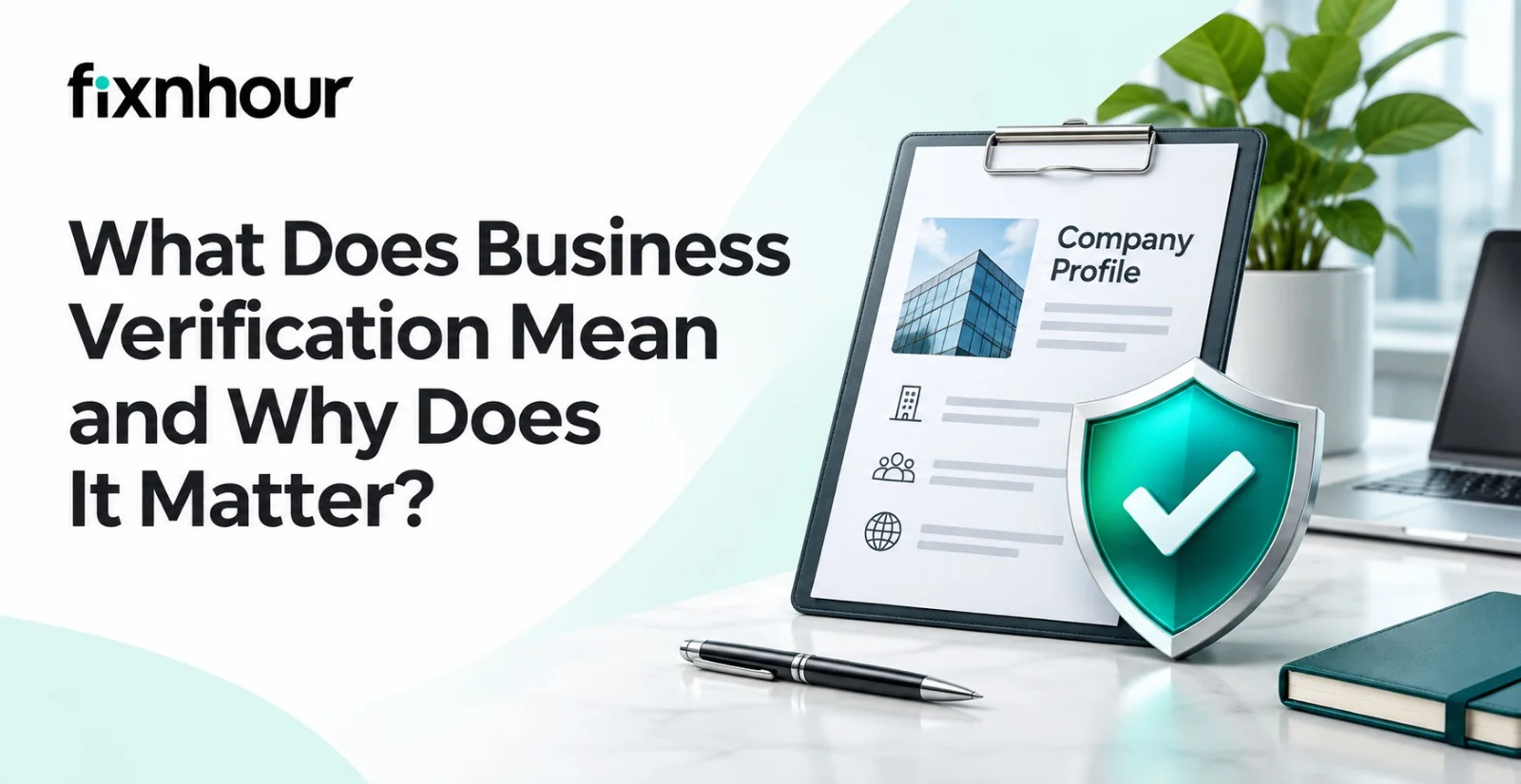
Business verification is a process used to check whether a company’s identity and submitted information can be supported by reliable evidence. Depending on the platform, it may involve reviewing a business name, website, address, contact details, registration records, or other documentation. The purpose is to help establish a clearer understanding of who operates the business and what information can be confirmed. Verified companies win more B2B clients by helping potential buyers review business information, build confidence during vendor research, and make more informed decisions when evaluating service providers.
What Information Is Checked During Business Verification?
Business verification requirements differ depending on the platform and purpose. A verification provider may review several details to establish whether the company information is consistent and supported by appropriate evidence.
- Business name and legal identity.
- Official website and business email.
- Business address or operating location.
- Registration or licensing information, where required.
- Contact details and company services.
What Is the Difference Between a Verified and an Unverified Business?
A verified business has completed a particular platform's verification requirements, while an unverified business may not have completed them or may not have been reviewed. The difference relates to the verification process, not necessarily the quality of services, experience, or reliability of either business.
Why Does Business Verification Matter for Companies and Customers?
Business verification matters because it helps companies establish credibility and gives customers greater confidence when researching potential partners. Confirming business details, such as identity, website, contact information, and services, can reduce uncertainty and support informed decisions. For companies, verification strengthens transparency, improves online presence, and makes it easier for potential customers to evaluate their business. Businesses are switching to Fixnhour to strengthen their B2B business visibility, showcase verified company information, and help potential buyers discover, evaluate, and shortlist service providers with greater confidence.
How Business Verification Builds Trust and Credibility
Business verification helps establish credibility by allowing essential company details to be reviewed against available evidence. When customers can access consistent business information, they may feel more confident researching, contacting, or considering a company for potential collaboration, services, or business opportunities.
Why B2B Buyers Check Business Verification Before Hiring
B2B buyers often evaluate several service providers before making a hiring decision. Business verification can support their due diligence by helping them review company identity, contact details, services, experience, and other available information before deciding which providers to shortlist.
How Business Verification Supports Online Reputation
Business verification can complement a company's online reputation by supporting transparency around its basic business information. Combined with authentic reviews, detailed service descriptions, case studies, professional communication, and consistent digital presence, it can help potential customers develop a clearer understanding of the business.
Does Business Verification Help Businesses Get Discovered Online?
Business verification may help companies maintain credible and accurate profiles across business listing platforms. Although verification alone does not guarantee better search rankings or AI visibility, complete profiles, relevant content, consistent information, and website quality can collectively support online discoverability.
Also read: How Does a Verified Business Profile Build Trust with B2B Buyers?
How Does the Business Verification Process Work? (Step-by-Step)
The business verification process generally involves collecting company information, submitting relevant evidence, reviewing details against appropriate sources, and resolving discrepancies. Depending on the platform, verification may be completed online or through additional document review. Businesses should prepare accurate information and understand the specific requirements before starting the process. A verified Google Business Profile can also help businesses confirm their identity, manage business information on Google Search and Maps, and make essential details more accessible to potential customers.
|
Steps |
Description |
Key Requirements |
|---|---|---|
|
Step 1 – Submit Essential Business Information |
Start by submitting accurate business information through the verification platform or service provider. These details help establish the company's identity and provide a foundation for the verification process. Ensure all submitted information is consistent, complete, and up to date. |
Business name and registration details; company website and business email; registered or operating business address; company overview and contact information. |
|
Step 2 – Provide Supporting Documents or Evidence |
Submit relevant documents or supporting evidence required by the verification provider. These records help validate the company's identity, registration, or other business details. Ensure documents are authentic, readable, current, and aligned with the information submitted during registration. |
Business registration certificates; tax documents or business licenses, where applicable; address proof or supporting records; additional documents requested by the verification provider. |
|
Step 3 – Review and Validate Business Details |
The verification provider reviews the submitted information and compares it with available records, databases, websites, or supporting evidence. This step helps identify inconsistencies, verify relevant business details, and determine whether the submitted information meets the platform's verification requirements. |
Cross-check business registration information; validate website and contact details; review submitted supporting documents; identify discrepancies or missing information. |
|
Step 4 – Complete the Verification Review |
Once the review is completed, the verification provider determines whether the submitted information meets its verification criteria. Businesses may receive approval, requests for additional evidence, or instructions to correct discrepancies before the verification process can be completed. |
Receive verification status or review updates; respond to additional information requests; correct inaccurate or inconsistent details; follow the provider's verification guidelines. |
|
Step 5 – Maintain an Updated Verified Business Profile |
After verification, businesses should regularly review their profiles to ensure that information remains accurate and relevant. Updating company details helps maintain transparency, supports buyer research, and ensures that potential customers can access the latest business information. |
Update contact details and business addresses; refresh services and company descriptions; maintain current documents and credentials; review business profiles periodically. |
|
Step 6 – Build Trust Through Transparent Business Information |
Verification is only one part of establishing business credibility. Companies should continue showcasing relevant expertise, services, project experience, and supporting evidence. Maintaining transparency and accurate information helps buyers better understand the business when researching potential service providers. |
Showcase relevant portfolios and case studies; display genuine customer reviews and testimonials; highlight industry expertise and capabilities; keep business information consistent across platforms. |
Step 1 – Submit Essential Business Information
Start by submitting accurate business information through the verification platform or service provider. These details help establish the company's identity and provide a foundation for the verification process. Ensure all submitted information is consistent, complete, and up to date.
- Business name and registration details.
- Company website and business email.
- Registered or operating business address.
- Company overview and contact information.
Step 2 – Provide Supporting Documents or Evidence
Submit relevant documents or supporting evidence required by the verification provider. These records help validate the company's identity, registration, or other business details. Ensure documents are authentic, readable, current, and aligned with the information submitted during registration.
- Business registration certificates.
- Tax documents or business licenses, where applicable.
- Address proof or supporting records.
- Additional documents requested by the verification provider.
Step 3 – Review and Validate Business Details
The verification provider reviews the submitted information and compares it with available records, databases, websites, or supporting evidence. This step helps identify inconsistencies, verify relevant business details, and determine whether the submitted information meets the platform's verification requirements.
- Cross-check business registration information.
- Validate website and contact details.
- Review submitted supporting documents.
- Identify discrepancies or missing information.
Step 4 – Complete the Verification Review
Once the review is completed, the verification provider determines whether the submitted information meets its verification criteria. Businesses may receive approval, requests for additional evidence, or instructions to correct discrepancies before the verification process can be completed.
- Receive verification status or review updates.
- Respond to additional information requests.
- Correct inaccurate or inconsistent details.
- Follow the provider's verification guidelines.
Step 5 – Maintain an Updated Verified Business Profile
After verification, businesses should regularly review their profiles to ensure that information remains accurate and relevant. Updating company details helps maintain transparency, supports buyer research, and ensures that potential customers can access the latest business information.
- Update contact details and business addresses.
- Refresh services and company descriptions.
- Maintain current documents and credentials.
- Review business profiles periodically.
Step 6 – Build Trust Through Transparent Business Information
Verification is only one part of establishing business credibility. Companies should continue showcasing relevant expertise, services, project experience, and supporting evidence. Maintaining transparency and accurate information helps buyers better understand the business when researching potential service providers.
- Showcase relevant portfolios and case studies.
- Display genuine customer reviews and testimonials.
- Highlight industry expertise and capabilities.
- Keep business information consistent across platforms.
Statistics and Market Insights: Why Business Verification Is Becoming Important
Business verification is increasingly relevant as businesses and customers rely on digital platforms for research, communication, and service discovery. Rather than relying on unsupported market statistics, it is useful to examine how verification fits into online business management, digital due diligence, business profile transparency, and the changing ways buyers evaluate companies. Verified business listings help make essential company information more transparent, allowing potential customers to review business details, explore services, and evaluate providers as part of their purchasing research.
How Digital Business Research Is Changing Buyer Behavior
Buyers can research companies through websites, directories, reviews, social platforms, portfolios, and search engines before contacting them. This makes accurate and accessible business information an important part of the buyer journey. Companies that clearly explain their services, expertise, and experience can make research more straightforward.
Why Business Transparency Matters in Online Marketplaces
Transparency helps buyers understand what a business offers and what evidence supports its claims. Complete company profiles, clear contact information, relevant case studies, and authentic reviews make business research more informative. Verification may complement these details, but it cannot replace the evidence buyers need to evaluate providers.
Business Verification in Search Engines and AI Search
Search engines and AI-powered tools process information from multiple sources to help users explore businesses, services, and topics. Consistent company details, clearly structured website content, descriptive service pages, and credible supporting information can help systems interpret business information. Verification is not a guaranteed AI ranking or recommendation signal.
What Are the Benefits of Business Verification?
Business verification can support transparency, business identity confirmation, and online profile management. It can also help buyers begin their research with clearer information about a company. While verification is not a substitute for detailed due diligence, it may contribute to a more informative digital business presence when combined with authentic evidence of expertise and experience. The growth of verified business ecosystems reflects the increasing importance of transparent company information, reliable business profiles, and digital trust signals in helping buyers discover and evaluate potential business partners.
Builds Buyer Confidence and Business Trust
Business verification can help buyers establish whether the business information they are reviewing has undergone a particular check. This may reduce uncertainty during early research, especially when evaluating unfamiliar companies. Confidence still depends on other factors, including the company's experience, communication, reputation, and ability to meet requirements.
Improves Business Profile Credibility
A verified and complete profile can present essential company information in a more transparent manner. Businesses can strengthen their profiles by adding accurate descriptions, service details, contact information, and supporting evidence, helping potential customers better understand the company before making an inquiry.
Helps Buyers Research and Compare Service Providers
Buyers often compare several companies before making a decision. Complete business profiles can make this research easier by providing information about services, expertise, industries, and relevant work.
Supports B2B Business Discovery
Business directories and discovery platforms can help companies present their services to audiences researching providers. A complete listing may improve the accessibility of business information on that platform, while visibility across search engines depends on multiple factors beyond the listing itself.
Strengthens Digital Due Diligence
Verification can contribute to digital due diligence by helping buyers review basic business information. Buyers should also examine contracts, project experience, references, ownership details, relevant certifications, and communication practices to assess whether a provider is suitable for their requirements.
Conclusion
Business verification helps establish a clearer understanding of a company's identity and information. It can support transparency, improve the accessibility of business details, and provide buyers with a useful starting point for researching potential service providers. However, verification is only one part of building business credibility. Real expertise, accurate information, authentic reviews, relevant experience, clear communication, and professional business profiles are equally important when customers evaluate companies.
Businesses should approach verification as an opportunity to improve transparency rather than as a shortcut to trust, rankings, or leads. When combined with a complete business profile, useful website content, and consistent digital information, verification can become part of a broader strategy for business discovery and buyer research. Talk to Our Experts
Frequently Asked Questions
Q1. What does business verification mean?
Ans. Business verification means checking a company's identity and information against evidence or requirements established by a particular platform or verification provider. It may involve reviewing the business name, website, contact details, address, registration information, or supporting documents. Verification helps establish whether certain information can be confirmed, but the scope varies. It does not automatically prove that a business is experienced, financially stable, trustworthy in every respect, or capable of delivering successful projects. Buyers should review additional evidence before engaging a company.
Q2. Why is business verification important for companies?
Ans. Business verification is important because it can help companies present more transparent business information to customers, partners, and potential buyers. It may support credibility during online research, help businesses manage certain platform profiles, and make company information easier to evaluate. For B2B companies, verification can complement business listings, service descriptions, portfolios, and client testimonials. However, verification should be considered one element of a broader digital presence rather than a guarantee of visibility, leads, or customer trust.
Q3. How can I verify whether a business is legitimate?
Ans. Start by checking the company's official website, business registration information where applicable, contact details, and address. Look for authentic reviews, case studies, client references, and relevant credentials. Check whether the business information is consistent across credible sources. You can also use business directories or verification platforms that explain their verification process. For important transactions, consider independent due diligence, contracts, and references rather than relying on a verification badge alone.
Q4. What documents are required for business verification?
Ans. Business verification documents depend on the platform and business type. Commonly requested documents may include business registration certificates, licenses, address evidence, official website information, or other supporting documents. Some platforms may use email, phone, video, or online information instead of formal documents. Businesses should follow the specific requirements provided by the verification service and avoid submitting sensitive information through unofficial channels.
Q5. How long does it take to get a business verified?
Ans. Business verification may take minutes, several days, or longer depending on the platform, verification method, and review requirements. Automated checks may be quicker, while manual reviews or requests for additional documents can extend the process. Businesses should submit accurate information, follow instructions carefully, and monitor their verification status. For Google Business Profile, verification reviews can take up to five working days after completing the verification steps, although delays may occur.
Q6. Is business verification free?
Ans. Business verification may be free or paid depending on the platform. Some business directories and services provide verification without a separate charge, while others offer verification through paid plans or third-party services. Additional profile features, promotional services, subscriptions, or document checks may involve costs. Before choosing a platform, review the verification requirements, pricing, terms, and what the verification actually confirms.
Q7. Does a verified business badge guarantee that a company is trustworthy?
Ans. No. A verified business badge does not guarantee that a company is trustworthy, experienced, financially stable, or capable of delivering successful projects. It usually indicates that the business has completed a particular verification process according to platform requirements. Buyers should also review company experience, portfolio, reviews, references, service terms, and communication before making decisions. Verification is a supporting signal, not a replacement for due diligence.
Q8. How does business verification help businesses get discovered on Google and AI search engines?
Ans. Business verification may help companies maintain accurate information on platforms where verification is required to manage business profiles. Complete business listings, consistent company information, descriptive website content, structured data, and relevant service pages can support discoverability. Google and AI-powered search tools use multiple sources and systems to interpret information, so verification alone does not guarantee higher rankings, AI citations, or recommendations. Businesses should focus on accurate, useful, and well-organized information across their digital presence.