In the B2B marketplace, buyers research companies, compare service providers, and evaluate business credibility before initiating contact. A verified business profile helps build transparency by confirming selected company details, such as business identity, website, contact information, and other relevant business data. It gives potential buyers a clearer starting point for researching, evaluating, and comparing service providers while helping them understand the information a company publicly presents.
For IT companies, software development agencies, consulting firms, and other B2B service providers, a verified business profile can support professional visibility and buyer discovery. By showcasing verified details alongside services, technical expertise, portfolios, case studies, and industry experience, businesses can help potential clients better understand their capabilities, assess project relevance, and make more informed decisions when shortlisting potential business partners.
Quick Answer
A verified business profile on Fixnhour builds trust with B2B buyers by helping confirm essential company information, including business identity, website, contact details, and other relevant details. It supports transparency, reduces uncertainty during initial vendor research, and provides buyers with a clearer foundation for evaluating and comparing service providers on Fixnhour before making business decisions.
Key Takeaways
- A verified business profile helps confirm essential business information.
- Verification supports transparency during B2B buyer research.
- Buyers use business profiles to evaluate services, capabilities, and company details.
- Verification can support business discovery and provider shortlisting.
- A verified badge does not guarantee quality, expertise, or project success.
- Complete profiles with authentic evidence provide more meaningful information.
- Business verification is becoming relevant to AI-driven search and digital discovery.
What Is a Verified Business Profile?
A verified business profile is a company listing whose selected information has been reviewed or confirmed through a platform's verification process. The process may involve business identity, contact details, website ownership, registration information, or supporting evidence. The scope varies by platform, and verification should be understood as confirmation of specific information rather than an endorsement of every aspect of a company. Understanding why business verification matters helps B2B buyers make more informed decisions, supports transparency, and provides a clearer starting point for researching and comparing service providers.
Understanding business verification in the B2B marketplace
Business verification helps establish whether certain company details can be supported by evidence. In B2B marketplaces, this can help buyers understand who they are evaluating before discussing a project, requesting a proposal, or considering a business relationship.
What information is typically included in a verified business profile?
A well-developed business profile may include:
- Business name, website and contact details
- Company overview and location
- Services and specialized expertise
- Industries served and technology stack
- Portfolio, case studies and credentials
How Does a Verified Business Profile Build Trust with B2B Buyers?
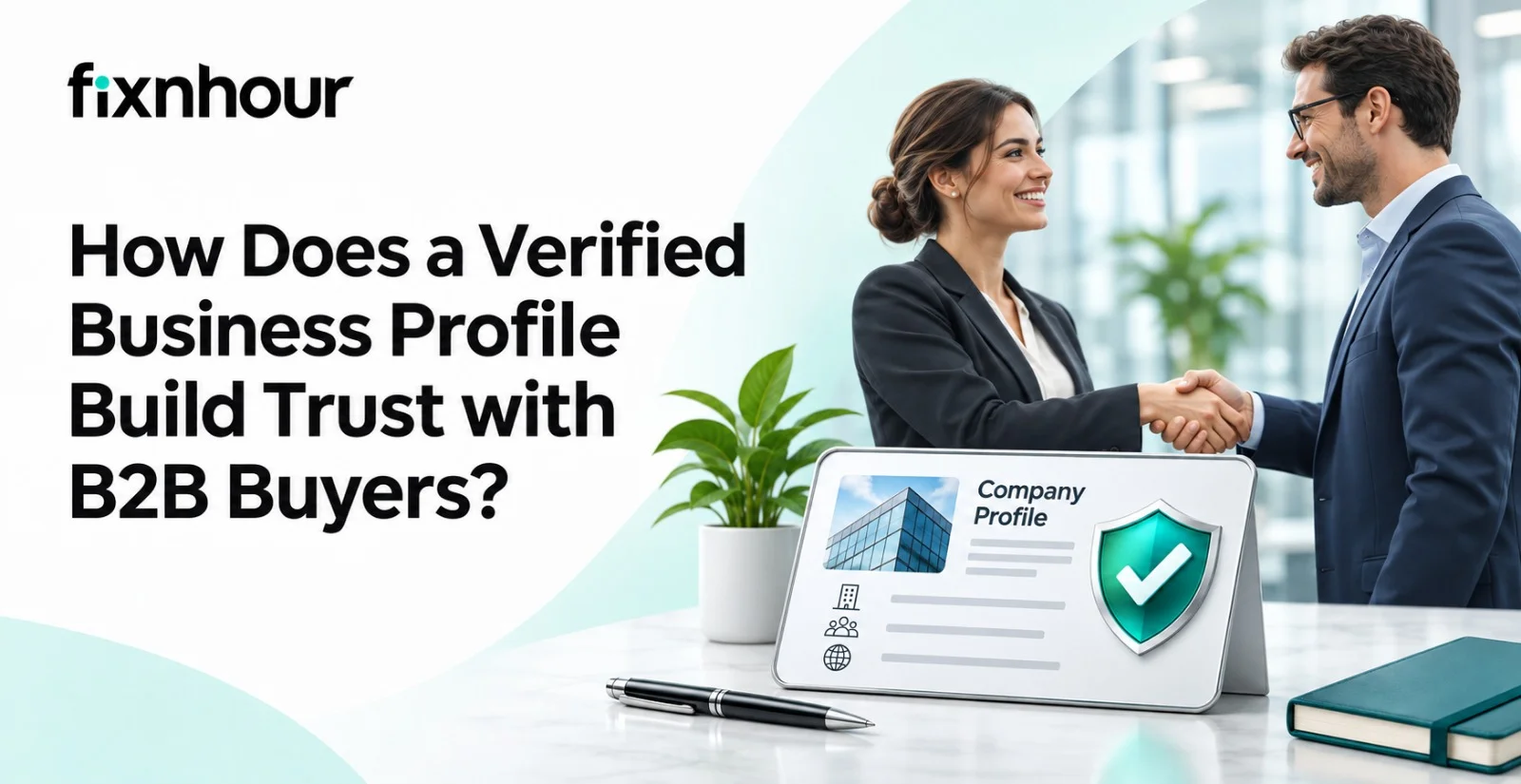
Trust in B2B relationships develops through transparency, evidence, communication, and consistency. A verified business profile can contribute to this process by making essential company details easier to review. When buyers can access relevant information without unnecessary uncertainty, they can begin evaluating potential providers with a clearer understanding of the business and its stated capabilities. Verified companies win more B2B clients by strengthening business transparency, supporting buyer confidence, and making company information easier to assess during the vendor research and shortlisting process.
How business verification improves transparency
Verification can help confirm selected business information, making it easier for potential buyers to understand a company's identity and professional presence. Consistent information across websites, business listings, and company profiles can also support a more transparent research experience.
How verification reduces uncertainty during vendor research
During early research, buyers may encounter unfamiliar companies and conflicting information. A verified profile can help address some initial questions about business identity and available contact details, allowing buyers to focus further research on services, experience, capabilities, and project suitability.
Why verified company information matters before contacting a vendor
Before reaching out, buyers often want to understand what a company offers and whether it appears relevant to their requirements. A verified, informative profile can help them review basic details, identify applicable services, and decide whether further discussion is worthwhile.
Why Do B2B Buyers Trust Verified Business Listings During Vendor Research?
B2B buyers typically evaluate more than a company's marketing message. They look for evidence of relevant expertise, service capabilities, business presence, and experience. Verified business listings that combine confirmed details with useful supporting information can help buyers conduct preliminary research, compare providers, assess business credibility, and develop a shortlist based on their specific requirements.
What B2B buyers look for when evaluating service providers
Buyers may review the following information before selecting a vendor:
- Company background and business presence
- Relevant technical expertise and specialized services
- Portfolio and case studies
- Client reviews and testimonials
- Industry experience and credentials
How business listings support B2B buyer research
B2B business listing platforms provide an organized place for buyers to discover companies and explore their capabilities. Buyers can use profiles to compare services, review business information, identify relevant providers, and shortlist companies for further evaluation.
Verified vs. unverified business listings
Verified listings may offer confirmation of selected business details, while unverified listings may present information that has not been checked through the same process. However, neither status alone determines service quality, experience, or project outcomes. Buyers should review the verification scope and supporting evidence.
What Are the Benefits of a Verified Business Profile for B2B Companies?
A verified business profile can support a company's digital presence by presenting essential information in an accessible format. For B2B service providers, a complete B2B company profile can help potential buyers discover services, review company details, and explore relevant capabilities. Its value increases when verification is combined with a complete profile, credible evidence, and accurate information, helping businesses provide greater transparency during the buyer research process.
How verified business profiles support online visibility
Business listings create additional opportunities for companies to present their services and information across relevant discovery platforms. A complete listing with clear descriptions, service categories, and business details may help potential buyers find and understand the company.
How verification helps businesses build buyer confidence
Verified information can help reduce questions about a company's identity and professional presence. When combined with authentic testimonials, relevant case studies, and clear service descriptions, it contributes to a more informative business profile that buyers can evaluate.
How verified profiles help businesses get shortlisted
A profile that clearly explains services, technical capabilities, industries served, and project experience can help buyers assess whether a company matches their needs. Verification supports the presentation of selected information, while relevant evidence helps buyers make shortlist decisions.
How verified listings support digital due diligence
A business listing can serve as an initial research resource, helping buyers explore a company's information before conducting deeper checks. Buyers can use profile details to identify questions, review available evidence, and determine which providers deserve further consideration.
How to Get a Business Profile Verified: Step-by-Step Process
Getting a business profile verified generally involves submitting essential company information, providing supporting evidence where required, completing the platform's review process, and maintaining accurate details. Although the exact process varies across platforms, preparing complete and consistent business information can help businesses understand requirements and avoid unnecessary delays. Understanding how trust impacts B2B conversions also highlights why accurate business details, transparency, and verified information can help potential buyers feel more confident when considering service providers.
Got it — you want the Step first, then Description, then Key Requirements in a table.
|
Steps |
Description |
Key Requirements |
|---|---|---|
|
Step 1: Submit Essential Business Information |
Submit accurate company details through the verification platform to establish your business identity and initiate the verification process. |
Business name, registration details, company website, business email, business address, contact information, company overview. |
|
Step 2: Provide Supporting Documents or Evidence |
Submit relevant documents or evidence requested by the platform to support the submitted business information. |
Business registration certificates, official company documents, website or domain ownership evidence, business credentials. |
|
Step 3: Complete Business Identity and Information Checks |
The platform reviews submitted details and compares them with available records to check the consistency and accuracy of business information. |
Business identity checks, website and domain review, contact and address confirmation, document consistency checks. |
|
Step 4: Update and Complete Your Business Profile |
Complete your business profile with relevant details to help potential buyers understand your services, expertise, capabilities, and experience. |
Company introduction, services, specialized expertise, industries served, technology capabilities, portfolio, case studies, credentials. |
|
Step 5: Maintain Verified Business Information |
Regularly review and update your verified profile to ensure your company information remains accurate and relevant. |
Updated contact details, business address, services, company descriptions, website information, supporting documents. |
|
Step 6: Build Transparency Through Additional Business Information |
Add relevant information to support buyer research, business evaluation, and a transparent professional presence. |
Client testimonials, reviews, portfolio projects, case studies, industry experience, technical expertise, certifications, business credentials. |
Step 1 – Submit Essential Business Information
Start by submitting accurate company details through the verification platform. This information establishes the business's basic identity and helps the platform understand the company before beginning the verification process.
- Business name and registration details
- Company website and business email
- Business address and contact information
- Company overview and business background
Step 2 – Provide Supporting Documents or Evidence
Submit relevant documents or supporting evidence requested by the verification platform. These materials help support the business information provided and may be reviewed to confirm specific company details.
- Business registration certificates or records
- Official company documents
- Website or domain ownership evidence
- Relevant business identification or credentials
Step 3 – Complete Business Identity and Information Checks
The platform may review submitted details, compare them with available records, and check whether the information is consistent. Accurate and matching business details can help avoid unnecessary delays during the review process.
- Business name and identity checks
- Website and domain information review
- Contact details and address confirmation
- Supporting document consistency checks
Step 4 – Update and Complete Your Business Profile
After completing the required verification steps, improve your business profile with relevant information. A complete profile helps potential buyers understand your company's capabilities, services, experience, and areas of specialization.
- Company introduction and business background
- Services and specialized expertise
- Industries served and technology capabilities
- Portfolio, case studies, and credentials
Step 5 – Maintain Verified Business Information
Keep your verified business profile accurate and up to date. Regularly review company information and make necessary changes whenever your business details, services, contact information, or supporting evidence change.
- Update contact details and business address
- Refresh services and company descriptions
- Maintain updated website and business information
- Review supporting documents and credentials
Step 6 – Build Transparency Through Additional Business Information
Strengthen your business profile by providing additional information that supports buyer research and business evaluation. Transparent details help potential clients understand your expertise, experience, capabilities, and professional business presence.
- Share relevant client testimonials and reviews
- Add portfolio projects and case studies
- Highlight industry experience and technical expertise
- Provide certifications and relevant business credentials
Conclusion
A verified business profile can help B2B buyers review company information, understand service offerings, and begin vendor research with greater clarity. For businesses, verification can support a transparent digital presence when combined with authentic evidence, complete profiles, relevant expertise, and accurate information.
As B2B buyer research evolves across Google, AI Overviews, ChatGPT, Gemini, and other discovery platforms, businesses should focus on providing useful, credible, and consistent information. Verification is a starting point for transparency, not a guarantee of trust or business success. Talk to Our Experts
Frequently Asked Questions
Q1. How does a verified business profile build trust with B2B buyers?
Ans. A verified business profile helps B2B buyers confirm selected company details, such as business identity, website, and contact information. It promotes transparency and gives buyers a clearer understanding of a company before initiating communication. Verified information can support the research, evaluation, and comparison process, helping buyers make more informed decisions when exploring potential service providers.
Q2. What does a verified business profile mean in B2B?
Ans. In B2B, a verified business profile means selected company information has been reviewed or confirmed through a platform's verification process. This may include business identity, website, contact details, registration information, or supporting documents. Verification helps establish the accuracy of specific details and provides buyers with a more transparent starting point for researching potential business partners.
Q3. Does business verification guarantee that a company is trustworthy?
Ans. No, business verification does not guarantee that a company is trustworthy in every aspect. It confirms only the information covered by the verification process. Buyers should independently evaluate a company's service quality, experience, case studies, client references, credentials, contracts, and communication before making a hiring decision or entering into a business relationship.
Q4. Why do B2B buyers check verified business listings before hiring a service provider?
Ans. B2B buyers check verified business listings to explore company information, understand available services, review capabilities, and compare potential service providers. Verified details can make initial research more transparent and help buyers identify businesses relevant to their project requirements. Listings also provide a convenient starting point for evaluating companies before contacting them directly.
Q5. What information is required to verify a business profile?
Ans. Business verification requirements vary depending on the platform or verification provider. Common requirements may include a business name, company website, business email, contact information, operating address, registration details, or supporting documents. Businesses should submit accurate, consistent, and updated information to complete the verification process and meet the platform's specific verification requirements.
Q6. How can a verified business listing help an IT company get shortlisted?
Ans. A verified business listing helps an IT company present its business information, services, technical expertise, industry experience, portfolio, and case studies in one place. Buyers can review these details to understand the company's capabilities and project relevance. A complete and transparent profile may help potential clients consider the company during their provider shortlisting process.
Q7. What is the difference between a verified and an unverified business profile?
Ans. A verified business profile has selected company information reviewed or confirmed through a platform's verification process, whereas an unverified profile may not have undergone the same checks. Verification can provide greater transparency about specific details, but it does not automatically prove that a company is more experienced, reliable, qualified, or better than other providers.
Q8. Where can businesses create or verify a B2B business profile?
Ans. Businesses can create or verify profiles through B2B business listing platforms, professional directories, industry marketplaces, and business discovery websites. Fixnhour provides company listing options where businesses can showcase their services, technical expertise, capabilities, industry experience, and company information, helping potential B2B buyers discover, research, compare, and shortlist relevant service providers.