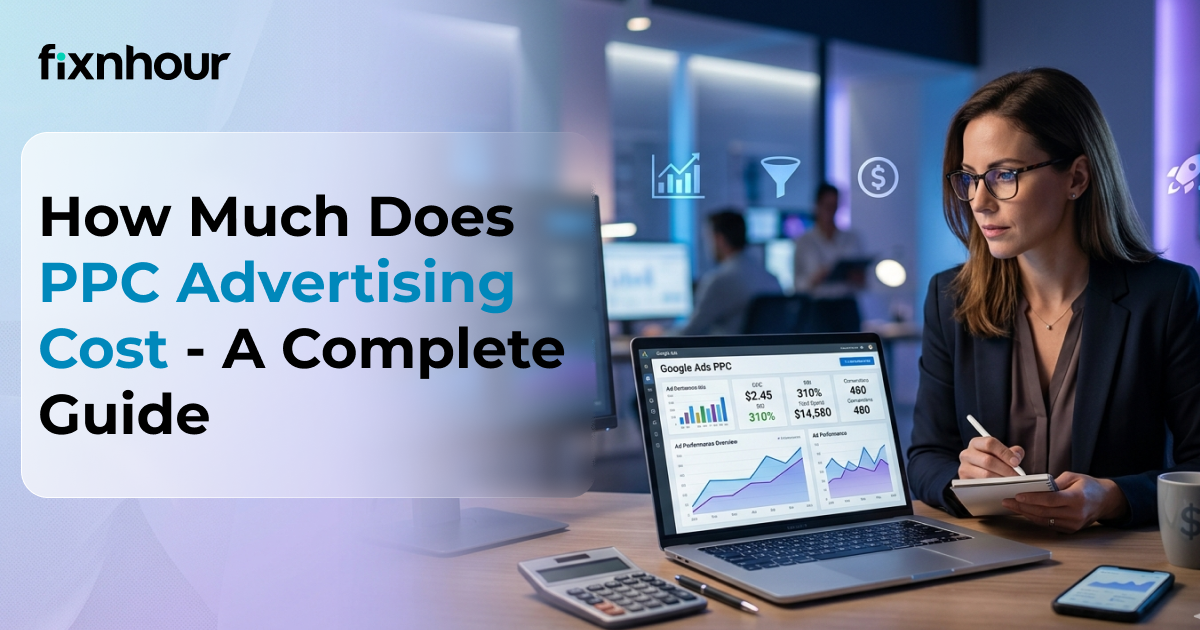
PPC advertising in 2026 isn’t just about spending money; it’s about spending it smartly. Whether you’re a startup testing the waters or an established brand scaling campaigns, understanding how much PPC really costs can feel overwhelming. From keyword competition and bidding strategies to platform choices and industry trends, several factors influence your final budget. And with rising competition in digital spaces, even small mistakes can quickly eat into your ad spend without delivering real results.
The good news? PPC doesn’t have to drain your budget if you know what you’re doing. With the right strategy, you can control costs, maximize ROI, and turn every click into a potential customer. In this guide, we’ll break down the real cost of PPC advertising in 2026, what affects pricing, and how you can plan your budget effectively so you get the most value out of every rupee you invest.
Key Takeaways
- PPC costs vary widely by industry and platform
- Start with a realistic budget (₹20K–₹30K)
- Focus on ROI, not just clicks
- Optimize regularly to reduce costs
- Use geo-targeting for better local audience reach
- Leverage AI Agentic tools for smarter bidding and targeting
- Track conversions to measure true campaign effectiveness
- Test multiple ad creatives to improve engagement and lower CPC
What is PPC Advertising?
PPC (Pay-Per-Click) advertising is a digital marketing model where businesses pay a fee each time someone clicks on their ad. It allows brands to appear on search engines, social media platforms, and websites, driving targeted traffic instantly. Platforms like Google Ads and social media ads help advertisers reach the right audience based on keywords, interests, and behavior, making PPC a fast and measurable way to generate leads and sales.\
-
PPC stands for Pay-Per-Click, where you pay only when someone clicks your ad
-
It helps drive instant traffic to your website or landing page
-
Ads can appear on search engines, social media, and websites
-
Targeting is based on keywords, location, interests, and user behavior
-
It offers measurable results like clicks, conversions, and ROI
-
PPC is a fast and effective way to generate leads and sales
How Much Does PPC Advertising Cost in 2026?
In 2026, the cost of PPC advertising varies based on industry, competition, and targeting strategy, especially in Local Business Marketing. On average, businesses may spend ₹20 to ₹200 per click, while monthly budgets can range from ₹10,000 to ₹1,00,000 or more. For local businesses, smart keyword selection and geo-targeting play a crucial role in controlling costs and maximizing ROI through effective Local B
| Cost Factor | Average Range (2026) | Description |
|---|---|---|
| Cost Per Click (CPC) | ₹20 – ₹200+ | Varies based on keyword competition and industry demand |
| Monthly Budget | ₹10,000 – ₹1,00,000+ | Depends on business size and campaign goals |
| Cost Per Lead (CPL) | ₹200 – ₹2,000+ | Based on targeting, landing page quality, and conversion rate |
| Small Local Business Budget | ₹10,000 – ₹30,000/month | Ideal for basic Local Business Marketing campaigns |
| Medium Business Budget | ₹30,000 – ₹70,000/month | Suitable for scaling reach and generating consistent leads |
| High-Competition Industries | ₹70,000 – ₹1,50,000+/month | Requires higher bids due to strong competition (e.g., finance, real estate) |
| Ad Management Cost (Optional) | 10% – 20% of ad spend | If hiring an agency or PPC expert |
Key Factors That Affect PPC Advertising Costs
Several factors influence PPC advertising costs, especially When Hiring IT Companies to manage campaigns. Key elements include keyword competition, industry demand, target audience, and ad quality score. Bidding strategy and geographic targeting also impact overall spend. Additionally, landing page experience and conversion optimization play a crucial role in cost efficiency. Understanding these factors helps businesses control budgets and achieve better ROI when working with professionals.
| Factor | Impact on Cost | Description |
|---|---|---|
| Keyword Competition | High competition = higher CPC | Popular keywords cost more due to increased bidding |
| Industry Type | Varies by niche | Sectors like finance or IT services usually have higher costs |
| Target Audience | More specific = higher cost | Narrow targeting can increase CPC but improve conversion quality |
| Ad Quality Score | Higher score = lower cost | Better ads and relevance reduce cost per click |
| Bidding Strategy | Affects total spend | Manual or automated bidding impacts how much you pay per click |
| Geographic Targeting | Location-based cost variation | Ads in metro cities often cost more than smaller areas |
| Landing Page Experience | Better UX = lower CPL | Optimized pages improve conversions and reduce overall costs |
| Agency/IT Company Fees | 10%–20% of budget | Cost added when hiring professionals to manage PPC campaigns |
PPC Cost Breakdown by Platform
Understanding PPC cost breakdown by platform is essential when choosing the Right Digital Agency. Platforms like Google Ads usually have higher CPC due to strong search intent, while Facebook and Instagram offer lower costs with advanced audience targeting. LinkedIn Ads are more expensive but ideal for B2B marketing. A Right Digital Agency helps allocate budget wisely across platforms, ensuring better reach, optimized spending, and higher ROI based on your business goals.
| Platform | Average CPC (2026) | Best For | Cost Level | Description |
|---|---|---|---|---|
| Google Ads | ₹50 – ₹300+ | High-intent search traffic | High | Best for targeting users actively searching for products/services |
| Facebook Ads | ₹10 – ₹80 | Brand awareness & engagement | Low–Medium | Cost-effective with detailed audience targeting options |
| Instagram Ads | ₹15 – ₹100 | Visual marketing & younger users | Medium | Great for lifestyle, fashion, and eCommerce brands |
| LinkedIn Ads | ₹100 – ₹500+ | B2B marketing | High | Ideal for targeting professionals and decision-makers |
| YouTube Ads | ₹5 – ₹50 (per view) | Video marketing | Low | Works well for brand awareness and storytelling campaigns |
| Twitter (X) Ads | ₹20 – ₹120 | Trending topics & engagement | Medium | Useful for real-time marketing and audience interaction |
How to Calculate Your PPC Budget
Calculating your PPC budget starts with clear goals, especially for Small Business Websites aiming to generate leads or sales. Begin by estimating your average cost per click (CPC) and desired monthly clicks. Then, factor in your conversion rate to understand how many clicks turn into customers. For Small Business Websites, it’s important to start with a manageable budget, track performance, and gradually scale based on ROI and campaign success.
Step 1: Set Your Goal
Decide whether you want:
-
Leads
-
Sales
-
Website traffic
Step 2: Estimate Cost Per Lead
Estimate your cost per lead by dividing total ad spend by conversions to understand efficiency and improve campaign performance.
Example:
-
CPC = ₹50
-
Conversion Rate = 5%
You’ll need 20 clicks → ₹1000 per lead
Step 3: Calculate ROI
If 1 lead gives ₹5000 revenue and costs ₹1000, → Your PPC campaign is profitable.
Is PPC Advertising Worth the Cost?
PPC advertising can be highly effective if managed correctly, offering instant traffic, measurable results, and targeted audience reach. For businesses aiming to generate leads, sales, or brand awareness quickly, the ROI often justifies the investment. However, costs can escalate in competitive industries, so careful planning, monitoring, and optimization are crucial. When done strategically, PPC campaigns provide a cost-effective way to achieve marketing goals and scale your business efficiently.
| Factor | Benefit | Consideration |
|---|---|---|
| Immediate Traffic | Drive visitors instantly | Requires budget management |
| Targeted Audience | Reach ideal customers | Needs accurate keyword and demographic targeting |
| Measurable Results | Track clicks, conversions, and ROI | Regular monitoring essential |
| Scalable Campaigns | Adjust budgets and bids easily | High competition may increase costs |
| Brand Awareness | Boost visibility quickly | Requires compelling ad creatives |
| Cost Efficiency | Pay only for clicks | Poorly optimized campaigns can waste money |
PPC Trends & Cost Predictions for 2026
In 2026, PPC advertising is evolving rapidly, with AI Agentic tools playing a key role in optimizing campaigns. Automation and AI-driven bidding strategies help businesses reduce costs, improve targeting, and maximize ROI. Predictive analytics allow smarter budget allocation, while personalized ads enhance engagement. By leveraging AI Agentic solutions, companies can stay ahead of competition, control ad spend, and achieve better performance in increasingly crowded digital advertising spaces.
1. AI & Automation
Platforms are using AI for smart bidding and targeting.
-
Streamline Business Processes: AI automates repetitive tasks, reducing manual effort and increasing efficiency.
-
Enhance Decision-Making: Data-driven insights from AI help make faster and more accurate business decisions.
-
Improve Customer Experience: Automated systems provide personalized interactions, 24/7 support, and faster response times.
2. Rising Competition
More businesses are investing in PPC, increasing CPC.
-
Market Saturation: More players in the industry make it harder to stand out and capture customer attention.
-
Innovation Pressure: Businesses must continuously innovate to stay ahead of competitors and retain market share.
-
Customer Expectations: Rising competition raises the bar for quality, service, and value, forcing companies to improve constantly.
3. Better Audience Targeting
Advanced segmentation helps improve ROI.
-
Personalized Marketing: Tailor messages to specific audience segments for higher engagement and conversion.
-
Optimized Ad Spend: Focus resources on the most relevant audiences, reducing wasted marketing budget.
-
Data-Driven Insights: Leverage analytics to understand audience behavior and refine targeting strategies.
4. Video & Visual Ads Growth
Short-form video ads are becoming more effective and affordable.
-
Higher Engagement: Video and visual content capture attention faster and boost audience interaction.
-
Stronger Brand Recall: Visual storytelling helps audiences remember your brand longer than text-based ads.
-
Cross-Platform Reach: Video and visuals perform well across social media, websites, and streaming platforms, expanding visibility.
Final words
Managing PPC advertising effectively is all about strategy, and platforms like Fixnhour can help businesses streamline campaigns while controlling costs. Every rupee spent should be aligned with your marketing goals, whether it’s generating leads, increasing sales, or boosting brand awareness. Starting small allows you to test keywords, ad creatives, and targeting options, minimizing risk while learning what works best. Regular optimization, monitoring performance metrics, and adjusting bids ensure your campaigns stay cost-efficient and deliver meaningful results over time.
Scaling your PPC campaigns successfully requires expert guidance, and professional support ensures you make data-driven decisions. For businesses ready to maximize ROI and improve their digital presence, don’t hesitate to contact us today to plan a tailored PPC strategy that works.
Frequently Asked Questions (FAQ)
Q1: What is the average cost of PPC advertising?
The average PPC advertising cost varies widely depending on your industry, target audience, and platform. On Google Ads, CPC can range from ₹20 to ₹200, while on Facebook Ads, it may be ₹5 to ₹50 per click. High-competition industries like finance, legal, and real estate can reach ₹500+ per click. Planning your budget carefully ensures you get maximum ROI from your PPC campaigns.
Q2: How do businesses calculate PPC advertising costs?
To calculate PPC costs, start with your campaign goals and target keywords. Estimate the average cost per click (CPC) for those keywords and multiply by expected clicks. Factor in conversion rates to determine cost per lead or sale. Platforms like Google Ads and Meta Ads provide insights, helping you adjust bids, target audience, and ad quality to optimize your overall PPC budget efficiently.
Q3: What factors affect the cost of PPC campaigns?
Several factors impact PPC advertising costs, including keyword competition, ad quality, audience location, and industry type. Quality Score on Google Ads can reduce costs if your ad is relevant and landing pages are optimized. Targeting metro cities or highly competitive niches usually increases CPC, while longer-tail, less competitive keywords can significantly reduce your PPC spend while maintaining effective traffic and conversions.
Q4: Which platforms are best for PPC advertising in 2026?
Top PPC platforms in 2026 include Google Ads, Facebook & Instagram Ads, LinkedIn Ads, and YouTube Ads. Google Ads is ideal for high-intent search traffic, Facebook and Instagram for engagement and awareness, LinkedIn for B2B campaigns, and YouTube for video marketing. Choosing the right platform depends on your target audience, campaign goals, and budget, ensuring every click drives valuable traffic and conversions.
Q5: How can I reduce my PPC advertising costs?
Reducing PPC costs requires smart targeting and campaign optimization. Focus on long-tail keywords to lower CPC, improve ad relevance and Quality Score, optimize landing pages, and use negative keywords to block irrelevant traffic. Regular monitoring, A/B testing, and adjusting bids based on performance can significantly reduce cost per click and cost per acquisition, helping businesses achieve maximum ROI from their PPC campaigns.
Q6: Is PPC advertising worth the investment for small businesses?
Yes, PPC advertising can be highly effective for small businesses. With a targeted strategy, even a modest budget can deliver measurable results, including website traffic, leads, and sales. Unlike SEO, which takes time, PPC offers instant visibility and controlled reach. By monitoring campaigns and optimizing for conversion, small businesses can achieve profitable ROI while scaling campaigns as their budget and audience grow.
Q7: What are common mistakes that increase PPC costs?
Common mistakes that inflate PPC costs include targeting broad or irrelevant keywords, ignoring analytics, poor ad copy, sending traffic to unoptimized landing pages, and failing to test multiple ad variations. Not monitoring campaigns regularly leads to wasted spend. Avoiding these mistakes, focusing on Quality Score, and using audience segmentation ensures your PPC budget is used efficiently while maximizing clicks, conversions, and overall ROI.