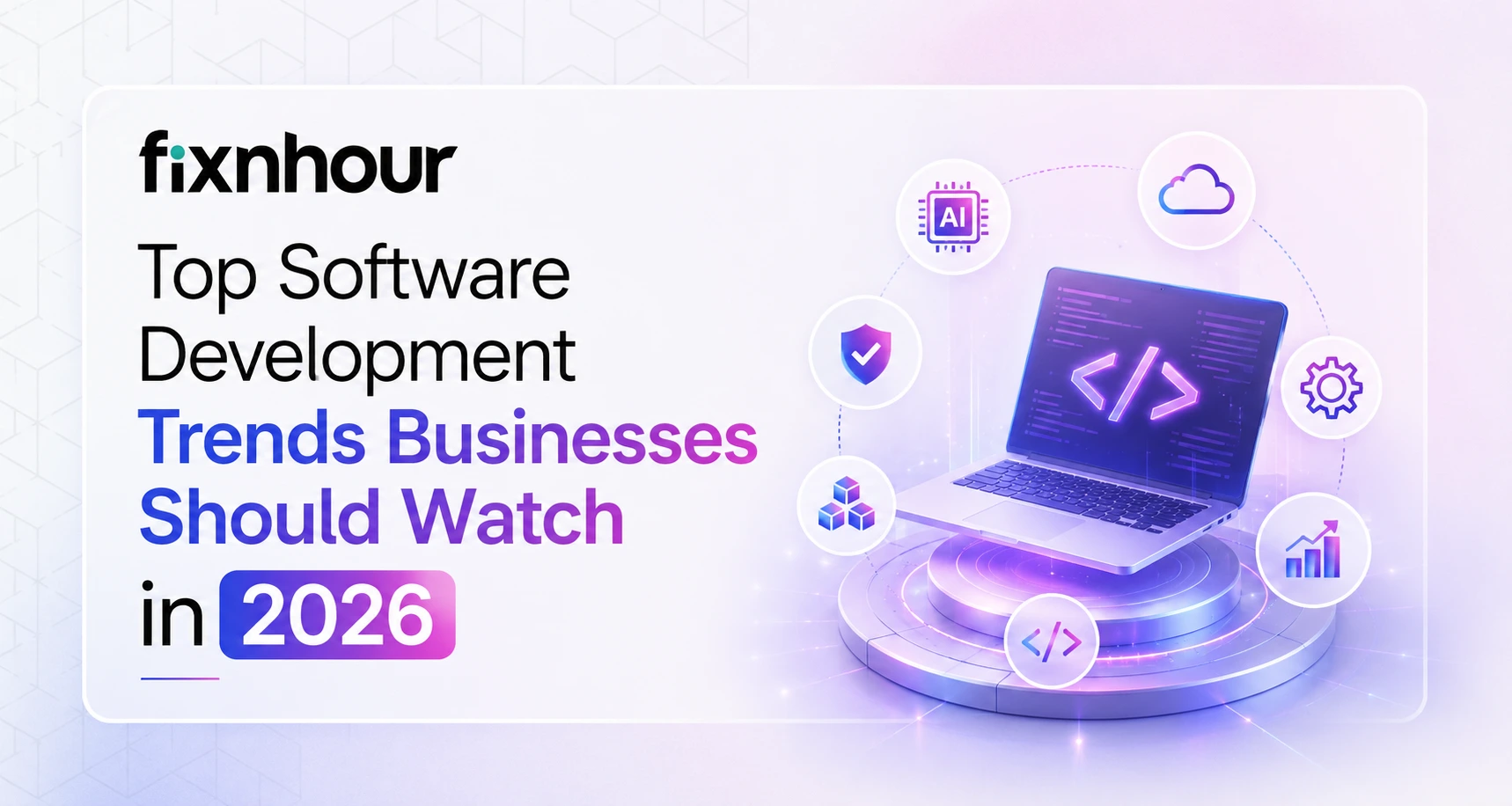
The software industry is evolving rapidly in 2026 as businesses invest in AI, automation, cloud technologies, and digital transformation. Companies across industries are adopting smarter solutions to improve efficiency, customer experience, and long-term scalability. From AI-powered applications to cybersecurity-first development, businesses must stay updated with the latest software trends to remain competitive in a technology-driven market. Whether startups or enterprises, organizations are increasingly partnering with experienced Software Development Companies to build future-ready digital products that support innovation and growth. In this blog, we will explore the top software development trends businesses should watch in 2026 and how these technologies are reshaping industries worldwide.
Why Software Development Trends Matter in 2026
Technology is no longer just a support function for businesses. It has become a core driver of growth, customer engagement, and operational efficiency. Businesses that adopt modern software solutions can improve productivity, automate workflows, and deliver better user experiences.Key Reasons Businesses Should Follow Software Trends
- Faster digital transformation
- Better customer satisfaction
- Improved business automation
- Stronger cybersecurity protection
- Competitive market advantage
- Scalable business operations
AI-Powered Software Development Will Lead the Industry
Artificial Intelligence is becoming one of the most important software development trends in 2026. AI is helping developers automate repetitive tasks, improve coding accuracy, and build intelligent applications faster than ever before.How AI is Transforming Software Development
AI Coding Assistants
- Faster code generation
- Reduced manual coding errors
- Improved developer productivity
AI-Powered Business Automation
- Intelligent chatbots
- Smart customer support systems
- Workflow automation
Predictive Analytics Solutions
- Better business insights
- Data-driven decision-making
- Customer behavior analysis
Low-Code and No-Code Development Will Continue Growing
Low-code and no-code platforms are simplifying application development for businesses in 2026. These platforms allow companies to create applications with minimal coding knowledge, reducing development time and costs.
Benefits of Low-Code Development
- Faster application deployment
- Lower development costs
- Easier workflow automation
- Improved collaboration between teams
Industries Using No-Code Solutions
- Healthcare
- Retail
- Banking
- Logistics
- Education
Cloud-Native Development Will Become Standard
Cloud-native development is helping businesses create scalable, secure, and high-performing applications. Modern businesses are shifting toward multi-cloud and hybrid cloud environments to improve flexibility and reliability. Key Cloud-Native Trends in 2026
Microservices Architecture
- Faster software updates
- Improved scalability
- Better application performance
Serverless Computing
- Reduced infrastructure management
- Cost optimization
- Faster deployment cycles
Kubernetes and Containerization
- Simplified application management
- Efficient resource utilization
- Enhanced scalability
Cybersecurity-First Development is Essential
Cybersecurity threats are increasing globally, making secure software development a top priority in 2026. Businesses are focusing on security-first approaches to protect sensitive customer data and digital assets. Important Cybersecurity Trends
DevSecOps Adoption
- Security integrated into development
- Continuous threat monitoring
- Faster vulnerability detection
Zero-Trust Security Models
- Advanced identity verification
- Controlled system access
- Improved data protection
API and Cloud Security
- Secure cloud infrastructure
- API protection strategies
- Encrypted communications
Custom Software Development Will Rise Further
Businesses are increasingly investing in custom software solutions instead of generic platforms. Custom software offers better scalability, flexibility, and business-specific functionality.
Benefits of Custom Software Development
- Tailored business solutions
- Better integration with existing systems
- Improved scalability
- Enhanced customer experience
Industries Driving Custom Software Demand
- Healthcare
- Fintech
- E-commerce
- Manufacturing
- Real Estate
Internet of Things (IoT) Will Expand Rapidly
IoT technology is transforming industries by connecting devices, systems, and applications through smart networks. Businesses are using IoT-powered solutions to improve operational efficiency and real-time monitoring. Popular IoT Applications in 2026
Smart Business Operations
- Automated inventory management
- Smart office systems
- Connected manufacturing
Predictive Maintenance
- Real-time equipment monitoring
- Reduced downtime
- Improved operational efficiency
AI-Powered IoT Solutions
- Intelligent analytics
- Automated alerts
- Data-driven automation
Blockchain Development Beyond Cryptocurrency
Blockchain technology is evolving beyond digital currencies and becoming a valuable solution for enterprise security and transparency. Enterprise Blockchain Use Cases
Supply Chain Management
- Real-time tracking
- Improved transparency
- Fraud prevention
Smart Contracts
- Automated agreements
- Faster transactions
- Reduced operational costs
Secure Data Sharing
- Enhanced security
- Decentralized systems
- Improved trust management
Progressive Web Apps and Cross-Platform Development
Businesses want applications that work seamlessly across devices and operating systems. Progressive Web Apps (PWAs) and cross-platform frameworks are becoming highly popular in 2026.
Benefits of Progressive Web Apps
- Faster loading speeds
- Better mobile experience
- Offline functionality
- Lower development costs
Popular Cross-Platform Technologies
- Flutter
- React Native
- .NET MAUI
Sustainable Software Development Will Gain Importance
Sustainability is becoming a major focus in the technology industry. Businesses are now investing in green software development practices to reduce energy consumption and environmental impact. Green Software Development Trends
Energy-Efficient Applications
- Optimized coding practices
- Reduced server usage
- Efficient application performance
Sustainable Cloud Infrastructure
- Green data centers
- Energy-efficient hosting
- Reduced carbon emissions
Eco-Friendly Digital Transformation
- Sustainable business operations
- Lower operational costs
- Improved brand reputation
Future of Software Development Outsourcing
The future of software development outsourcing is driven by AI, cloud computing, automation, cybersecurity, and agile development solutions. Businesses are increasingly outsourcing software projects to reduce costs, access global talent, and accelerate digital transformation. Advanced technologies like Software Testing, DevOps, and AI-powered development are improving software quality, security, and performance while helping companies scale faster in competitive markets.
Why Businesses Outsource Development
- Access to global talent
- Faster project delivery
- Lower operational costs
- Flexible scaling options
Key Outsourcing Trends in 2026
- Global collaboration
- Agile project management
- Improved productivity
IT Staff Augmentation
- Flexible hiring models
- Specialized technical expertise
- Faster resource allocation
How Businesses Can Prepare for 2026 Software Trends
To stay competitive in the evolving digital landscape, businesses should focus on adopting scalable and future-ready technologies.
Best Strategies for Businesses
- Invest in AI-powered solutions
- Prioritize cybersecurity
- Build scalable cloud infrastructure
- Focus on customer experience
- Adopt agile development methodologies
- Partner with experienced technology providers
Conclusion
The software development industry is evolving rapidly with advancements in AI, cloud computing, cybersecurity, IoT, blockchain, and automation technologies. Businesses that adopt these emerging software development trends can improve efficiency, enhance customer experiences, and achieve long-term growth. If you are planning to build innovative and future-ready software solutions, contact us today to discuss your project requirements and transform your business with advanced technology solutions
Frequently Asked Questions
Q1. What are the top software development trends businesses should watch in 2026?
Ans. In 2026, businesses should focus on AI-powered applications, low-code development, cloud-native software, cybersecurity automation, blockchain integration, IoT solutions, and progressive web apps. These technologies are helping companies improve efficiency, reduce operational costs, and deliver better customer experiences. AI-driven automation and data analytics are becoming especially important for decision-making and business growth. Companies adopting modern software trends early can stay competitive, improve scalability, and achieve faster digital transformation in evolving global markets.
Q2. Why is AI becoming important in software development in 2026?
Ans. Artificial Intelligence is transforming software development by automating coding, testing, customer support, and data analysis processes. AI-powered tools help developers build applications faster while reducing human errors. Businesses are using AI chatbots, recommendation engines, predictive analytics, and automation systems to improve customer engagement and operational efficiency. In 2026, AI integration is no longer optional because it helps organizations save time, increase productivity, and deliver personalized user experiences across multiple digital platforms and industries.
Q3. How is cloud-native development changing modern businesses?
Ans. Cloud-native development allows businesses to build scalable, flexible, and high-performing applications using cloud infrastructure. Companies can quickly deploy updates, manage remote teams, and reduce hardware costs through cloud technologies. In 2026, businesses are increasingly adopting microservices, containerization, and serverless computing to improve software performance and reliability. Cloud-native applications also provide better security, disaster recovery, and real-time scalability, making them essential for companies looking to grow their digital operations efficiently.
Q4. What role does cybersecurity play in software development trends?
Ans. Cybersecurity has become a critical part of software development because businesses face increasing cyber threats and data breaches. Modern software applications now include advanced security measures like multi-factor authentication, AI-powered threat detection, data encryption, and secure cloud environments. In 2026, businesses are prioritizing secure software development practices to protect customer data and maintain trust. Strong cybersecurity strategies also help companies comply with regulations and reduce financial risks caused by cyberattacks or unauthorized access.
Q5. Why are low-code and no-code platforms growing rapidly?
Ans. Low-code and no-code platforms help businesses create applications with minimal programming knowledge, reducing development time and costs. These platforms allow startups and enterprises to launch digital products quickly while improving operational efficiency. In 2026, businesses are using low-code solutions for workflow automation, mobile app development, and internal management systems. They also help non-technical teams participate in software creation, accelerating innovation and enabling companies to respond faster to changing market demands.
Q6. How is IoT influencing software development in 2026?
Ans. The Internet of Things (IoT) is connecting smart devices, machines, and applications to collect and exchange real-time data. Businesses are using IoT software solutions in healthcare, manufacturing, logistics, retail, and smart homes to improve automation and efficiency. In 2026, IoT-driven software development helps companies monitor operations, reduce downtime, and enhance customer experiences. Combined with AI and cloud computing, IoT technologies are enabling businesses to create intelligent ecosystems and data-driven decision-making systems.
Q7. Why are businesses investing in blockchain technology?
Ans. Blockchain technology provides secure, transparent, and decentralized systems for managing transactions and digital records. Businesses are adopting blockchain for secure payments, supply chain tracking, smart contracts, and identity verification. In 2026, blockchain software development is gaining popularity because it improves data security, reduces fraud risks, and enhances transparency across industries. Companies investing in blockchain solutions can build customer trust, streamline business processes, and create innovative digital products with stronger security frameworks.
Q8. How can businesses prepare for future software development trends?
Ans. Businesses can prepare for future software development trends by investing in digital transformation, adopting scalable technologies, and hiring skilled development teams. Staying updated with AI, cloud computing, cybersecurity, automation, and emerging frameworks is essential for long-term success. Companies should also focus on user experience, mobile-first strategies, and data-driven decision-making. Partnering with experienced software development companies can help businesses implement modern technologies efficiently while remaining competitive in the rapidly evolving digital landscape