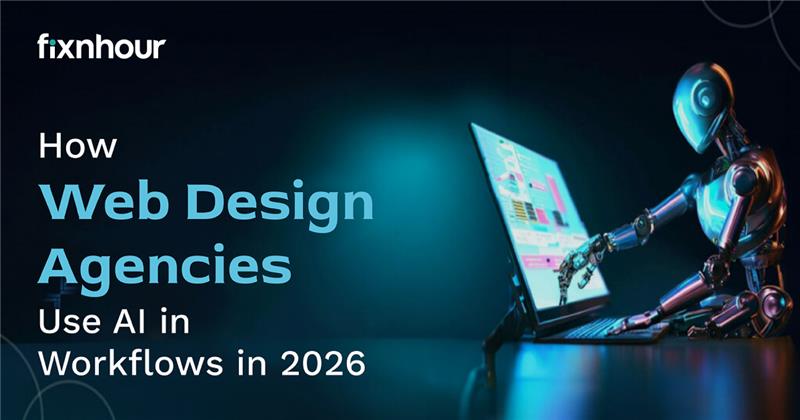
In 2026, web design has evolved beyond static layouts and basic templates. Agencies are now leveraging Artificial Intelligence to streamline workflows, enhance creativity, and deliver websites faster than ever. From automated design suggestions to AI-powered code optimization, the digital landscape is becoming smarter, more efficient, and deeply personalized for clients.
AI tools assist designers in everything from generating responsive layouts and color palettes to predicting user behavior and improving UX. Routine tasks like content formatting, image resizing, and even SEO audits are automated, allowing designers to focus on strategic, creative decisions that truly add value.
Despite AI’s growing role, human expertise remains essential. Agencies blend AI efficiency with human creativity, intuition, and client collaboration to produce websites that are not only functional but emotionally engaging and brand-aligned.
Next-Gen AI Tools Transforming Web Design
Next-gen AI tools are reshaping the way agencies approach web design. From generating layouts to optimizing user experiences, these intelligent solutions streamline workflows and enhance creativity. By integrating AI into their processes, designers can access powerful web design resources that save time, improve efficiency, and deliver highly personalized, visually stunning websites for clients in 2026.
AI for Wireframing and Prototyping
AI for wireframing and prototyping accelerates design workflows, enabling rapid creation of interactive mockups, intuitive layouts, and user-centric prototypes, reducing manual effort while enhancing creativity, accuracy, and collaboration.
-
Reduce initial design time
-
Experiment with multiple layout options
-
Quickly adapt to client feedback
AI in Visual Design
AI in visual design transforms creativity by automating layout generation, color schemes, and typography choices, enhancing user experience, boosting efficiency, and enabling designers to craft visually stunning, data-driven designs faster.
-
Predicting which design elements resonate with users
-
Offering dynamic themes based on industry trends
-
Enhancing brand consistency across pages
Revolutionizing User Experience Through AI
Revolutionizing user experience through AI in app development enhances personalization, streamlines interactions, and predicts user behavior. Integrating AI-driven features in apps boosts engagement, improves usability, and empowers developers to create smarter, more intuitive mobile and web applications.
Personalized UX Recommendations
Personalized UX recommendations use AI in app development to analyze user behavior, deliver tailored content, optimize interfaces, and enhance engagement, ensuring each user experiences a seamless, intuitive, and highly relevant digital journey.
-
Dynamic content tailored to individual visitors
-
Automated A/B testing for layouts and CTAs
-
Optimized user journeys to increase conversions
Accessibility Improvements
Accessibility improvements in app development leverage AI to create inclusive user experiences, offering features like voice navigation, automated captions, adaptive interfaces, and enhanced readability, ensuring apps are usable and enjoyable for all users.
-
Auto-generating alt text for images
-
Ensuring color contrast and font accessibility
-
Detecting and fixing accessibility issues proactively
Content Creation and SEO Optimization
AI-powered content creation and SEO optimization streamline app development by generating high-quality, engaging content, suggesting relevant keywords, and improving search rankings. This ensures apps and websites attract more users while maintaining a natural, human-like voice and readability.
AI Copywriting and Blog Generation
AI-powered content tools can generate high-quality copy, meta descriptions, and blog outlines quickly. Benefits include:
-
Faster content creation with minimal human input
-
Maintaining brand tone and style consistently
-
Generating SEO-friendly headlines and CTAs
SEO Analysis and Recommendations
AI-driven SEO analysis provides actionable recommendations, identifying optimization opportunities, improving rankings, and enhancing app visibility while ensuring user-friendly, high-quality content.
-
Keyword targeting and density optimization
-
Identifying content gaps
-
Improving overall search engine rankings
AI in Testing and Quality Assurance
AI in testing and quality assurance revolutionizes app development by automating test case generation, detecting bugs faster, and predicting potential issues. It enhances accuracy, reduces manual effort, and ensures higher software reliability, enabling developers to deliver robust, efficient, and seamless applications with improved user satisfaction.
| AI Application Area | Description | Key Benefits |
|---|---|---|
| AI for Wireframing & Prototyping | Automates creation of interactive mockups and intuitive layouts for apps. | Faster design cycles, improved accuracy, enhanced collaboration, reduced manual effort. |
| AI in Visual Design | Generates optimized layouts, color schemes, and typography choices. | Enhances creativity, boosts efficiency, creates visually appealing, data-driven designs. |
| Revolutionizing User Experience | Integrates AI to predict user behavior and personalize interactions. | Higher engagement, intuitive interfaces, smarter and more adaptive apps. |
| Personalized UX Recommendations | Analyzes user behavior to deliver tailored content and interface suggestions. | Improved usability, increased engagement, seamless user journeys. |
| Accessibility Improvements | Implements voice navigation, automated captions, and adaptive interfaces. | Inclusive design, enhanced usability for all users, better compliance with accessibility standards. |
| Content Creation & SEO Optimization | Uses AI to generate high-quality content and optimize keywords naturally. | Better search rankings, engaging content, time-saving for developers, human-like readability. |
| SEO Analysis & Recommendations | Analyzes app or website SEO performance and suggests improvements. | Improved visibility, actionable insights, higher traffic, optimized user experience. |
| AI in Testing & Quality Assurance | Automates testing, detects bugs, and predicts potential issues before release. | Increased reliability, reduced manual testing effort, faster development, and robust applications. |
Future Trends: AI and Web Design Agencies
The future of web design is being shaped by AI innovations. Web design agencies are adopting intelligent tools to streamline workflows, personalize experiences, and stay ahead, making these AI-driven solutions a key part of web design trends in 2026.
| Trend | Description | Impact on Agencies | Example Tools |
|---|---|---|---|
| AI-Powered Design Automation | Automating repetitive tasks like layout creation, color palettes, and typography suggestions. | Saves time, improves consistency, allows designers to focus on creativity. | Adobe Firefly, Canva AI, Figma AI Plugins |
| Personalized User Experiences | AI analyzes user behavior to create tailored web experiences. | Increases engagement, boosts conversion rates, improves UX design. | Dynamic Yield, Optimizely, Adobe Target |
| AI-Driven Content Generation | Generates copy, product descriptions, and microcopy automatically. | Speeds up content creation, ensures SEO-friendly text, reduces dependency on copywriters. | Jasper AI, Copy.ai, Writesonic |
| Intelligent Image & Video Editing | AI tools enhance, edit, or create visual assets automatically. | Reduces manual editing time, enhances visual storytelling. | Runway ML, Luminar AI, Canva AI |
| Predictive Analytics for Design Decisions | AI predicts which layouts, colors, and designs perform best. | Informs design choices, increases project success rates. | Google Analytics AI, Hotjar AI Insights |
| AI-Assisted Prototyping & Testing | AI generates prototypes and tests UX/UI flows. | Speeds up testing, improves usability before launch. | Uizard, Maze, Figma AI |
| Voice & Chatbot Integration | AI-driven conversational interfaces are integrated into websites. | Enhances customer support, engagement, and personalization. | ChatGPT, Dialogflow, Intercom AI |
| Automated SEO Optimization | AI monitors and optimizes on-page SEO, keywords, and structure. | Improves search rankings, reduces manual SEO work. | Surfer SEO, Clearscope, RankMath AI |
Key Takeaways
-
AI accelerates design, development, and decision-making
-
Personalized UX increases engagement and conversions
-
Agencies gain efficiency without sacrificing creativity
-
Predictive analytics improve project planning and outcomes
-
SEO and content automation enhance online visibility
-
AI adoption is now essential for competitive web design agencies
conclusion
In 2026, AI is no longer a futuristic concept for web design agencies; it’s a daily partner. From automating repetitive tasks to providing insights into user behavior, AI allows teams to focus more on creativity and strategy. Agencies leveraging AI can deliver faster, smarter, and more personalized websites that truly resonate with clients.
AI-driven tools streamline workflows, reduce errors, and enhance collaboration across departments. Designers, developers, and project managers can now work in harmony with AI-driven solutions, ensuring projects are efficient, innovative, and truly user-centered.
The future of web design lies in blending human creativity with AI precision. Agencies embracing this synergy will set industry benchmarks, delivering cutting-edge experiences while staying agile and competitive in a rapidly evolving digital landscape.
Ready to elevate your website with cutting-edge AI-powered design? Contact us today and let’s create digital experiences that shine!
Frequently Asked Questions (FAQs)
Q1. How is AI used in web design workflows?
Ans. AI now powers nearly every step of modern web design. From suggesting intuitive layouts and generating code snippets to analyzing user behavior and drafting content ideas, AI reduces repetitive tasks. This allows designers to focus on creating engaging, human-centered experiences that truly resonate with users while speeding up project delivery.
Q2. Can AI replace web designers?
Ans. Not at all. AI is a powerful collaborator, not a replacement. While it handles data-heavy or routine tasks, human designers provide intuition, creativity, and storytelling qualities AI cannot replicate. By combining AI efficiency with human insight, agencies deliver faster, smarter, and more innovative web solutions.
Q3. Which AI tools are most popular for web design in 2026?
Ans. Leading web design agencies leverage AI-driven prototyping, smart content generators, design assistants, and predictive analytics platforms. These tools streamline every stage of design, from ideation to testing, boosting both efficiency and creativity across projects of any scale.
Q4. Does AI improve website performance?
Ans. Yes. AI analyzes user behavior, predicts patterns, optimizes loading times, and enhances accessibility. It even suggests design tweaks to improve engagement and conversions. The outcome is websites that aren’t just visually stunning; they perform exceptionally well in real-world use.
Q5. Is AI cost-effective for small web design agencies?
Ans. Absolutely. Small teams can now deliver high-quality projects without massive budgets. AI automates repetitive tasks, accelerates workflows, and empowers smaller agencies to compete with larger firms, all while maintaining creativity and originality.
Q6. How does AI affect creativity in web design?
Ans. Far from stifling creativity, AI amplifies it. By automating mundane tasks and highlighting user trends, AI frees designers to explore bold concepts, tell compelling stories, and craft memorable, human-focused digital experiences that stand out in a crowded web space.
Q7. What’s the future of AI in web design?
Ans. The future is collaborative. AI will continue enhancing personalization, predictive design, and intelligent automation, but the human touch will remain essential. Together, humans and AI will create websites that are innovative, engaging, and deeply aligned with user needs.