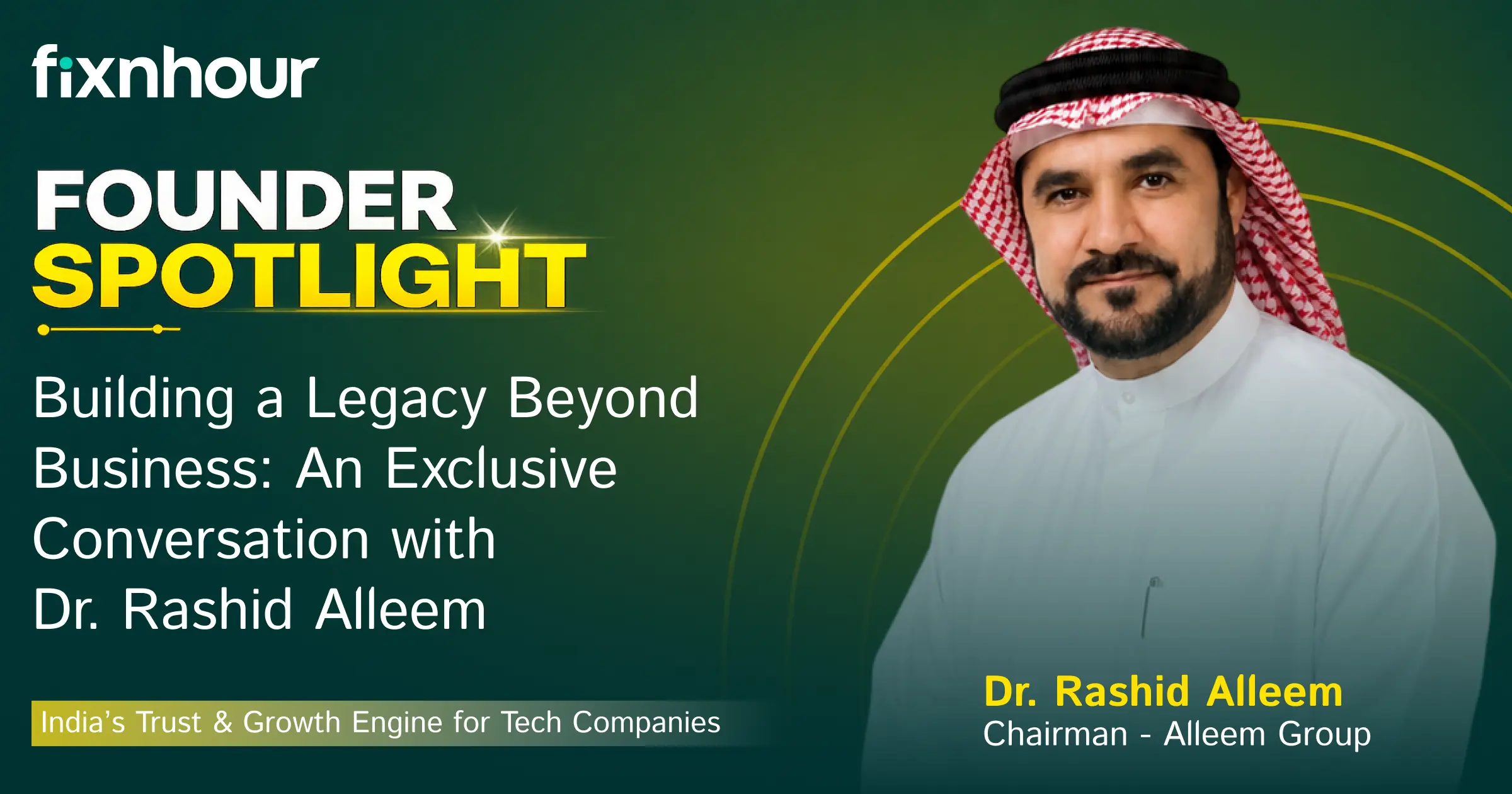
In today’s fast-changing business world, success is no longer measured only by profits and growth, but by the impact leaders create for society. In this exclusive conversation with Dr. Rashid Alleem, we explore what it truly means to build a legacy beyond business. Dr. Alleem shares his thoughts on leadership, innovation, and the importance of values in shaping long-term success.
His journey highlights how purpose-driven decisions and a commitment to excellence can create meaningful change that lasts beyond corporate achievements. This discussion offers valuable insights for entrepreneurs, professionals, and aspiring leaders who aim to build not just successful careers, but a lasting legacy that positively influences communities and future generations.
Who is Dr. Rashid Alleem?
In the modern world, success is often measured through financial achievements, corporate titles, or business milestones. However, there are a few extraordinary individuals whose influence extends far beyond balance sheets and boardrooms. Their impact is measured through institutions they build, lives they inspire, ideas they champion, and the legacy they leave behind.
Dr. Rashid Alleem is one such individual.Widely recognized across the United Arab Emirates and internationally as a visionary leader, strategic thinker, author, philanthropist, and nation-builder, Dr. Alleem has spent decades contributing to business, education, public administration, leadership development, environmental sustainability, and cultural advancement.His professional journey is remarkable not only because of the positions he has held but because of the breadth of his contributions. As the former Director General of Sharjah Department of Seaports and Customs and the Sharjah Free Zones Authorities, he played an instrumental role in strengthening trade, economic development, and international business connectivity within the region.
Beyond public service, he has established himself as an influential business leader through Alleem Group while simultaneously contributing to academia as a lecturer, researcher, author, and mentor. His leadership philosophies have reached audiences around the world through books, international conferences, media appearances, and educational initiatives.Throughout his career, Dr. Alleem has remained guided by a simple yet powerful belief: leadership is not about power; it is about service.His achievements have earned global recognition, including awards from international organizations, governments, academic institutions, and industry bodies. Yet when speaking with him, one quickly realizes that his focus is not on accolades. Instead, he speaks passionately about purpose, values, loyalty, learning, and the responsibility leaders carry toward society.In this exclusive Founder Spotlight with Fixnhour, Dr. Rashid Alleem shares his remarkable journey, leadership philosophy, and vision for creating a lasting impact that extends beyond business success.
Q1. Dr. Alleem, after decades of leadership across business, government, academia, and philanthropy, how do you define yourself today?
I have been fortunate to experience many different roles throughout my life. I have served in public administration, business leadership, education, research, writing, and community development. Each role taught me valuable lessons about people, leadership, and purpose.However, if I were to define myself today, I would simply say that I am a lifelong learner and servant leader.Titles come and go. Positions change. Organizations evolve. What remains constant is the opportunity to contribute positively to the lives of others.For me, leadership has never been about authority. It has always been about responsibility. Every position we hold provides an opportunity to create value, empower people, and leave the world better than we found it. That philosophy continues to guide me today.
Q.2. You have often been described as a visionary leader. What does vision mean to you?
Vision is the ability to see possibilities before they become realities. Most people see situations as they are. Visionary leaders imagine what they could become. However, vision alone is not enough. A dream without action remains a dream. A vision becomes meaningful only when it is supported by commitment, discipline, and execution. Throughout my career, I have learned that true vision requires courage. It often means pursuing ideas that others initially consider impossible. It means remaining committed to long-term objectives even when short-term challenges arise. The future is always created by individuals who are willing to think beyond limitations.
Q.3. You have led major public institutions and business organizations. What leadership lessons stand out the most?
One lesson stands above all others. People matter more than systems. Technology, infrastructure, policies, and processes are important. However, organizations ultimately succeed because of people. Great leaders understand that leadership is fundamentally about human relationships. People want to be respected. People want to be valued. People want opportunities to grow. When leaders create environments where individuals feel trusted and empowered, extraordinary results become possible. Leadership is not about commanding people. It is about inspiring them.
Q.4. Your book 'My Leadership Secret' has inspired many readers. What is the core message behind your leadership philosophy?
The central message is that leadership begins from within. Many people focus on external leadership skills such as communication, strategy, and management. While these are important, sustainable leadership starts with character. Integrity. Humility. Discipline. Self-awareness. Compassion. Without these foundations, leadership becomes fragile. I believe leaders must first learn to lead themselves before attempting to lead others. The quality of our leadership is ultimately determined by the quality of our character.
Also Read: From Innovation to Impact: The Vision of Dr. SanJayy Khandelwal
Q.5. Throughout your career, loyalty has been one of your recurring themes. Why is loyalty important in leadership?
Loyalty is one of the most undervalued virtues in modern leadership. Organizations are built on trust. Trust is built through loyalty. Loyalty does not mean blind agreement. It means commitment to shared values, mutual respect, and long-term relationships. Throughout my journey, I have observed that organizations with strong cultures of loyalty often outperform those focused solely on short-term results. People are willing to go the extra mile when they know they are valued and respected. Leadership is not merely about achieving goals. It is about creating relationships that endure beyond those goals.
Q.6. You have received numerous awards and international recognitions. Which achievement makes you most proud?
Awards are humbling, and I am grateful for every recognition I have received. However, the achievements that mean the most to me are not necessarily the awards. What gives me the greatest satisfaction is seeing people grow. Watching students become leaders. Watching organizations succeed. Watching communities improve. Watching ideas create positive impact. Those outcomes represent the true rewards of leadership. Success becomes meaningful when it contributes to the success of others.
Q.7. What role does education play in leadership development?
Education is one of the most powerful forces for transformation. It expands perspectives. It develops critical thinking. It creates opportunities. However, education should not be limited to academic qualifications. True education is a lifelong journey. The most effective leaders remain curious throughout their lives. They continue learning regardless of age, experience, or achievement. Knowledge creates possibilities. Wisdom determines how those possibilities are used.
Q.8. What advice would you give to young entrepreneurs seeking success?
Focus on purpose before profit. Profit is important because businesses must remain sustainable. However, organizations built solely around profit rarely create lasting impact. Ask yourself: What problem am I solving? Who am I serving? How am I creating value? When entrepreneurs focus on contributing meaningfully to society, success often follows naturally. Build with purpose. Lead with integrity. Remain committed to excellence. Those principles never go out of style.
Q.9. How do you view the future of leadership in a rapidly changing world?
Technology will continue transforming industries and societies. Artificial intelligence, automation, and digital innovation will reshape how we work and live. However, human values will become even more important. Empathy. Trust. Ethics. Purpose. Communication. These qualities cannot be automated. Future leaders must learn to combine technological advancement with human wisdom. The organizations that succeed will be those that balance innovation with humanity.
Q.10. How has Fixnhour contributed to founder visibility and business credibility?
I appreciate initiatives that celebrate entrepreneurship and leadership through meaningful conversations. Platforms like Fixnhour create opportunities for founders to share not only their businesses but also their values, experiences, and lessons. In today's digital world, credibility has become one of the most valuable assets a business can possess. By highlighting founder journeys and creating visibility around authentic leadership stories, platforms like
Fixnhour contribute positively to the entrepreneurial ecosystem. Trust is built through transparency, and transparency begins with sharing stories.
Final Message to Future Leaders
Life is not measured by the years we live but by the impact we create. Every individual has the potential to contribute something meaningful to society. Dream boldly. Work diligently. Lead ethically. Serve generously.
Never underestimate the difference one committed individual can make. The greatest legacy is not what we accumulate. It is what we leave behind for future generations. That, ultimately, is the true purpose of leadership. This format positions Dr. Rashid Alleem as a global thought leader, visionary, and legacy builder, which is much more aligned with his stature than a traditional founder interview. Contact us today to learn more.