Education has been a very strong instrument for personal and professional development, but not all access to education guarantees equal access to opportunity. There are still a number of young and talented people who are hindered by distance, narrow professional circles, not having had the chance to experience their careers, and unequal access to advice. The future of work is changing quickly and dramatically as technology and AI advance, and equipping students for success in the workplace demand more than just knowledge it demands skills, flexibility, awareness and connections to real-world opportunities.
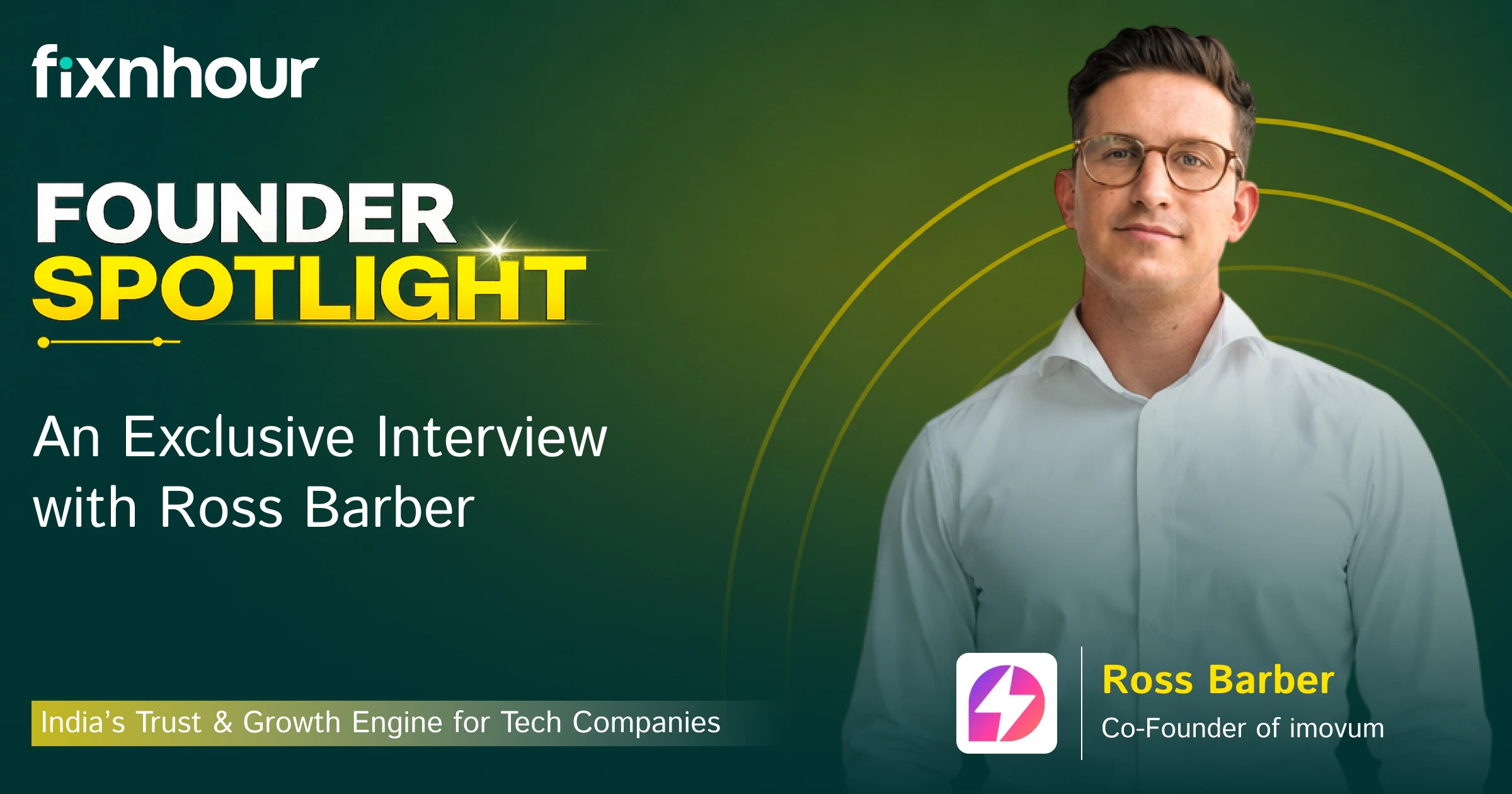
This is where Ross Barber has made an impact. Ross is a founder and EdTech executive with experience in education, technology, career readiness, and social impact, and a passion for leveraging innovation for equitable opportunity pathways. His efforts over the past decade with global organisations, governments, educators and others have been a testament to the power of thoughtful design of technology to personalise learning, enhance career discovery, and help young people see where their skills and potential can lead them.
Key Takeaways
- Information alone does not foster access to opportunity.
- Being ready for work needs to start long before students are ready to put themselves out there.
- Technology can be used to create scale in personalizing education and career guidance.
- Equity needs to be deliberately and explicitly built into EdTech solutions.
- AI should be used to augment rather than exacerbate inequalities.
- AI will make critical thinking, adaptability, communication, and judgment all more important traits in the workplace.
- Career exposure has the power to open up the possibilities for young people.
- Employers need to take an active role in education and career readiness.
- Governments, teachers, workplaces, and technology firms must work together to bring about lasting change.
- Social-impact technology should be assessed by its outcomes, not just its activities.
- It is important to start with the learner and the problem, not technology, when it comes to EdTech.
- Sustainable business models can reinforce social impact, not detract from it.
- Designing for all should be considered in the very beginning of product development.
- Technology is a tool, opportunity and human development are the goals.
- There is talent all around the world, and the job is to find opportunity everywhere.
Who is Ross Barber?
The future of education is not just about making classrooms digital or adding more technology into the education process. The more difficult one is to make that education useful for opportunity, irrespective of a young person's background, geographical location, network and situation.It is this challenge that lies at the heart of Ross Barber's work. Ross is a founder and EdTech leader at the intersection of education, technology, career readiness and social impact. His passion is to build opportunities for the next generation through strategic thinking and technology to make opportunities more level.
For 10 years, Ross has collaborated with global organizations, governments, educators, and other stakeholders on sustainable change in education and career readiness.His work is an increasingly significant paradigm change in thought for education.One of the major issues for decades was access to knowledge. Information abounds today. Students can gain knowledge from online classes, video tutorials, online communities, AI platforms, and educational apps.Although information does not necessarily produce opportunity.There's still a need for guidance.
They must learn what skills are important, what careers are available, how their skills relate to the evolving world of work, and how to make opportunities available that might previously have been in their personal network, or geographically distant.Technology can help to reverse that.EdTech can be leveraged effectively to personalise learning; to enhance career discovery; to assist learners to connect to resources; to increase access to guidance; and to enable institutions to better understand the needs of learners.However, technology is not sufficient.Ross believes sustainable impact is the result of working together between educators, governments, technology providers, employers, communities and the young themselves.It also demands maintaining equity in the focus of innovation.To the extent that the most sophisticated educational technology serves mainly those who are already opportune, it adds little to their social value.Now the more important question is:Is it possible that technology can bring opportunity to those who have not had easy access to it in the past?At the intersection of education, technology, and social impact.In this exclusive Fixnhour Founder Spotlight, Ross Barber provides his insights on EdTech, career readiness, access, responsible innovation and how to equip the next generation for a technologically and AI-driven workplace.
Q1. Ross, what inspired you to build your career at the intersection of education, technology, and social impact?
I've always had an interest in potential vs opportunity. Fixnhour Talent abounds, but opportunities don't. The areas in which a person lives, the schools that he or she attends, the people the person interacts with, and the resources available to the person can greatly shape the opportunities available to them.That poses an important challenge.Education has great potential for improving mobility, but education systems cannot work without taking into account the realities of the labour market and society.Technological innovation opens a window on how to better bring those worlds together.In the last ten years, collaborating with organizations, governments, and educators has strengthened my conviction that positive change is possible with strategy and action.It all starts with understanding the people we're trying to serve – and technology can be used to help us scale our solutions.So my research and work efforts have gradually shifted to the pursuit of better access, relevance and equity of educational and career experiences through innovation.
Q2. What does “equitable career access” mean to you?
Equitable access is not equal access; it doesn't mean everyone gets the same access.It is about making sure that a person's situation does not restrict his or her ability to find, create and pursue meaningful opportunities unnecessarily.Traditionally a lot more than abilities are needed to gain access to careers.Many youth are born into families that have professionals who are able to share with them about various professions, review applications, make connections, or offer internships.Other people can be just as good, but not as exposed to those networks.This opens a gap in opportunity.Some of these barriers can be overcome with the help of technology, which can offer access to information, career exploration, mentoring, skills development, and opportunities at a larger scale.We need to deliberately create such systems, though.Technology will not solve the problem if only inequalities are copied and pasted into the digital format.Equity must be taken into account at the outset.
Q3. What are the biggest gaps you currently see between education and career readiness?
One of the largest disconnects is between the knowledge imparted and its understanding of the world of work.While education is vital for providing the knowledge and skills that are necessary for the workforce, it also needs to be complemented by guidance in how to apply those skills and knowledge to the world of work.They need exposure.They need context.They require exposure to various industries and occupations.They must also possess skills like communication, collaboration, critical thinking, flexibility, and now more than ever digital and AI literacy.The second problem is the need to adapt to the rapidly evolving labor market, which traditional education systems are not keeping up with.New roles appear.Existing roles evolve.Changes in technology alter the ways in which work is done.This implies that career readiness can't be a single event that takes place just before graduation.It must be a continuous process of exploration, learning, experimentation and adaptation.
Q4. How can EdTech help close this gap?
EdTech has the potential to make connections that cannot be made at scale using conventional methods.Technology can support students to investigate career pathways, understand skill requirements, access learning resources, get personalized suggestions and be connected with opportunities.It can also assist teachers to better comprehend the learners.Patterns of engagement, interests, skills development and needs for further support can be identified from the data.AI adds an extra degree of possibility to personalization.Systems can increasingly tailor information and experiences to individual interests, strengths and aspirations rather than universal information being provided to all learners.But we must not forget that technology doesn't necessarily make education better.The first step in good EdTech is a genuine educational/social challenge.It's the technology that's the vehicle, not the mission.
Q5. You have worked with global organisations, governments, and educators. What have you learned about creating sustainable change?
The main take-away is that sustainable change is the result of cooperation.Education ecosystems are complex and challenging.Policy and funding is influenced by governments.Learners are understood in the school and by the teachers.Employers are aware of the changing needs of the workforce.Technological companies contribute tools and innovation.Communities have an insight into the realities within their own communities.Youth are aware of their aspirations and experiences.It is not something that can be addressed by one stakeholder alone.The most effective efforts incorporate all these views into a common goal.A second lesson is that change is a process that takes time.Pilot programs can create excitement but in order to have an impact, there has to be infrastructure, training, leadership support, measurement, and a commitment to sustainability.We need to plan for programmes to get off the ground and also to be useful beyond the honeymoon or the money has run out.
Q6. AI is rapidly changing education. Where do you see the biggest opportunities?
The power of AI in enhancing personalization and accessibility is immense.Students learn differently.They have varying interests, strengths, weaknesses, and objectives. Traditional systems tend to fall short of delivering personalised support in large volumes.Personalized explanations, feedback, career advice, and learning recommendations are potential benefits that AI can provide to learners.It can also provide for less administrative burden on teachers and allow more time to be dedicated to activities that require human interaction.One of the other important opportunities is career readiness.AI can guide young people in discovering career pathways, transferable skills, new job opportunities and complex employment landscapes.But it has to be done responsibly.The four Ts accuracy, bias, privacy, transparency, and accessibility are all important.AI must serve to enhance human capabilities, rather than to generate another layer of inequality.
Q7. Do you think AI will fundamentally change the skills young people need?
Absolutely.But access to information itself is less valuable as people are able to access and access information really quickly with the help of AI.The more important dimension will be in understanding what questions to ask, how to assess information, how to use knowledge, and how to be creative with technology.The importance of critical thinking increases.Communication becomes a more important part of life.Judgement comes in more into the picture.Adaptability becomes essential.Yet young people should also be familiar with the concept of AI, but not to the extent of being experts in its technical implementation, but rather, to the point where they can responsibly and effectively use these systems.Meanwhile, uniquely human qualities like empathy, creativity, collaboration, leadership and ethical understanding can come into even greater play.The aim of education should instead be to complement it.It should be to educate people to work with it in an intelligent way.
Q8. How important is career exposure for young people?
It is very significant because it's impossible to aspire to something you haven't heard about.Young people have a fairly limited perspective on careers due to naturally limited exposure from family, school, community and media.There are thousands of jobs and career trajectories in the modern economy, though.New ones are being developed with technology all the time.A career exposure should, therefore, start earlier and should be more experiential.Students should be given chances to listen to professionals, learn about the workplace, gain insight into industries and careers, and be provided with practical projects and experiences, to allow them to relate various skills to various careers.This is especially relevant for students who might not have a broad network in their professional world.The more you are exposed, the more you have the potential to do.Sometimes just witnessing someone with a similar background succeed in a certain field can make a young person think that's what is possible.
Q9. What role should employers play in improving career readiness?
Employers should keep in active participation.They know more than almost anyone else about the changing roles and the developing skills that are important.Greater cooperation between employers and education providers can enable students to be better informed about careers and to have more experience in the workplace.This may be through internships, mentoring, industry projects, workplace experiences, guest sessions, skills programs and more accessible information on a range of career pathways.Employers also benefit.They can serve as a talent pipeline for future talent development rather than waiting until the recruitment process to engage in talent.There is also an opportunity for employers to reevaluate their approach to potential.Skills, adaptability and practical experience and demonstrated capability can also give signals, as long as traditional qualifications are also important.The link between education and employment is more beneficial to all when connected.
Q10. What are some of the biggest mistakes organizations make when trying to create social impact through technology?
A bad bet is to begin with technology instead of the problem.A platform, AI or a digital tool can get your attention and you may end up excited about it, and then need to find a place to use it.The process should be reversed.Begin with persons.Understand the barriers.Understand the context.Next, ask yourself if technology can be beneficial.One error is measuring activity rather than impact.It is helpful to know how many people are registered, how many workshops were conducted, or how many people attended a workshop, but these statistics do not necessarily indicate that people's lives or outcomes were improved.There is a need for a deeper question.Did access improve?Did confidence increase?Were students' skills developed positively?Were there more opportunities achieved?It is important to keep in mind that in order to achieve sustainable social innovation we need to keep our eyes on the prize, not the glass half empty.
Q11. What does good leadership look like when working across education, government, and technology?
It starts with listening.Each stakeholder has their own goals, considerations and criteria for success.A tech firm might make use of the idea of speed.Scale, accountability, and public value may be important points to consider for a government.Teachers might focus on the learning outcomes and the working realities in the classroom.Employers can emphasize skills and workforce requirements.These groups can function and move toward a common goal if there is sufficient common understanding due to a good leader.It takes patience as well.Solving systemic problems is seldom a fast process.Leaders must be ambitious but they must also have the discipline to establish trust and sustain change.Leadership in this environment is more about assembling the right people around you to get better answers together, rather than having all the answers.
Q12. As a founder, what have you learned about turning mission into a sustainable organization?
Mission is important because it provides the opportunity for people to care.However, missions are not the key to sustainability.It still requires a good business model, execution, measurable results, good people and good decision-making.It can be challenging for impact-driven founders to find this balance.It's possible to think that commercial thinking degrades social mission.In my opinion, this can be the exact opposite.A sustainable organisation can be more effective in making lasting impact.The question is, does the business model uphold the mission or distract the organization from it?Growth may enhance impact when commercial success and social outcomes are connected.
Q13. What advice would you give entrepreneurs building EdTech companies today?
Start with learners and educators, not technology.Take the time to get to know what it's like to learn in practice.Speak with teachers.Speak with students.Speak with institutions.Know what the current workflows, constraints, incentives and frustrations are.Then recognize where technology really makes a difference.Evidence is also a critical consideration for founders.Engagement and pretty interfaces aren't the only things that matter when it comes to education.Question if the product enhances learning, access, readiness, or some other relevant aspect of the product.Lastly, cater to the ones you are likely to overlook.If your product serves only well-motivated, high-tech, highly-connected learners, it could also inadvertently expand the difference you would like to have narrowed.Inclusive design needs to be considered from the outset of product development.
Q14. What is your long-term vision for the future of education and career access?
I hope that a future develops where opportunity is far less reliant on post code, family upbringing and personal networks.Technology can help us get there.What if the youth can understand what they are strong at, explore thousands of career pathways, develop relevant skills, connect with mentors, taste the industries and discover opportunities anywhere in the world without any matter of location?Education is for people to know not just what they know but what they can become.It is not ok for Career readiness to start at the end of Education.It should be integrated throughout the learning journey.And technology should enable institutions to deliver one-to-one support on a scale that was not possible historically.The end goal isn’t about technology.It's more opportunity.Technology has created social value if it allows talented youth to become part of opportunities that were out of reach.
About the Founder
Ross Barber is a founder and an EdTech leader bridging the gap between education, technology, social good, and career readiness.For the last ten years he has collaborated with international organisations, governments and teaching professionals to drive sustainable and meaningful change in education and contribute to the development of more equitable pathways to career.His strategy and tech 'play-to-learning' efforts are centered on bringing technology and strategy together to support the next generation, increase access to opportunity and establish a stronger link between education and the evolving world of work.The mission of Ross is based on a simple but powerful belief:One's starting point shouldn't be a limit on how far they can go.
Final Message to Educators, Founders, and Leaders
The world into which the next generation is stepping is going to be quite different from the world that many of us entered.Industries will remain in flux with technology.The roles will be transformed by AI.New jobs will be created and existing jobs will change.Our job isn't to anticipate all the jobs that are going to be there.
It's our job to equip young people to face change with confidence.Share with them the knowledge.Give them exposure to possibilities.Guide them to learn skills that they can apply in other situations.Help them to learn how to learn.Link with people and opportunities.But ensure that innovation can trickle down to those who need it the most – not just those who already have it.Talent is ubiquitous.Too should be opportunity.
Final Thoughts on the Founder
The evolution of Ross Barber's work is a growing area of technology innovation and social responsibility.His task isn't just to digitise education. It is time to think about the opportunities for technology to make learning, skills, career and opportunity more meaningful and equitable.That distinction matters.The next big change in EdTech might not be about more content on the web. There is already a lot of information out there. There is more to be gained from helping people to understand what they need to learn, why it is important, where their abilities can take them, and how they can tap into opportunities.This has also been a key takeaway from the 10 years that Ross has spent working with global organisations, governments and educators: education transformation must not occur in isolation.
It needs collaboration amongst education, government, employers, technology companies, communities and the young people themselves.His priority on equitable career access is especially important with the evolution of the workplace brought on by AI. New technologies can exacerbate existing opportunity disparities if they're only available to communities that are already well-positioned. However, with an inclusive design, the same technologies can be used to make guidance, learning, exposure, and career discovery accessible to everyone.Perhaps the most important thing about Ross' work is:Innovation is really valuable when it increases the number of people who can access opportunity. Get Your Free Consultation.