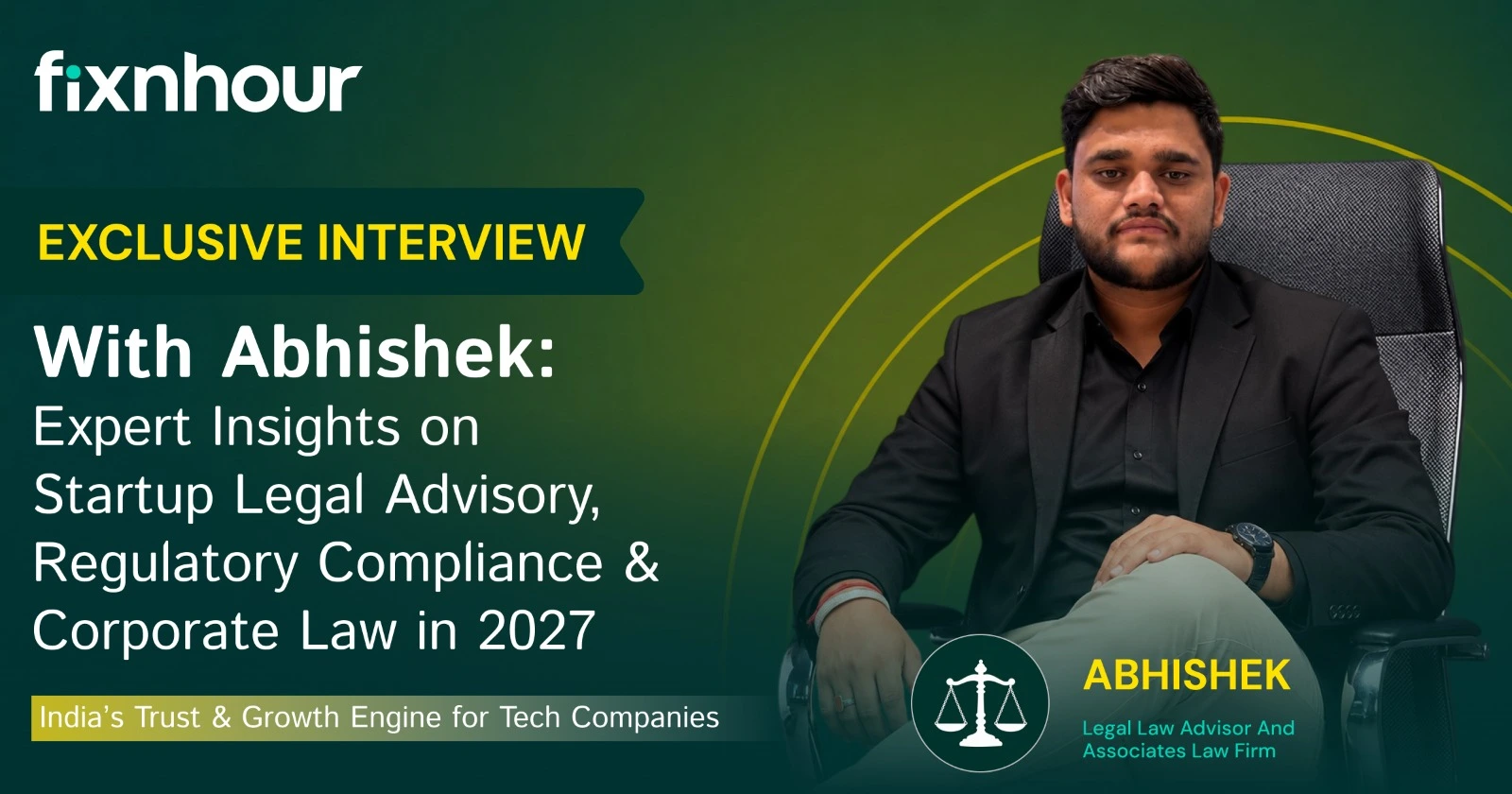
There is a lot more to building a startup than creating a product and getting customers to buy it. Founders also decide on issues of business ownership, contracts, intellectual property, investment and regulatory compliance. These decisions may affect a company's confidence in its operations, ability to settle disputes, and strategy for future expansion.
For entrepreneurs, it's often the case that the question is how to prioritize first. Shall they incorporate a company right away? At what point should cofounders put in writing their agreement? What can be expected by investors during legal due diligence? Clear answers make a difference to founders' decision making, as they avoid getting caught up in jargon.This interview deals with 10 practical questions on Legal Advisory for Startups in India. The topic is then taken up from the selection of the business structure to protection of intellectual property, the negotiation of commercial agreements, and the availability of affordable legal assistance.The emphasis is on application knowing the "why" of the use of legal documents and relating it to business decisions. It will depend on the business organization, activities, geographical location and the growth stage of the company and founders should make use of these insights based on their situation.
Q1. Abhishek, what inspired you to specialize in startup legal advisory, regulatory compliance, and corporate law?
I am drawn to Startup Legal Advisor because of the impact that legal decisions can have on a startup's future. Founders come with vision, drive and expertise, but can lack the skills to define business relationships in terms of agreements. My interest is in making this process understandable and useful. In corporate law, ownership and accountability are linked to investment and growth, and regulatory compliance ensures that businesses can function responsibly. The best motivator for me is solving problems before they get in the way of progress. A properly drafted agreement or timely discussion with the law can provide clarity and safeguard key relationships, empowering founders to make informed decisions and grow their businesses with confidence.
Q2. What legal steps should founders prioritize when launching a startup in India?
The first step for founders is to decide who owns the business, what type of business structure they should use, and what legal requirements are applicable to their business activities.Fixnhour The legal compliance of startups in India can vary based on the business model, geographical location, employee count, and industry.
Early priorities include:
- Keeping track of co-founder roles, contributions and equity arrangements.
- Filing incorporation or business registrations.
- Inspection of relevant tax registration and operating licences.
- Creating work, contractor or customer contracts.
- Determining what constitutes IP and confidential information.
Develop compliance calendar and responsibilities/reminders. These are just the first steps – keeping records and checking the obligations as operations evolve helps avoid unnecessary gaps throughout the startup's evolution.
Q3. How should entrepreneurs choose between a private limited company, an LLP, and a sole proprietorship?
The right business structure will be influenced by liability, ownership, financing, tax and compliance considerations. A sole proprietorship may be appropriate for someone who is trying a small business but it does not provide personal/business liability separation. Under an LLP, there is a separate legal limbo with limited liability and partnership flexibility (excluding legal limitations). A private limited company is appealing to consider when the founders are thinking about equity funding or employee share incentives. But with the incorporation, there are ongoing governance obligations. Entrepreneurs are advised to check their anticipated activities and investments and compare it with the professional advice. If only the registration cost is considered, it may lead to restructuring jobs when the business expands.
The Startup India website mentions “entity selection”, “founder arrangements”, “IP”, and “regulatory assessment” as key legal aspects to consider when starting a business.
Q4. What should a founders’ agreement cover to prevent disputes over ownership, responsibilities, and exits?
A founders' agreement is a document that helps clarify how founders will function, decide and manage changes in their relationship. Clearly stated expectations are critical even with friends and family members.
The agreement should include:
- Any conditions on equity allocation, contributions and vesting.
- Roles and responsibilities, authority and accountability, commitments and remuneration.
- Ownership and assignment of business intellectual property.
- Deadlocks and solving them using decision procedures.
- Departure, transfer of shares, confidentiality and dispute resolution.
The document should also be consistent with the relevant legislation and the company's constitutional documents. Before signing, discuss challenging situations. If priorities, performance or relationships change the next day, then agreement on uncomfortable questions today can help to minimize uncertainty.
Q5. What are the most common compliance mistakes startups make, and how can founders avoid them?
One of the frequent errors in compliance is assuming that incorporation is the end of the legal process. Founders might also be negligent about filing requirements, use informal agreements or delay the review of licensing as the business grows. Another issue is that people think that someone else is doing the job – an accountant, a lawyer, a colleague – is taking care of a deadline. The first step in prevention is to create a practical compliance register which includes requirements, who is responsible, relevant records and review dates. Maintain business finances in order and store signed business agreements in one place. Have a review with the person you hired, entered the market with, raised the capital from or launched the service with. Compliance management is best done if it becomes a regular part of day to day business and everyone knows who to hold accountable.
Q6. Which regulatory developments should Indian startups pay particular attention to in 2027?
In addition to the changes taking place in every startup's industry, data protection readiness is a subject to pay special attention to in 2027. The Digital Personal Data Protection Rules, 2025 had provided for phases of implementation, meaning that the existing conditions and requirements have to be differentiated from the obligations that will begin in the coming future.
Practical preparation includes:
- Creating a list of personal data being collected by the business.
- Determining purposes, access and service providers.
- Checking on notices, consent procedures and practices, and retention practices.
- Planning security response and incident investigations.
- Checking commencement notifications and relevant sector requirements.
An operational review is a prerequisite to a generic privacy policy. Start-ups should consider the extent of their data handling and seek guidance on the clauses which may apply to their business model.
The Government published guidance in relation to the phased implementation period of 18 months. The applicability needs to be verified with the respective commencement notifications.
Q7. How can startups protect their intellectual property when working with employees, freelancers, and technology partners?
Before development or creative work take place, it is important that startups document the ownership of intellectual property. Again, paying a freelancer or agency doesn't solve all the ownership issues. Agreements should address deliverables, existing materials, allowed uses, confidentiality responsibilities and appropriate assignment or licensing terms. Working records should include work created during employment and relevant statutory requirements. Keep records of contributions of code, designs, ownership of brands and third party licenses. Think about appropriate trademark, patent or design protection as applicable. NDAs can help safeguard confidential information, but cannot be used as a substitute for ownership provisions. An intellectual property record is also of significant assistance for investor due diligence and commercial negotiations.
Trademarks and software IP are among the areas recognised as crucial for startups' legal planning by Startup India.
Q8. What legal documents and due diligence checks should startups prepare before approaching investors?
Startups should create a legal data room that is structured and organized to enable investors to check business risks and obligations, as well as ownership. Preparing for fundraising requires more than having a good look book.
Common documents include:
Add incorporation records and existing constitutions documents.
- A correct capitalization table and a shareholding register.
- Founder agreements and necessary corporate approvals.
- Material customer, vendor, employee and contract agreements.
- Records of Intellectual Property and relevant Registration of Regulatory.
- Financial statements, tax returns and dispute disclosures.
Each transaction has different requirements. Discuss any issues that have not been resolved before sharing documents, provide accurate explanations of issues that are not resolved, and secure sensitive data in a manner suitable to the situation. When creating business records, it will be easier for investors to evaluate the business without having to avoid unnecessary clarification rounds.
Q9. Which clauses deserve the most attention when startups negotiate client contracts and vendor agreements?
A careful reading of scope, payment, IP, liability and termination clauses is a must in commercial contracts. First, make sure you have clear objectives, deadlines, acceptance criteria and responsibilities. Payment provisions should outline how the payments are made, what milestones are expected, taxes and implications for late payments. Discuss the process of approving and pricing changes. Elements of the IP clauses should separate assets already existing from project assets. Confidentiality and data provisions should be in line with the information shared. Discuss indemnities, limits of liability, termination clauses and dispute clauses as they will impact on the allocation of risk. A good contract should also clarify what happens when there are unexpected changes in the expectations, deadlines or project requirements during the day-to-day delivery process.
Q10. What practical advice would you give founders who need reliable legal support on a limited budget?
Focus on spending on the law around legal decisions that have large consequences of ownership, financial, or operation. Not all issues need to be addressed by the founders at the same time, but they should determine their primary exposures.
One possible solution is to:
- Asking for a preliminary legal opinion.
- In writing, agreeing deliverables, fees and exclusions.
- Making founder arrangements and crucial commercial contracts a priority.
- Preparing documents prior to professional review.
- Evaluating advisers for relevant experience and communication.
Closing Perspective
Built around that is the central lesson for founders: Link legal planning to business milestones. Adding a cofounder, recruitment of a developer, signing a customer or investment alters the relationships and responsibilities of the company. It's helpful to check in on each milestone to discuss documents and any expectations.Getting started is a good idea: collect current agreements, note next steps and identify outstanding ownership and compliance issues. It helps focus on spending priorities and conversations with advisers as a result of that preparation.
Understanding startup legal advice, regulatory compliance and corporate law is more helpful when applied to actual business experiences. The founders of an agreement should be aware of what an agreement accomplishes, who is accountable for carrying out the agreement, and when an agreement should be updated. Those efforts can help with decision making in the future as the company expands. Talk to our experts